 By
By  August 6th, 2026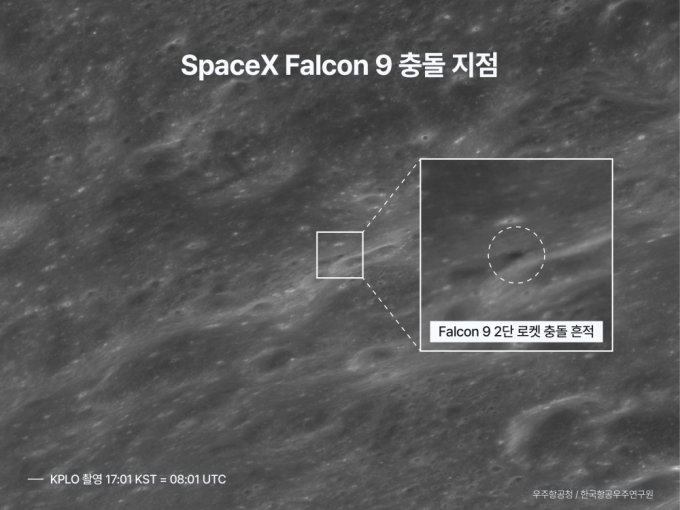
Image credit: Korea Aerospace Administration
The Korea Aerospace Administration (KASA) has released the lunar impact observation data acquired by the country’s Moon-orbiting Danuri spacecraft.
Danuri captured images of the pre-hit scene and after the impact of the roughly 4 ton upper stage of a SpaceX rocket.
The upper stage of the SpaceX Falcon 9 rocket struck the area near the lunar ‘Einstein Crater’ at around 3:34 p.m. on the 5th (Korean time).
Imaging sessions
Danuri conducted an initial imaging session about 30 minutes before the impact, and then carried out an additional seven imaging sessions after the impact.
All spacecraft imaging was completed at around 7 a.m. (Korean time) on August 6.
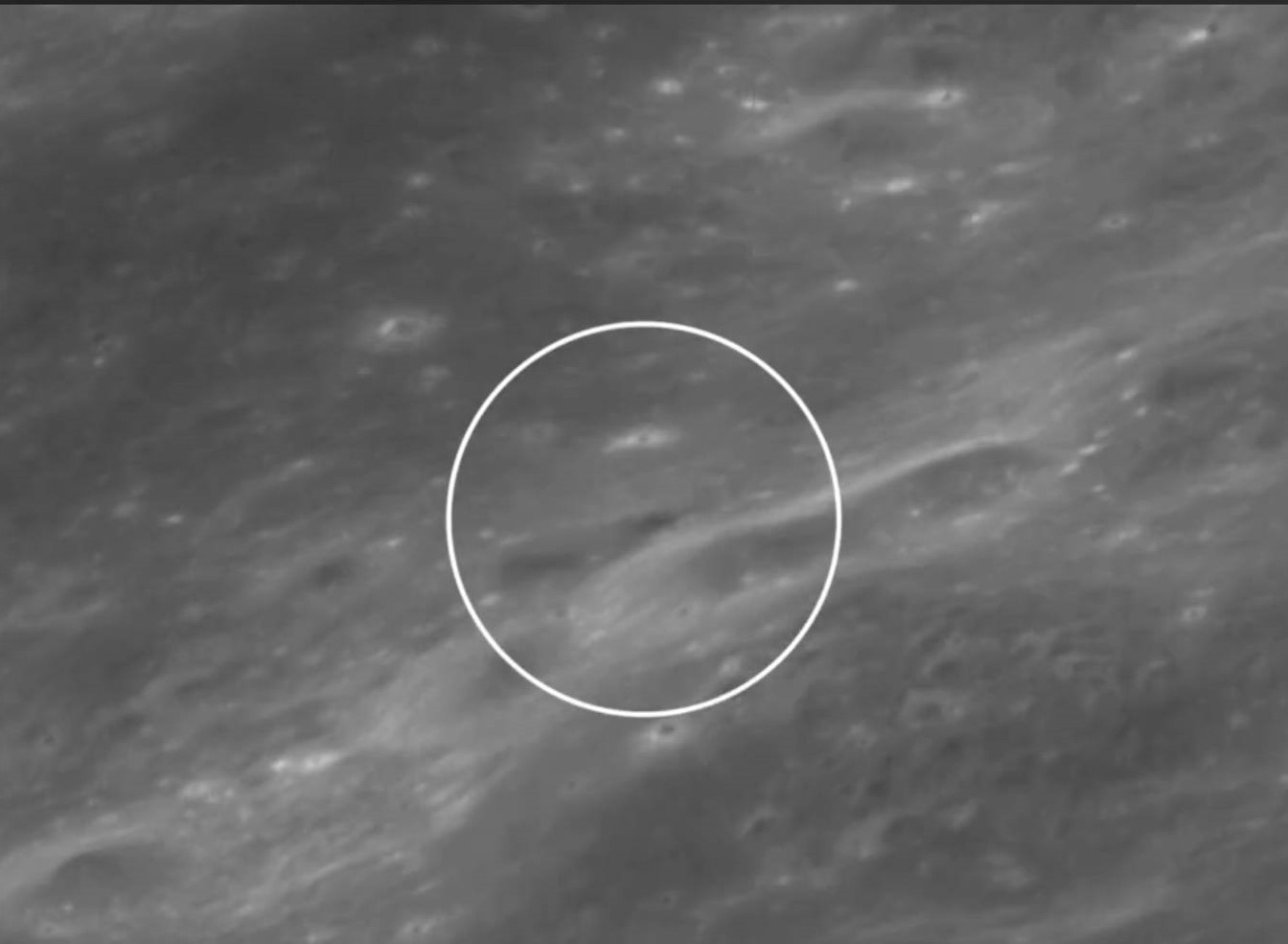
Image credit: Korea Aerospace Administration
Imagery taken show changes in the lunar landscape near the impact site and traces of ejecta tossed onto the surface.
Using the orbiter’s ‘high-resolution camera (LUTI), researchers confirmed the surface changes.
Danuri’s ‘wide-angle polarimetric camera (PolCam)’ also imaged the same region.
Researchers plan to analyze how the reflection and polarization properties of light from the lunar surface changed before and after the impact.
Next flyover: LRO
NASA’s Lunar Reconnaissance Orbiter (LRO) is will pass over the impact region on August 11, Mark Robinson of Intuitive Machines in Phoenix, Arizona told Inside Outer Space. He serves as the principle investigator for the NASA Lunar Reconnaissance Orbiter Camera and also the PI for the NASA lunar imaging experiment ShadowCam onboard Korea’s lunar orbiter.
Close conjunction
Interestingly, there was the prospect of a worrisome close conjunction of the Falcon-9 upper stage and Korea’s Danuri lunar orbiter.
“We noticed roughly late June that there is an incoming Falcon-9 upper stage toward the Moon, and also knew that it would be close to Danuri,” Eunhyeuk Kim, a senior researcher at the Korea Aerospace Research Institute (KARI) told Inside Outer Space.
There was a huge uncertainty in the predicted trajectory of the moon-bound rocket state, while the orbit information of Danuri was quite accurate, Kim added. Therefore, operators of Danuri could not neglect the probability of an incoming and close encounter.
However, around mid-July, the KARI/Danuri team made a maneuver of the spacecraft for the preparation of a near-total lunar eclipse on August 28. Kim said this maneuver brought a slight change in the phase of the spacecraft’s orbit, which canceled the probable conjunction between Danuri and the SpaceX Falcon 9 rocket stage.

NASA’s Lunar Reconnaissance Orbiter (LRO).
Credit: NASA’s Goddard Space Flight Center Conceptual Image Lab
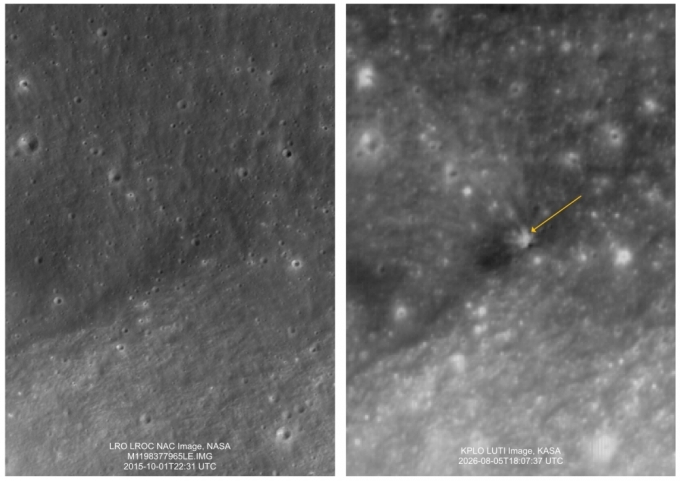
The left image shows the impact site area as captured in October 2015 by NASA’s Lunar Reconnaissance Orbiter (LRO). The right image shows the same region captured by Danuri’s LUTI at 6:07 p.m. on August 6; the yellow arrow indicates the impact site. Provided by NASA, KASA, and Korea Aerospace Research Institute (KARI)
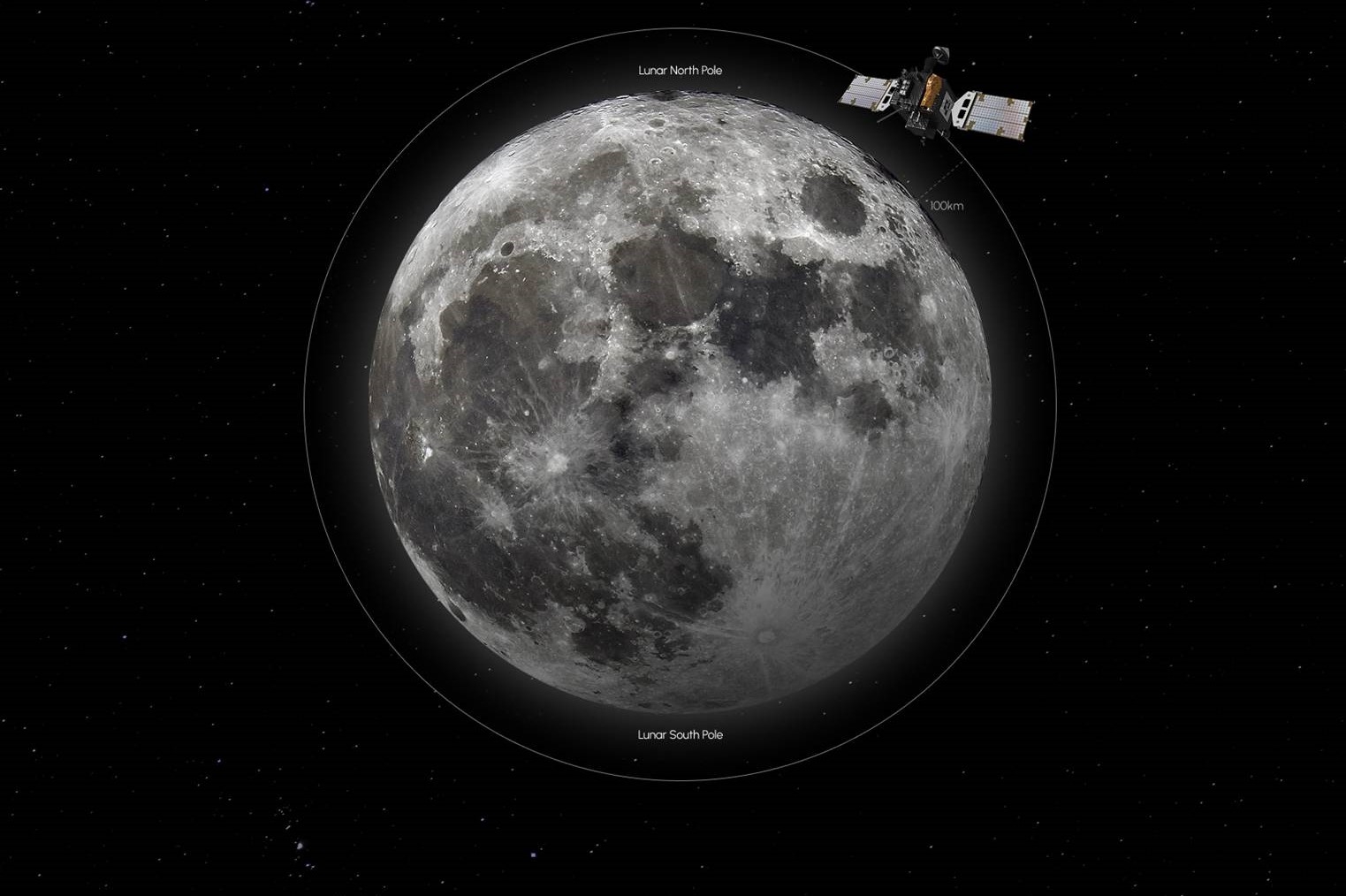
Image credit: Korea Aerospace Research Institute (KARI)
Go to this video provided by the Korea Aerospace Administration at:
https://youtu.be/411Xv9wJxws?si=MEBdFfkfWiURyKsK
Reports Jose Maria Madiedo at the Astrophysics Institute of Andalusia (IAA-CSIC), they obtained video of the impact of the Falcon 9 stage on the Moon. “Note that the impact occurred just behind the Moon’s limb as seen from Earth, so we only see the dust cloud rising beyond the limb. The impact zone is invisible.”
Go to the IAA-CSIC video at:
 Posted in Space News

