 By
By  July 10th, 2026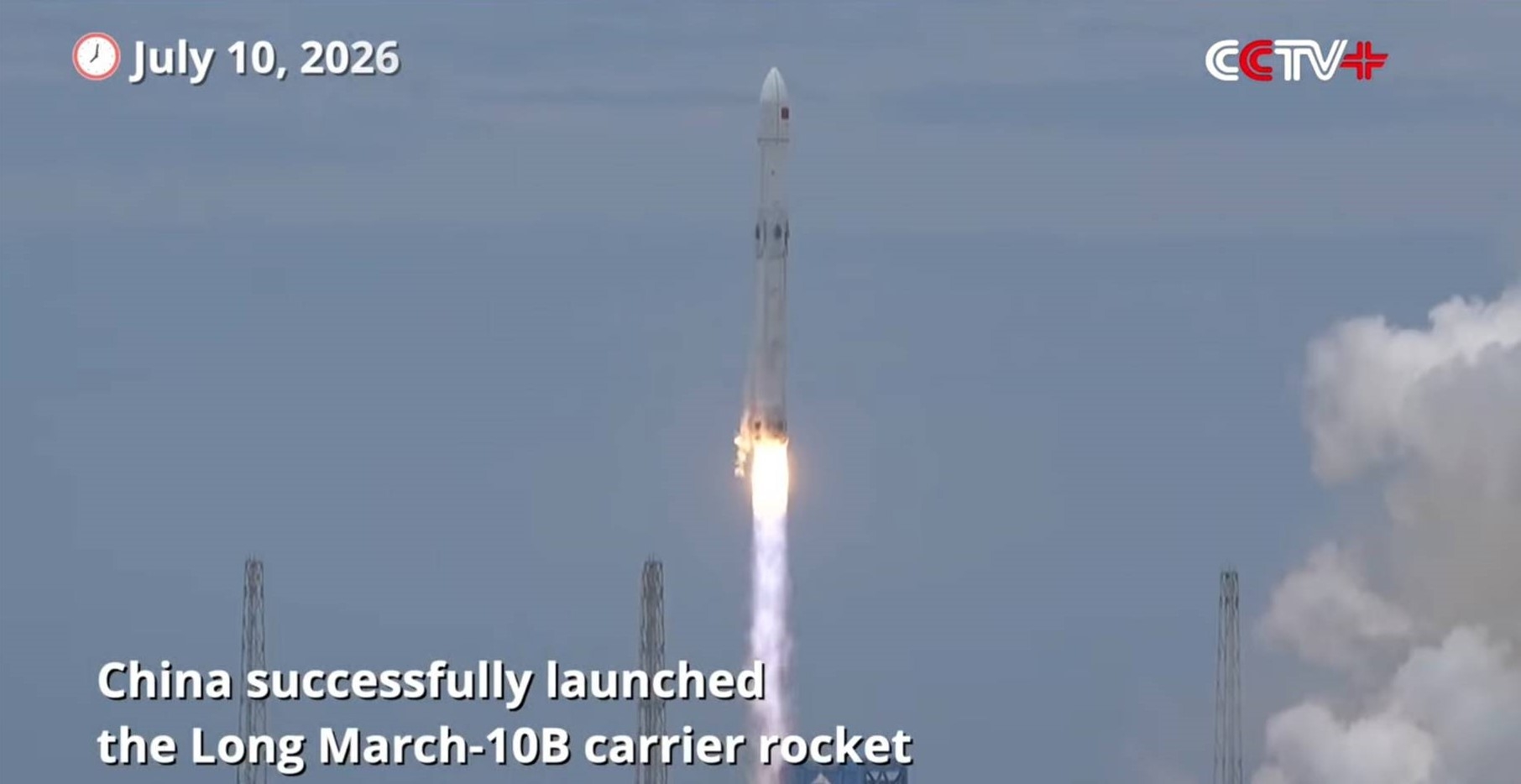
Image credit: CCTV/Inside Outer Space screengrab
A Long March-10B carrier rocket blasted off from the Hainan commercial spacecraft launch site in Wenchang, south China’s Hainan Province on July 10, 2026.
On its maiden flight, the Long March-10B achieved its first-ever controlled recovery of the rocket’s first stage.
Seaborne net-capture system
About six minutes after the separation of the rocket’s first and second stages, that first stage returned and was captured on a seaborne platform via a net-capture system.
The recovery represents China’s first successful controlled recovery of a carrier rocket’s first stage, tagged as a breakthrough in the country’s reusable rocket technology.
Developed by the China Academy of Launch Vehicle Technology (CALT) under the China Aerospace Science and Technology Corporation (CASC), the Long March-10B is a large, two-stage liquid-fueled carrier rocket featuring a 5-meter diameter core. Standing approximately 63 meters tall with a takeoff thrust of 890 tons, the rocket utilizes liquid oxygen and kerosene for its first stage and liquid oxygen and methane for its second.
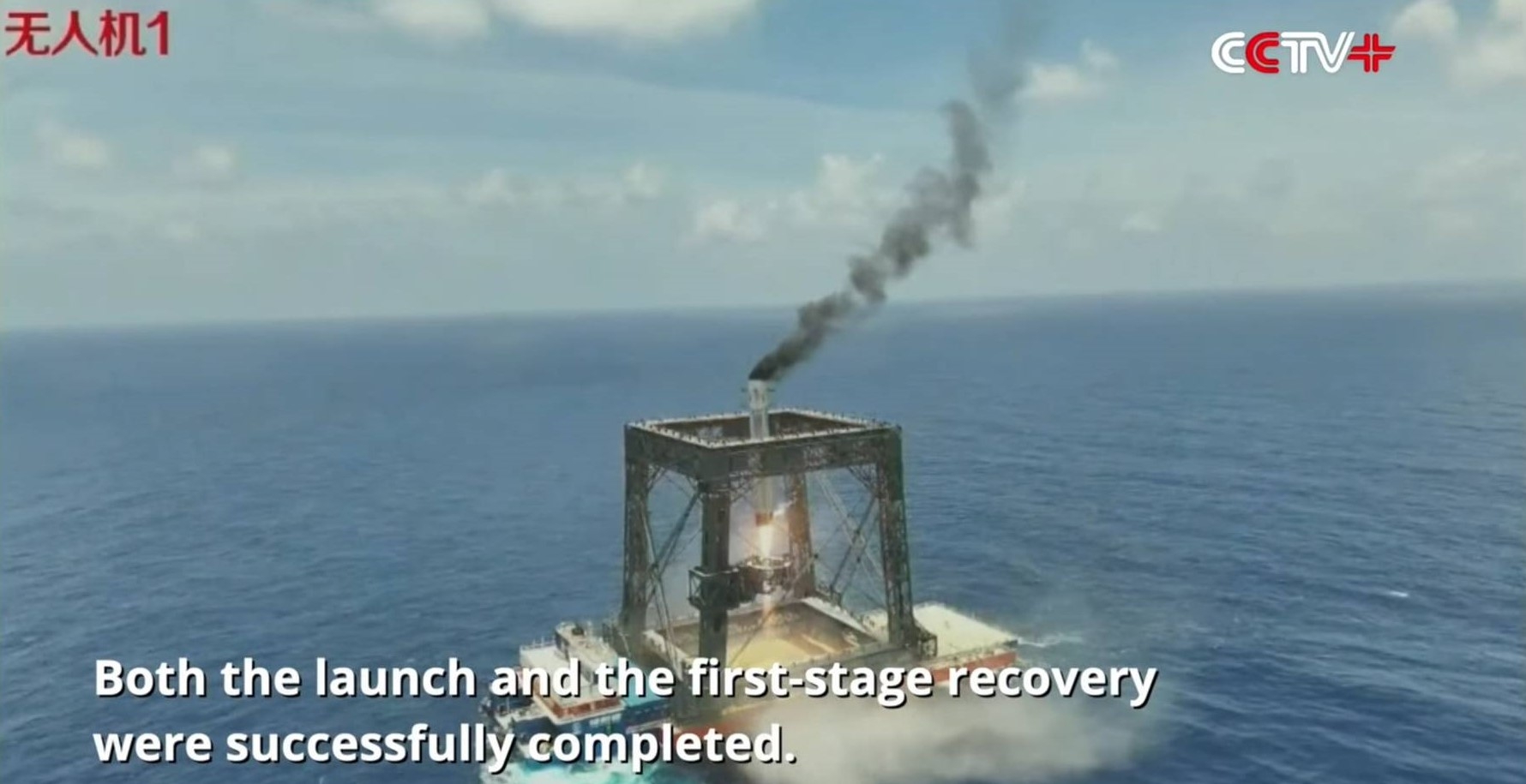
Image credit: CCTV/Inside Outer Space screengrab
Core technologies
Friday’s mission successfully validated several core technologies:
- Combined configuration optimization
- Methane autogenous pressurization
- Propellant management using baffled tanks
- It demonstrated critical first-stage reuse technologies such as multiple engine restarts, high-altitude ignition, adaptability to complex aerothermal environments, high-precision navigation and control, and a sea-based net-capture recovery system.
China Central Television (CCTV) said that, looking ahead, the development team plans to continuously optimize the rocket’s performance and accelerate the iteration of its reusable technologies, with a targeted first-stage reuse flight scheduled for the end of this year.
Commercial market
“The Long March-10B carrier rocket is mainly designed to serve the commercial market. This time, we’ll carry out precise recovery and ultimately land the rocket’s first stage on this large net,” said Hao Jinjie, a CASC researcher.
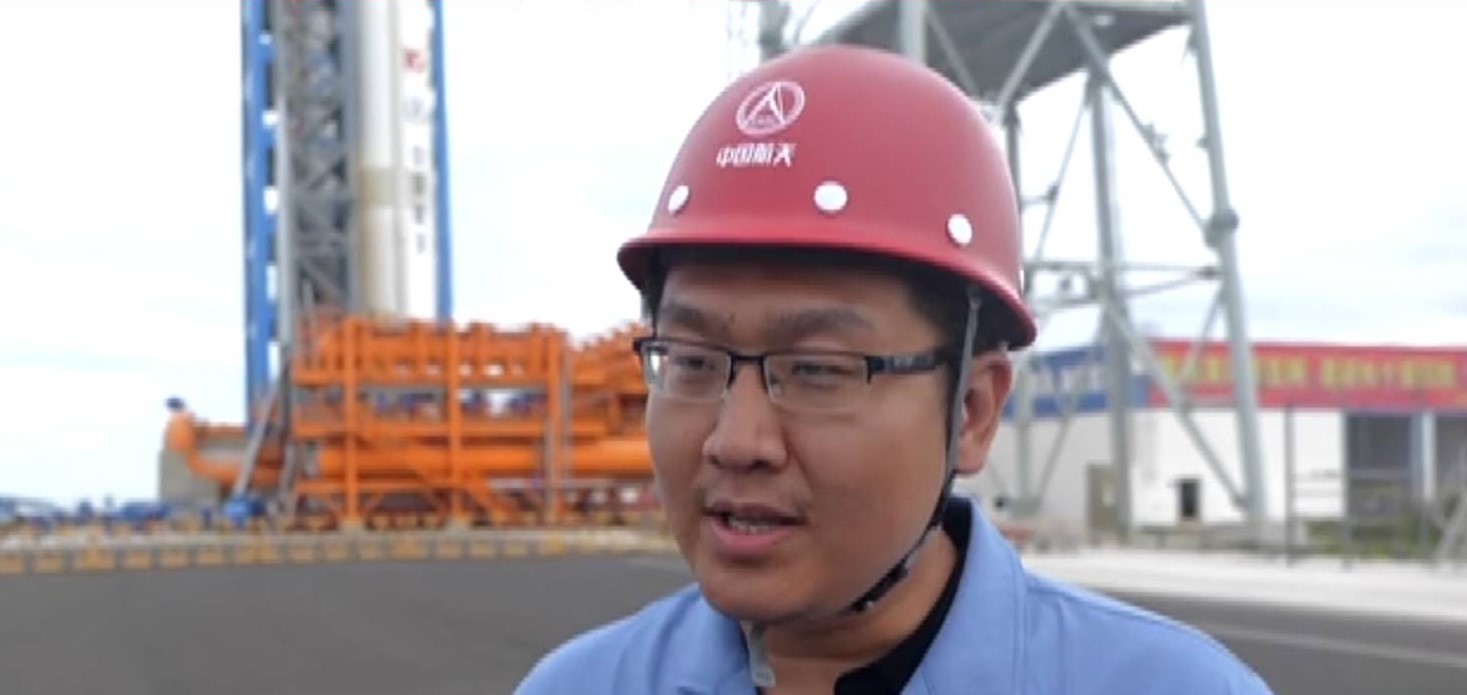
Image credit: CCTV/Inside Outer Space screengrab
While the world’s mainstream reusable rockets adopt the propulsive vertical landing, the Long March-10B carrier rocket takes a completely different method.
“The recovery of this rocket marks the world’s first adoption of the net-capture system, which mainly uses the net on the seaborne platform to catch and hold the retrieved rocket. Both the two recovery methods have their own advantages. Our adoption of net-capture system ultimately enhances the rocket’s payload capacity,” said Hao told CCTV.
For a video of the flight, go to:
https://www.facebook.com/reel/2610346632701016
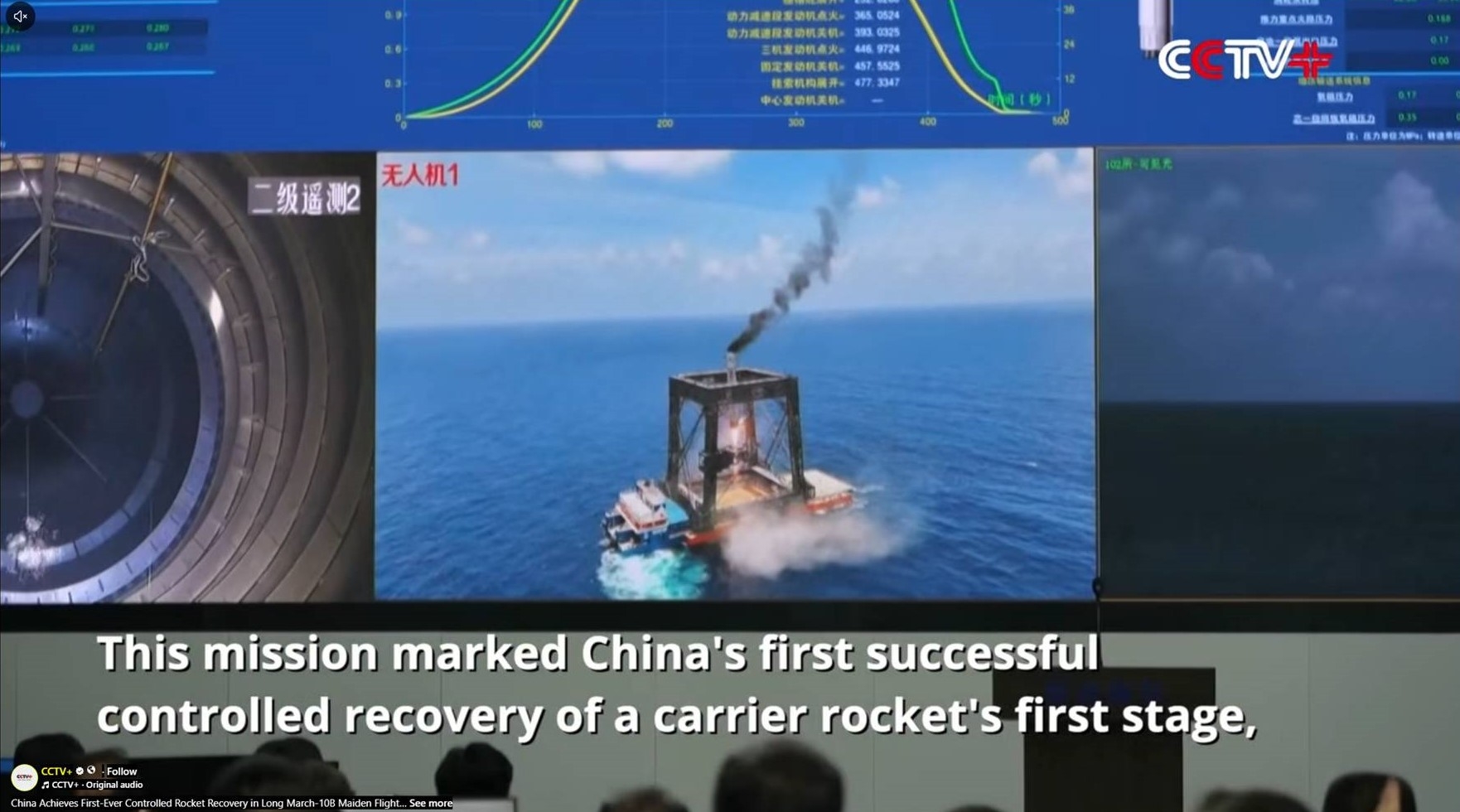
Image credit: CCTV/Inside Outer Space screengrab
 Posted in Space News

