 By
By  July 5th, 2026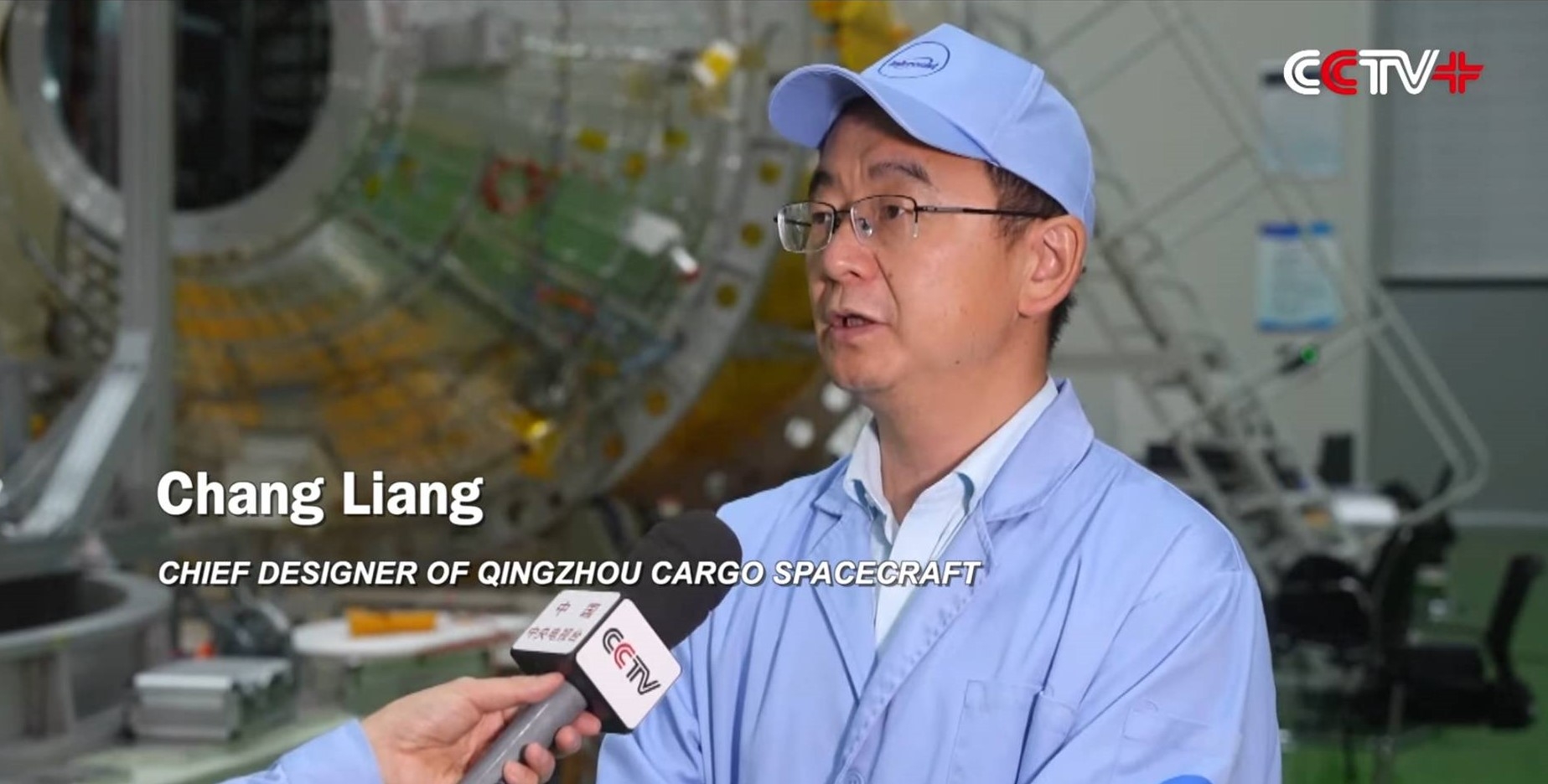
Image credit: CCTV/Inside Outer Space screengrab
China’s new cargo transport craft – Qingzhou – is ready for operations next year.
A test flight of the craft earlier this year verified key aspects of the spacecraft to deliver supplies to the country’s space station.
The test vehicle, designed for a three-year service life, was launched into orbit in March.
“The test flight was aimed at making good in-orbit preparations for the formal launch of the spacecraft,” said Chang Liang, chief designer of the Qingzhou cargo spacecraft.
“We verified many key technologies,” Chang told China Central Television (CCTV) “including those for the sealed capsule and propulsion. We also carried out some space experiment payloads. Having laid a solid foundation, we will be very confident to carry out the formal mission next year.”
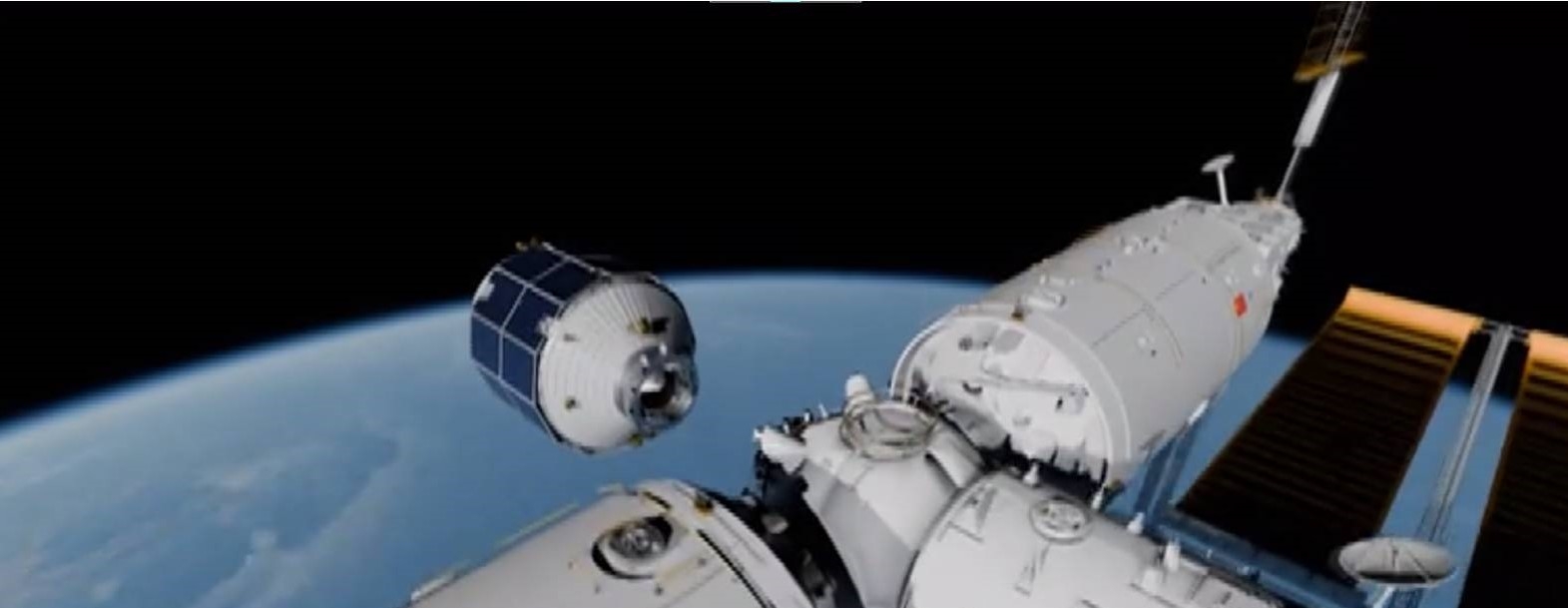
Artwork depicts Qingzhou Cargo spacecraft docking to China’s space station.
Image credit: CCTV/Inside Outer Space screengrab
Test craft factoids
Here are some factoids about the Qingzhou test spacecraft:
- It consists of a sealed main capsule and an unsealed tail cone section at the rear
- Has a total mass of 4.2 tons and a single-module integrated configuration.
- The main capsule houses 40 cargo compartments, offering a total volume of around 27 cubic meters for carrying astronaut supplies, scientific payloads and other equipment.
- The open tail cone section can carry additional payloads and equipment required for space exposure experiments, thus maximizing the spacecraft’s cargo capacity.
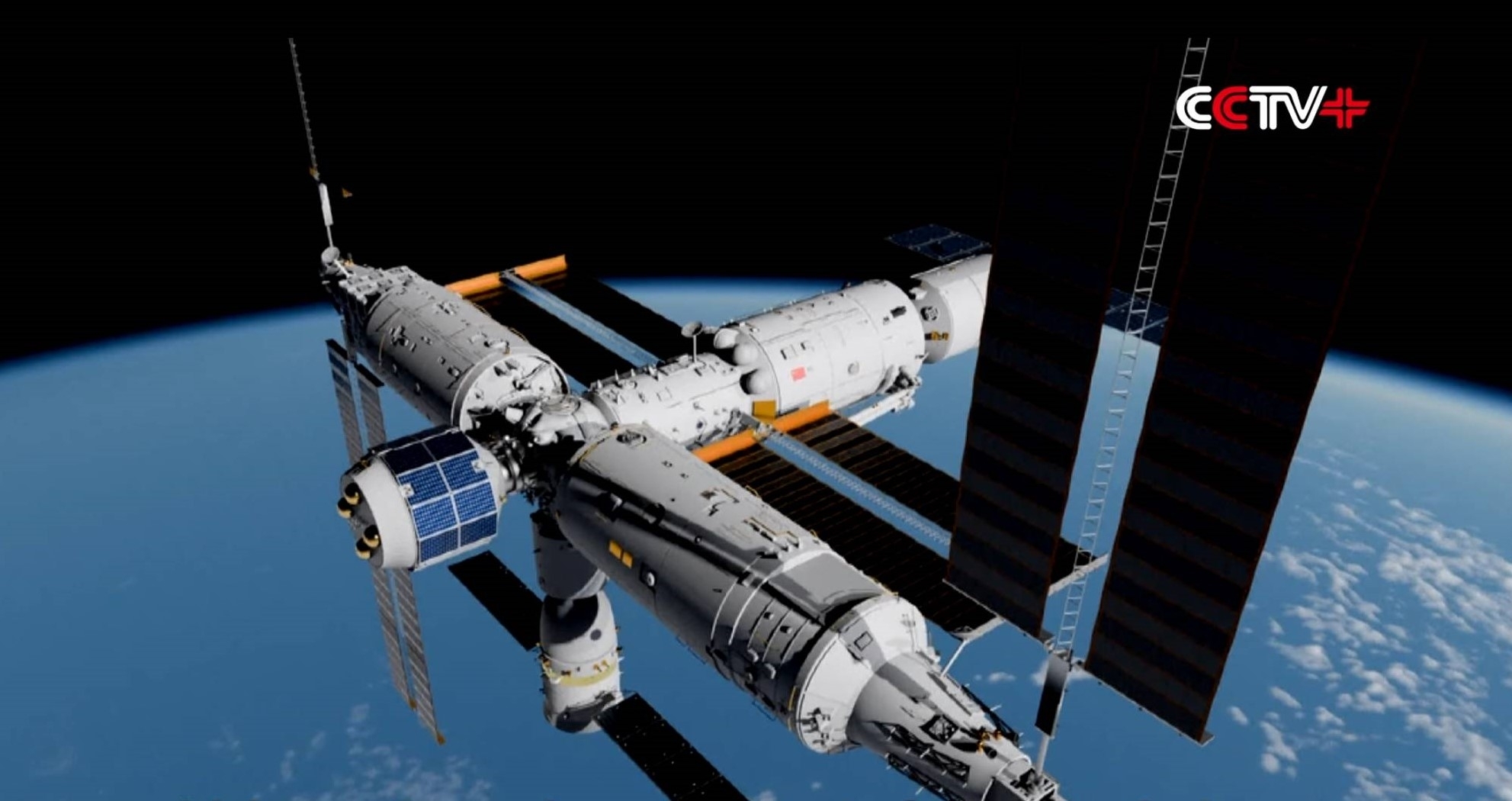
Artwork depicts Qingzhou cargo spacecraft (left) docked to Chinese space station, leading to growth of the orbiting outpost.
Image credit: CCTV/Inside Outer Space screengrab
Supplementary system
Development of the station-assigned Qingzhou cargo spacecraft is progressing smoothly, with the spacecraft scheduled in early 2027 to dock with China’s orbital outpost.
Qingzhou will serve as a “supplementary cargo transport system” to the existing Tianzhou cargo spacecraft, providing relatively low-cost cargo delivery services to the space station, CCTV reports.
“Our test spacecraft didn’t dock with the space station,” Chang added. “Instead, it operated independently in orbit, creating a mini space experiment environment by itself.”
Formal flight mission
Chang noted that the craft’s “formal flight mission” will deliver supplies for astronauts’ daily use and scientific experiments.
“These two missions are very different,” Chang said. “The spacecraft to be formally launched will dock with the space station and complete cargo transfer, and we need to work on that.”
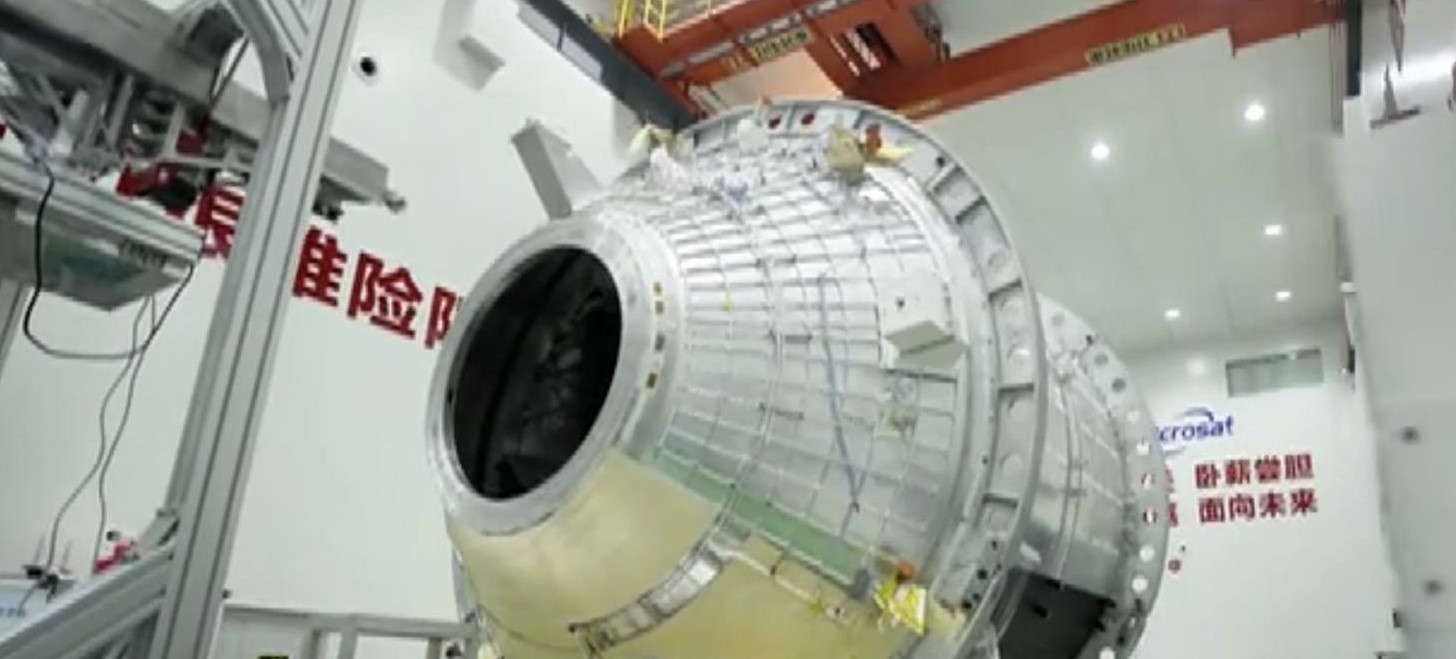
Work progressing on China’s Qingzhou Cargo spacecraft.
Image credit: CCTV/Inside Outer Space screengrab
 Posted in Space News

