 By
By  July 4th, 2026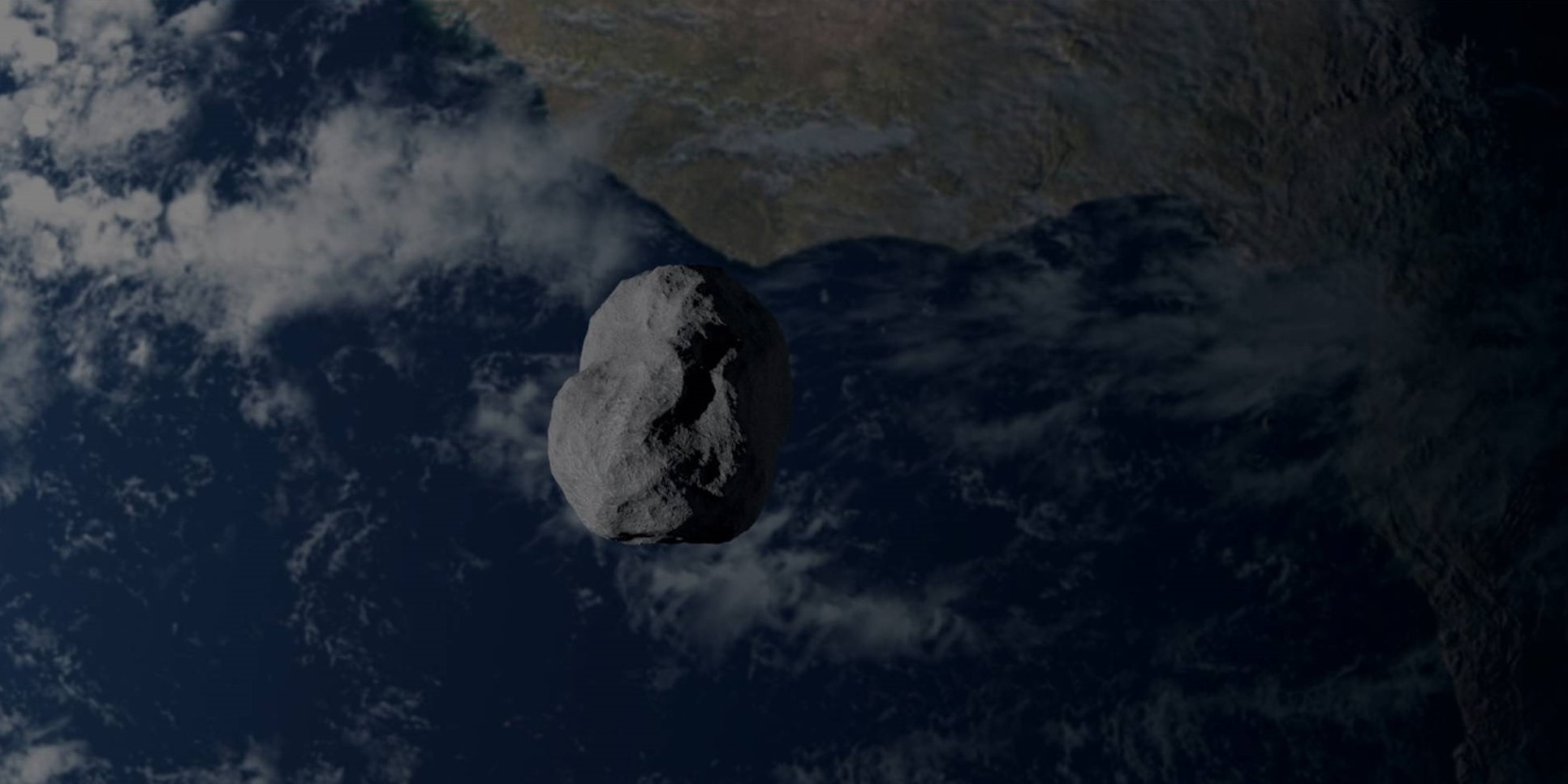
Asteroids have struck the Earth in the past…and they will again.
Image credit: ESA
Last week, the China National Space Administration (CNSA) announced that using ground- and space-based equipment enables the ability to track near-Earth asteroids and determine potential impact threats.
The CNSA said China will build an integrated network featuring telescopes and other equipment on the ground and in space to eliminate blind spots.
Round-the-clock monitoring
“On the ground, we will select outstanding observatories and deploy multiple large-aperture optical telescopes to form a ground-based monitoring and early-warning network,” said Li Mingtao, chief scientist at the CNSA Asteroid Monitoring and Early Warning Research Center.
“In space, we will launch telescopes beyond the atmosphere,” Li told China Central Television (CCTV). “Through the coordination of ground and space assets, we will achieve round-the-clock 360-degree monitoring.”
According to the CNSA, China has made initial advances in developing early-warning models and algorithms for asteroid impact risks, and is now building an operational near-Earth asteroid risk warning system.

Li Mingtao, chief scientist at the China National Space Administration’s Asteroid Monitoring and Early Warning Research Center.
Deflect the threat
China is also tackling what to do following the detection of a potentially hazardous asteroid with Earth in the cross-hairs of the object. That is, determining how to deflect the threat.
“Kinetic impact is the most feasible and simplest approach, but its effectiveness is relatively difficult to assess,” Li said. “Continuous deflection offers more precise results, but the main challenge is that the applied force is extremely weak. That is why early detection is critical, as more time gives us more options to avoid impact.”
Incoming factoids
In the CCTV story, also highlighted were these factoids.
- The United Nations has declared June 30 as International Asteroid Day to raise public awareness about the potential hazards of asteroid impacts, which are a common challenge facing all humanity.
- Other deflection approaches focus on changing the asteroid’s orbit, including using gravity tractors, laser ablation and continuous-thrust techniques, with the ultimate goal of nudging the asteroid away from Earth’s orbital path well in advance, preventing a potential impact.
- By June 2026, more than 40,000 near-Earth asteroids had been discovered and catalogued by space agencies around the world. Although none has been confirmed to be on a definite collision course with Earth, many smaller celestial bodies have yet to be detected.

Apophis 2029 – a close encounter of the space rock kindl
Image credit: The International Year of Asteroid Awareness and Planetary Defense 2029

 Posted in Space News

