 By
By  June 10th, 2026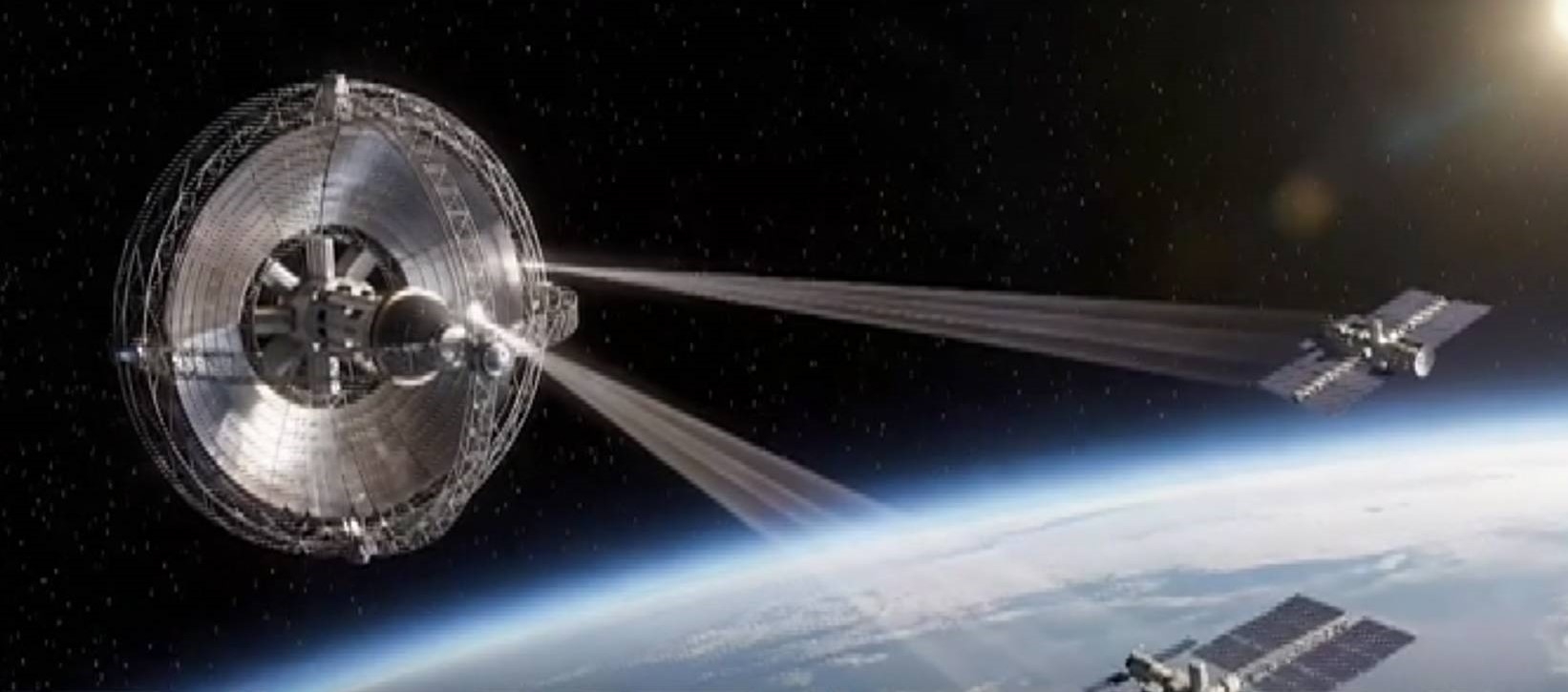
Image credit: CCTV/Inside Outer Space screengrab
Work in China is underway toward building a space solar power station.
The effort is being led by Xidian University in northwest China’s Shaanxi Province, with reports that a breakthrough has been achieved in transmitting energy to multiple moving targets simultaneously.
Underway since 2018, the work is being done under the name “Zhu Ri.” Its latest upgrade has shifted from one-to-one fixed transmission to one-to-many energy supply streams, enabling precise power delivery to multiple fast-moving targets.
As reported by China Central Television (CCTV), researchers say the challenge of the upgraded system was to keep beams locked on moving targets without losing signal.
Control system
“Our transmitting antenna beam must be monitored in real time and precisely directed toward the receiving antenna,” says Qian Sihao, associate professor at the School of Electromechanical Engineering of the university.
“To achieve this, we have developed a high-precision closed-loop control system based on reverse beam guidance,” Qian tells CCTV. “When the receiving antenna sends out a guiding signal, the transmitting antenna can promptly capture it and instantly calculate the position and angular attitude of the receiving antenna, thereby ensuring accurate beam pointing.”
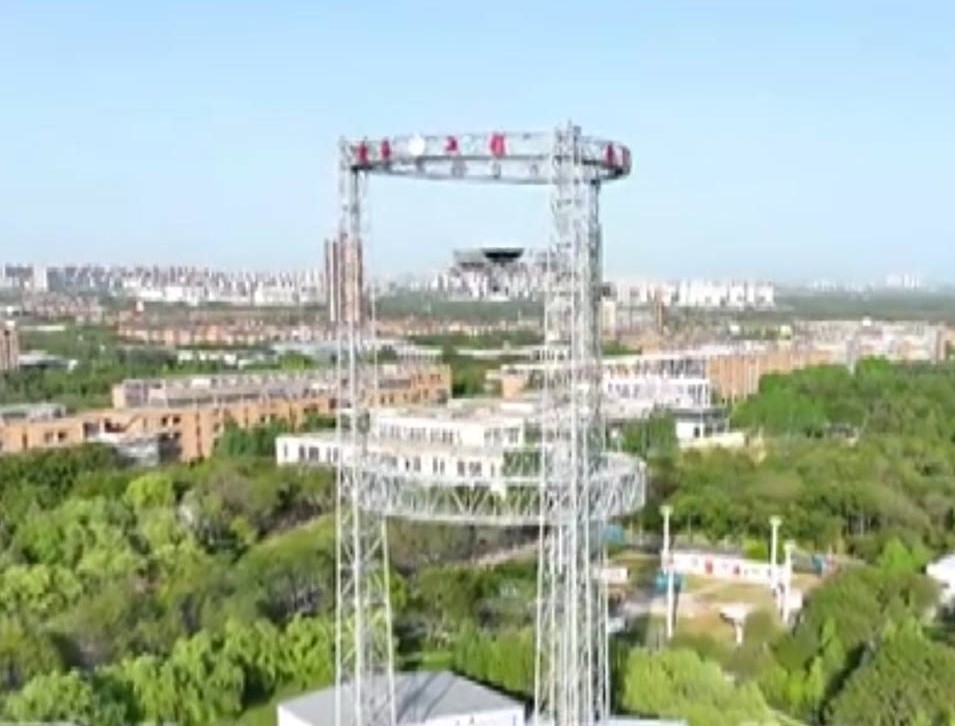
Image credit: CCTV/Inside Outer Space screengrab
Outdoor tests
“In simple terms, the system can track targets and make real-time corrections during transmission, enabling dynamic power supply to multiple moving devices,” notes CCTV. To prevent damage from misaligned beams, key components were upgraded with gallium nitride diodes, improving tolerance to high-power fluctuations.
According to CCTV, outdoor tests showed the system could deliver 1,180 watts of output power at a distance of 100 meters, with DC-to-DC transmission efficiency rising to 20.8 percent and beam collection efficiency reaching 88 percent.
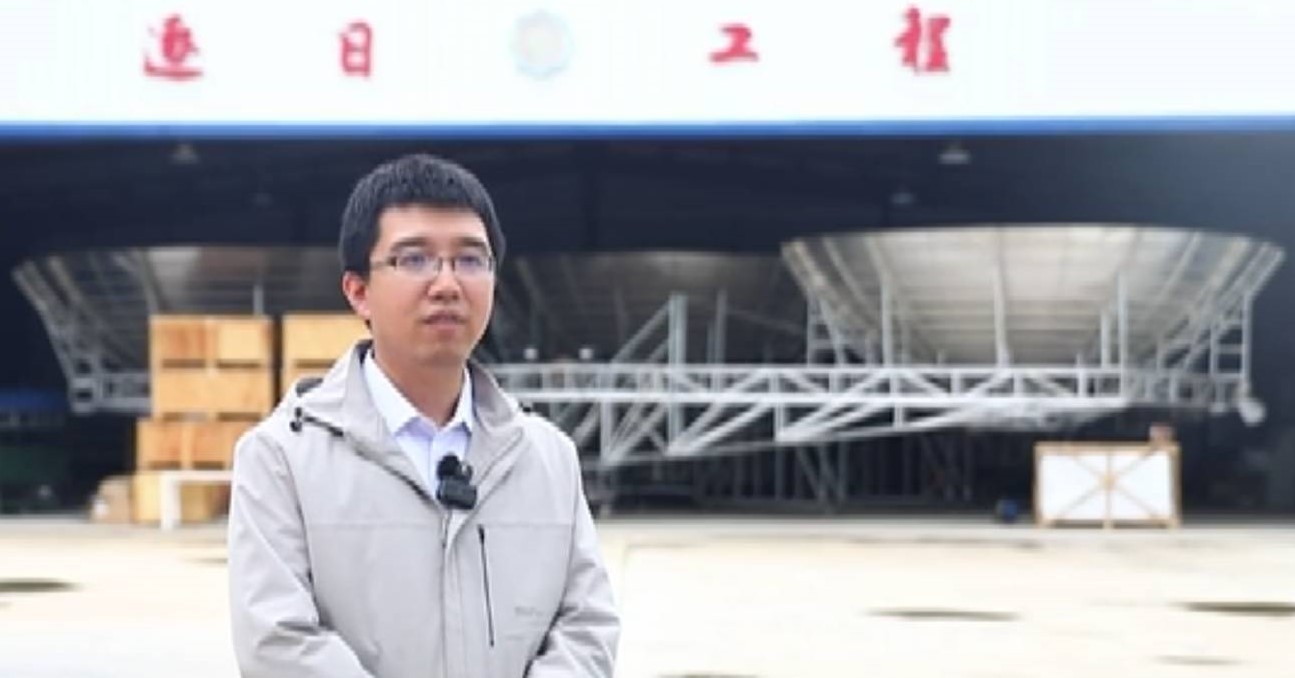
Qian Sihao, associate professor at the School of Electromechanical Engineering at Xidian University.
Image credit: CCTV/Inside Outer Space screengrab
“This means that most of the beams emitted by our transmitting antenna can be precisely captured by the receiving antenna, with very little energy wasted,” Qian adds. “In addition, our overall output power has reached the kilowatt level, which is enough to run a household air conditioner. It can also easily cover everyday needs such as cooking, boiling water, or other domestic uses.”
Power supply for space vehicles
Fan Guanheng, associate professor, School of Mechano-Electronic Engineering at Xidian University, said the construction of space solar power stations could become a major undertaking in the future.
“One potential benefit is access to a virtually unlimited power supply. Because energy can be collected continuously in space 24 hours a day, electricity could be supplied on an uninterrupted basis,” says Fan.
“Secondly, it could reduce our dependence on fossil fuels, thereby lowering carbon emissions and helping protect the environment,” Fan explains.
“Thirdly, it could support the development of charging infrastructure in space and enable wireless microwave charging for spacecraft, changing the way power is supplied to space vehicles,” says Fan.
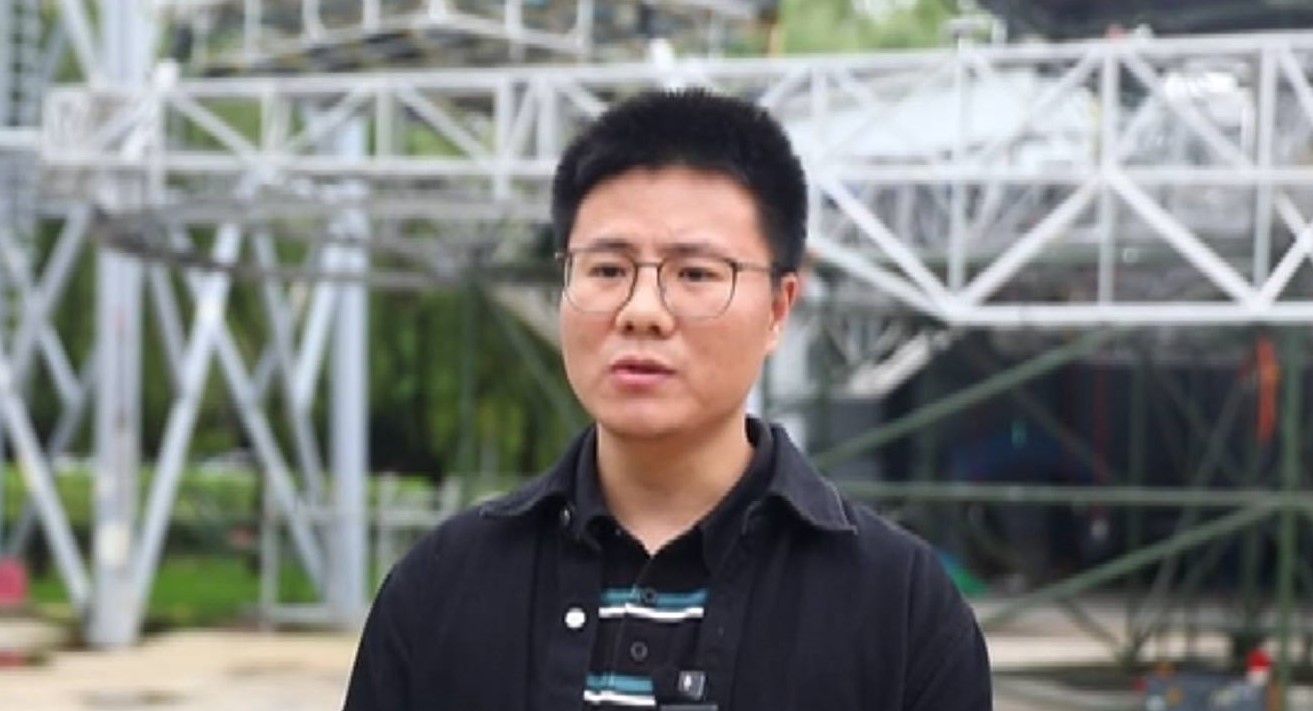
Fan Guanheng, associate professor, School of Mechano-Electronic Engineering at Xidian University.
Image credit: CCTV/Inside Outer Space screengrab
Ground test system
In 2018, the research team launched the first phase of the Sun Chasing project to build a ground test system.
By June 2022, they had completed the world’s first full-link, full-system ground validation system for a space solar power station.
The team has now moved to phase two. The present goal is to solve the challenges of generating high power in space and transmitting it efficiently over long distances.
Overcoming challenges
Despite the advances in ground-based validation, the researchers add that a series of technical challenges must still be overcome before the technology can be deployed in space.
“The first issue that needs to be addressed is the adaptability of components to the space environment, as conditions in space are completely different from those on Earth, including radiation exposure and extreme temperatures,” Qian says.
“Another challenge involves the deployment and retraction design of transmitting and receiving antennas. We also need to develop thermal management systems to cope with extreme temperatures and temperature fluctuations in space. These are all areas where further breakthroughs are needed,” notes Qian.
In-orbit demonstration
“We have now completed the development and validation of a ground-based test system, and our next step is to carry out in-orbit wireless microwave power transmission,” Fan said.
With ground validation complete, notes CCTV, the team now turns its attention to overcoming the harsh realities of space, “aiming to demonstrate in-orbit wireless power transmission and bring the vision of orbital solar energy closer to reality.”
 Posted in Space News

