 By
By  May 18th, 2026
Eye of the illustrator captures asteroid Apophis near Earth.
Credit: Dan Durda – FIAAA
New research highlights growing risks to public understanding of “planetary defense” – an area of science that deals with the threat to Earth from asteroid and comet impacts, with potentially global consequences.
Research professor Mark Boslough at The University of New Mexico has led the effort to appraise how misinformation emerges, spreads and persists in planetary science, particularly in discussions surrounding asteroids and comets, and the impact risk they pose.
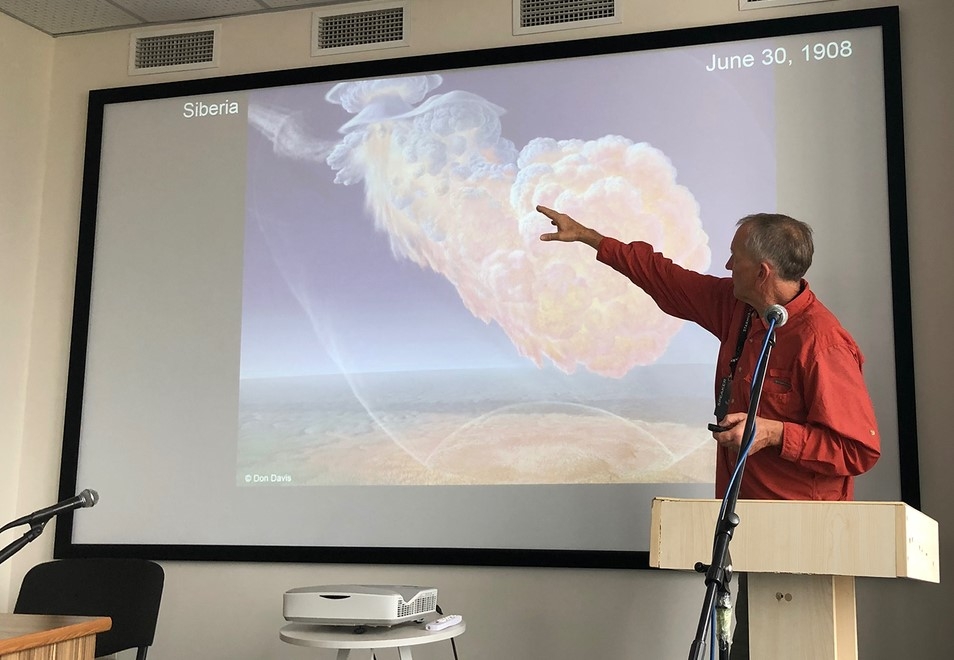
Image credit: Mark Boslough/The University of New Mexico
Such worries often capture widespread public attention, Boslough explains, but make them especially vulnerable to misinterpretation and sensationalized coverage.
Boslough and colleagues have issued a paper titled, “Preventing and Correcting Spread of Misinformation about Near Earth Objects, Impacts, Airbursts, and Planetary Defense: Case Studies.”
The work is published in the journal, Meteoritics and Planetary Science.
Public trust
“Planetary defense is about protecting lives, livelihoods, and property,” Boslough explains in a university press statement. “Misinformation undermines public trust and endangers people by reducing confidence in scientific assessments and emergency response plans.”
The new research looks at a series of case studies, with the experts demonstrating how misinformation can originate from multiple sources.
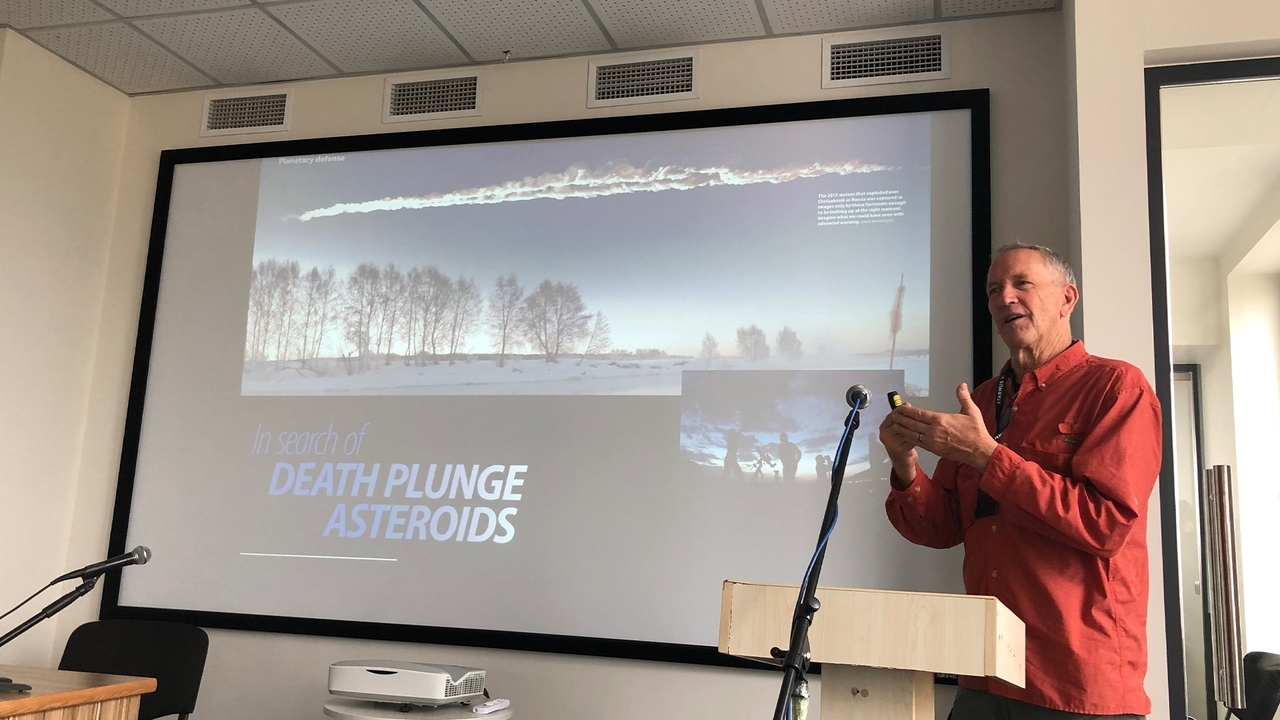
Image credit: Mark Boslough/The University of New Mexico
Those sources include weak peer-review processes, overstated press releases, limited scientific literacy and the amplification of false narratives through emerging technologies like artificial intelligence.
Practical strategies
“Interstellar comets are not alien spaceships. Sodom and Gomorrah were not destroyed by a cosmic airburst. Ancient advanced civilizations were not wiped out by a comet swarm 12,900 years ago,” observes Boslough. “These might be fun science fiction plots, but they have no scientific support.”
A key attribute of the paper is that it offers practical strategies for addressing misinformation, emphasizing the need for proactive communication, improved scientific literacy and stronger collaboration between scientists and media professionals.
In the paper, the Boslough-led work considers: (1) rapidly evolving news events requiring timely expert response; (2) intermediate-term cases involving inadequately reviewed publications, overpromotion, and uncritical reporting; and (3) long-term, persistent, and self-perpetuating myths that can grow organically and insidiously, even within the scientific community.
Growing plague
“Scientists must remain engaged in the public square and not retreat to our offices and labs or ignore the growing plague of TV pseudodocumentaries, fake academic journals, internet clickbait, and AI slop, said Boslough.
“We have a professional obligation to call out misinformation for what it is, in a compelling way that everyone can understand,” Boslough concludes.
To access the paper – “Preventing and correcting spread of misinformation about near-Earth objects, impacts, airbursts, and planetary defense: Case studies” – go to:
https://onlinelibrary.wiley.com/doi/10.1111/maps.70140

Chelyabinsk sky rendering is a reconstruction of the asteroid that exploded over Chelyabinsk, Russia on Feb. 15, 2013. Scientific study of the airburst has provided information about the origin, trajectory and power of the explosion. This simulation of the Chelyabinsk meteor explosion by Mark Boslough was rendered by Brad Carvey using the CTH code on Sandia National Laboratories’ Red Sky supercomputer. Andrea Carvey composited the wireframe tail. Photo by Olga Kruglova.
Credit: Sandia National Laboratories
 Posted in Space News

