 By
By  May 13th, 2026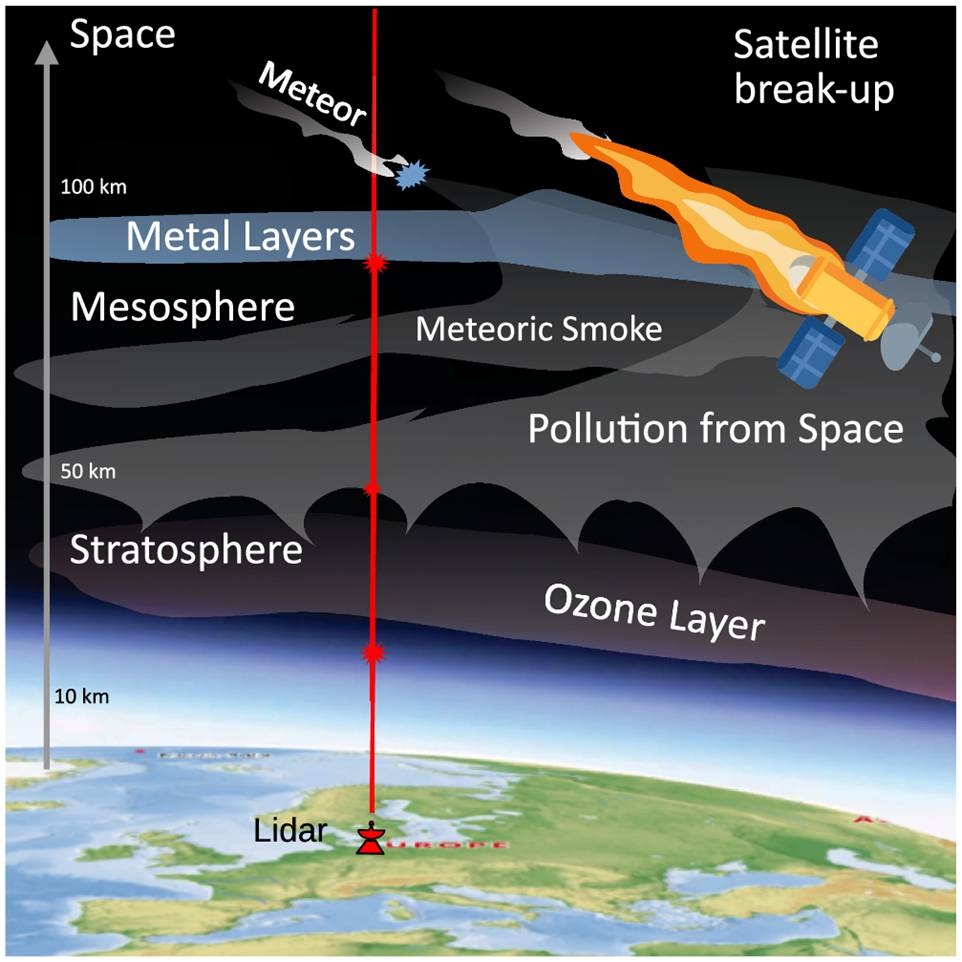
While natural metal layers form in the upper mesosphere due to meteor ablation, new light detection and ranging (LiDAR) measurements have found additional mass and elements are being introduced via the re-entry of space hardware. This type of pollution has unknown consequences for the upper atmosphere and ozone layer.
Image credit: Robin Wing, et al.
A new technique and technology is in use to study incoming space debris and its impactful implications for Earth’s atmosphere.
Observational evidence is being gathered that the ablation of space debris can be detected by ground-based light detection and ranging (LiDAR) equipment.
LiDAR is an acronym for “light detection and ranging,” is a remote-sensing technology that uses laser beams to measure precise distances and movement in an environment, in real time. Last year, for the first time, a lithium cloud in the upper atmosphere was linked to the reentry of a rocket stage.
This notable event took place on February 19-20, 2025 with the detection of a lithium (Li) cloud ten times higher than typical. Back-trajectory analysis indicated the lidar-probed air mass originated from a location west of Ireland that coinciding with the atmospheric re-entry of a SpaceX Falcon 9 upper stage.
For more details, got to my new Space.com story – “Lasers shine a new light on the space junk air pollution problem – They can detect clouds of metal generated by falling satellites and rocket bodies” – at:
 Posted in Space News

