 By
By  May 6th, 2026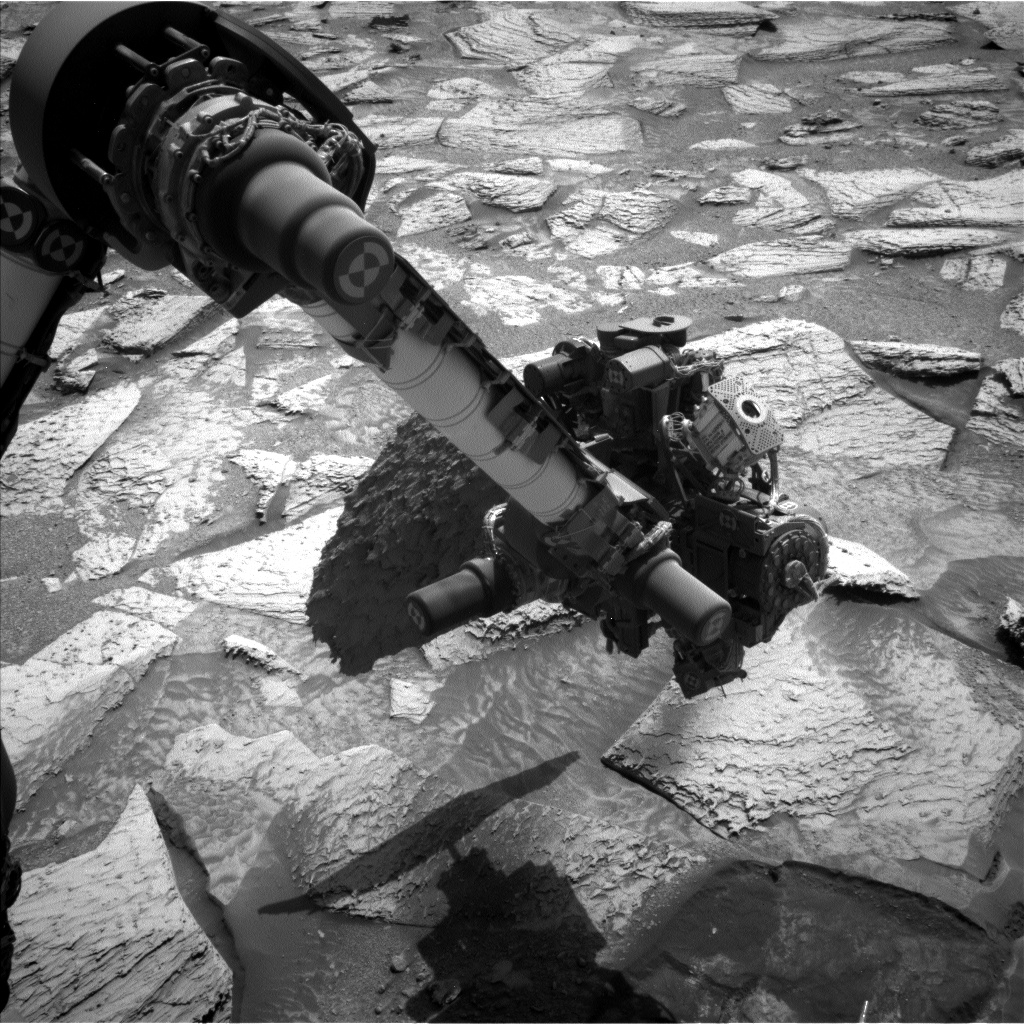
Curiosity Left Navigation Camera image taken on May 2, 2026.
Image credit: NASA/JPL-Caltech
The Atacama drill target on Mars presented a challenge to the Curiosity rover and to the rover team reports William Farrand, a senior research scientist at the Space Science Institute.
Downlinked data from the Mars machinery indicating that a successful drill hole was made in the Atacama target, Farrand explains, “but the rock being drilled into was a detached block and as the arm was raised to extract the drill, the rock came along with it!”
Bite of the drill bit
Curiosity’s rover planners went to work to develop a plan to extract the drill bit from the rock.
“These included efforts at changing the orientation of the drill bit, and attached block, as well as carrying out percussion to try to vibrate the rock off,” Farrand adds. “Ultimately, as a result of activities like these in the Sol 4883-4885 plan, we freed the drill from the Atacama block.”
Future activities involve wrapping up the drill campaign on Atacama and, nominally, seeking a more “firmly rooted drill target” in order to collect drill tailings for analysis, says Farrand, “which were lost from Atacama as part of the effort to dislodge the drill bit from the rock.”
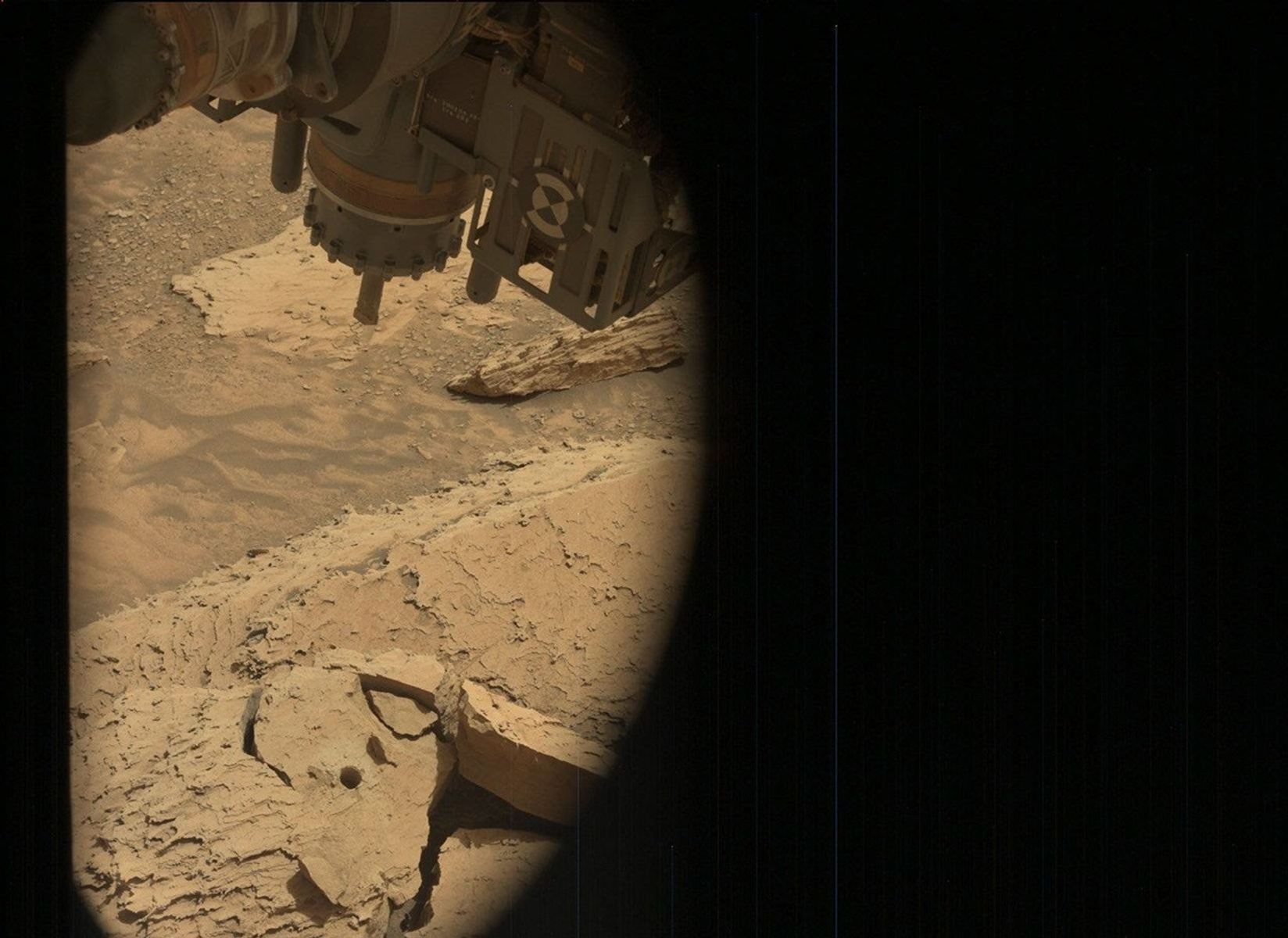
NASA’s Mars rover Curiosity acquired this image of its drill (above, now free of the Atacama block) and the stubborn stone block, again back on the surface (below), on May 2, 2026.
Image credit: Mast Camera (Mastcam) on Sol 4883/NASA/JPL-Caltech/MSSS
Here’s the history
On April 25, 2026, Curiosity drilled a sample from a rock nicknamed “Atacama,” which is an estimated 1.5 feet in diameter at its base, 6 inches thick and weighs roughly 28.6 pounds (13 kilograms).
When the rover retracted its arm, the entire rock lifted out of the ground, suspended by the fixed sleeve that surrounds the rotating drill bit. Drilling has fractured or separated the upper layers of rocks in the past, but a rock has never remained attached to the drill sleeve.
The team initially tried vibrating the drill to shake off the rock, but saw no change.
Freedom
On April 29, the team tried reorienting Curiosity’s robotic arm and vibrating the drill again. Imagery shows sand falling from Atacama, but the rock stayed attached to the rover.
Finally, on May 1, Curiosity’s team tried again, tilting the drill more, rotating and vibrating the drill, and spinning the drill bit.
The team planned to perform these actions multiple times but the rock came off on the first round, fracturing as it hit the ground.
Check out this NASA/JPL-Caltech link to see Curiosity’s dilemma at:
https://science.nasa.gov/photojournal/nasas-curiosity-rover-frees-its-drill-from-a-rock/
 Posted in Space News

