 By
By  March 8th, 2026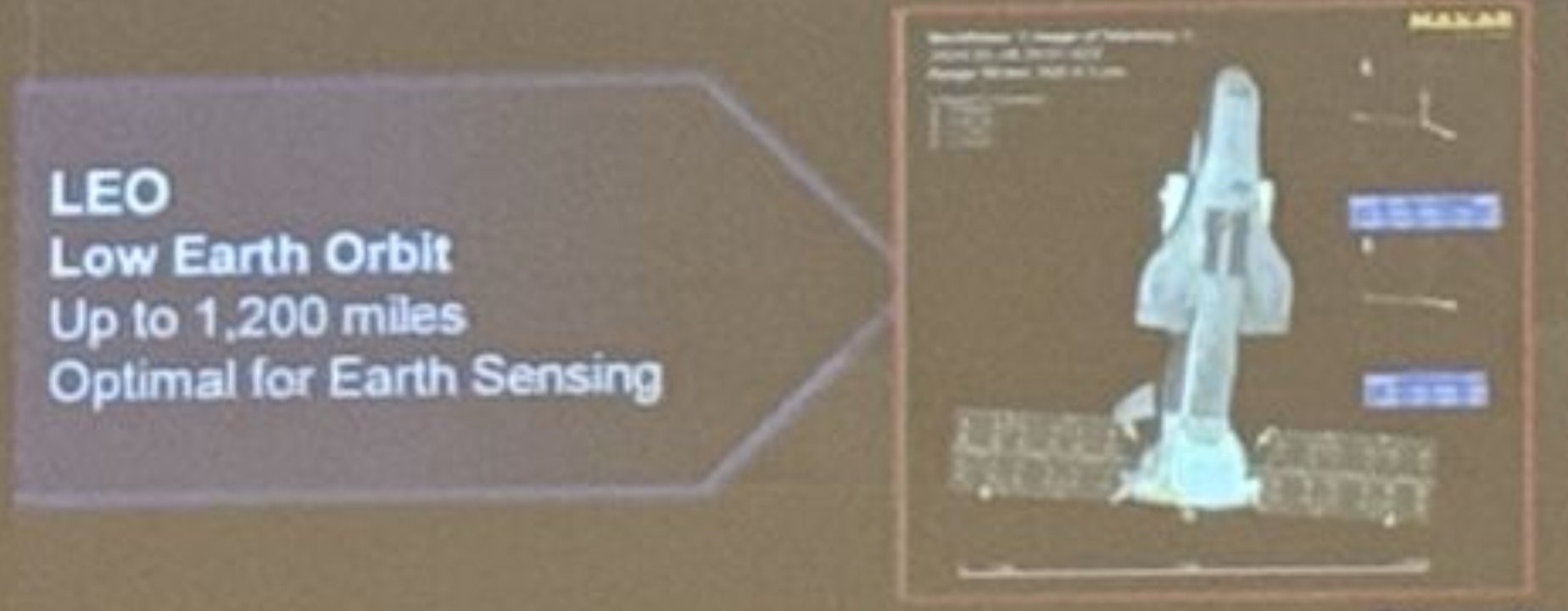
Several in-space cameras have imaged China’s reusable space plane. Shown here was image taken by
Maxar Intelligence, now Vantor, of the space asset.
Image credit: DutchSpace
China’s Shenlong (“Divine Dragon”) space plane launched from the country’s Jiuquan Satellite Launch Center in the Gobi Desert on February 6 and continues on its fourth-ever orbital mission.
What’s up with this mysterious winged craft, a vessel very similar to the U.S. Space Force X-37B robotic space plane, also now zipping around Earth on its eighth flight after launch on August 21, 2025?
Spacewatcher’s angle
Reports space tracker Bob Christy of OrbitalFocus, all is very quiet from the spacewatcher’s angle.
The Chinese craft’s initial orbit of over 306 miles altitude (494 kilometers) is at the “usual” 50° inclination. “There was a thruster test on February 9 then a pair of firings on February 12 taking it to 594 kilometers [nearly 370 miles] where it has remained,” Christy told Inside Outer Space.
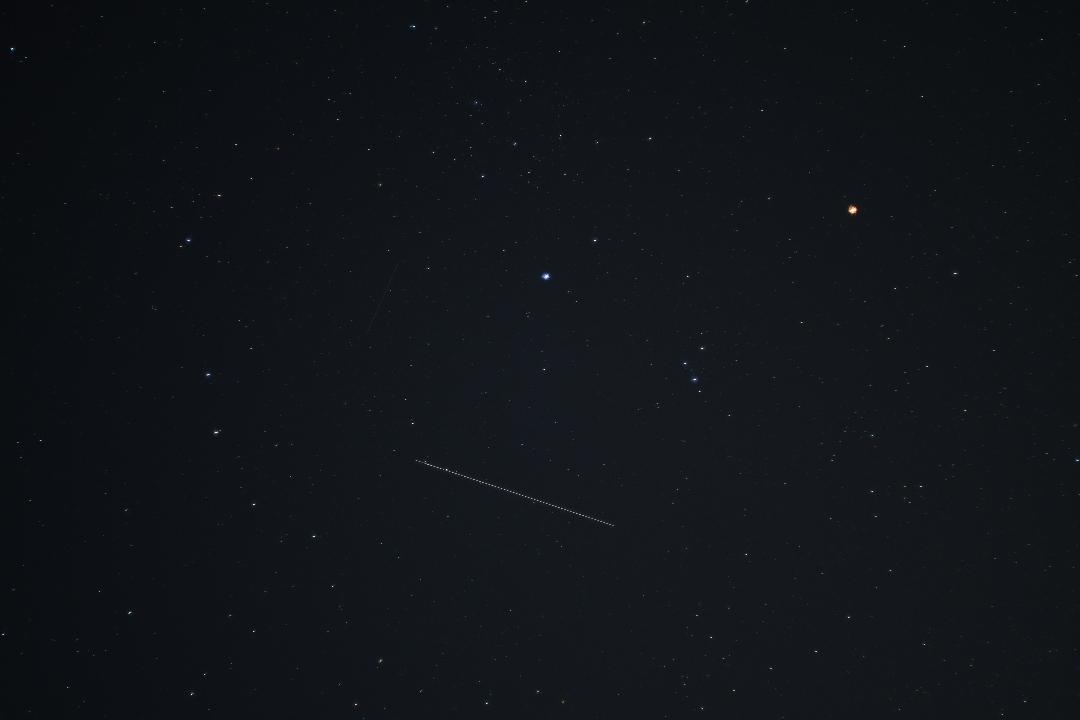
Image credit: Paul Maley
Furthermore, there’s no additional small satellite deployment from the craft like skywatchers saw on earlier missions – at least not yet, Christy explains.
The Chinese space plane was accompanied by the usual four pieces of debris, probably from the launch vehicle when it was released, said Christy.
Its mission profile so far is similar to the 2023 flight of the experimental vessel, but notes that one of the vehicles climbed to slightly higher altitude, to 605 kilometers, where it remained for six months.
Caught on camera
Meanwhile, observers have caught on camera the flyovers of China’s space plane.
For example, Paul Maley caught the craft passing over the western part of South Africa on February 17, telling Inside Outer Space that on each pass the object has been stable with no light variations.
Also catching on camera China’s space plane is Felix Schöfbänker in Austria. His analysis of new imagery he has taken suggests that the main difference from the vehicle’s last flight seems to be that only a single solar panel is deployed from the cargo bay, similar to the Space Force X-37B.
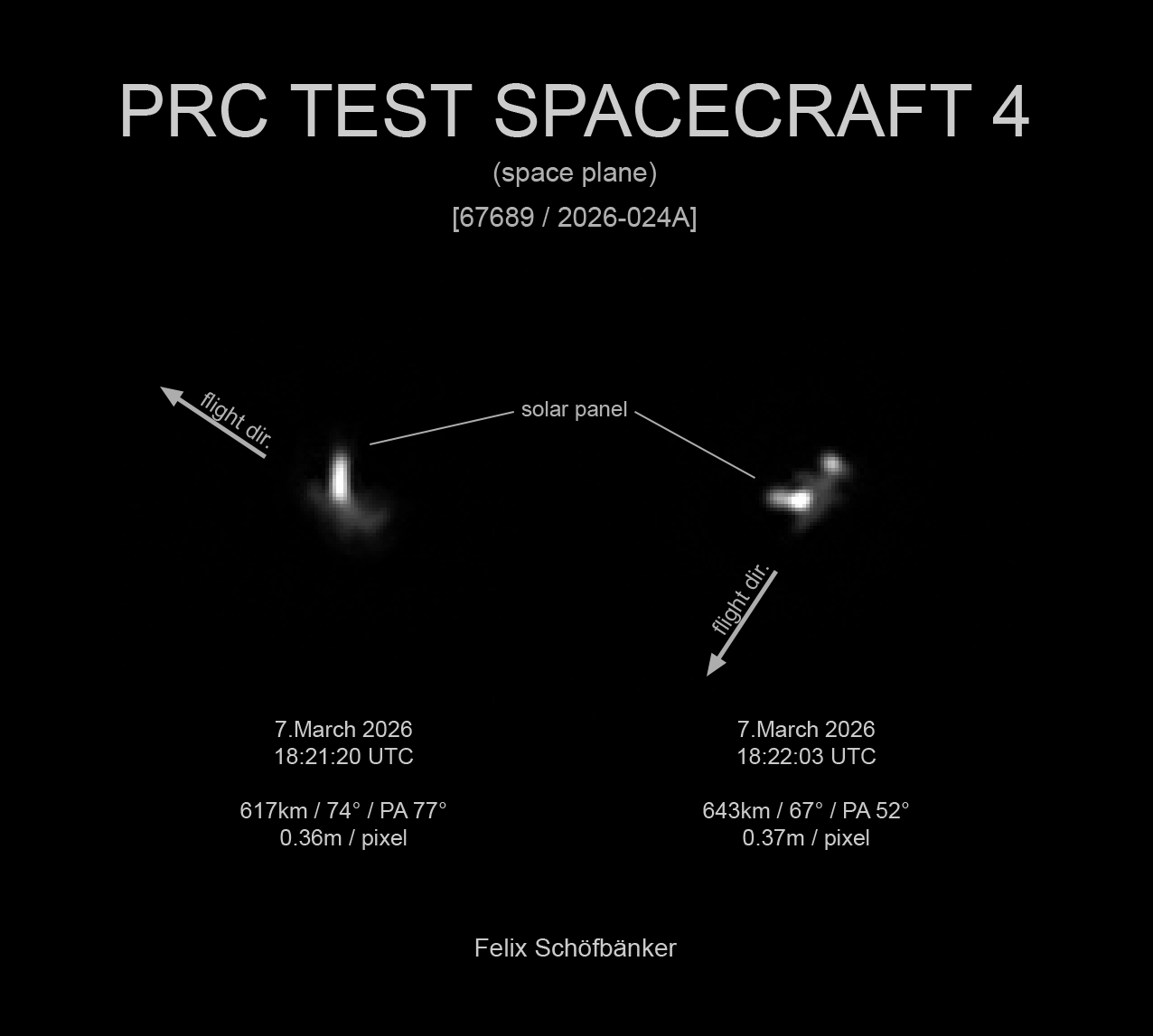
Image credit: Felix Schöfbänker
During the spacecraft’s last flight, two solar panels were mounted on a support module at the rear of the craft.
Peak of the pass
“I believe that the bright extension is the solar panel, due to it only becoming visible at phase angles smaller than 90 degrees, Schöfbänker reports on SeeSat-L, a website for visual satellite observers. “The panel also seems to have been the source of the bright flare shortly after the peak of the pass.
“Additionally the panel seems to be smaller than on the previous flight,” Schöfbänker notes.
The total length of the craft is around 28 feet (8.5 meters), similar to the X-37B, and it also seems to have aligned its longitudinal axis along its flight path, says Schöfbänker.
For more information, go to Mike Wall’s story at Space.com: “China’s mysterious Shenlong space plane recently launched on its 4th mission. What is it doing up there?” at:
 Posted in Space News

