 By
By  January 11th, 2026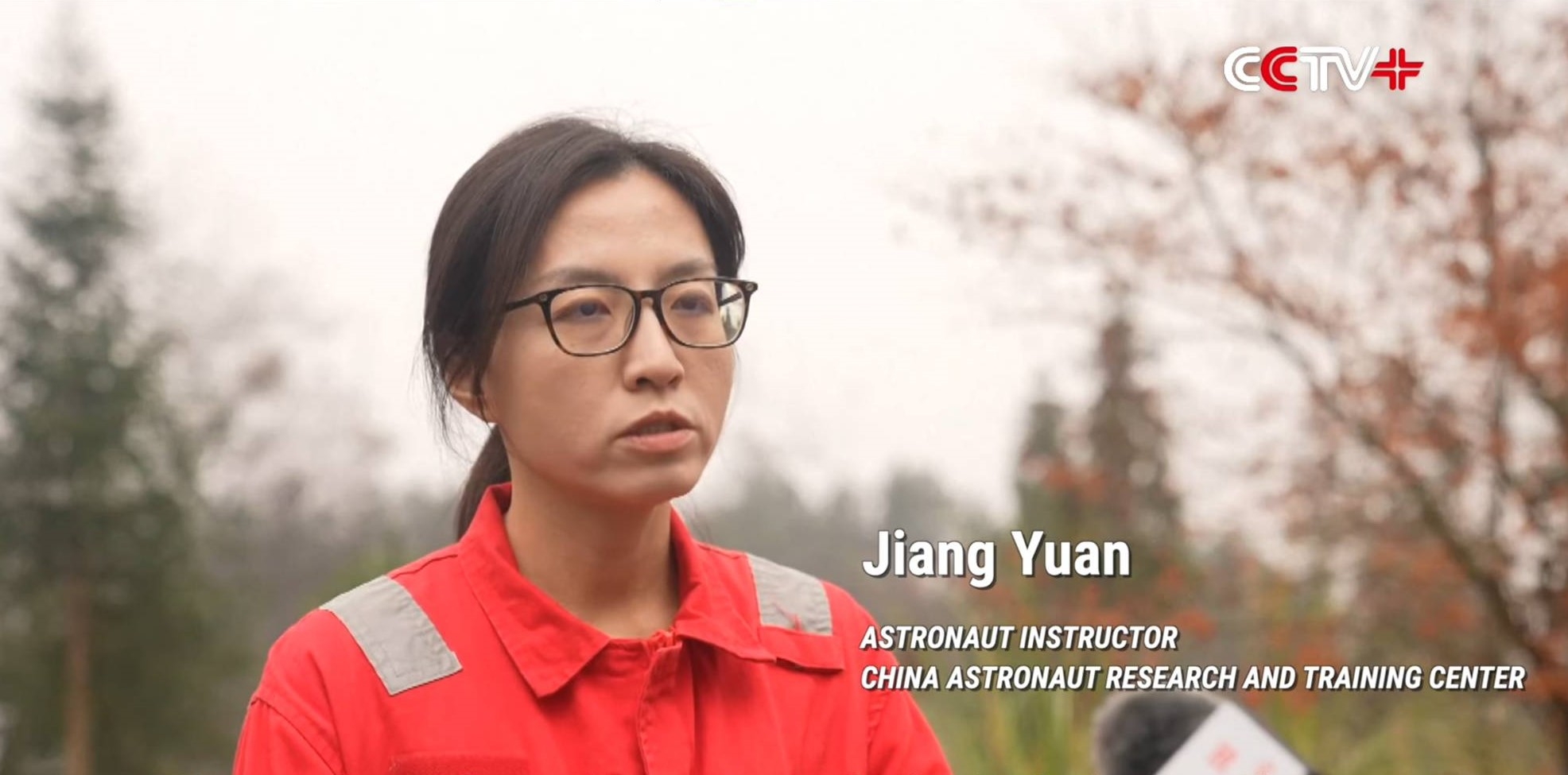
Image credit: CCTV/Inside Outer Space screengrab
A month-long program was organized by the China Astronaut Research and Training Center, one that involved a team of 28 astronauts.
The data collected during the CAVES training experience is helping to shape psychological support systems for astronauts undergoing lengthy space station missions as well as future crewed lunar landing missions, said Jiang Yuan, an instructor from the China Astronaut Research and Training Center.
Cooperative Adventure for Valuing and Exercising human behavior and performance Skills (CAVES) training is similar to those organized by the European Space Agency (ESA).
Isolation, confinement and high risk
The Chinese initiative made use of a mountainous area of southwest China’s Chongqing Municipality. The astronauts were divided into four groups, each taking turns to continuously stay in a cave with an average temperature of eight degree Celsius and humidity as high as 99 percent for six days and five nights.
Isolation, confinement and high risk were experienced by the groups, along with numerous psychological hurdles including fear of darkness and sensory deprivation.

Image credit: CCTV/Inside Outer Space screengrab
Astronaut training
“Our cave training program is primarily designed to meet the requirements of our nation’s manned spaceflight development,” said Wu Bin, an expert in charge of astronaut training with the China Astronaut Research and Training Center.
“We utilize the natural cave environment to enhance astronauts’ capabilities in handling hazardous situations, team collaboration, scientific literacy and research skills, emergency decision-making, physical endurance, and psychological resilience in extreme conditions,” Wu told China Central Television (CCTV).

Image credit: CCTV/Inside Outer Space screengrab
Unique challenges and difficulties
During the CAVES training, groups were placed in emergency scenarios like simulated medical evacuations to test their emergency response and collaborative problem-solving capabilities.
“Exploring four side caves, each with distinct topography and terrain, presents unique challenges and difficulties,” said astronaut Zhu Yangzhu. “Cave training hones one’s comprehensive qualities and capabilities, particularly teamwork skills. This holds significant implications for our future spaceflight missions, prompting me to contemplate how to effectively lead teams and manage crews aboard the space station,” Zhu said.

Image credit: CCTV/Inside Outer Space screengrab
Teamwork
Astronaut Ye Guangfu, who previously received the ESA’s CAVES training, served as one of the commanders for the training in Chongqing.
“In terms of the training procedure, our support team reduced intervention in the activities of astronauts. This approach allows for greater autonomy in teamwork,” Ye said, “thereby further unlocking their potential to accomplish tasks in the cave.
Ye said a series of experimental tasks during the mission were incorporated to deepen understanding of the mutual influence between the cave environment and human behavior. “For support capabilities, we enhanced audio-visual communication methods, significantly improving our external communication support capacity.”
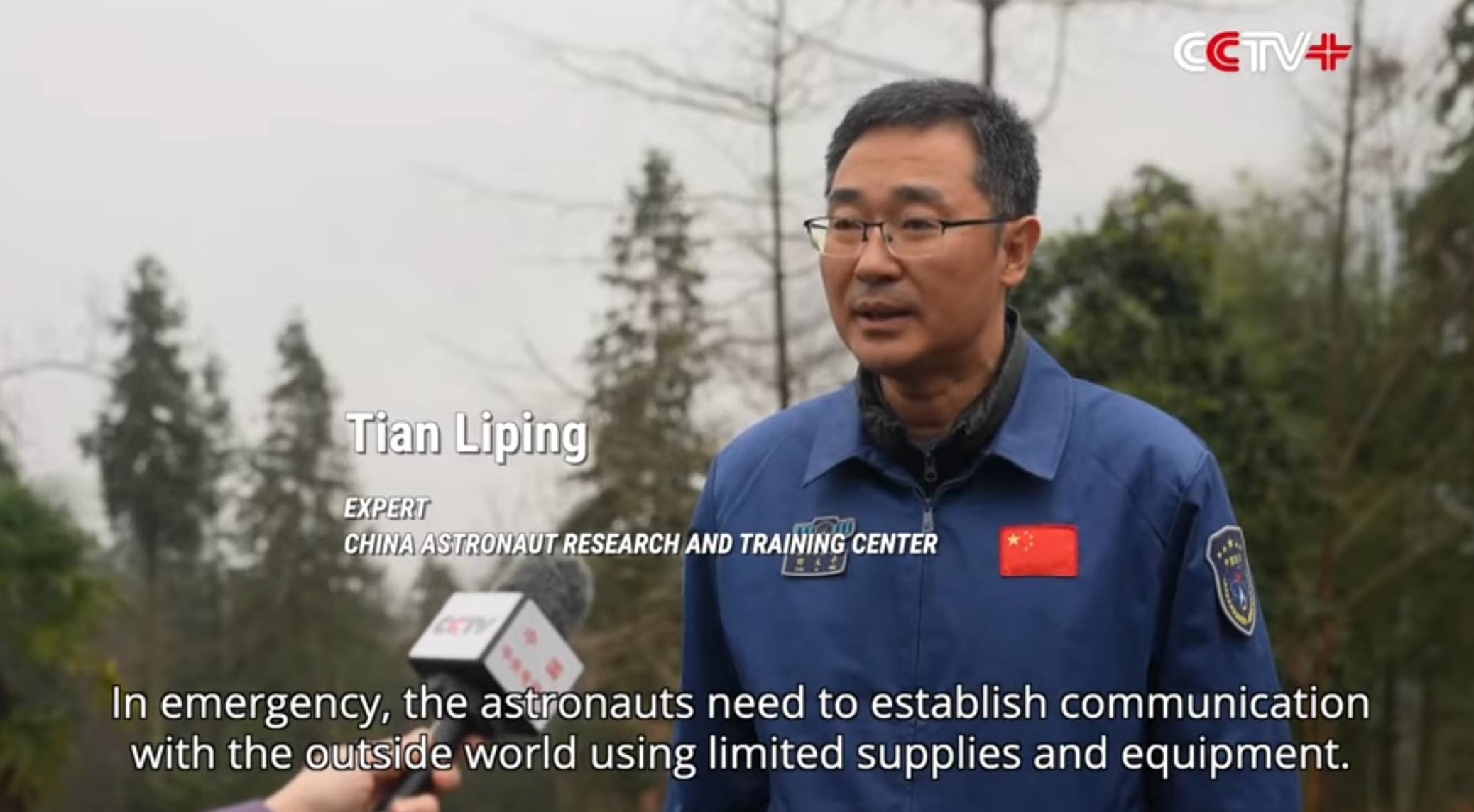
Image credit: CCTV/Inside Outer Space screengrab
Jungle training
This training program also included two days of jungle training for each session.
Tian Liping from the China Astronaut Research and Training Center added: “The jungle training program consists of three main components: First, emergency contact: In emergency, the astronauts need to establish communication with the outside world using limited supplies and equipment. Second, sustaining life: In the event that rescue forces may be unable to arrive promptly, the astronauts need to do all they can to utilize acquired knowledge and skills to maintain survival with minimal tools. And third, safely navigating out of the jungle: Under the premise of guaranteeing safety, the astronauts need to go out of the jungle to rendezvous with search and rescue teams.”
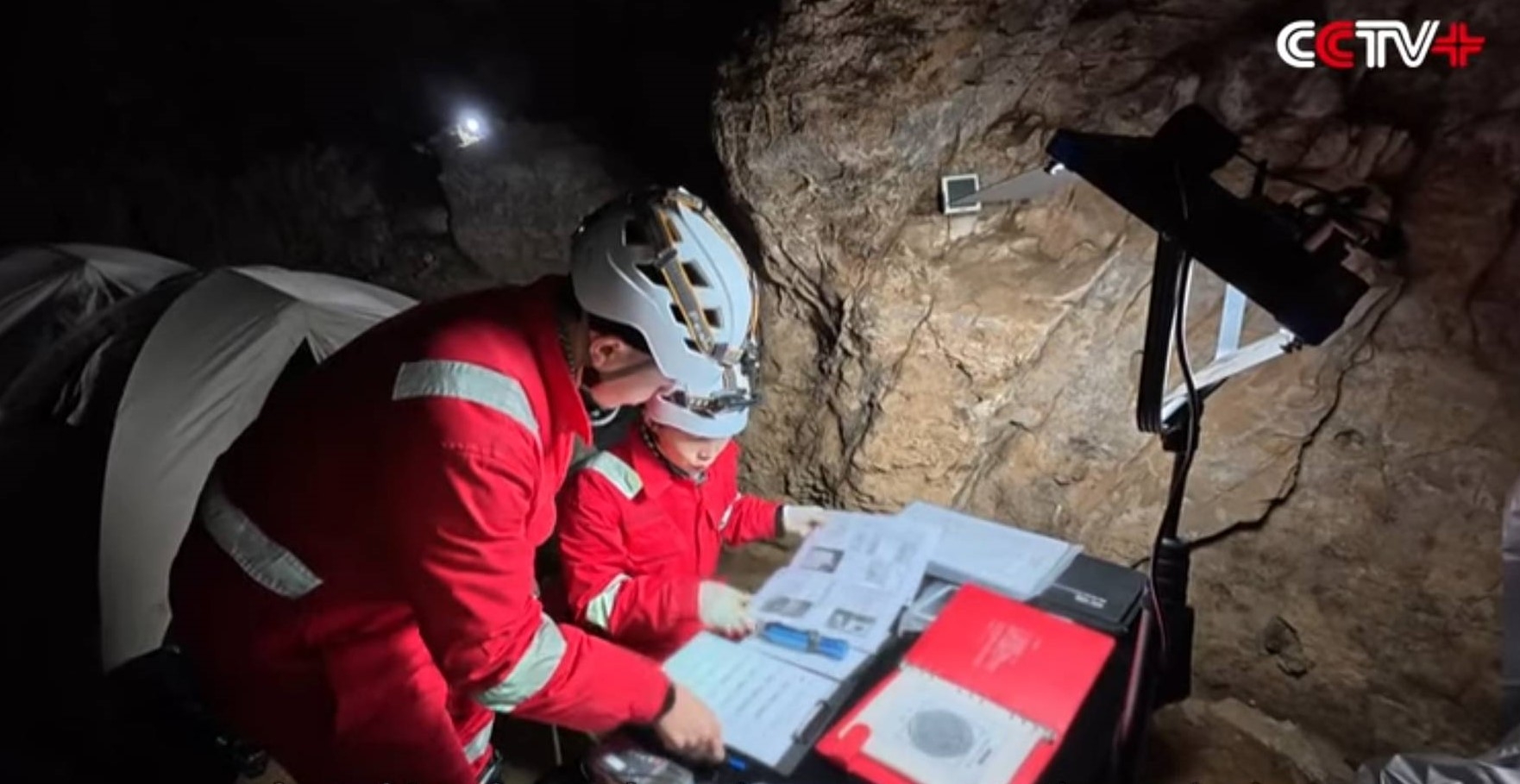
Image credit: CCTV/Inside Outer Space screengrab
Lunar lava tubes
In recent years, the China Astronaut Research and Training Center has carried out training methods and techniques in response to new mission requirements.
Analog missions like Switzerland’s Asclepios project also use subterranean tunnels to simulate lunar lava tubes, testing scientific operations and survival strategies in isolation.
Asclepios is an international non-profit with the goal of enabling analogue space missions, offered exclusively by students for students.
China’s cave training is linked to the country’s lunar ambitions, including crewed landings and a planned uncrewed Moon base by 2027.
For an informative CCTV video on CAVES training, go to:
 Posted in Space News

