 By
By  December 5th, 2025
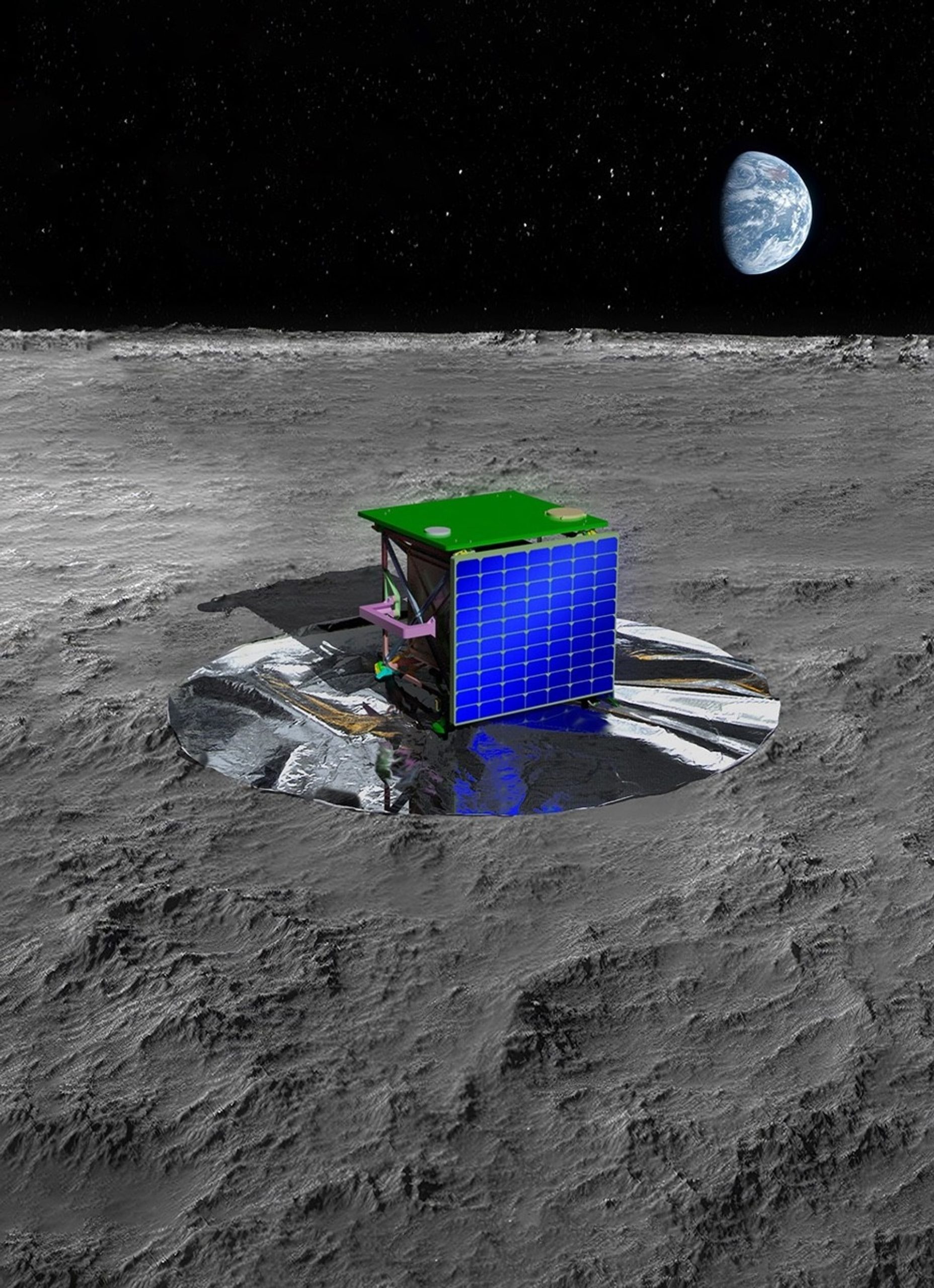
South Pole Seismic Station. Image credit: NASA
While NASA is undergoing an upheaval trying to sort out how best to return humans to the Moon via its Artemis program, the space agency has picked two Artemis-4 science instruments designed for astronauts to deploy on the surface of the Moon.
The two payloads were selected for further development to fly on the future Artemis-4 mission. However, final manifesting decisions about the mission will be determined at a later date.
To be emplaced by an Artemis-4 crew at the lunar south polar region at a projected 2028 time frame, the instruments just picked by NASA are:

Image credit: NASA
- DUSTER (DUst and plaSma environmenT survEyoR) will measure the charge, velocity, size, and flux of dust particles lofted from the lunar surface, as well as characterize the average electron density above the lunar surface using plasma sounding.
Based in Golden, Colorado, Lunar Outpost’s MAPP (Mobile Autonomous Prospecting Platform) rover will support NASA’s DUSTER investigation, in partnership with the Laboratory for Atmospheric and Space Physics (LASP) at the University of Colorado Boulder, the University of Central Florida, and the University of California Berkeley.
- South Pole Seismic Station (SPSS) is designed to characterize the lunar interior structure to better understand the geologic processes that affect planetary bodies, by meteorite impacts for example. SPSS will also monitor the real-time seismic environment and how it can affect operations for astronauts, and determine properties of the Moon’s deep interior. The SPSS instrument is led by Mark Panning of NASA’s Jet Propulsion Laboratory (JPL).
For more information, go to:
 Posted in Space News

