 By
By  March 1st, 2025
Firefly Blue Ghost now in lunar orbit.
Artwork credit: Firefly Aerospace/Inside Outer Space screengrab
The Firefly Aerospace Blue Ghost lunar lander is slated to touch down in Mare Crisium on the Moon’s near side no earlier than 2:45 a.m. Central Standard “Texas” Time (0845 UTC) on Sunday, March 2.
Blue Ghost’s final autonomous descent will take roughly an hour, kick-started by the craft’s 19-second burn that will place Blue Ghost on its final descent trajectory and landing spot within Mare Crisium, near Mons Latreille.

Image credit: Firefly Aerospace
Delivery service
Blue Ghost Mission 1 is slated to deliver 10 science and technology instruments to the lunar surface as part of NASA’s Commercial Lunar Payload Services (CLPS) initiative. Following its landing, Blue Ghost is set to operate payloads for a complete lunar day (about 14 Earth days).
On March 14, Firefly expects to capture high-definition imagery of a total eclipse when the Earth blocks the Sun above the Moon’s horizon.
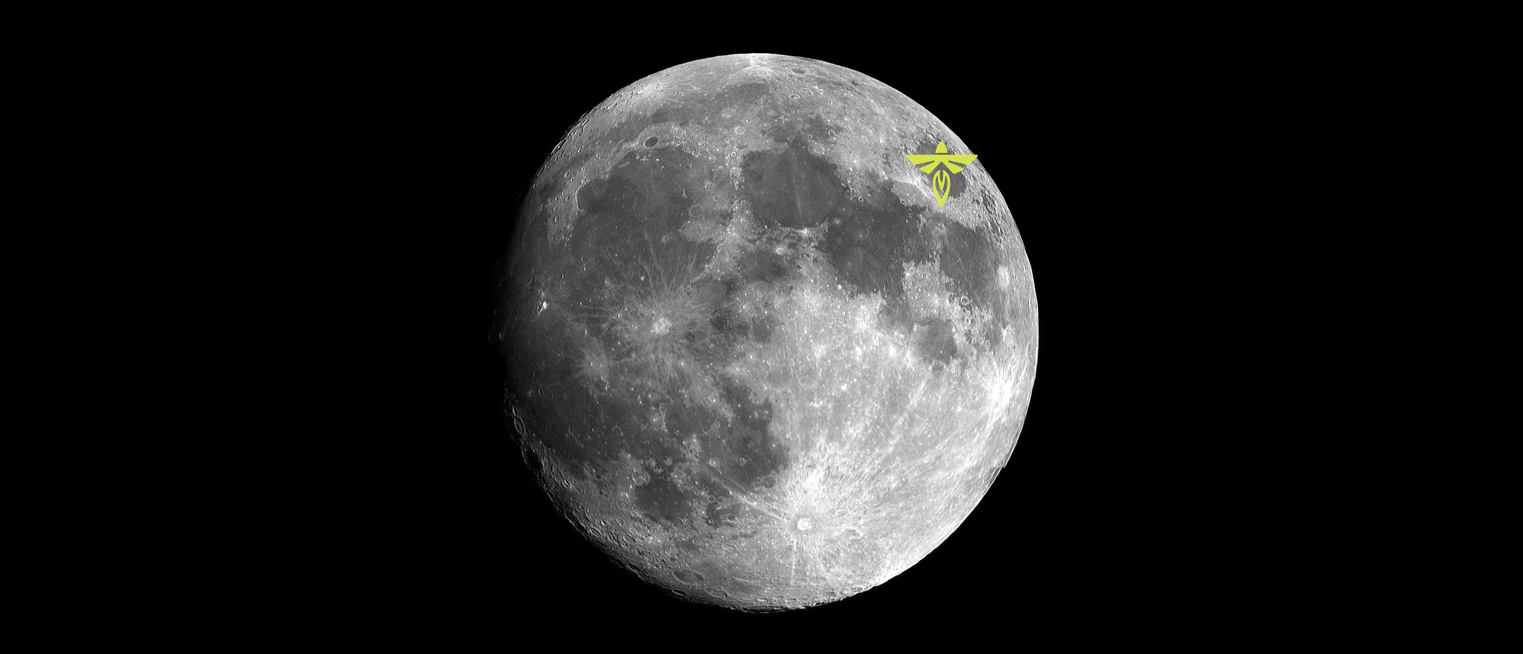
Image credit: Firefly Aerospace
Horizon glow
Blue Ghost will then capture the lunar sunset on March 16, perhaps helping unravel how lunar dust levitates due to solar influences and creates a “lunar horizon glow” as documented by Apollo 17 crewmembers in 1972.
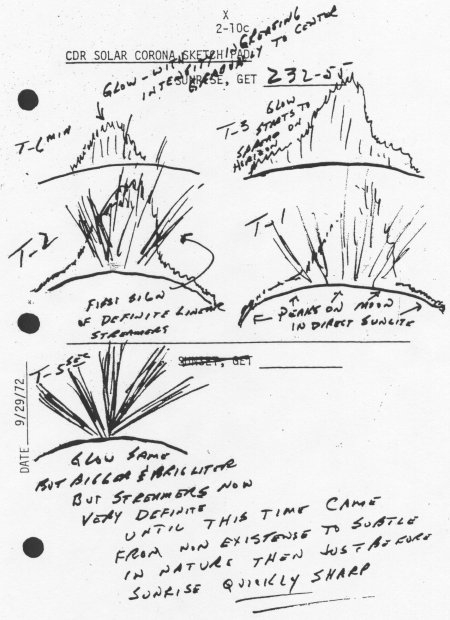
Apollo 17’s Gene Cernan sketches of puzzling glow .
Image credit: NASA/Gene Cernan
Just before sunrise, in lunar orbit, Apollo 17 commander, Gene Cernan spotted and sketched out a puzzling glow circling the horizon of the Moon.
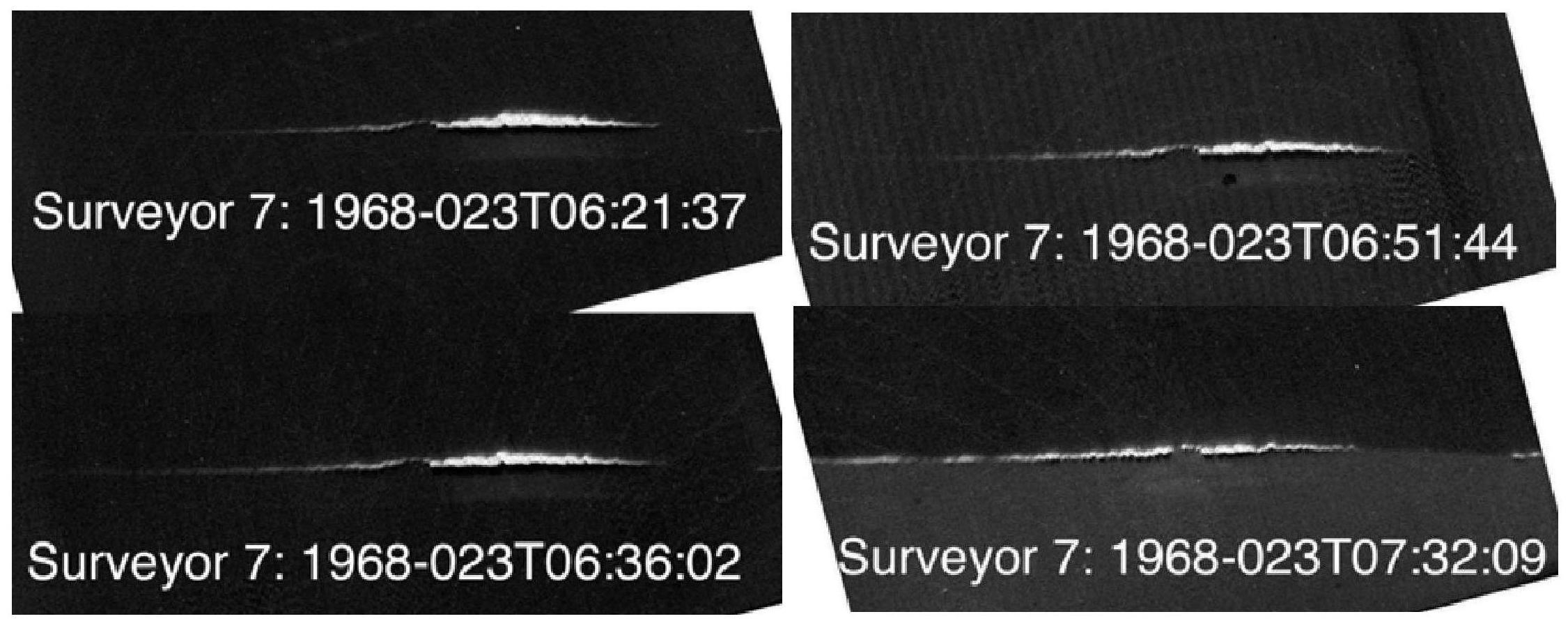
Surveyor 7 images of puzzling Moon glow.
Image credit: NASA
Years earlier, there were camera observations in 1967-1968 by several NASA Surveyor-series Moon landers of the phenomenon, dubbed Lunar Horizon Glow, believed to be electrically charged dust grains that could be levitated at sunset.
Firefly’s Blue Ghost will operate several hours into the lunar night following sunset.

Blue Ghost will capture imagery of the lunar sunset and provide critical data on how lunar regolith reacts to solar influences during lunar dusk conditions. The lander will then operate for several hours into the lunar night.
Artwork credit: Firefly Aerospace/Inside Outer Space screengrab
Soviet lunar landers
For space history buffs, Mare Crisium has already seen spacecraft landings.
The former Soviet Union’s Luna 23 was a robotic sample return mission that landed on November 6, 1974.
However, a spacecraft malfunction prevented the collection and return of a lunar sample. Due to a failure of the spacecraft’s Doppler equipment, the landing occurred with an increased vertical speed, which led to damage to the soil collection device
The entire spacecraft – consisting of a descent stage, ascent stage, and Earth-return capsule – is still at its touchdown spot.
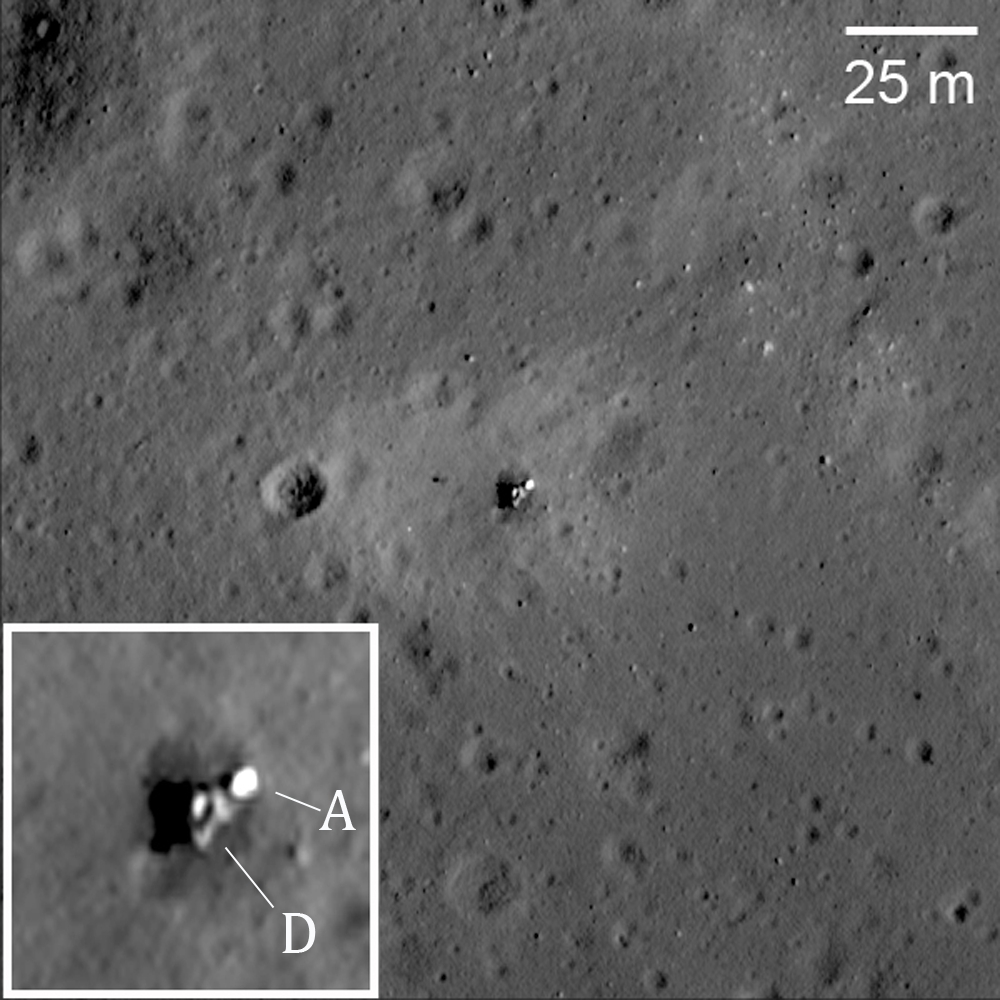
The entire Luna 23 vehicle (descent stage, ascent stage and Earth-return capsule) landed at an unexpected speed and fell on its side. Enlargement of vehicle in lower left inset; D: descent stage, A: ascent stage.
Image credit: NASA/GSFC/Arizona State University
This lander struck the surface at a very high velocity, tipping over as indicated in imagery taken years later by NASA’s Lunar Reconnaissance Orbiter (LRO).
Follow-up success
After the failure of Luna 23, the Soviet Union’s Luna 24 also landed in Mare Crisium on August 18, 1976. As noted by postings on the Lunar Reconnaissance Orbiter Camera (LROC) Science Operations Center website at Arizona State University, the landing sites of Luna 23 and 24 are only 1.4 miles (2.3 kilometers) apart.
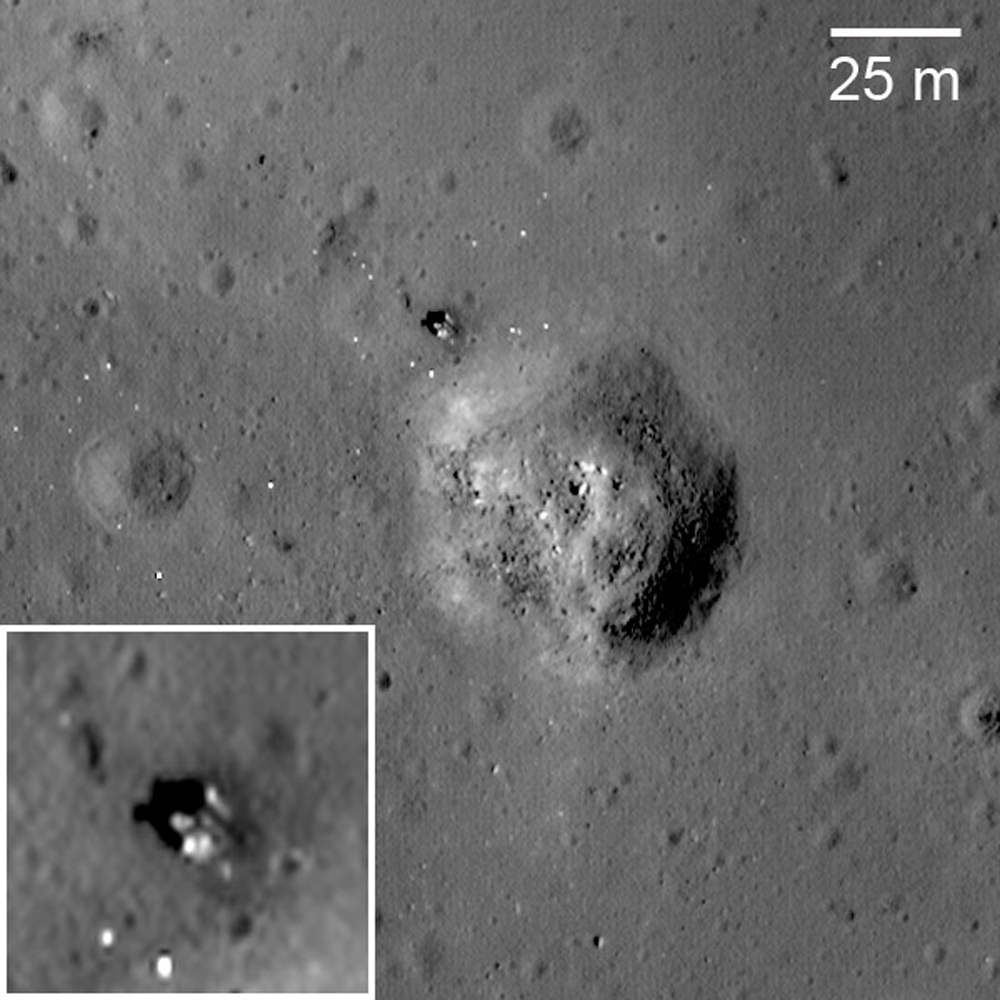
Successful Soviet Moon lander – Luna 24.
Image credit: NASA/GSFC/Arizona State University
“The region of Mare Crisium where they landed is a typical smooth mare surface with little relief in the immediate vicinity,” the website notes.
The successful Luna 24 rocketed back to Earth its sample collection on August 22, 1976.
Given the incoming trajectory of Firefly’s Blue Ghost to its targeted touchdown, “It’s not within our procedures to capture the shot,” advises Firefly Aerospace, so maybe/maybe not.
Stay tuned!
To follow the lunar landing attempt by the Firefly Aerospace Blue Ghost, go to:
LIVE TRACK! Firefly Blue Ghost Lunar Landing at:
https://www.youtube.com/watch?v=k93YE-otlLo
Live coverage, jointly hosted by Firefly and NASA, is scheduled to begin at 1:30 a.m. CST (0730 UTC). Go to:
https://www.youtube.com/watch?v=ChEuA1AUJAY
For detailed information on the mission and its payloads, go to:
https://fireflyspace.com/missions/blue-ghost-mission-1/

Image credit: Firefly Aerospace
 Posted in Space News

