 By
By  January 24th, 2025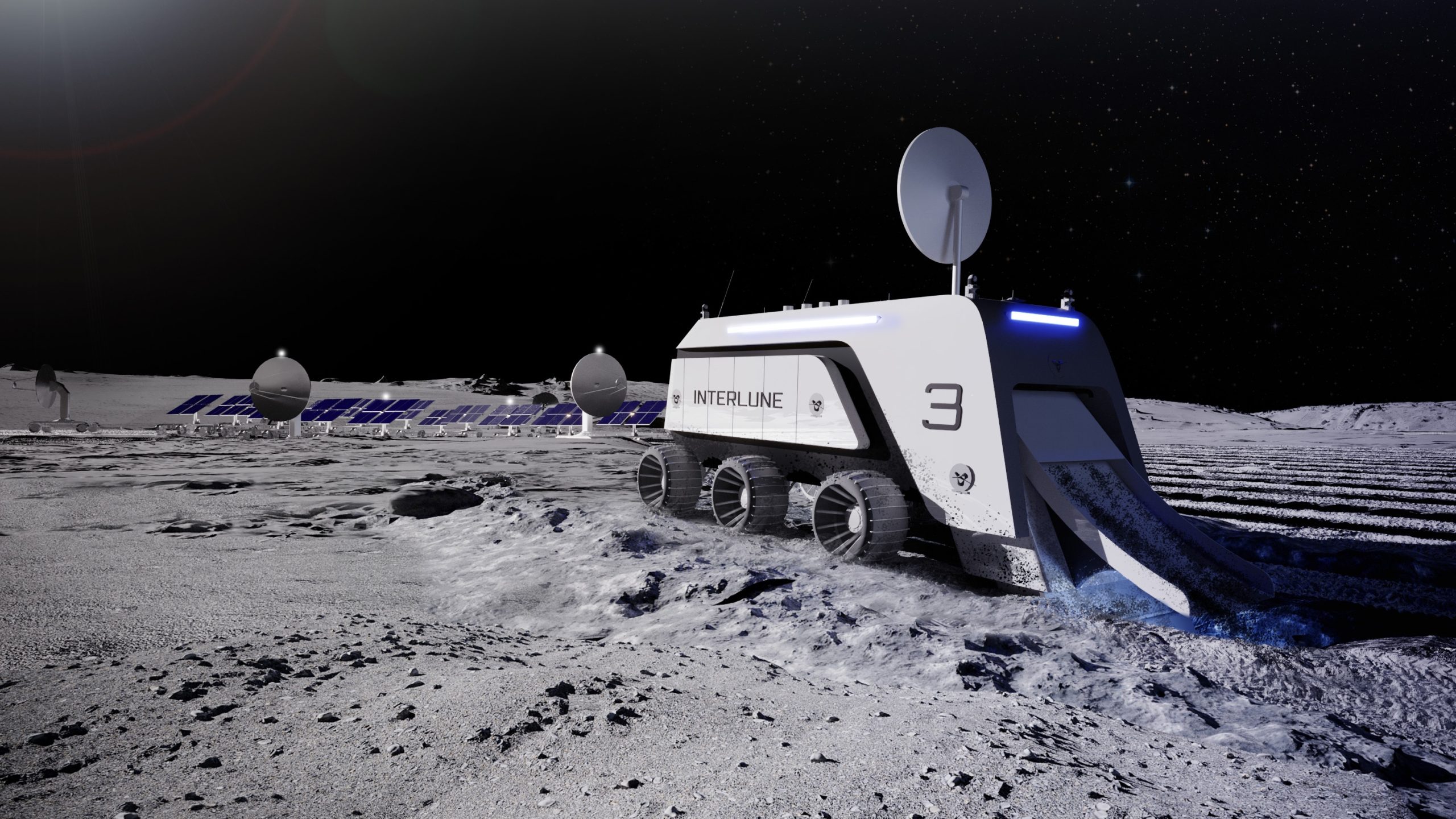
Image credit: Interlune
Exploration of Earth’s Moon beckons – not solely as a time capsule, indeed a witness plate, to help piece together the puzzling history of our solar system.
The Moon is also a rocky, airless world of energy, mineral, and water resources to help fuel a projected cis-lunar economy.
Enter Interlune, a Seattle-based group founded in 2020, drawing upon former technologists at Blue Origin. Serving as the group’s executive chairman is Apollo 17 moonwalker and geologist Harrison “Jack” Schmitt.
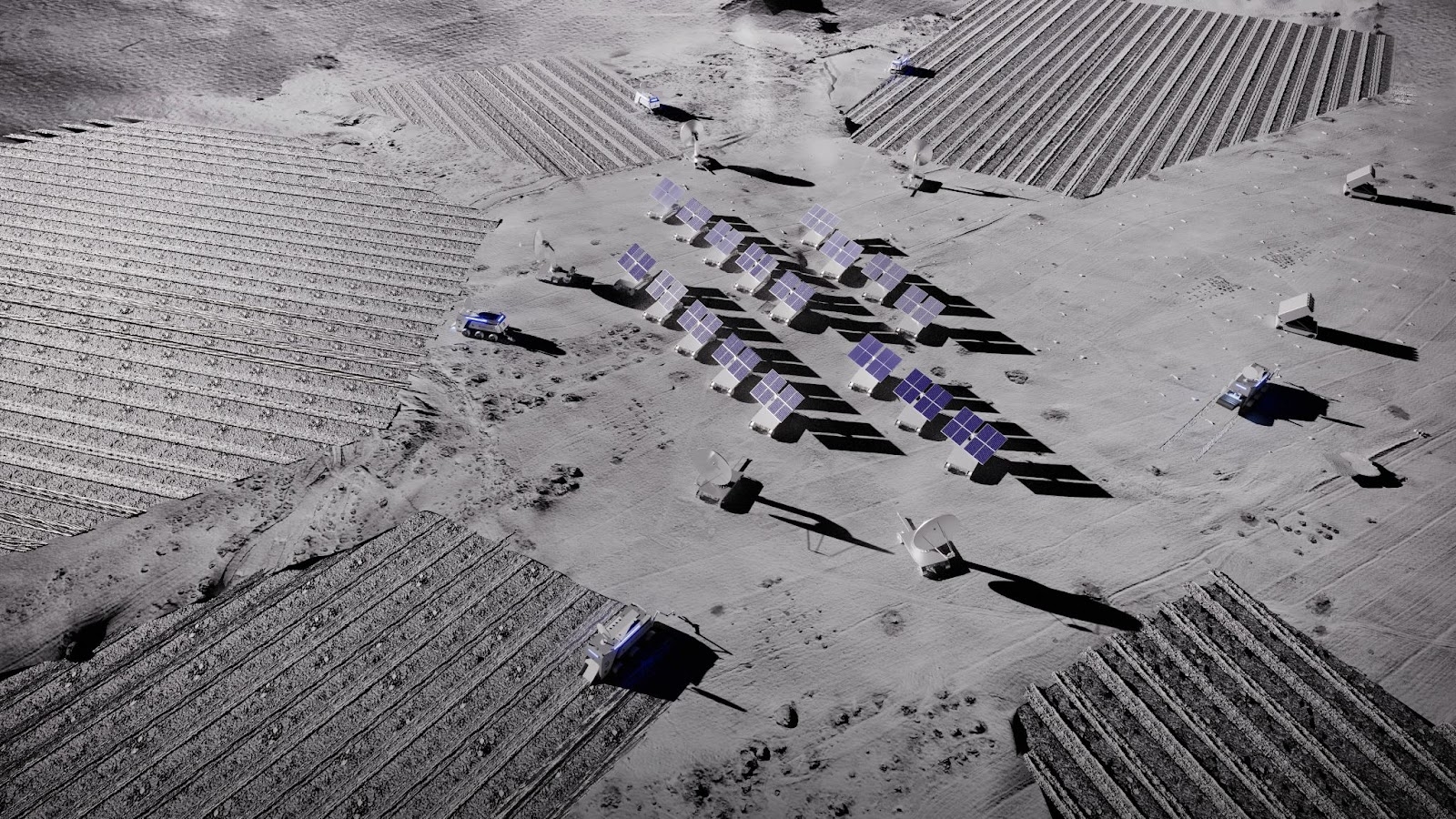
Artwork depicts moon mining operations for Helium-3 involving harvesters, solar power plant, rover, and return launchers.
Image credit: Interlune
Interlune plans to gather scarce lunar Helium-3 for quantum computing on Earth
Heavy isotope
What Interlune has been established to do, in time, is harvest lunar resources, be they industrial metals, rare Earth elements, and water to support a long-term presence on the Moon and a full-bodied, in-space economy.
But the up-front lunar resource demanding Interlune’s attention is extracting the heavy isotope of helium-3, explains Rob Meyerson, the CEO of Interlune.
Found in small quantities in the solar wind, helium-3 is implanted into the lunar regolith in tiny concentrations by mass, as measured in samples brought back to Earth via the NASA Apollo Moon landing program.
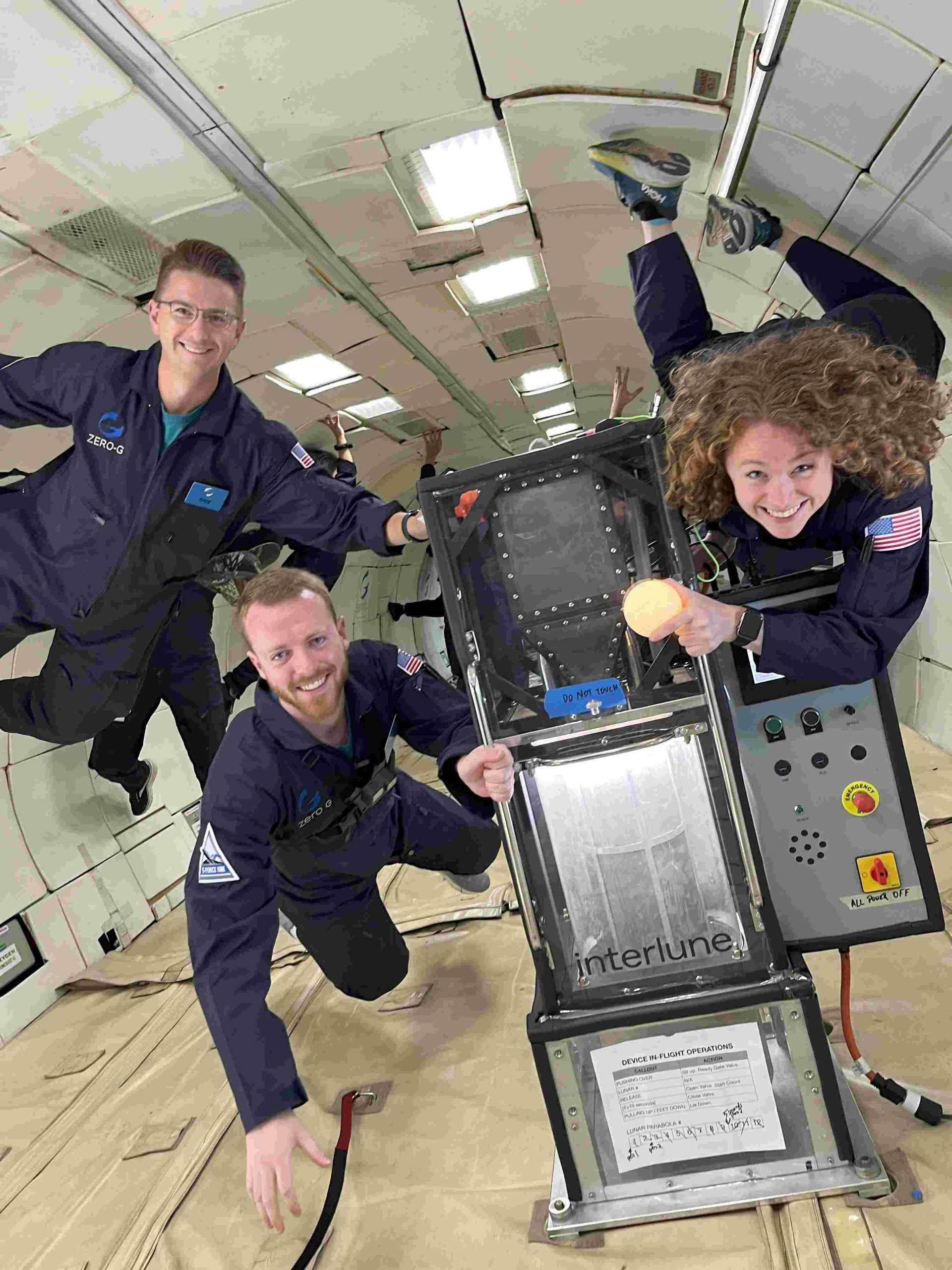
Interlune technology testing: Airborne shake-out flights to evaluate lunar machinery making use of the Zero-G Corporation’s modified B-727-200 aircraft to mimic one-sixth lunar gravity conditions during parabolic dives.
Image credit: Interlune
For more information on harvesting helium-3 on the Moon, go to my new SpaceNews story at:
 Posted in Space News


I think it’s best to leave the moon be.