 By
By  January 17th, 2025
Image credit: SpaceX
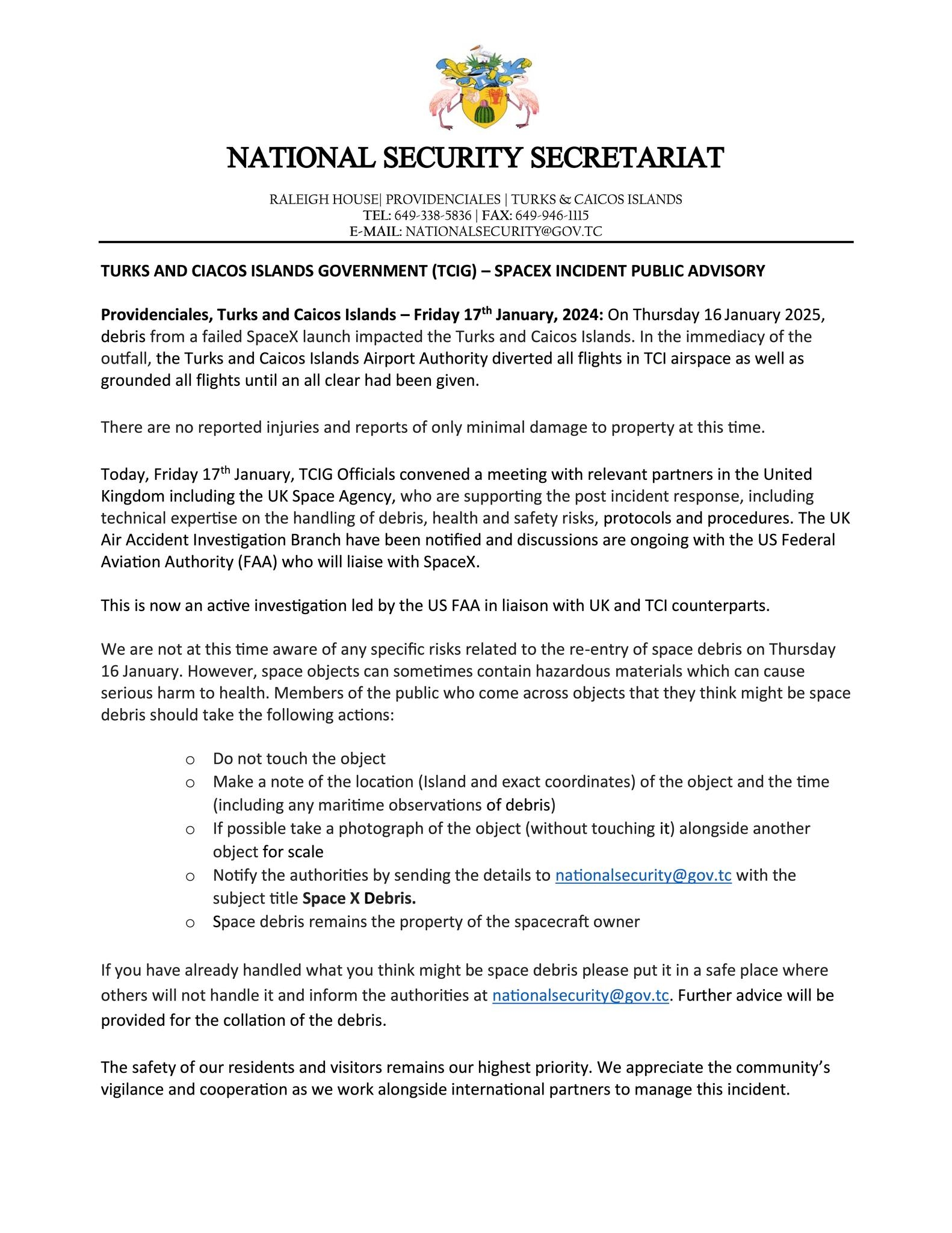
The Federal Aviation Administration (FAA) is requiring SpaceX to perform a mishap investigation into the loss of the Starship vehicle during launch operations on January 16.
“There are no reports of public injury, and the FAA is working with SpaceX and appropriate authorities to confirm reports of public property damage on Turks and Caicos.”
During the Starship 7 destructive event, the FAA activated a Debris Response Area and briefly slowed aircraft outside the area where space vehicle debris was falling or stopped aircraft at their departure location.

Starship 7 leftovers arc into the Atlantic near the Turks and Caicos Islands.
Image credit: Dean Olson
Several aircraft requested to divert due to low fuel levels while holding outside impacted areas, said the FAA in a statement, called preliminary and subject to change.
Root cause
As background, the FAA mishap investigation is designed to enhance public safety, determine the root cause of the event, and identify corrective actions to avoid it from happening again.
“The FAA will be involved in every step of the SpaceX-led mishap investigation process and must approve SpaceX’s final report, including any corrective actions,” the FAA stated. “A return to flight is based on the FAA determining that any system, process, or procedure related to the mishap does not affect public safety.”

Image credit: Mapcarta/Inside Outer Space screengrab
Sonic booms
In addition, the FAA noted that a Debris Response Area is activated “only if the space vehicle experiences an anomaly with debris falling outside of the identified closed aircraft hazard areas. It allows the FAA to direct aircraft to exit the area and prevent others from entering.”
Meanwhile, Johns Hopkins University (JHU) seismologists report that they recorded sonic booms caused by the explosion of SpaceX’s Starship rocket, which were strong enough to be felt in the Caribbean.
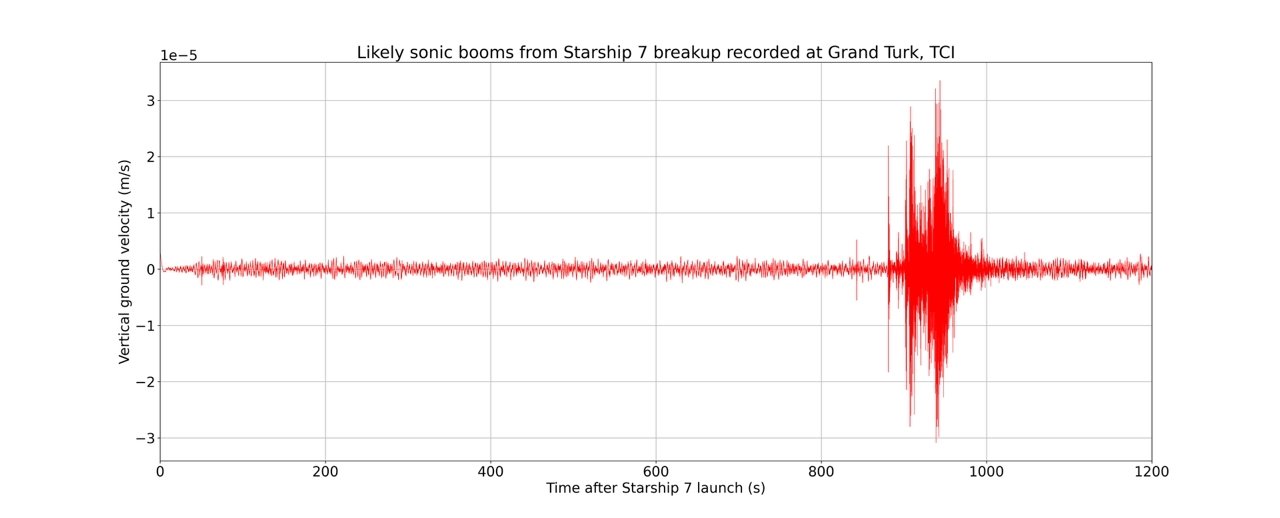
Image credit: JHU
Go to Scott Manley’s excellent and detailed video of the flight test at:
SpaceX’s New Starship Upgrade Puts On Amazing Show As Space Debris
 Posted in Space News

