 By
By  December 4th, 2024
Pile driving the International Space Station into the Earth’s atmosphere is on the books, but what are the consequences?
Image credit: NASA
The International Space Station is a problem child.
The orbital outpost is plagued by cracks, coolant and air leaks, even a surprising smell that recently wafting into the station from a just-arrived Russian Progress cargo ship.
Toss into the mix a number of high-speed, close encounters with space clutter from time to time that make the space facility a risky residence.
Bottom line: There’s escalating worry that the aging complex has become a questionable home for crews to be safe and sound.
Making the Elvis Presley maneuver
Sustaining ISS operations through 2030 is touch-and-go, prior to a projected 2031 “safe, controlled de-orbit” into remote ocean territory as foreseen by NASA.
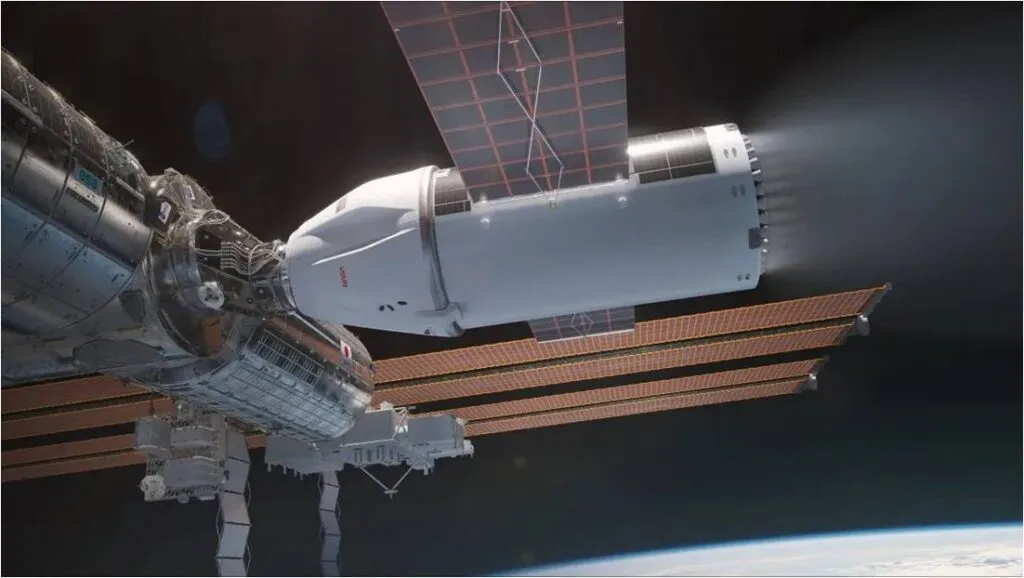
Nuanced nudge to final plunge. Artwork shows a SpaceX-provided United States Deorbit Vehicle (USDV).
Image credit: SpaceX
Think of it this way.
Such a destructive plunge might as well be labeled the Elvis Presley maneuver, one that renders the ISS as “just a hunk, a hunk of burning love,” as its temperature rises high and higher while violently deep diving into Earth’s atmosphere.
For more details, go to my new Space.com story – “Will the International Space Station’s 2031 death dive cause pollution problems? Some people have begun asking the question” – at:
 Posted in Space News

