 By
By  November 13th, 2024
Image credit: NASA
As humanity prepares to “reboot” Earth’s Moon, one expected outcome is putting in place a sustained human presence on that nearby world. There is need to develop long-term and reliable lunar surface infrastructure and systems for safe robotic and crewed exploration.
That assignment won’t be easy.
To establish a permanent foothold on the Moon, future crews must deal with impact hazards, moonquakes, rough and tumble terrain, radiation, as well as thermal day/night issues. And don’t forget the pesky lunar dust.

Image credit: NASA
Suite of videos
It’s dubbed Lunar Engineering 101 by experts at The Johns Hopkins University Applied Laboratory (APL) for NASA’s Lunar Surface Innovation Initiative, part of the agency’s Space Technology Mission Directorate.
An informative suite of videos has been produced by the Lunar Surface Innovation Consortium (LSIC), which is managed by APL.

Image credit: Breakthrough, Innovative and Game-changing (BIG) Idea Challenge/NASA
“Lunar Engineering 101 combines the knowledge obtained and lessons learned from previous missions to provide a resource for technology developers with the background needed to design systems to withstand extreme conditions on the lunar surface,” explains APL’s Milena Graziano, the Lunar Engineering 101 point of contact.
Subject matter experts
The videos serve as a resource for engineers, Graziano adds, by presenting the main characteristics of lunar surface environments — including reduced gravity, radiation, dust, regolith, moonquakes, and others — along with their respective challenges and hardware design considerations to ensure system function and reliability.
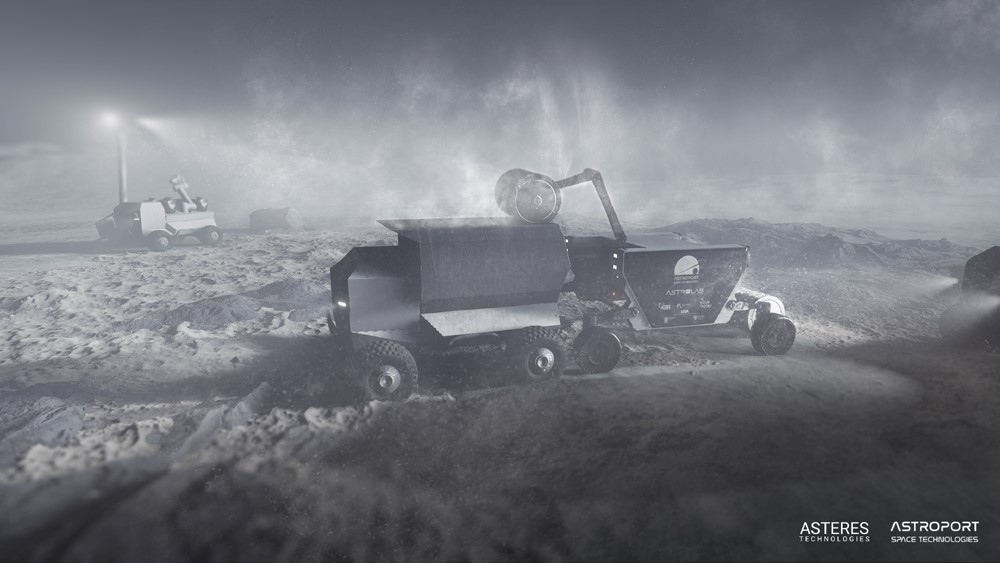
Image credit: Astroport Space Technologies
“This new resource has been prepared by subject matter experts in lunar science and spacecraft engineering to serve as an aid to engineers and scientists, providing an overview of the content, topics, and key practices that will prove beneficial to the development of lunar systems,” Graziano points out.
Go to the videos at:
 Posted in Space News

