 By
By  October 20th, 2024
The future of Moon exploration construction will benefit from a combination of lunar rovers and Inchworm robots.

Image credit: GITAI/Inside Outer Space screengrab
That’s the vision of GITAI, a space robotics startup that last year relocated its headquarters from Japan to the United States. The group is blueprinting a range of robotic satellites for on-orbit services, as well as lunar rovers and inchworm-type robotic arms for lunar infrastructure construction.
Headquartered in Torrance, California, GITAI is pressing forward on the firm’s goal to significantly reduce space labor costs.

Image credit: GITAI/Inside Outer Space screengrab

Image credit: GITAI/Inside Outer Space screengrab

Image credit: GITAI/Inside Outer Space screengrab
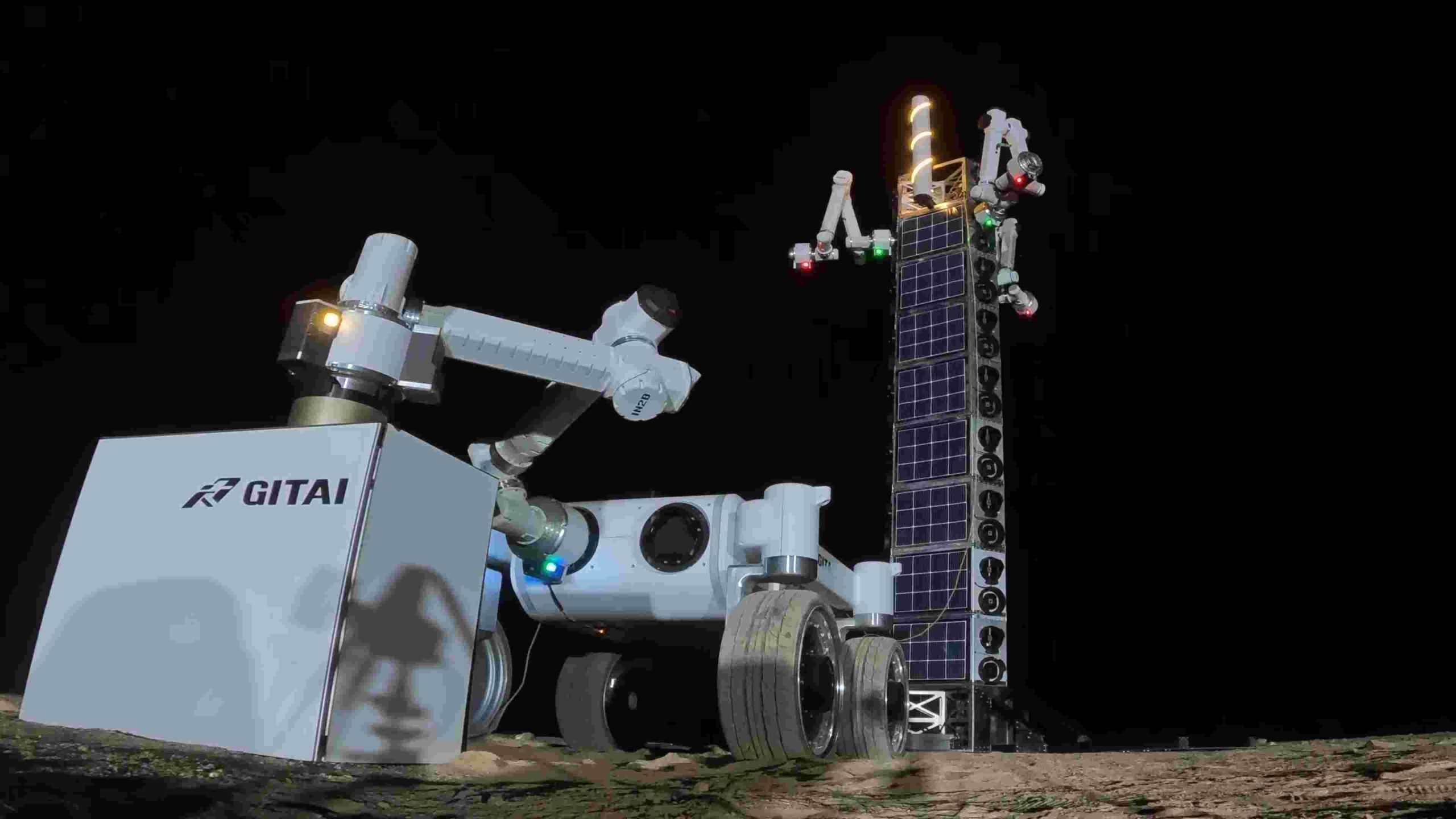
Image credit: GITAI
Truss-based towers
Under a NASA Small Business Innovation Research (SBIR) Phase 1 project award, GITAI has been scoping out the assembly and outfitting of tall truss-based towers on the Moon using autonomous lunar robots. These lunar towers can support communication and solar panel energy needs.
In a recent showcasing of their robotic wares at a California Mojave Desert test site, multiple GITAI robots worked together to perform key tasks such as building communication antennas, exchanging flat tires, drilling holes, welding metal panels, and assembling solar panels.
One output was autonomously assembling a tower 16 feet high (5 meters) to simulate use for future lunar habitats. Put to use was a GITAI Inchworm Robot, a robotic arm equipped with “grapple end-effectors” on both ends of the arm.
To view a fascinating video of this capability, go to:
For more information on GITAI, go to:
 Posted in Space News

