 By
By  September 9th, 2024
Artwork depicts Cluster satellite reentry.
Image credit: ESA/David Ducross
The European Space Agency’s Salsa spacecraft took the plunge into Earth’s atmosphere on September 8.
That fiery finale yielded the first recorded observation of a satellite reentry from a high-speed orbit, taken from a plane in bright daylight.
Bright dot
A newly issued photo captures the craft burning up further out and to the left from the predicted field of view. But airplane mounted gear caught Salsa’s nose dive just left of center as a bright dot.
Together with partners at Astros Solutions, ESA sent a plane to observe Salsa’s reentry live from the sky to observe a satellite class and reentry conditions which have never been accessible before.
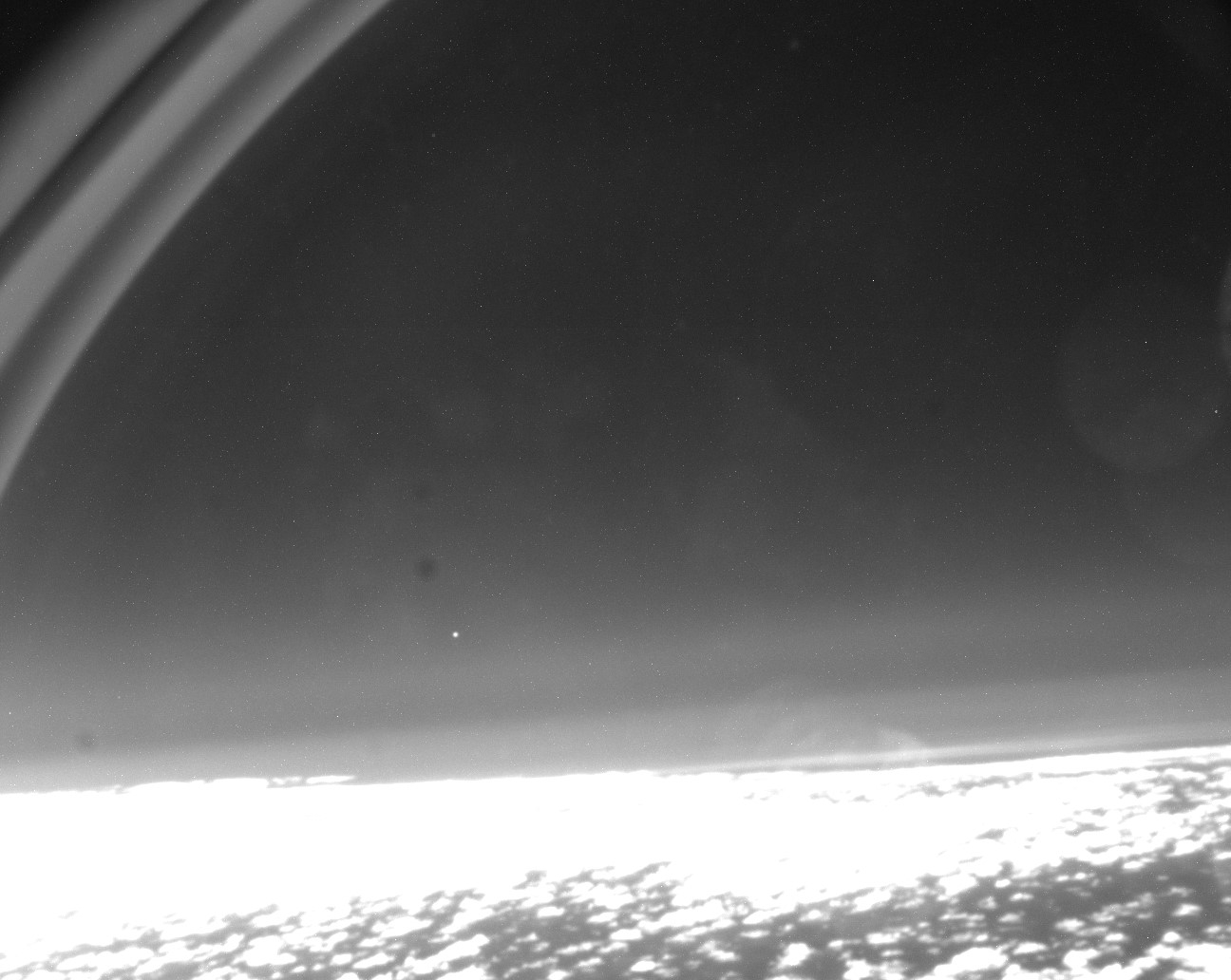
Image credit: ESA/ROSIE/University of Southern Queensland with photo taken by Ranjith Ravichandran and Gerard Armstrong
The reentry was still in range of instruments and the team managed to collect the first-ever data points of the targeted reentry.
Aerial/ground teams
Still ahead is painstakingly looking at all the data gathered, as will the information gleaned by observation teams on the ground.
Salsa was the first of four Cluster satellites to plow into the atmosphere.
ESA’s Space Debris team is hoping to monitor and improve current reentry prediction models as well as learn more about how a satellite “burns up.”
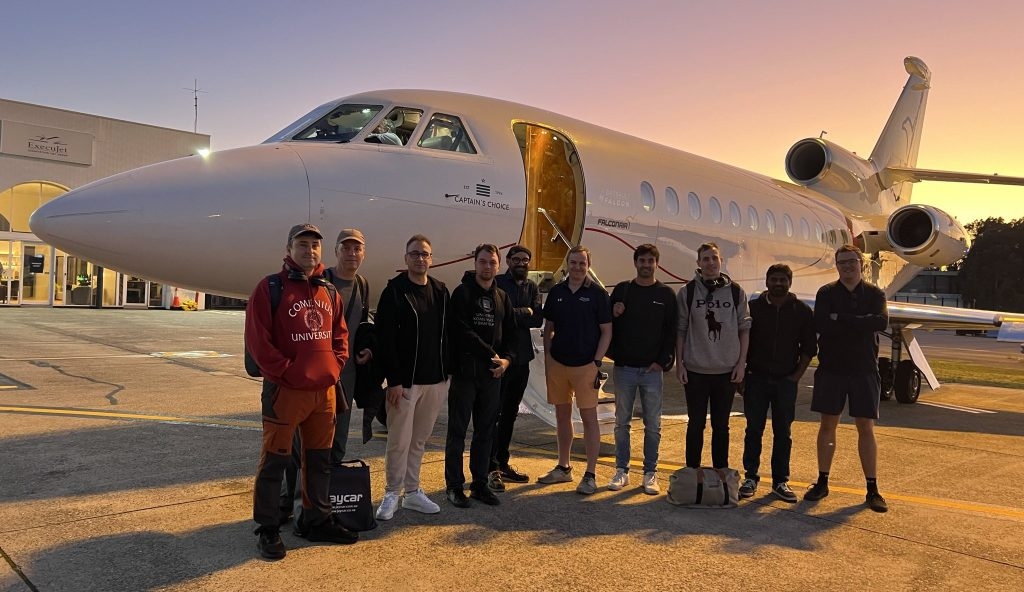
Airplane observation team.
Image credit: FalconAir/ESA
Joint effort
The ROSIE-Salsa observation mission is a joint effort, with academic partners from University of Stuttgart (IRS/HEFDiG), Comenius University in Bratislava (CUB), the University of Southern Queensland (UniSQ) and industrial partners from Hypersonic Technology Göttingen (HTG) and Astros Solutions in close cooperation with the European Space Agency (ESA).
The airborne observation campaign saw Salsa back at Earth again after 24 years in space, with more of the Cluster satellites in the series reach their respective reentry dates in 2025 and 2026.
 Posted in Space News

