 By
By  July 13th, 2024
Image credit: Barbara David
Wait-a-minute: A misbehaving SpaceX Falcon 9 upper stage has led to Starlink satellites each taking destructive dives, willy-nilly style, into the Earth’s atmosphere.
The July 11 liftoff of the SpaceX Starlink Group 9-3 from Vandenberg Space Force Base in California was a definite dud, with several of the 20 Starlinks already nearing their plunge to oblivion according to The Aerospace Corporation’s Center for Orbital and Reentry Debris Studies (CORDS).
To keep an eye on incoming Starlinks associated with the rare SpaceX upper stage mishap, go to https://aerospace.org/cords
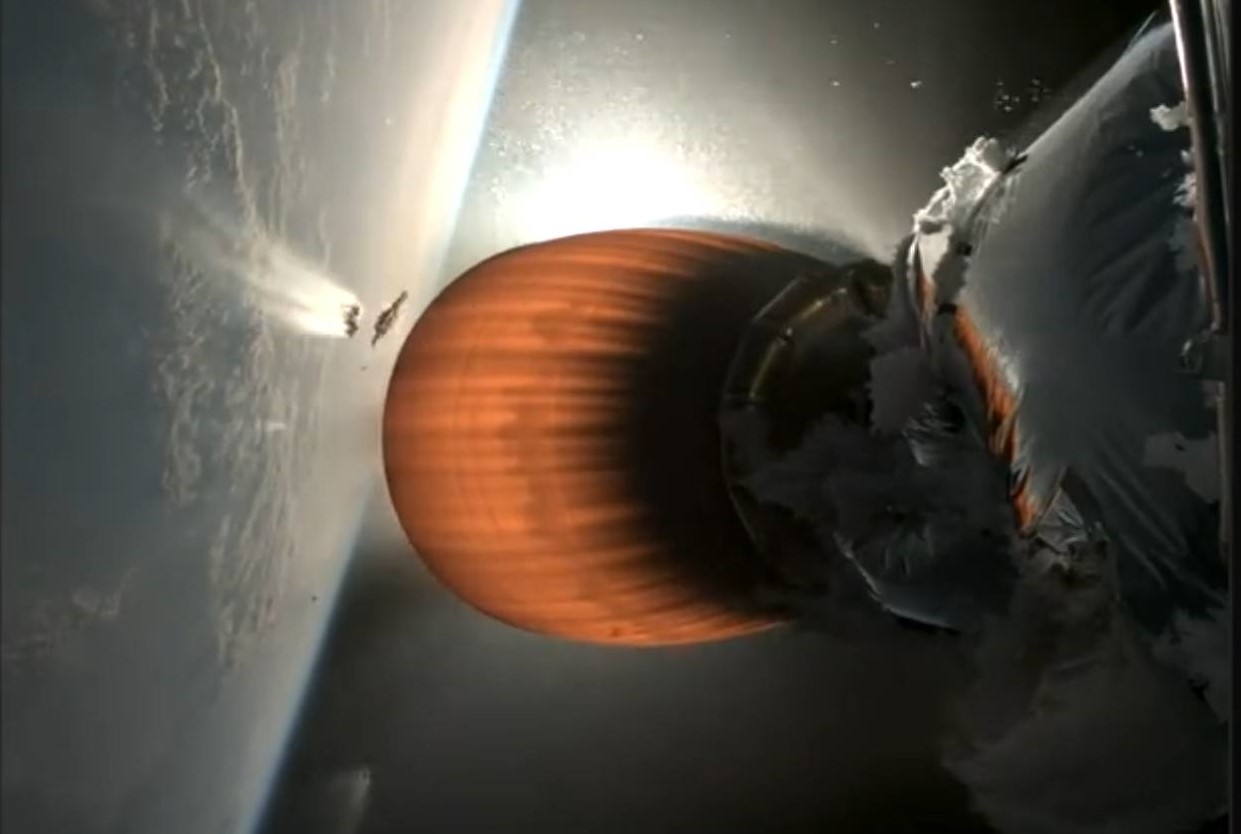
Misbehaving upper stage. Image credit: SpaceX/Inside Outer Space screengrab
Eccentric orbit
As explained in a SpaceX posting, Falcon 9’s second stage performed its first burn nominally, “however a liquid oxygen leak developed on the second stage.”
After a planned relight of the upper stage engine to raise the lowest point of orbit, that stage’s Merlin Vacuum engine experienced an anomaly and was unable to complete its second burn.
“Although the stage survived and still deployed the satellites, it did not successfully circularize its orbit,” SpaceX explained, but the stage did passivate itself, a step normally performed at the end of each mission.
This left the satellites in an eccentric orbit, SpaceX added, with a very low perigee to Earth of under 85 miles (135 kilometers) altitude, which is less than half the expected perigee altitude.
Incident investigation
“No public injuries or public property damage have been reported,” reports the Federal Aviation Administration that is now requiring an investigation of the incident.
“An investigation is designed to further enhance public safety, determine the root cause of the event, and identify corrective actions to avoid it from happening again,” states the FAA.
Furthermore, the FAA must approve SpaceX’s final report, including any corrective actions.
“A return to flight is based on the FAA determining that any system, process, or procedure related to the mishap does not affect public safety,” the FAA explains. “In addition, SpaceX may need to request and receive approval from the FAA to modify its license that incorporates any corrective actions and meet all other licensing requirements.”
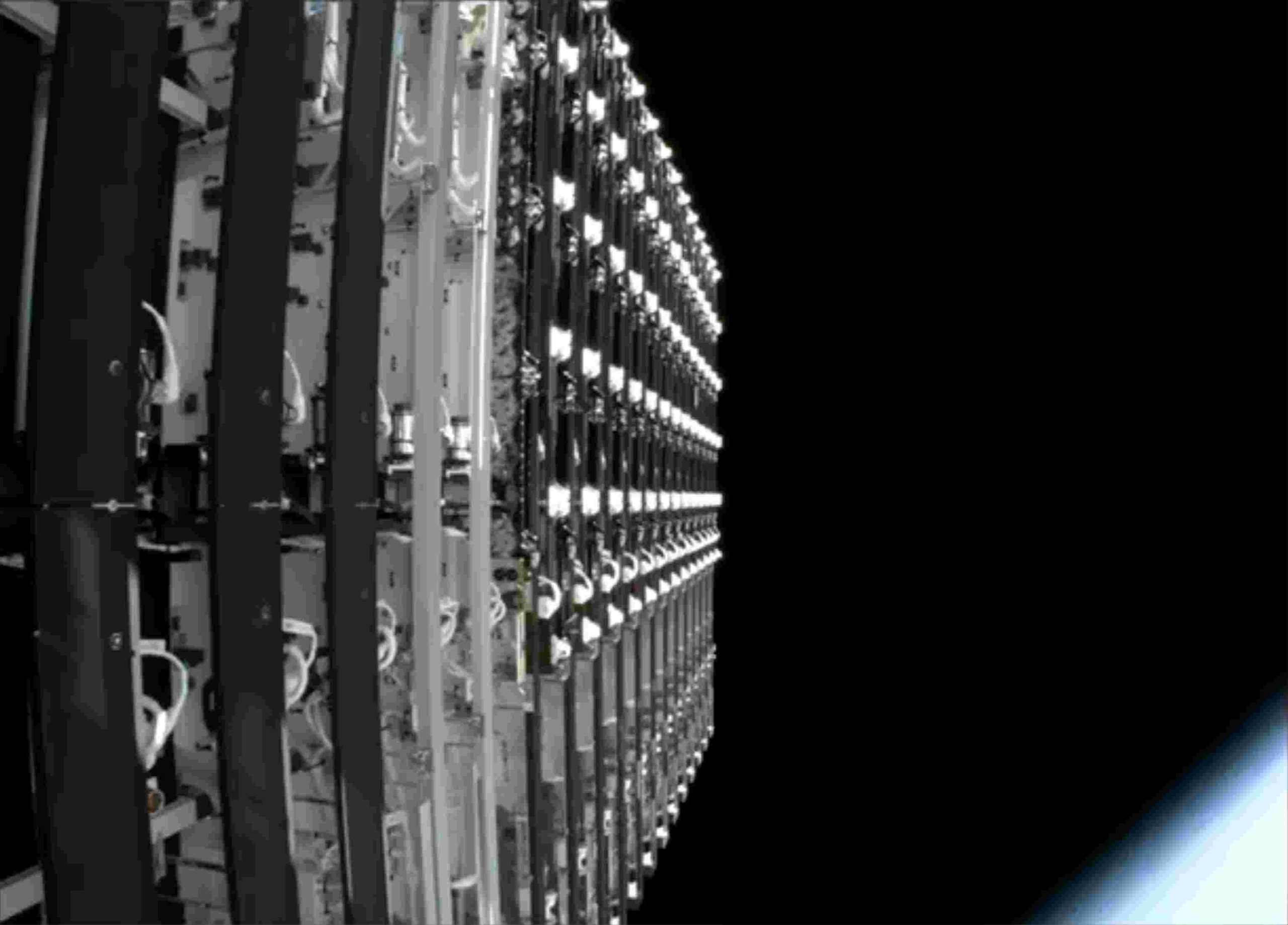
Load of Starlink satellites in doomed deployment.
Image credit: SpaceX via CelesTrak
I’ll raise you
According to SpaceX, the satellites were left in an enormously high-drag environment as they circuited the Earth.
At that level of drag, “our maximum available thrust is unlikely to be enough to successfully raise the satellites.”
The Starlink satellites will re-enter Earth’s atmosphere and “fully demise,” SpaceX added. “They do not pose a threat to other satellites in orbit or to public safety.”
Fully demise
The term “fully demise” is worth a note here.
Evidence is mounting that the high-heating of spacecraft materials as they plow through the atmosphere at high speeds do off-load chemistry into the Earth’s upper stratosphere. How destructive to the atmosphere that process is remains in research mode.
Then there’s the issue of spacecraft pieces that do find their way to Earth’s surface, be it ocean or land.

Image credit: NOAA
Increased activity
Meanwhile, satellite tracker T.S. Kelso and the CelesTrak chief, has been monitoring all 20 Starlink spacecraft, eyeing their individual decay rates as they circle Earth.
“At least geomagnetic activity is low (normal) right now,” Kelso told Inside Outer Space, but NOAA’s Space Weather Prediction Center is forecasting increased activity today.
CelesTrak ‘s mission is focused on making data and other resources freely available to the space community “to facilitate understanding of our orbital environment and how to use it safely and responsibly.”

Confirmed SpaceX debris found in Australia.
Photo courtesy: Brad Tucker
Uptick in skyfall
All in all, SpaceX and company leftovers falling from the heavens have garnered increased attention.
Last May, the remainders of a SpaceX Dragon “trunk” from its Crew-7 mission peppered separate sites in North Carolina.
While Starlink’s construction and the Dragon trunk design are worlds apart, the uptick from uncontrolled riff-raff coming down is a growing, worrisome trend.
For one, the list of other trunk dumps that survived their fiery skyfall also includes Australia, as well as Canada.
As reported by Canada’s CBC News, SpaceX employees visited a farm near Ituna, Saskatchewan, northeast of Regina, whisking away a number of trunk fragments in a U-haul trailer.

SpaceX Dragon “trunk” Image credit: SpaceX
The farmer that owns the property where the clutter came to full-stop was later compensated by SpaceX, CBC reports, for an undisclosed amount. Some of that money was subsequently donated to installation of a new local hockey rink.
Hot-lines
For its part, SpaceX has established a “SpaceX debris hot line” call-in number, as well as a “recovery@spaceX.com” email address.
“If you believe you have identified a piece of debris, please do not attempt to handle or retrieve the debris directly. Instead, please either email or leave a voice mail here with your name, number, and a brief description of what you have discovered and where,” the hot-line phone message explains.
“Teams are actively monitoring both message boxes and will ensure the notification is handled appropriately,” the recording adds. “If you have concerns about an immediate hazard, please contact your local law enforcement agency. Thank you, your assistance is greatly appreciated.”
Not sure if any recovered Starlink bits and pieces can use these same hot lines, but why not?
“I wish I may, I wish I might…Have the wish I wish tonight.”
 Posted in
