 By
By  March 14th, 2024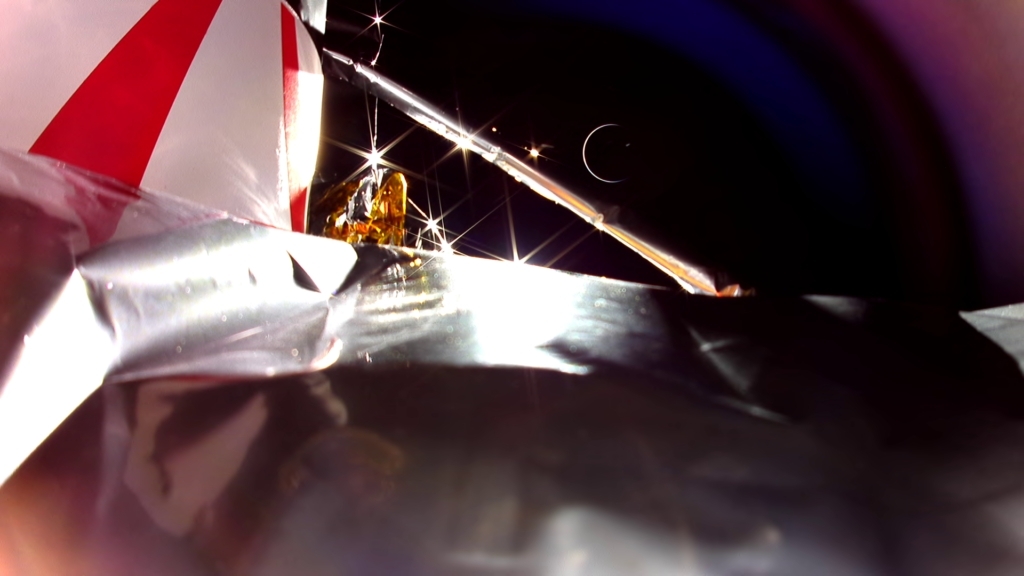
Peregrine commercial lunar lander imaged the Earth as it headed for destructive dive into the South Pacific ocean.
(Image credit: Astrobotic Technology)
It has been a rough and tumble start for hurling hardware and science experiments to the Moon under NASA’s Commercial Lunar Payload Services initiative, dubbed CLPS.
Under CLPS, American vendors have been contracted to assist the space agency in “re-booting” the Moon no earlier than September 2026 by way of an Artemis crew landing at the lunar south pole.
Commercial deliveries of scientific equipment, trial-running technologies, and showcasing capabilities, that’s what CLPS is about, a government-private sector partnership that adds up to a maximum of $2.6 billion in competitive contracts through 2028.
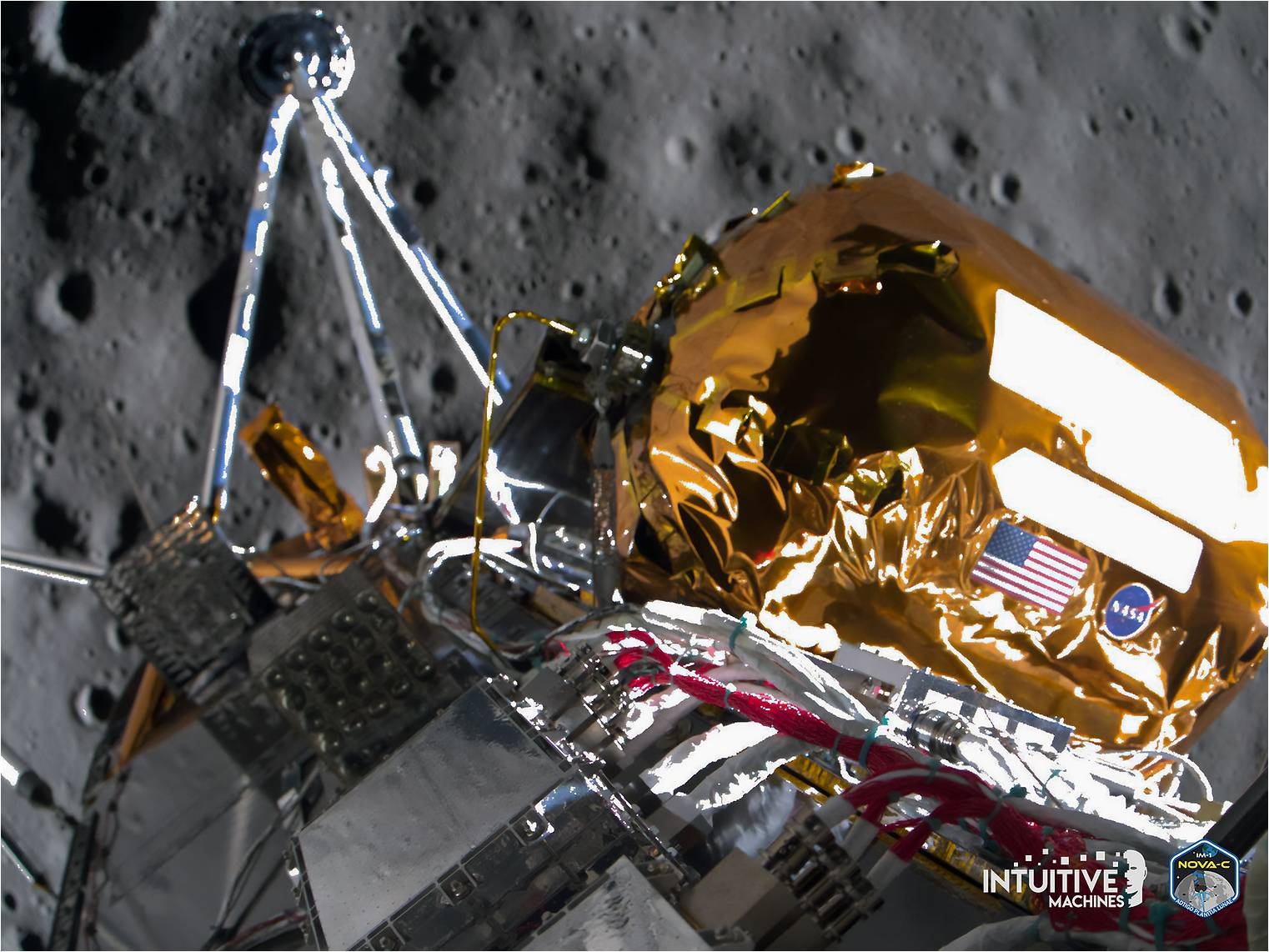
Odysseus captured this image less than 100 feet (30 meters) above the lunar surface while his main engine throttled down
Image credit: Intuitive Machines
Early speed bumps
NASA dollars, the agency relates, helps lay the foundation for sustained stays of human explorers on the Moon, while shoring up the creation of a lunar economy and gain the chops to march off to Mars.
That’s the off-and-running vision – but there are some early speed bumps.
Take a look at my new Scientific American story – “In NASA’s Push for the Moon, Commercial Partners Soar—And Stumble: NASA’s partnership with private industry to accelerate the U.S.’s return to the Moon is delivering lunar payloads—and mixed results” – at:
https://www.scientificamerican.com/article/whats-behind-nasas-commercial-lunar-hits-and-misses/
 Posted in Space News

