 By
By  February 14th, 2024
Ambassadors ready to board Zero-G plane. From left to right is (top row) Mary Cooper, Dr. Sheri Wells-Jensen, Eric Shear, Apurva Varia, Sina Bahram, Zuby Onwuta, Dr. Mona Minkara, Viktoria Modesta, (bottom row) Sawyer Rosenstein, Dana Bolles, Eric Ingram, and Ce–Ce Mazyck. The four individuals in front are seated in wheelchairs, the two standing Ambassadors flanking the group each have visible prosthetic legs, and one of the blind Ambassadors is holding a white cane.
Image credit: AstroAccess
We are in a golden age of human spaceflight due to both governmental and private capabilities and knowhow.
To help enhance the roster of public space travel participation, attention is being paid to disabled and mixed ability individuals.
Exploratory research on parabolic zero-gravity flights has been performed underscoring the fact that disabled individuals can operate safely and effectively in weightless environments.
A new research paper highlights what types of technologies offer promising solutions for accessible design of space habitats, suits, and tools. The work also notes what accommodations can enable future disabled astronauts to operate safely in space.

An Ambassador used both hands to remove a prosthetic foot from her left leg. She is mostly floating with her other toe touching the floor.
Image credit: AstroAccess
AstroAccess
In the past, Disabled individuals have been excluded from human spaceflight opportunities in both the public and rapidly growing private sector, notes the paper: “AstroAccess: Testing accessibility accommodations for disabled and mixed-ability crews operating in space-like environments.”
That exclusion is due to perceptions that Disabled individuals “lack the physical endurance or capacity to function in extreme environments, ability to perform rigorous or dexterous athletic activity, or the ability to operate effectively as part of a team with nondisabled individuals,” the paper explains.
“Such perceptions are born from broadly pervasive and harmful societal assumptions about their ability to act and live independently,” the paper points out, “and from the lack of motivation on the part of individuals and institutions to invest in making the necessary modifications to our physical environments and daily behaviors required to make society more accessible.

NASA Gallaudet research participants chat in sign language while sitting in a zero gravity aircraft before take-off.
Image credit: U.S. Navy/Gallaudet University collection
While no public space agency has yet to “officially” fly a Disabled astronaut, the paper observes that individuals with conditions that may be considered disabilities in some contexts have been to space. They include NASA shuttle astronaut, Rich Clifford, with early signs of Parkinson’s, NASA’s Scott Kelly with Attention-deficit/hyperactivity disorder (ADHD), and Haley Arceneaux of the private Inspiration4 mission, a bone cancer survivor with an artificial femur.
Gallaudet Eleven
The paper spotlights NASA’s own history, flagging the space agency’s recruitment of the “Gallaudet Eleven.” This select group of deaf men back in the 1960s offered NASA insight into the effects of spaceflight on the body.
“Since they had sustained damage to their vestibular systems, they were immune to motion sickness and therefore able to endure physical challenges while being subjected to rotation, high acceleration forces, and weightlessness they may experience in space without becoming nauseous,” the paper reports.
“Unfortunately, this very advantage which made them excellent candidates for research,” the paper adds, “would have disqualified them from applying for astronaut candidacy.”
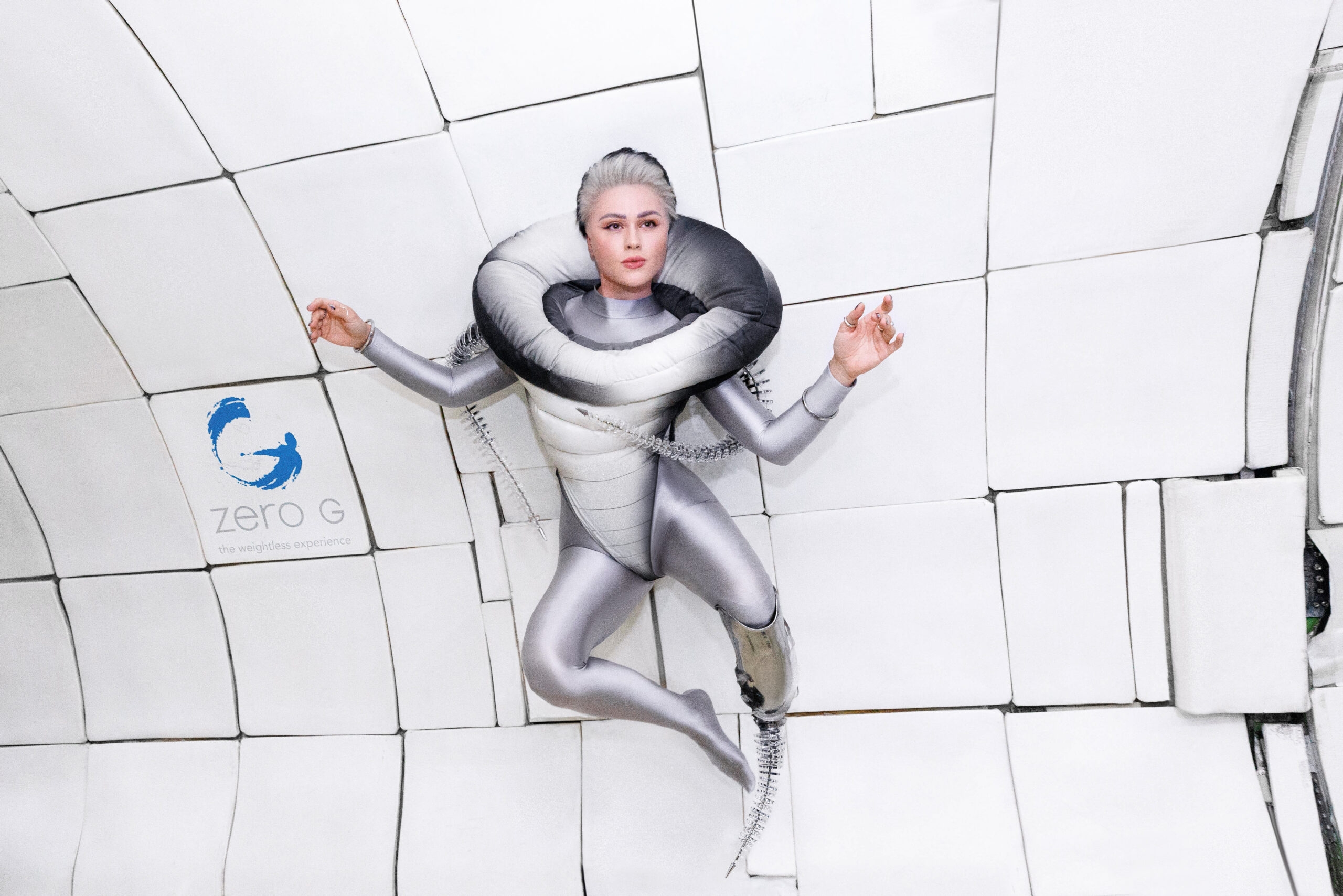
Image credit: AstroAccess
Ambassadors for microgravity
Fast forward to today.
Enter AstroAccess with its mission to allow the next generation of disabled scientists, students, athletes and artists to see that science, technology, engineering, and mathematics (STEM) is truly possible for them.
To bolster the cause, AstroAccess is advancing research on disability and human spaceflight by flying Disabled researchers on parabolic flights that produce stints of weightlessness.
Called the “Ambassadors,” these specifically recruited individuals came from three broad categories: Blind/Low Vision, Deaf/Hard of Hearing, and Mobility Disabilities.
“These categories do not represent the full spectrum of types of disabilities, but it was necessary to limit the scope of our efforts given the small size of the flight crew and the initial questions we wished to investigate,” the paper elucidates.
Evolving project
Since October 2021, AstroAccess Ambassadors have participated in five parabolic flights making use of the Zero Gravity Corporation’s spiffed up G-FORCE ONE Boeing aircraft.
Among the findings is that communication and way finding are primary challenges to mixed ability crews. Furthermore, for inclusive human spaceflight, redesign of emergency response systems is critical. Also, redundancy using varied solutions is key to accessible design and operations.
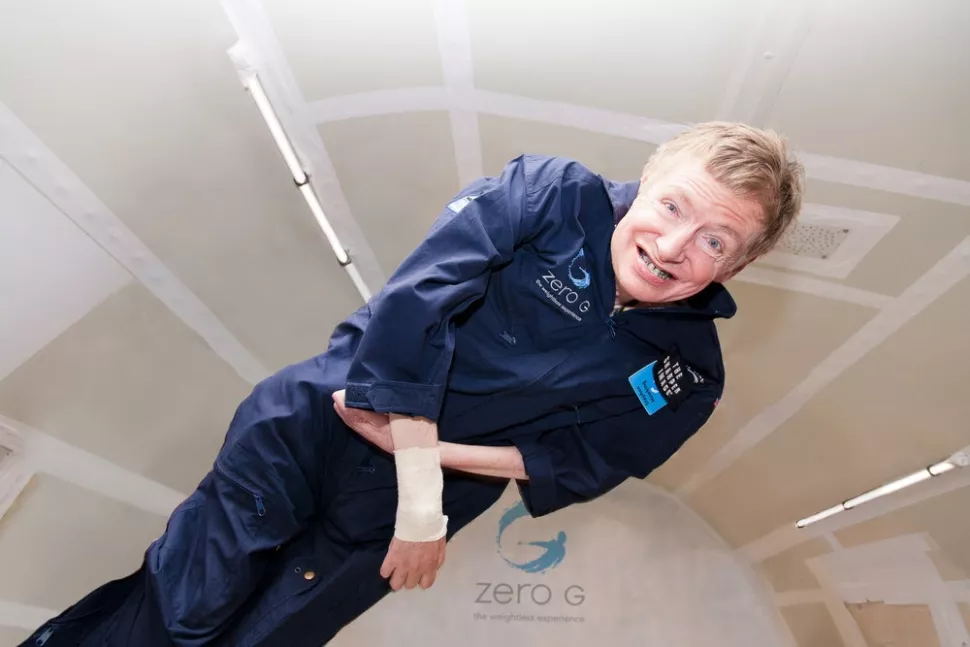
In 2007, wheelchair-bound theoretical physicist Stephen Hawking floated freely during a zero-gravity airplane flight. Hawking said of the experience: “For me, this was true freedom. People who know me well say that my smile was the biggest they’d ever seen. I was Superman for those few minutes.” (Image credit: Steve Boxall/ZERO-G Corporation via AstroAccess)
“This has been an evolving project over several years and multiple Zero-G flights, and our research has only touched the surface of topics to study in accessible human spaceflight,” said Jamie Molaro, a research scientist at the Planetary Science Institute.
Molaro is lead author of the research paper on AstroAccess that details the results from initial investigations.
Molaro told Inside Outer Space that the research project has spurred interest in building upon findings so far. “We’ve already seen discourse building around Disability within the public and private space sectors as a result,” Molaro said.
To learn more, go to “AstroAccess: Testing accessibility accommodations for disabled and mixed-ability crews operating in space-like environments” appearing in Acta Astronautica at:
https://www.sciencedirect.com/science/article/pii/S0094576524000699#sec2
For more information on AstroAccess, go to:
 Posted in Space News

