 By
By  January 15th, 2024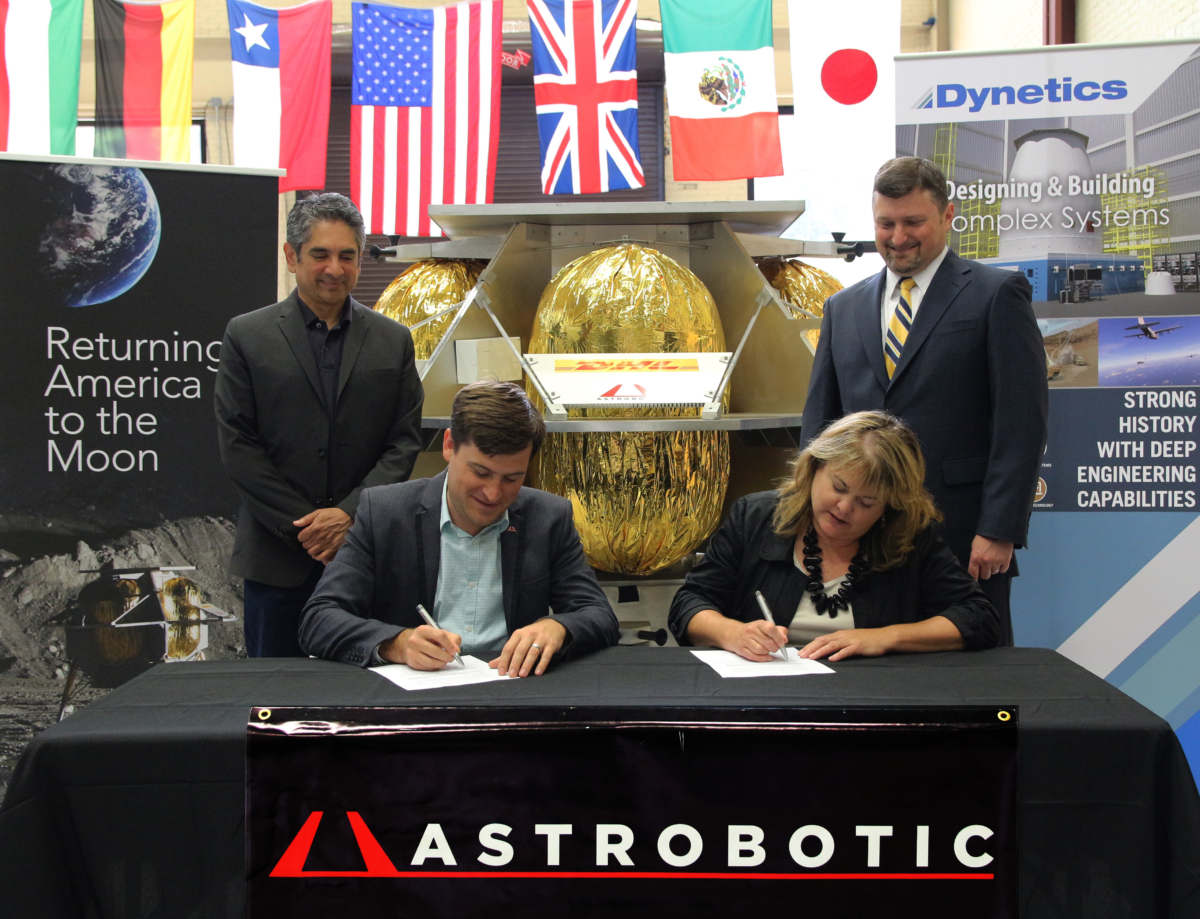
Astrobotic CEO John Thornton and then Dynetics Space Division Manager Kim Doering sign the Peregrine Propulsion Teaming Agreement in July 2018 at Astrobotic’s Spacecraft High Bay in Pittsburgh, Pennsylvania.
Credit: Astrobotic
“Peregrine will soon return to Earth’s atmosphere and the vehicle is now about 234,000 miles away. We are working with NASA to continue updating and evaluating the controlled re-entry path of Peregrine,” notes a communiqué from the Pittsburgh, Pa.-situated Astrobotic – the private firm that designed and built the lunar lander.
“Working with NASA, we received inputs from the space community and the U.S. Government on the most safe and responsible course of action to end Peregrine’s mission,” the Astrobotic control team explained. “The recommendation we have received is to let the spacecraft burn up during re-entry in Earth’s atmosphere. Since this is a commercial mission, the final decision of Peregrine’s final flight path is in our hands.”
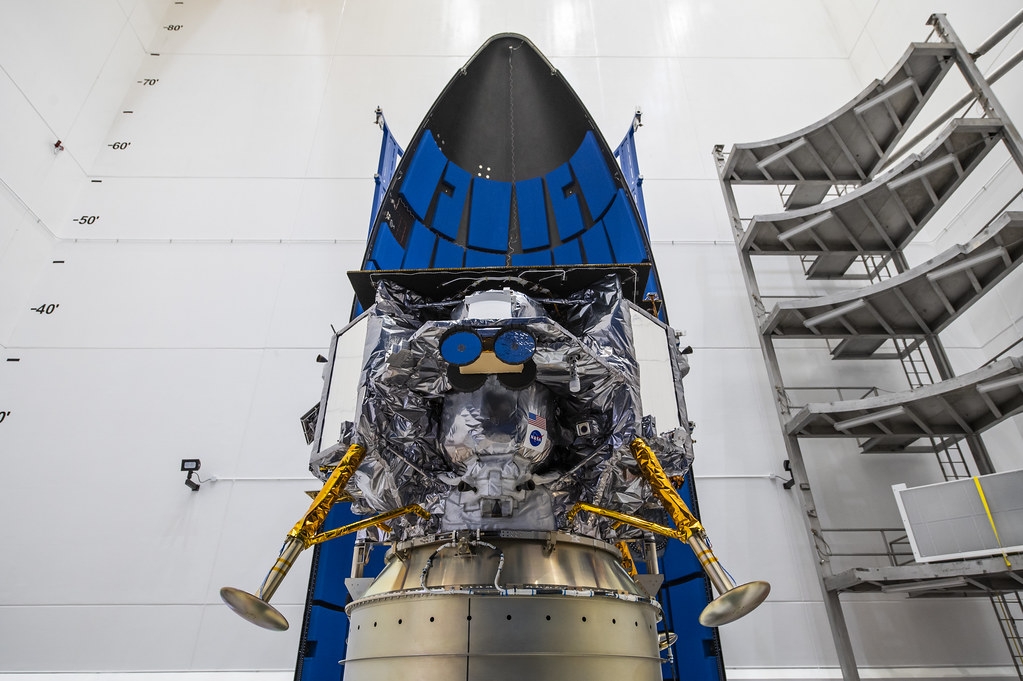
Moon lander successfully launched atop maiden flight of Vulcan booster.
Image credit: ULA/Astrobotic
Cislunar preservation
While the Astrobotic crew has expertly extended the spacecraft’s life and operated payloads, the risk is that the damaged spacecraft could cause a problem in cislunar space, the communiqué explains.
“As such, we have made the difficult decision to maintain the current spacecraft’s trajectory to re-enter the Earth’s atmosphere. By responsibly ending Peregrine’s mission, we are doing our part to preserve the future of cislunar space for all,” the Astrobotic Update #17 adds.
The Astrobotic ground controllers did achieve a 200 millisecond burn, acquiring data that indicated Peregrine could have main engine propulsive capability.

Image credit: Astrobotic
However, the fuel to oxidizer ratio is well outside of the normal operating range of the main engines making long controlled burns impossible. The team projects that the spacecraft has enough remaining propellant to maintain sun pointing and perform small maneuvers, Astrobotic’s communiqué adds.
Misbehaving hardware
As for focusing on what took place that trashed the mission – apparently misbehaving valve hardware – Astrobotic said it designed and built hardware, avionics, software, and system architectures “that have all performed as expected in space.”
Back in July of 2018, Astrobotic selected Dynetics of Huntsville, Alabama as the propulsion provider for its Peregrine Lunar Lander. In December 2019, defense contractor Leidos acquired Dynetics.
While Astrobotic explains that the firm believes it possible for the spacecraft to operate for several more weeks and could potentially have raised the orbit to miss the Earth, “we must take into consideration the anomalous state of the propulsion system and utilize the vehicle’s onboard capability to end the mission responsibly and safely.”
The mission concludes on January 18, said Astrobotic CEO, John Thornton.
 Posted in Space News

