 By
By  December 11th, 2023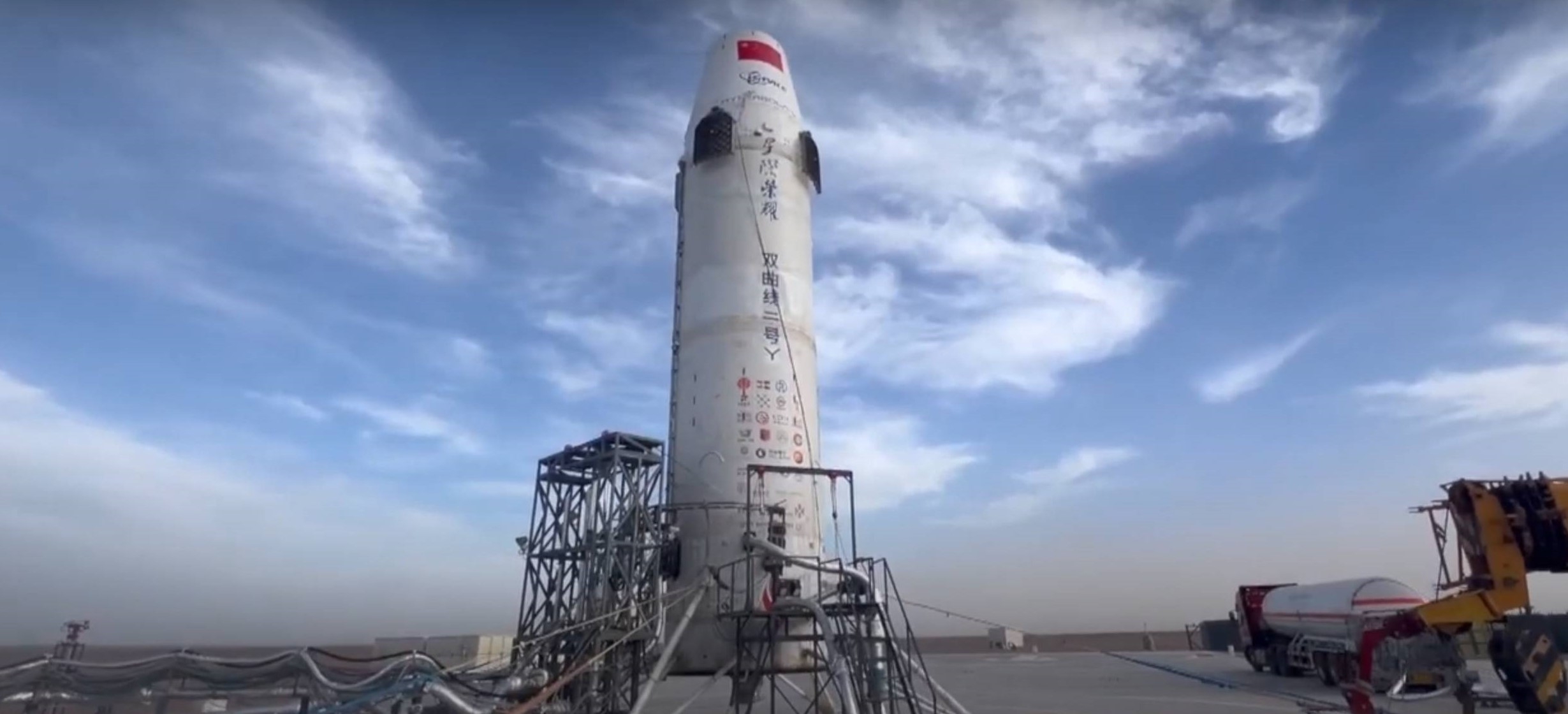
Image credit: CCTV/Inside Outer Space screengrab
It was a busy weekend for China rocketeers on the path to developing reusable launch capability.
Now underway is testing of the Hyperbola-2 methane-liquid oxygen reusable verification stage, built to evaluate its ability of vertical liftoff and landing. Testing is being performed in the Jiuquan Satellite Launch Center in northwestern China.
On Sunday, its second flight was performed. The initial test for vertical liftoff and landing was conducted in early November.
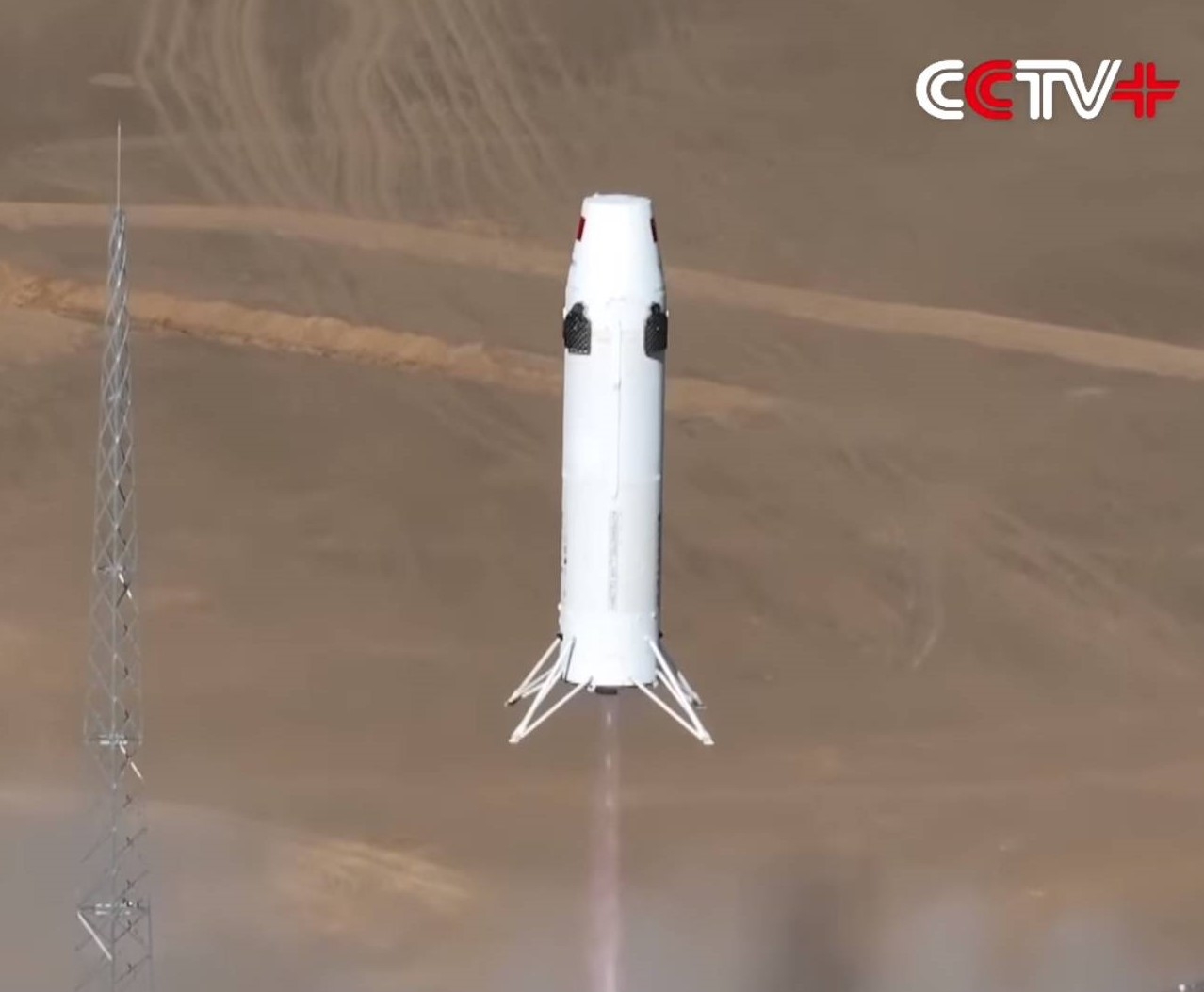
Image credit: CCTV/Inside Outer Space screengrab
Interstellar Glory
Ji Haibo, chief designer of Hyperbola 2Y at Interstellar Glory, said that after tests on the ground, they are planning to conduct one at sea next year, telling China Central Television (CCTV) that the proven reusable technologies will be applied in Hyperbola-3, a 70-meter-tall rocket powered by methane and liquid oxygen, and the rocket will be used in projects such as satellite internet.
The recent test flight of the Hyperbola-2 methane-liquid oxygen reusable verification stage is to fully evaluate the reusability of the rocket, said Jiang Yi, Designer of Liquid Rockets at Interstellar Glory.
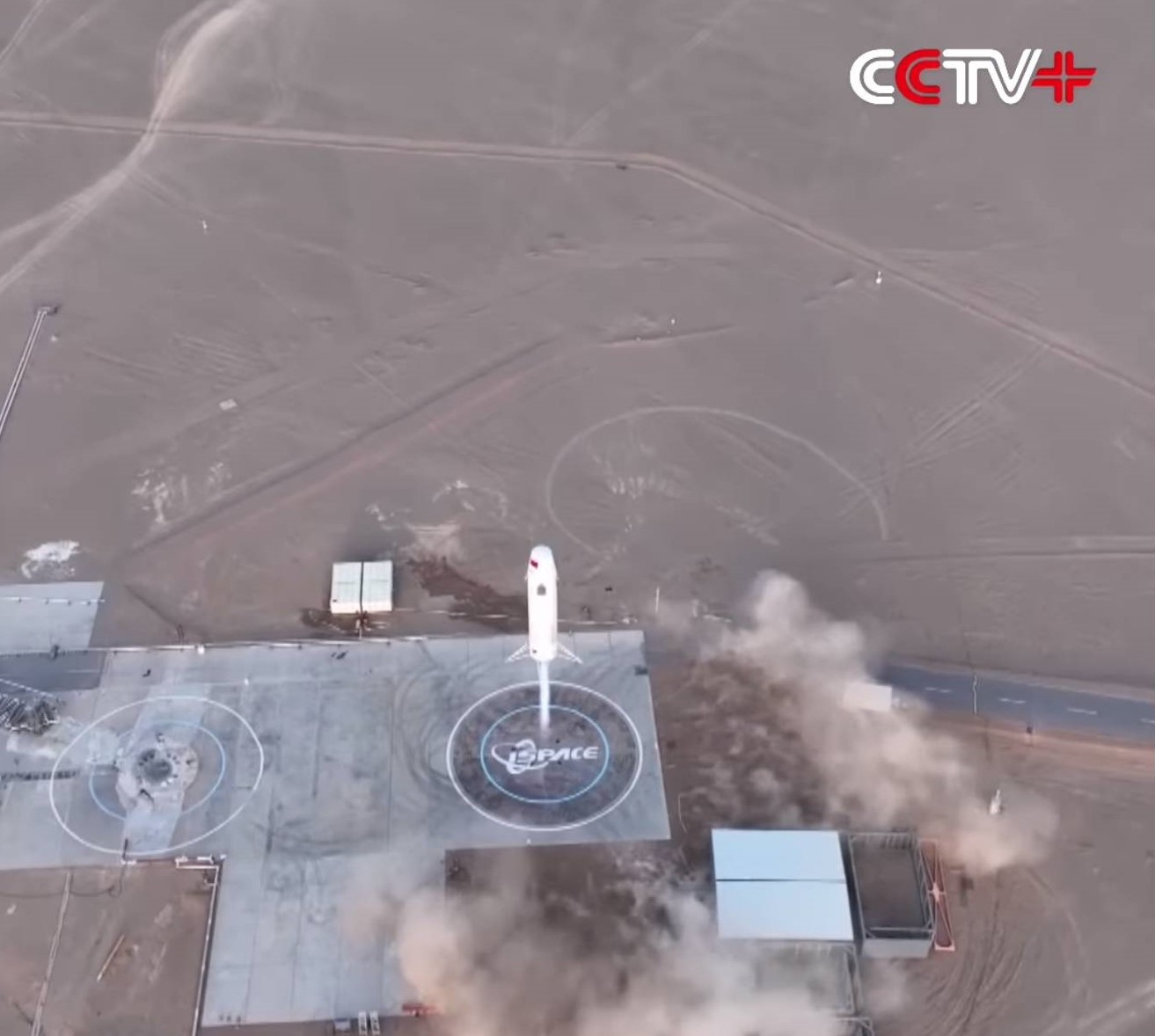
Image credit: CCTV/Inside Outer Space screengrab
Low-cost, reusable rocketry
On Saturday, LandSpace’s Zhuque-2 Y-3 carrier rocket was successfully launched into space from the Jiuquan Satellite Launch Center in northwest China, sending three satellites into orbit.
It was the third flight mission of the Zhuque-2 carrier rocket.
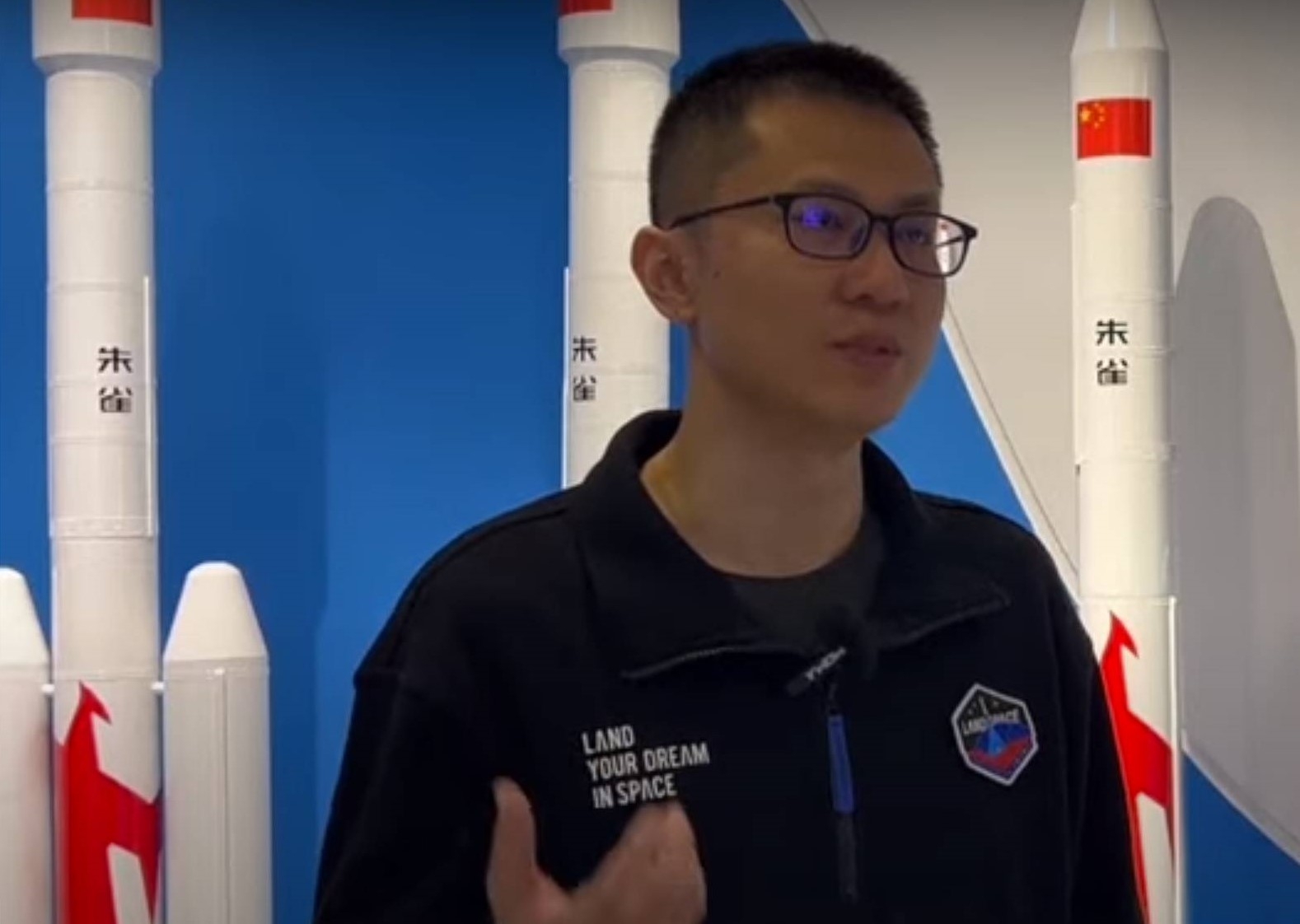
Dai Zheng, deputy chief designer and deputy commander of Zhuque-2 carrier rocket.
Image credit: CCTV/Inside Outer Space screengrab
Saturday’s successful launch of China’s liquid oxygen methane-fueled rocket Zhuque-2 Y3 marked a breakthrough in the development of low-cost reusable commercial rockets, which is crucial to expanding the space traffic portal in the future for the aerospace industry, said Dai Zheng, deputy chief designer of the rocket.
Stainless steel
Developed by the Chinese rocket company LandSpace, Zhuque-2 is China’s first medium-sized rocket powered by liquid oxygen and methane. Its upgraded version has an increased liftoff weight that meets the demand for low-Earth orbit satellite deployment and spacecraft launches.
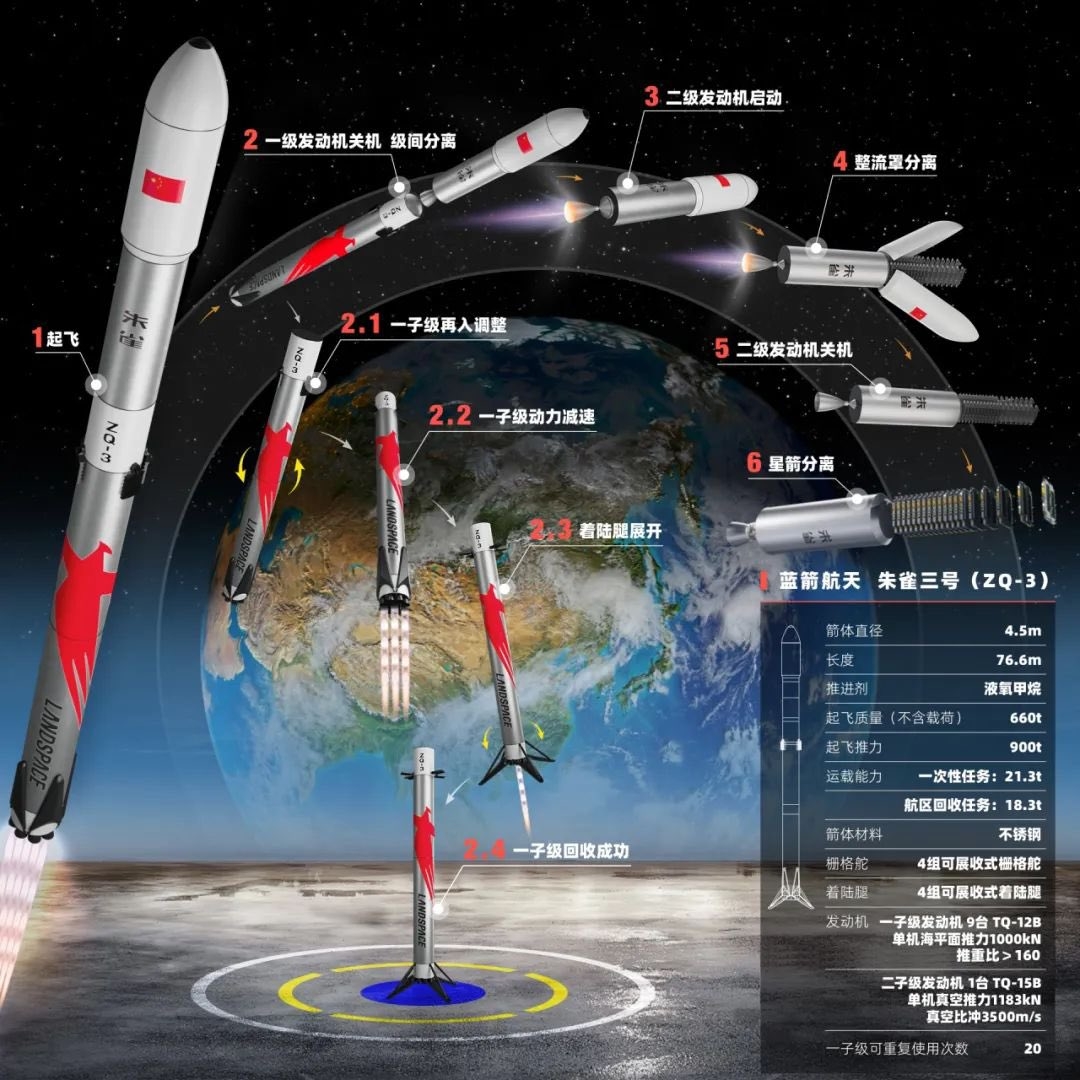
Image credit: Dongfang Hour
China’s methane-powered Zhuque-3 reusable carrier rocket is expected to take on its maiden flight in 2025.
The Zhuque-3 rocket will use Tianque methane engines developed by LandSpace. Its first stage will have nine Tianque-12B engines, which may be reused for up to 20 times. Zhuque-3’s second stage will employ a Tianque-15B vacuum engine.
The Zhuque-3 carrier rocket will be China’s first rocket made of stainless steel and will have a liftoff weight of about 660 tons and a carrying capacity of 21.3 tons.
Single-stage reusability
“The Zhuque-3 carrier rocket is a large-sized single-stage liquid oxygen methane reusable launch vehicle specifically developed in response to the market demand within the context of construction of China’s national satellite-based internet project,” said Zhang Changwu, CEO of LandSpace.
“We are also expected to achieve the milestone of product delivery in 2025. For the Zhuque-3 carrier rocket, we have made numerous breakthroughs in the fundamental experiments for making it. We have achieved groundbreaking progress in the rocket’s material, the upgrade of the thrust of the rocket engine and the algorithm for single-stage reusability,” Zhang told CCTV.
Go to this video focused on testing the Hyperbola-2 methane-liquid oxygen reusable verification stage at:
https://youtu.be/8wbxGIZ97LU?si=i3zOJ9ARvDMojPvN
Go to this video spotlighting launch of LandSpace’s ZhuQue-2 booster.
 Posted in Space News

