 By
By  May 3rd, 2023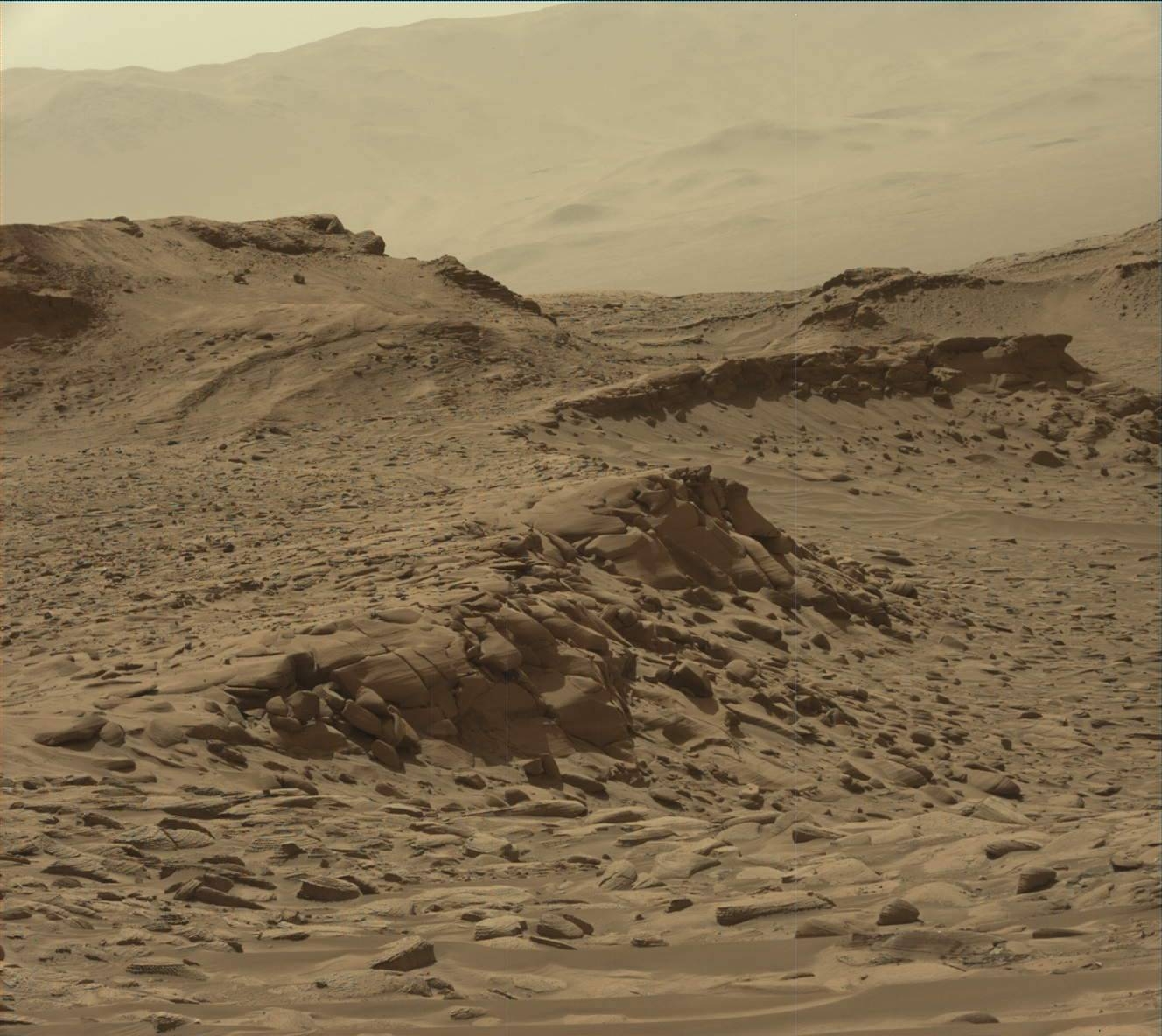
Curiosity Mast Camera Left image taken on Sol 3815, May 1, 2023.
Image credit: NASA/JPL-Caltech/MSSS
NASA’s Curiosity Mars rover at Gale Crater is now performing Sol 3818 duties.
Alex Innanen, Atmospheric Scientist at York University, Toronto, Ontario, Canada.
The last weekend drive moved the robot into a good position to attempt to examine a block it may attempt to drill, reports Alex Innanen, an atmospheric scientist at York University, Toronto, Ontario, Canada.
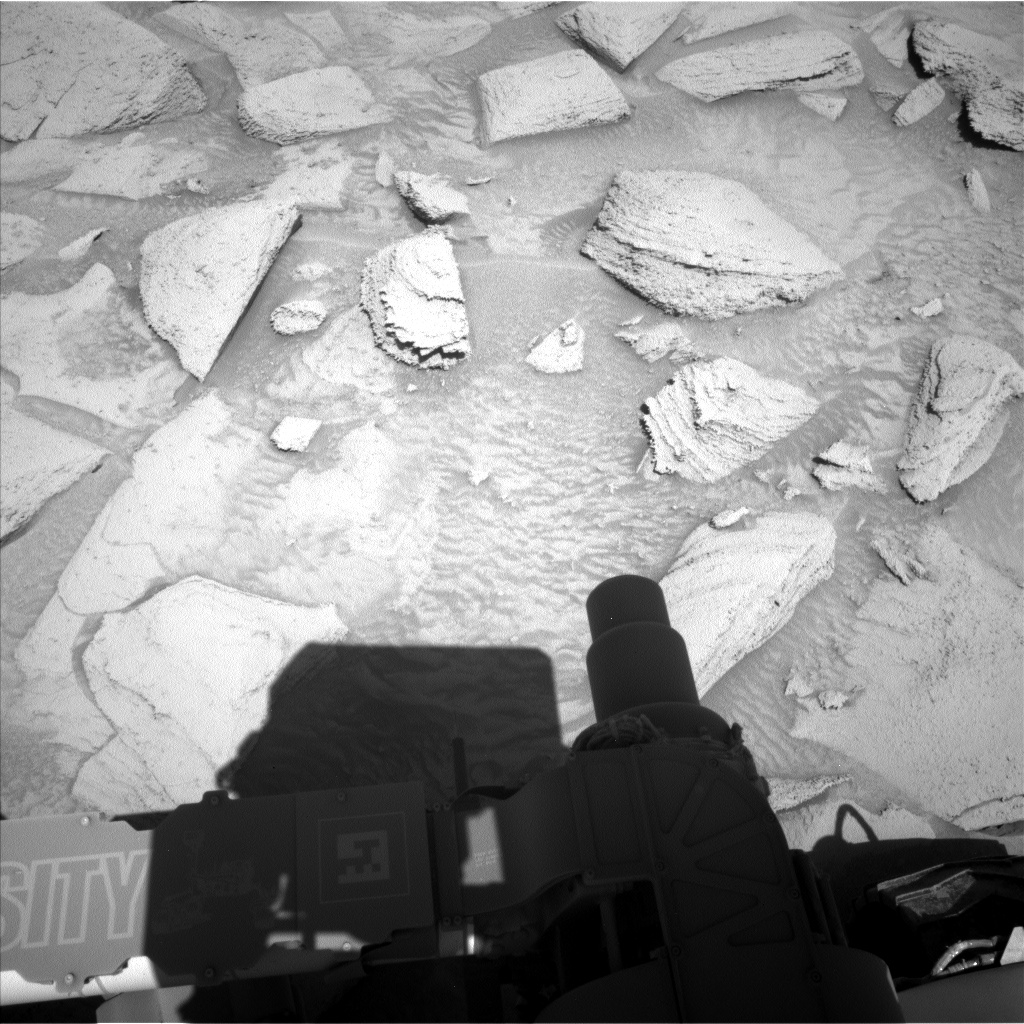
Curiosity Left Navigation Camera image taken shows “Ubajara,” which you can see on the left of the image taken on Sol 3815, May 1, 2023.
Image credit: NASA/JPL-Caltech
“We don’t dive right in; we have to make sure this is in fact where we want to drill,” Innanen notes. “This means contact science on “Ubajara.”
Special target name
Part of the Mars Curiosity team spent some time picking a special target name, which involved looking at pictures of national parks.
“Ubajara (a national park in Brazil), it was decided, is a great choice – it’s a bit more lush and green than Gale Crater, but the mountains and canyons are reminders of the canyon Curiosity just climbed out of,” Innanen adds.

Curiosity Mast Camera Left image taken on Sol 3815, May 1, 2023.
Image credit: NASA/JPL-Caltech/MSSS
The plan called for a pretty typical drill scenario, with Curiosity’s Mars Hand Lens Imager (MAHLI) and Alpha Particle X-Ray Spectrometer (APXS) on the drill target, and a brush with the dust removal tool (DRT), but then researchers learned that they will not be able to use the DRT until more images of this target are collected, Innanen points out.
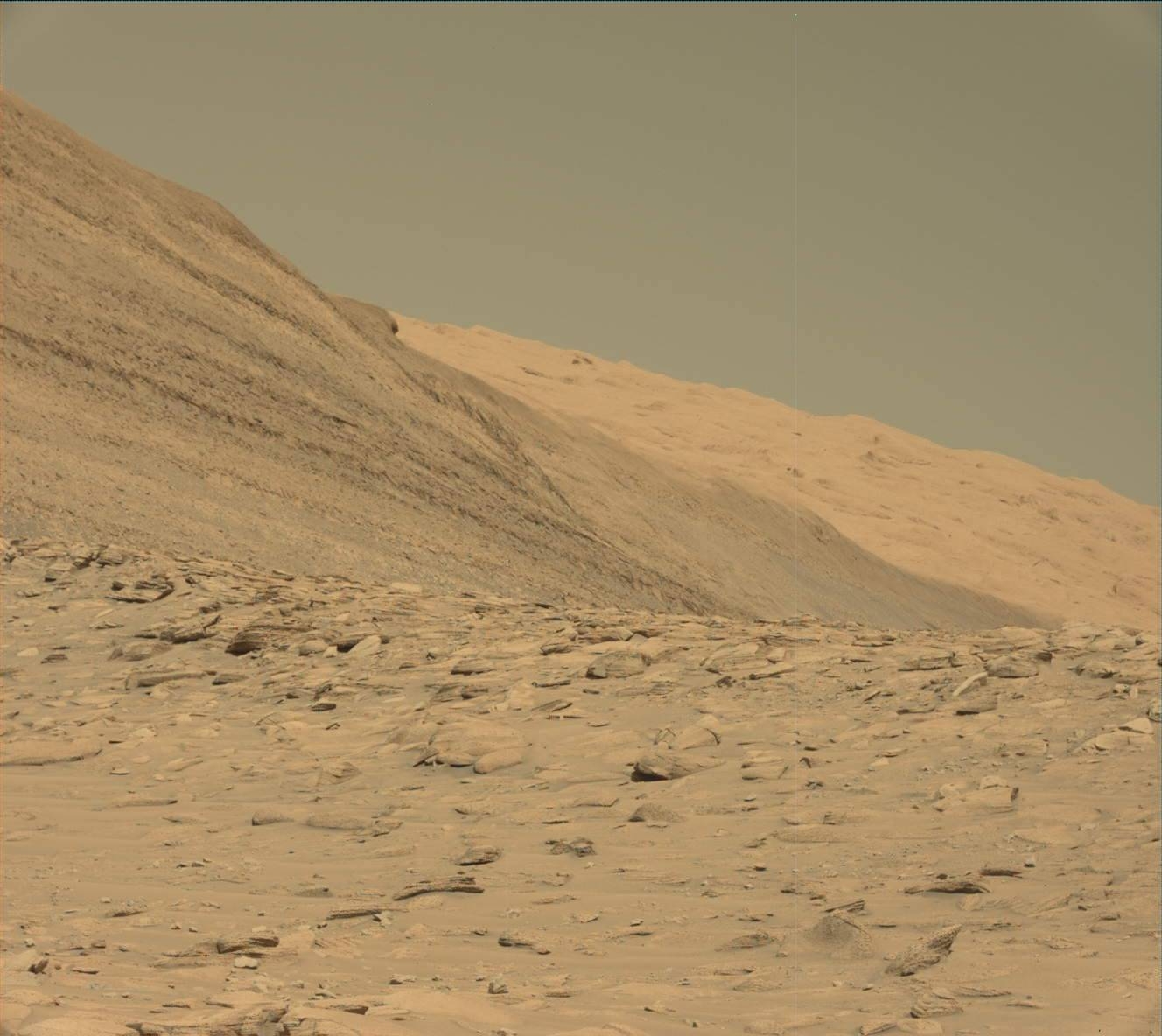
Curiosity Mast Camera Left image taken on Sol 3815, May 1, 2023.
Image credit: NASA/JPL-Caltech/MSSS
“Luckily, we were still able to move forward with the other activities in the plan,” Innanen notes, “and still prepare to examine this block to decide if we want to drill it in the future.”
Catch some clouds
A recent two sol plan (3817-3818) starts with a couple environmental activities – looking back towards the crater rim to measure the amount of dust in the atmosphere, and then scanning for dust devils.
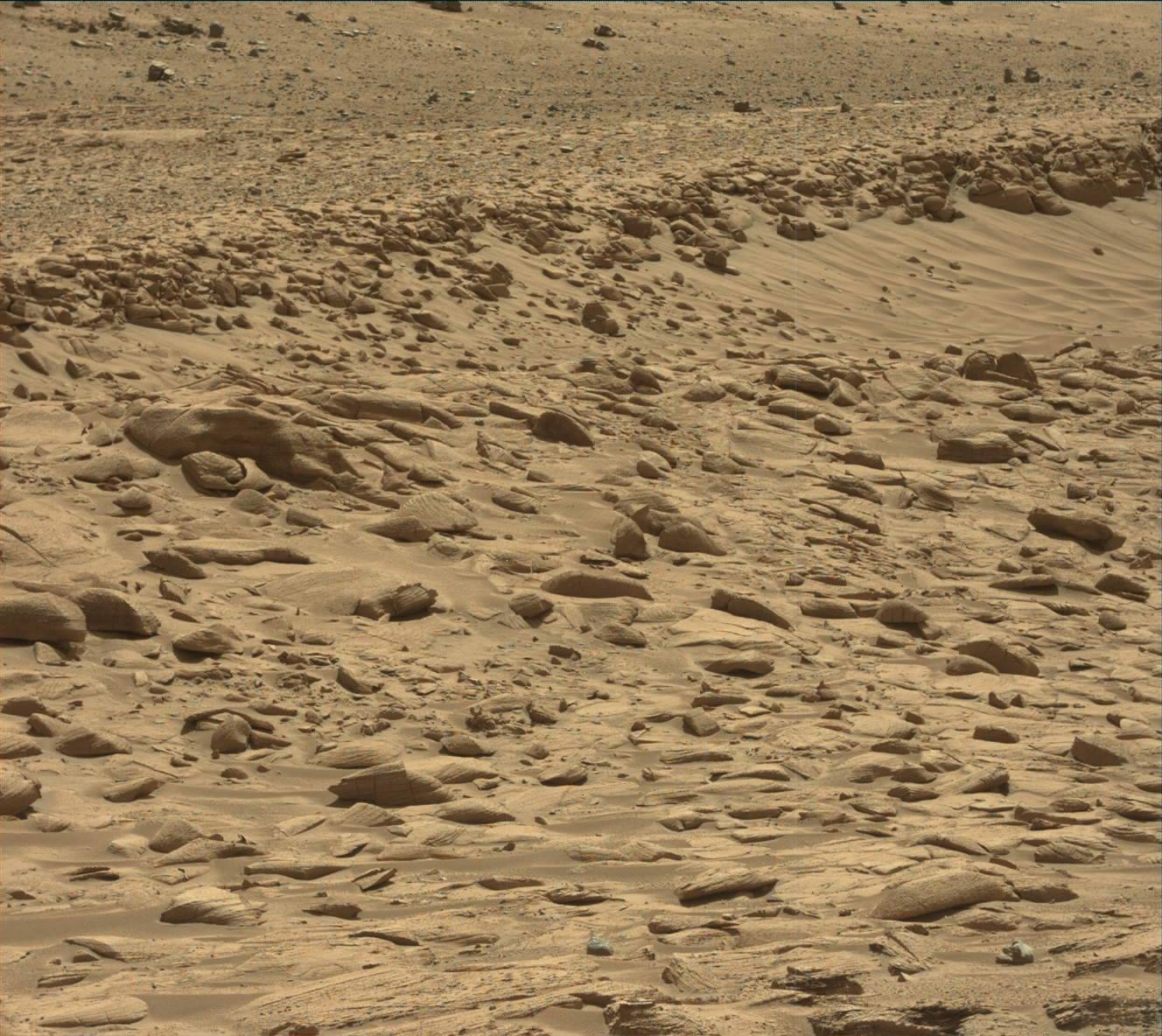
Curiosity Mast Camera Left image taken on Sol 3815, May 1, 2023.
Image credit: NASA/JPL-Caltech/MSSS
Then the rover’s Mastcam and Chemistry and Camera (ChemCam) will both image Ubajara in advance of the contact science. After contact science, Mars environment experts plan afternoon observations to try to catch some clouds.
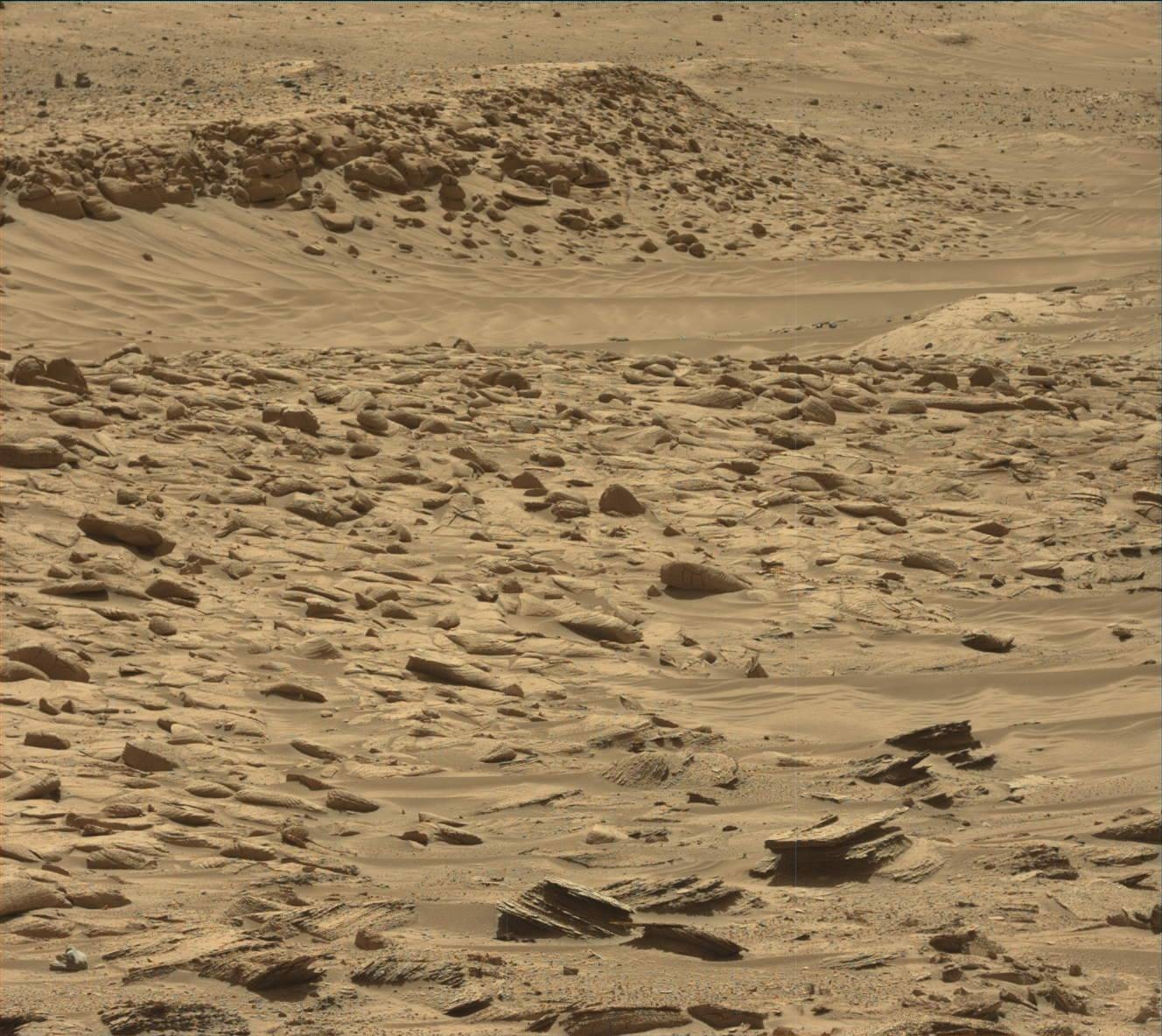
Curiosity Mast Camera Left image taken on Sol 3815, May 1, 2023.
Image credit: NASA/JPL-Caltech/MSSS
A next sol plan calls for targeted cloud and dust devil movies. Then ChemCam has a Laser Induced Breakdown Spectroscopy (LIBS) observation of “Bwesse Kiiki,” and a long distance Remote Micro-Imager (RMI) mosaic on a ridge to the north.
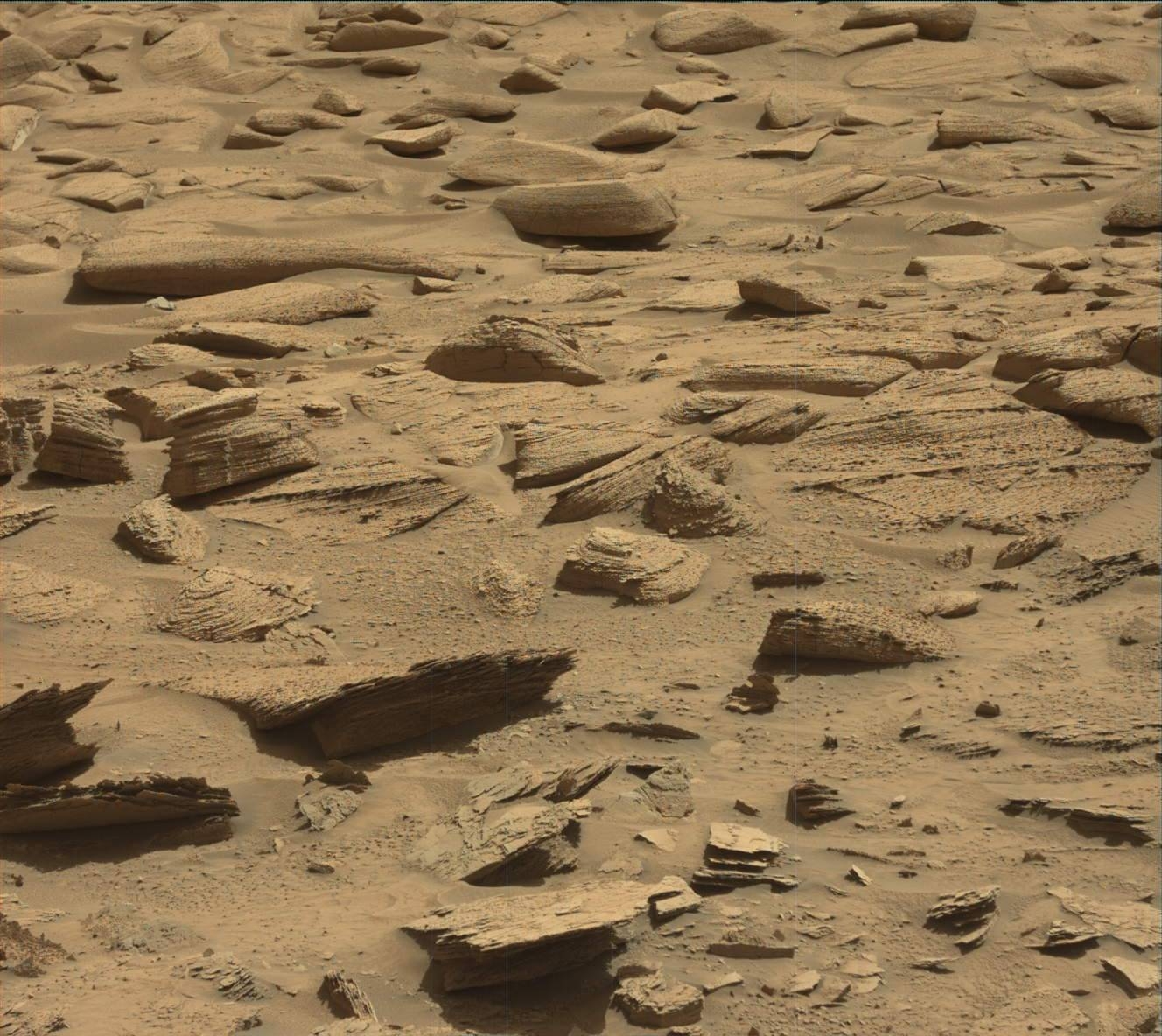
Curiosity Mast Camera Left image taken on Sol 3815, May 1, 2023.
Image credit: NASA/JPL-Caltech/MSSS
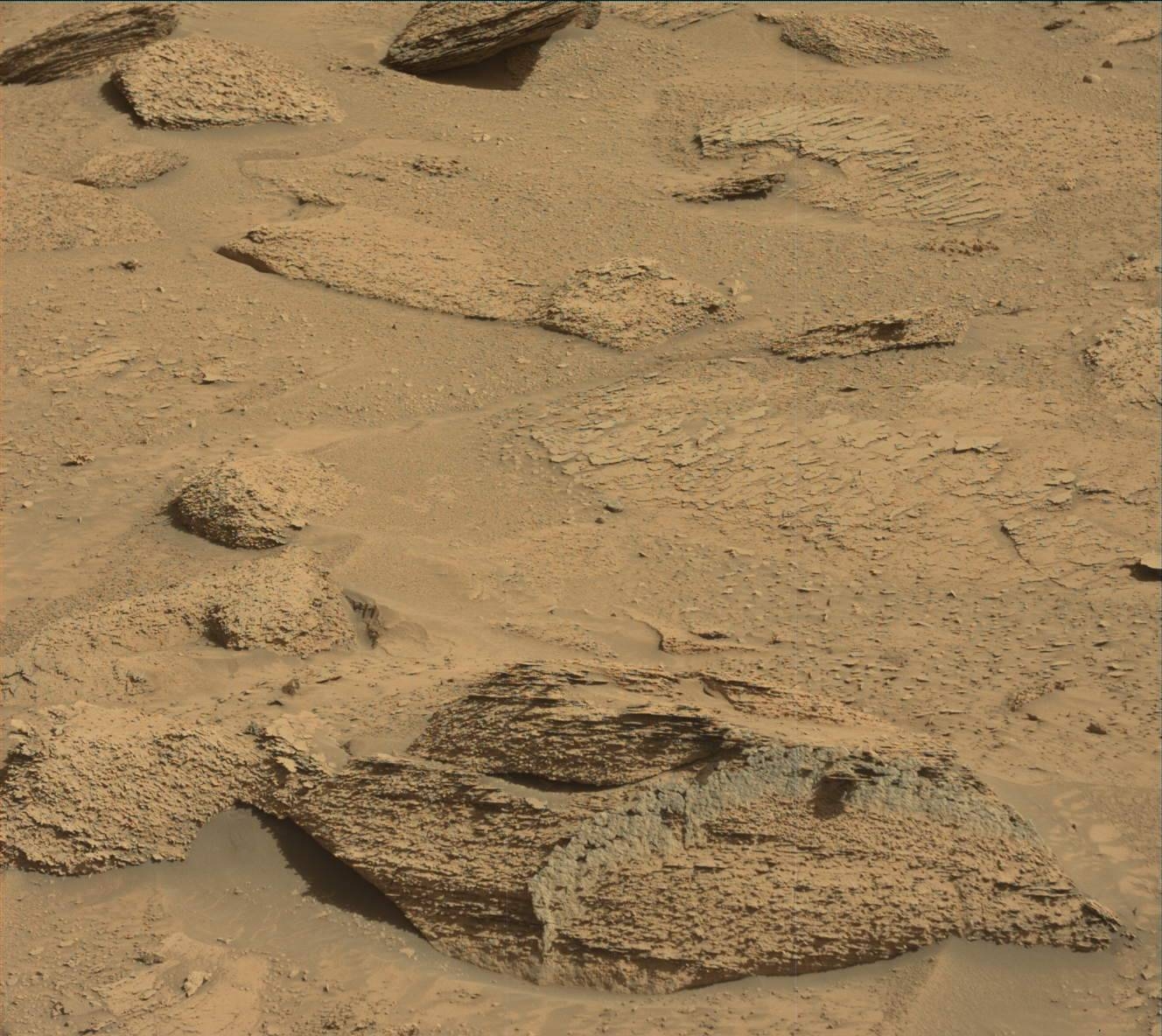
Curiosity Mast Camera Left image taken on Sol 3815, May 1, 2023.
Image credit: NASA/JPL-Caltech/MSSS
Mastcam is also documenting the ChemCam LIBS target, Innanen concludes, and doing multispectral imaging on the layered block “Ekeni.”
 Posted in Space News

