 By
By  November 1st, 2022
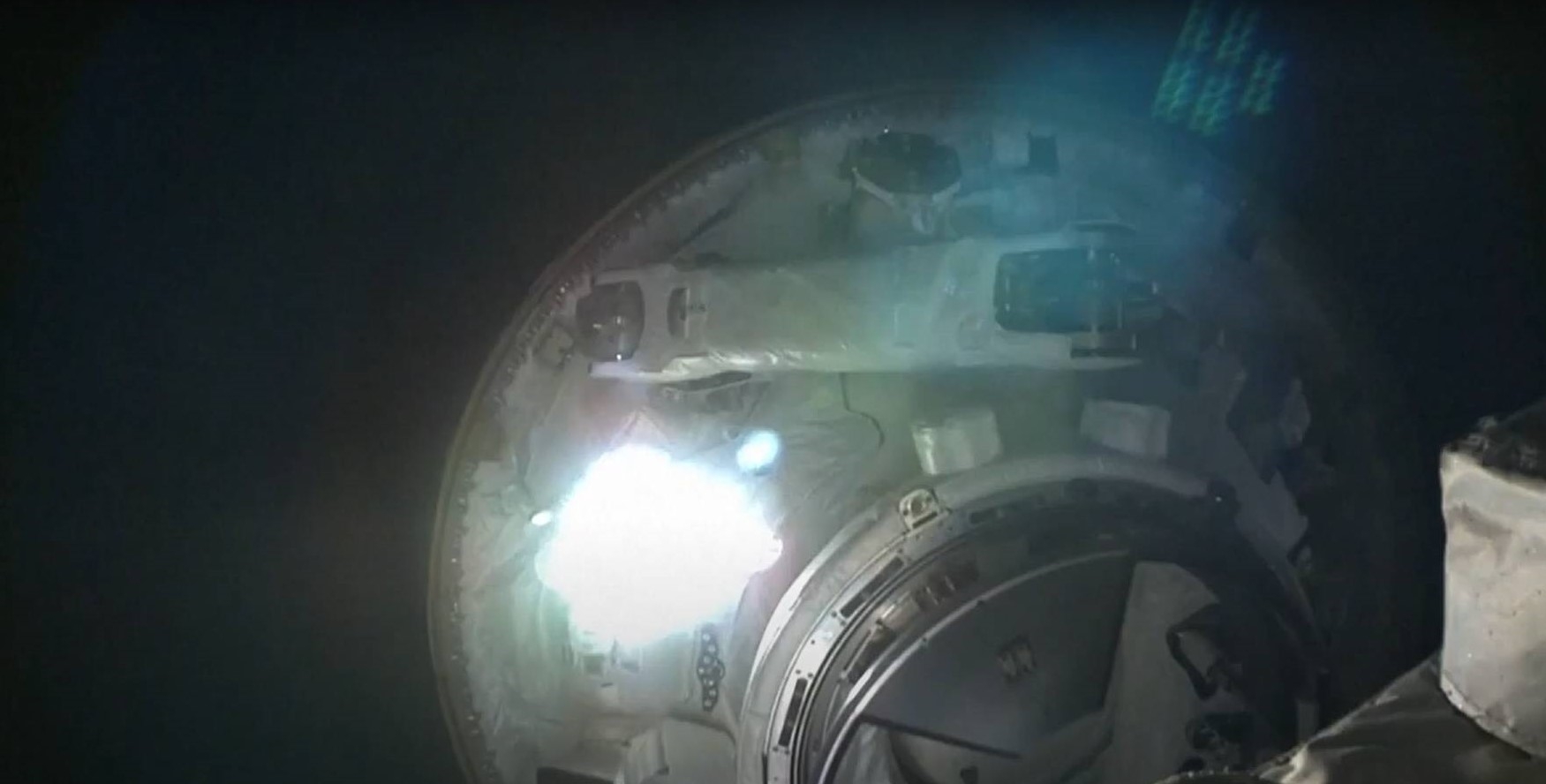
Credit: CNSA/CCTV/Inside Outer Space screengrab
China’s Mengtian lab module has docked with the Tianhe core module’s forward port. This hardware represents the third part of completing China’s Tiangong space station.
Following the lab’s launch, the process of rendezvous and docking took approximately 13 hours.
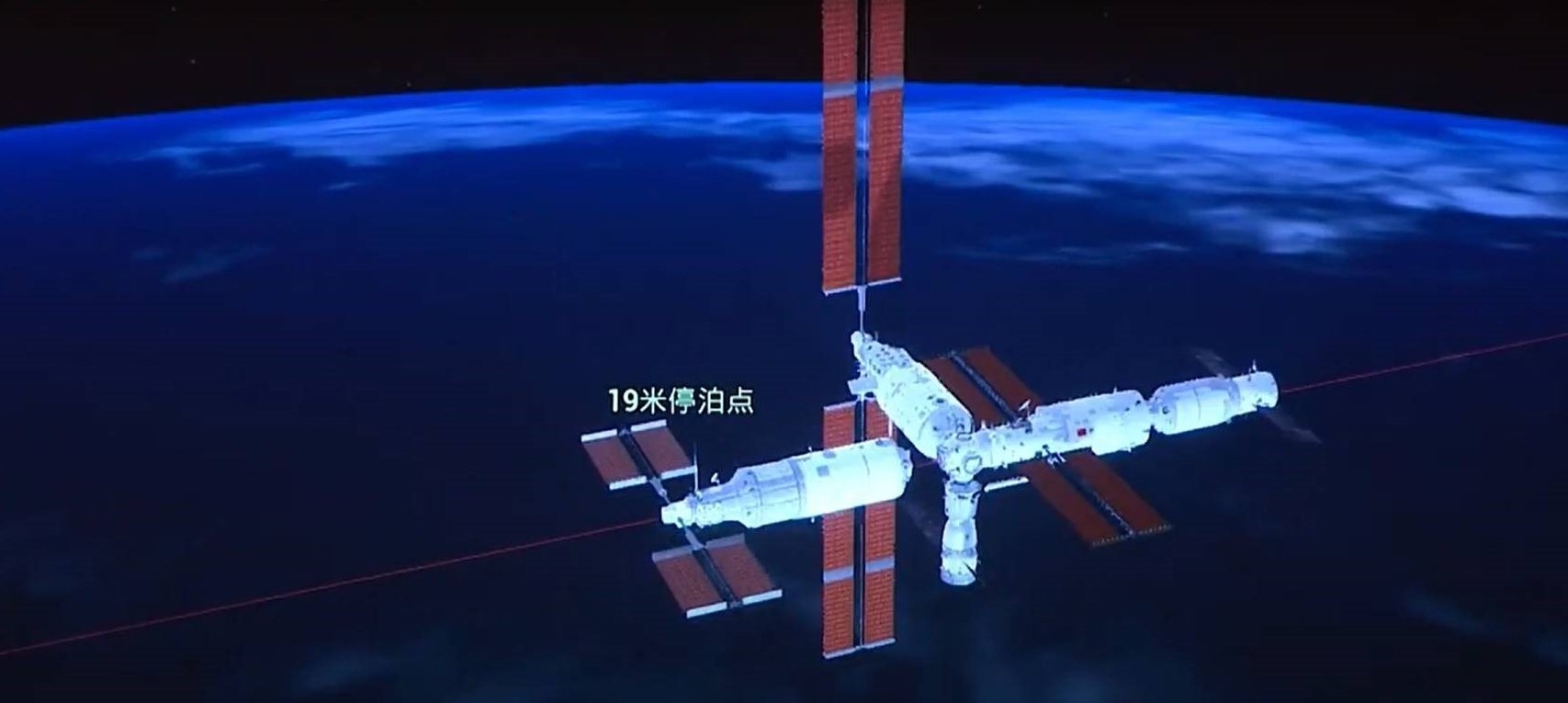
Credit: CNSA/CCTV/Inside Outer Space screengrab
Next step: Transposition of module
“After docking with the space station complex, it will start transposition, which is different from the [earlier launched and docked] Wentian lab module,” said Wang Saijin, deputy chief engineer, Beijing Aerospace Control Center. “Then the Mengtian will connect its system with the complex and create environment for human activities. Our crew members will enter the Mengtian after all these processes,” Wang told China Central Television (CCTV).
Credit: CNSA/CCTV/Inside Outer Space screengrab
The scientific equipment in the Mengtian module will be used for studying microgravity and carrying out experiments in fluid physics, materials science, combustion science and fundamental physics.
T-shape station
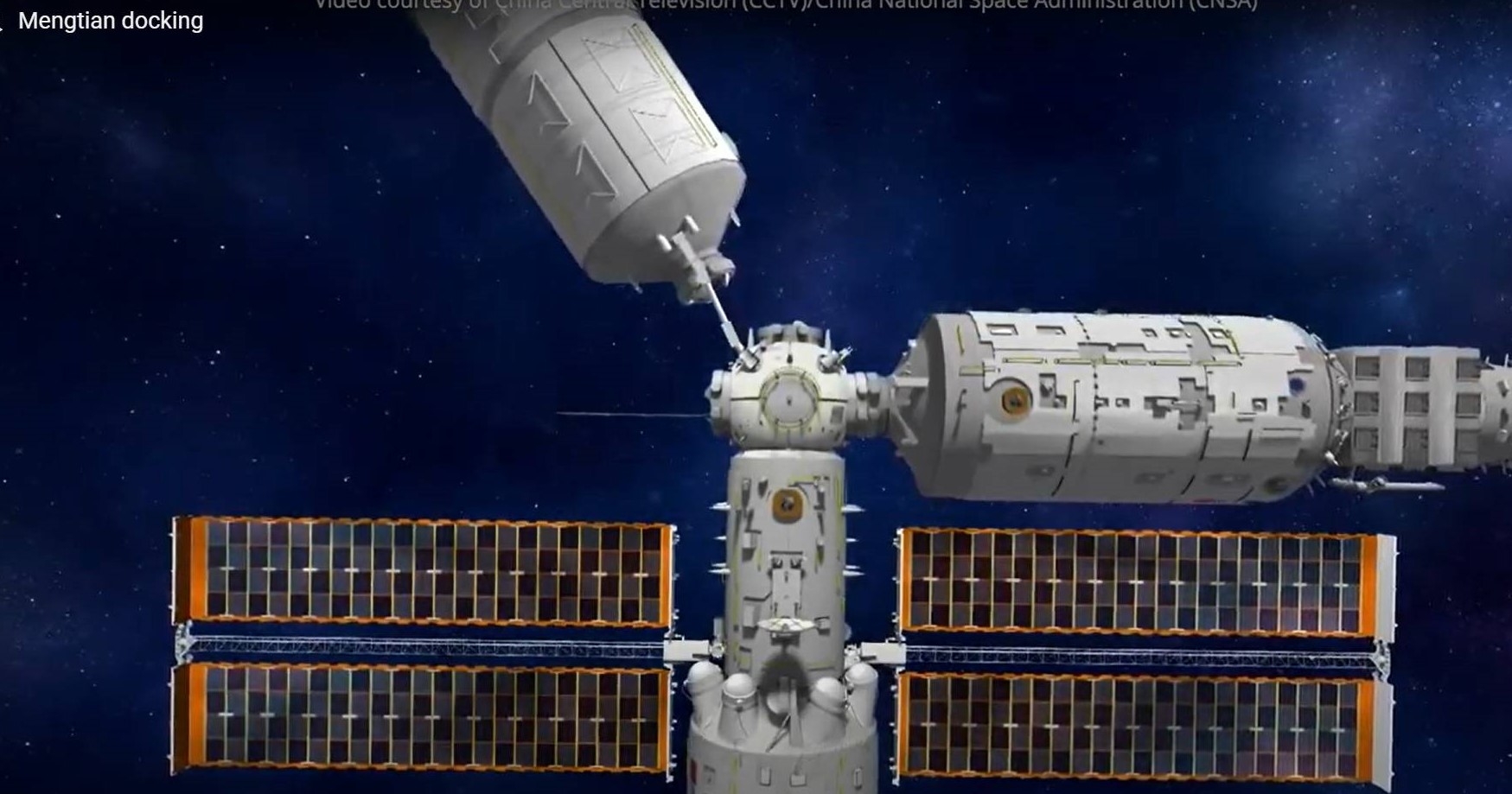
During the Mengitan transposition, that module will be moved by an angle of 90 degrees from the front docking port to a side port of the core module’s node cabin, forming a straight line with the Wentian lab module.
Credit: CNSA/CCTV/Inside Outer Space screengrab
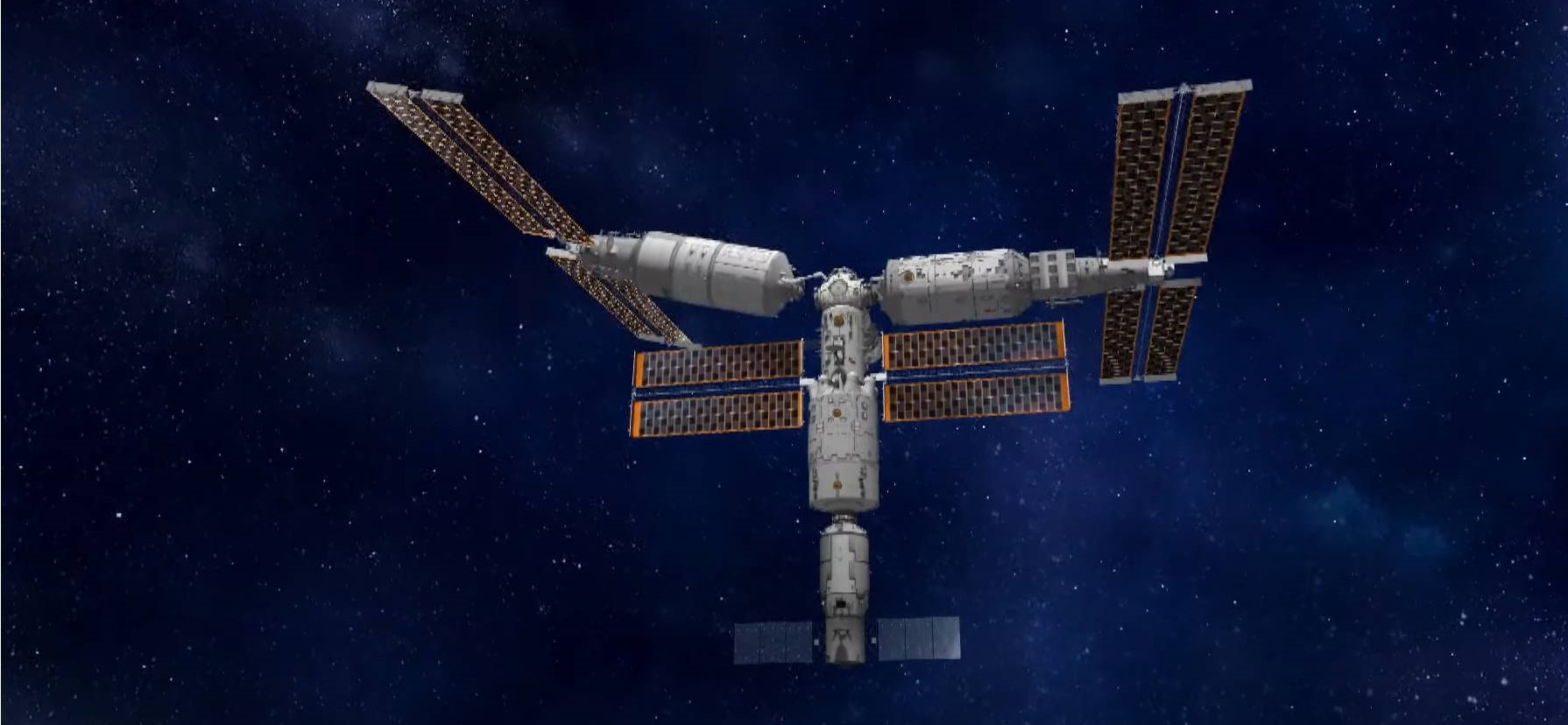
Credit: CNSA/CCTV/Inside Outer Space screengrab
The two lab modules, together with Tianhe core module, will then form a T-shape structure, the planned layout at the space station’s completion.
Malfunction response planning
“The Shenzhou-14 astronauts will cooperate with the ground control teams to adjust the settings of the space station combination. We only need to launch the transposition process at the right time, and then the whole transposition will be implemented automatically without control from the ground,” said Luo Chao, chief system designer for space station with the China Academy of Space Technology.
The transposition equipment weighing only around 220 pounds (100 kilograms) will move the over-20-ton Mengtian lab module during the process.

Station complete is set for year’s end.
Credit: CNSA/CCTV Video News Agency/Inside Outer Space screengrab
Station designers and engineers have arranged many in-orbit tests on the transposition equipment, Luo added. “We have designed plans and done ground tests and in-orbit tests targeting all the links that may give rise to problems. And we have prepared around 100 malfunction response plans to ensure completion of the procedures.”
Airlock serves as cargo port
The airlock cabin on the earlier launched Wentian module is designed for the access of astronauts.
Mengtian’s airlock cabin will enable automatic entry and exit of goods, serving the function of a “cargo port”, according to Liu Huiying, planning manager of the space station project office at the Shanghai Academy of Spaceflight Technology.
“The Wentian lab module also has an airlock cabin, which mainly serves as the exit-entry point for astronauts to conduct extravehicular activities. But the diameter of the cabin is limited, making it difficult to move goods with heavy payload out of the cabin,” Liu told CCTV.

Credit: CCTV/Inside Outer Space screengrab
“The airlock cabin of Mengtian is designed for the free entry and exit of cargoes, with a payload capacity of more than 400 kilograms. The entrance is 1.2 meters in length, width and height, allowing the free entry and exit of cargoes that are difficult for astronauts to carry around,” said Liu.
The three-member crew of the Shenzhou-14 mission now onboard the orbital complex will later be joined by three more astronauts in the coming months to complete the final construction of China’s space station by year’s end.
For newly issued videos regarding the docking and new module, go to:
 Posted in Space News

