 By
By  October 21st, 2022
Curiosity’s location on Sol 3628. Distance driven to that sol: 17.86 miles/28.74 kilometers.
Credit: NASA/JPL-Caltech/Univ. of Arizona
NASA’s Curiosity Mars rover at Gale Crater is currently performing Sol 3629 duties.
The robot is now at a new location, with new targets and new viewsheds to investigate, reports Alex Innanen, an atmospheric scientist at York University; Toronto, Ontario, Canada.
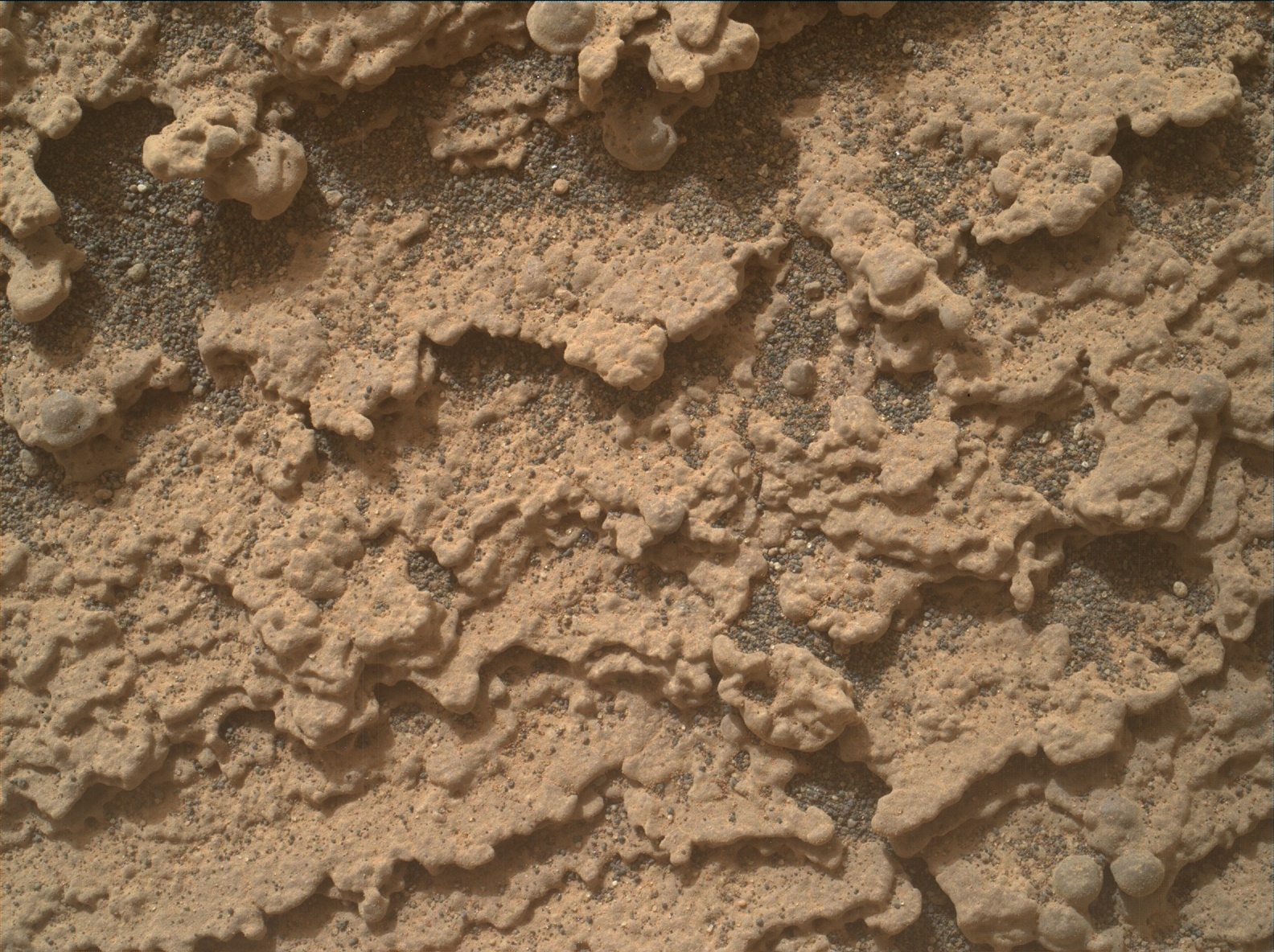
Curiosity Mars Hand Lens Imager photo produced on Sol 3628, October 21, 2022.
Credit: NASA/JPL-Caltech/MSSS
“Power was a bit tight, especially for the first sol with two hours of science time, a drive, and arm activities. Still, we managed to pack in lots of targeted science before driving away,” Innanen added.

Curiosity Left B Navigation Camera image acquired on Sol 3628, October 21, 2022.
Credit: NASA/JPL-Caltech
Bedrock target
On tap is a look at a bedrock target called “Pacu” with the Alpha Particle X-Ray Spectrometer (APXS), as well as making a Chemistry and Camera (ChemCam) Laser Induced Breakdown Spectroscopy (LIBS) observation. ChemCam will be rounding out their sol’s imaging with a long distance mosaic of “Los Brincos.” Mastcam is also getting in on the action, with the similarly named “Arapari” and “Arapixi,” as well as “Baganara Island.”
The environmental team is also surveying the location, trying to catch dust devils.
The Mars Hand Lens Imager (MAHLI) is returning to Pacu before the rover drive’s off.

Curiosity Left B Navigation Camera image acquired on Sol 3628, October 21, 2022.
Credit: NASA/JPL-Caltech
Untargeted science
“Just because we’ve driven to a new location doesn’t mean we have to wait to plan more science,” Innanen explains. “After driving in the middle of the plan, such as on the second sol in this plan [Sols 3628-3629], we can still do ‘untargeted’ science, which just means we don’t have the benefit of seeing exactly what our new location looks like.”

Curiosity Left B Navigation Camera image acquired on Sol 3628, October 21, 2022.
Credit: NASA/JPL-Caltech
Lastly, a suprahorizon cloud movie, a dust devil movie, a full tau observation and a line of sight at the crater rim is slated.
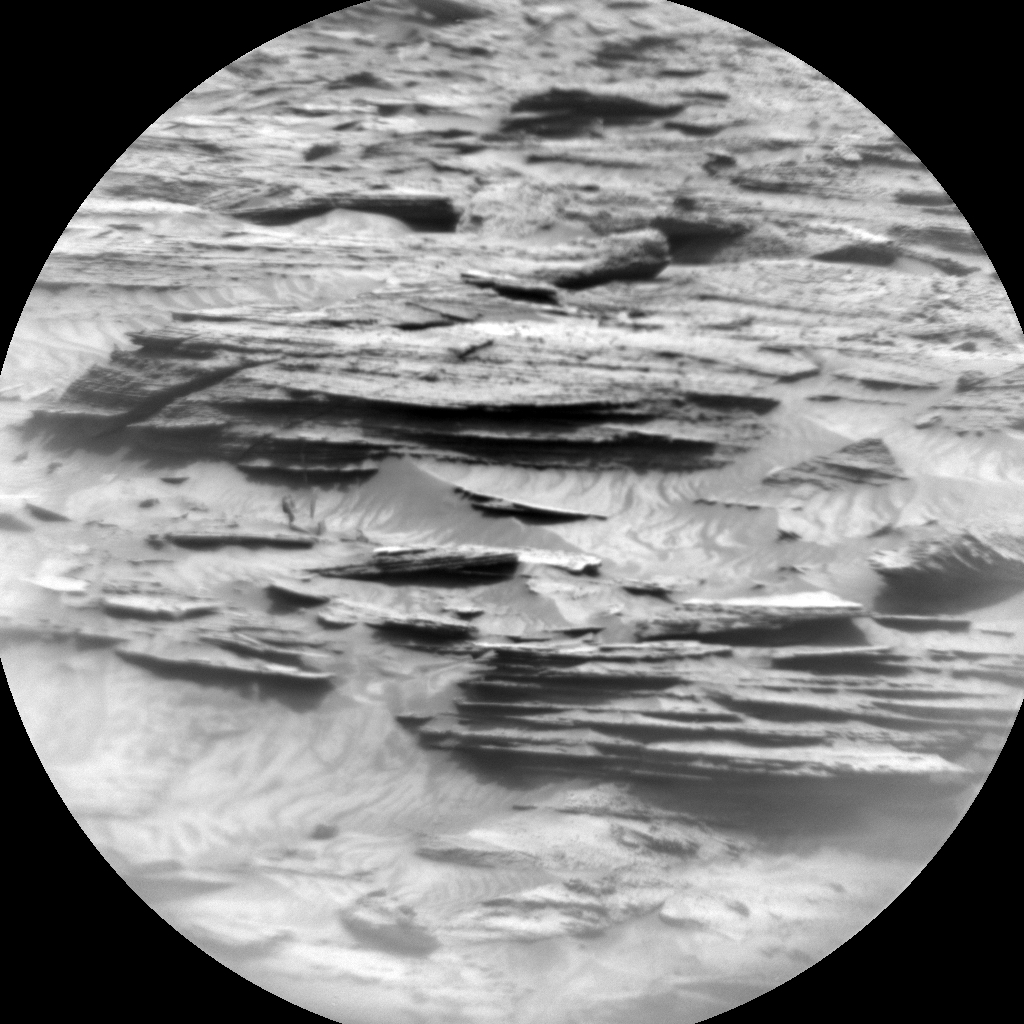
Curiosity Chemistry & Camera (ChemCam) Remote Micro-Imager (RMI) photo taken on Sol 3628, October 20, 2022.
Credit: NASA/JPL-Caltech/LANL
ChemCam is also using AEGIS to autonomously select a target for analysis, Innanen concludes. AEGIS stands for Autonomous Exploration for Gathering Increased Science) – a software suite that permits the rover to autonomously detect and prioritize targets.
 Posted in Space News

