 By
By  August 16th, 2022
Curiosity Right Navigation Camera Sol 3560
Credit: NASA/JPL-Caltech
NASA’s Curiosity Mars rover at Gale Crater is now performing Sol 3564 duties.
For the robot, it’s slow and steady does it, reports Catherine O’Connell-Cooper, a planetary geologist at University of New Brunswick Fredericton, New Brunswick, Canada.
“We are making slow but steady progress through the ‘Paraitepuy pass,’ having passed the approximate halfway point over the weekend,” O’Connell-Cooper adds.
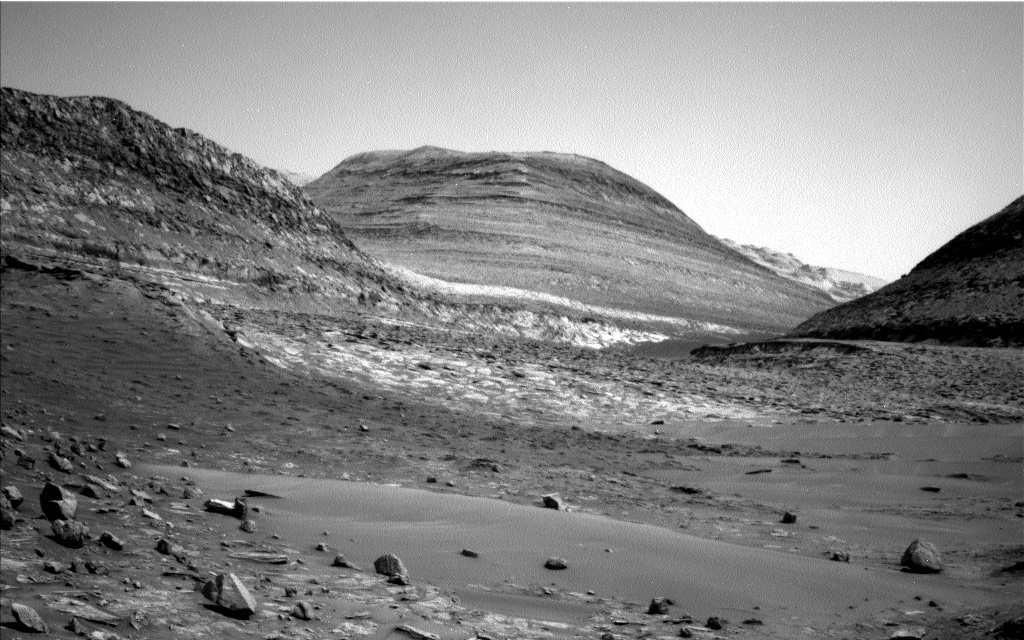
Curiosity Left Navigation Camera image showing Orninoco and Kukenán buttes. Image taken on Sol 3563, August 15, 2022. “Chenapua” is just visible on the right hand side of the image.
Credit: NASA/JPL-Caltech
Path forward
A recent one sol plan (Sol 3564) found researchers staring around the corner at the neck of the pass and considering a rover drive path forward.
“Sometimes, our drive forward is smooth and flat,” O’Connell-Cooper, notes, “neither word can be used here! Our drive forward has abundant sand and sharp rocks, so finding a safe path is providing our intrepid rover planners with some interesting times!”
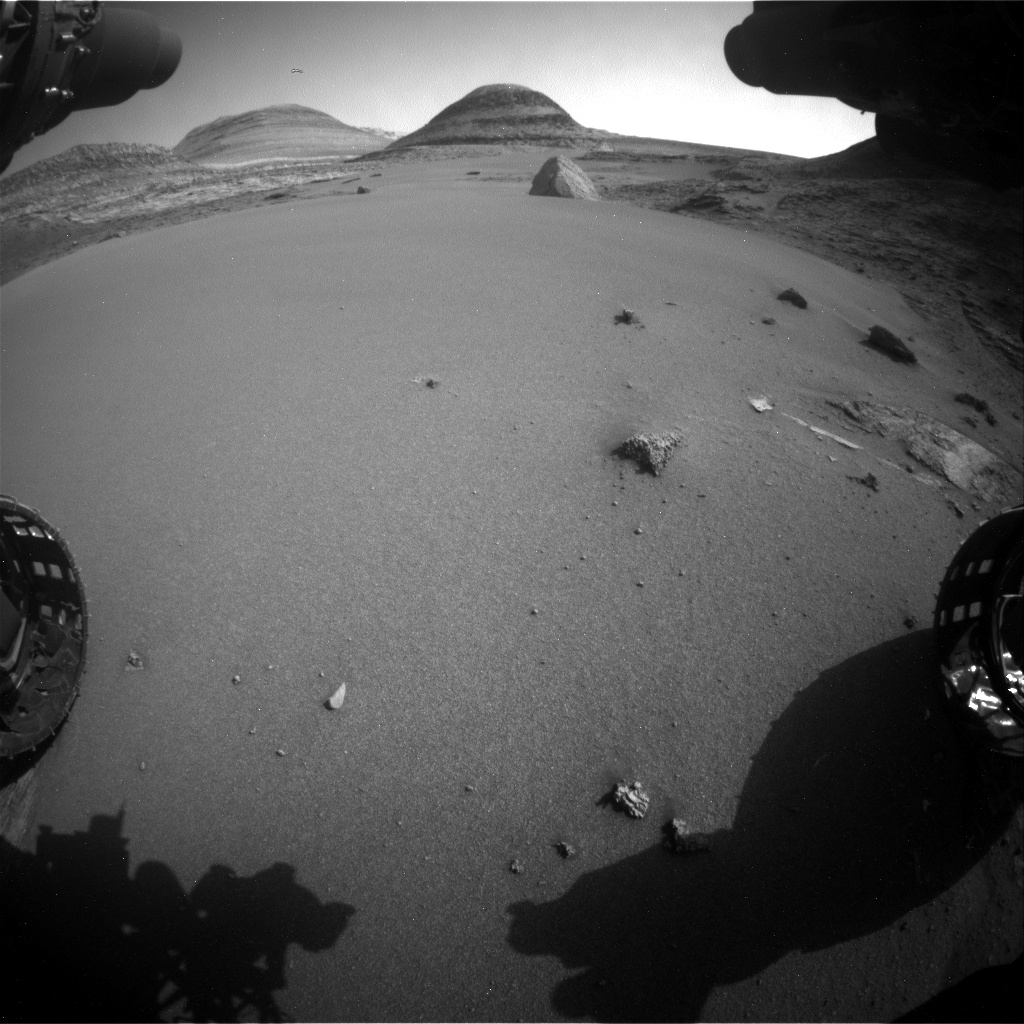
Curiosity Front Hazard Avoidance Camera Right B image acquired on Sol 3564, August 16, 2022.
Credit: NASA/JPL-Caltech
A newly scripted planned drive is roughly 95 feet (29 meters).
Extraordinary view
O’Connell-Cooper points out: “The view from here is quite extraordinary — we are looking at several large buttes, which lie along the side of the pass and in front of us — and it is hard to resist the urge to photograph everything in sight, just like any tourist or traveler!”
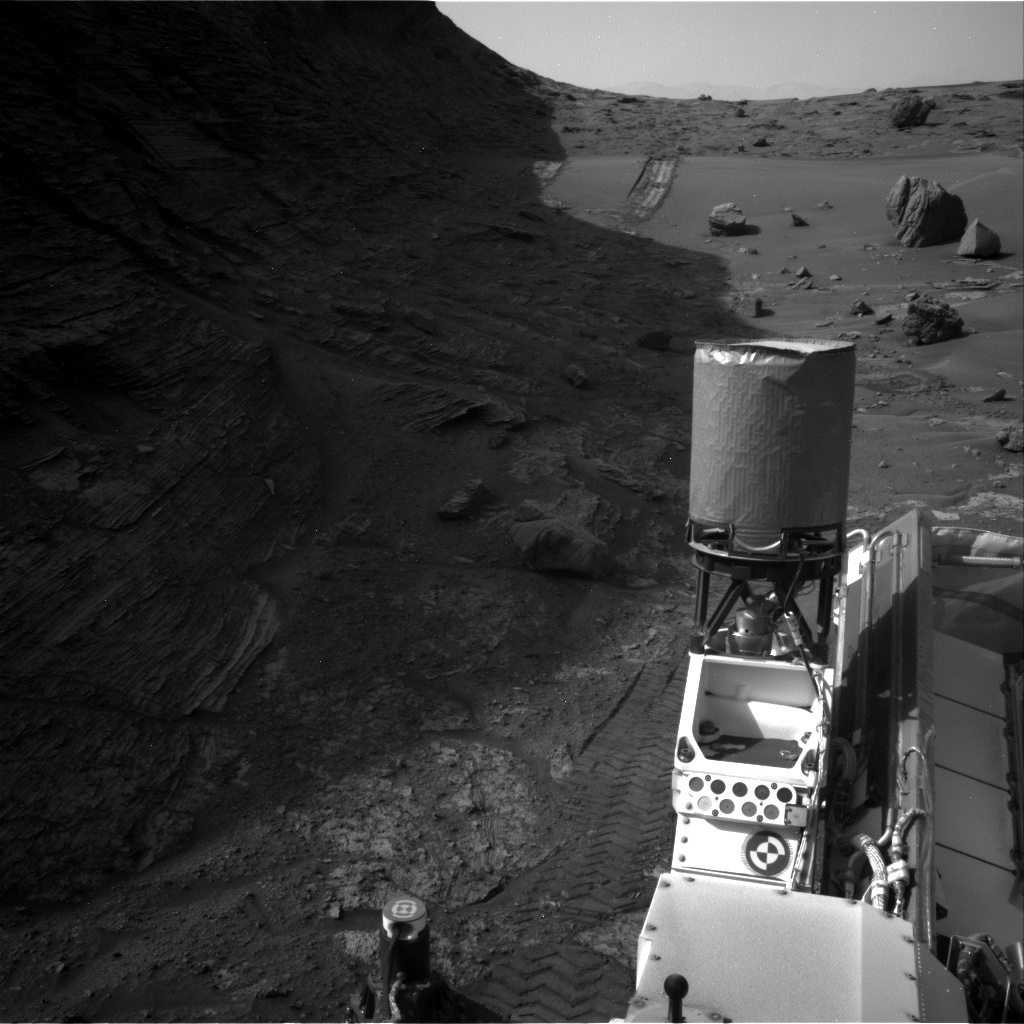
Curiosity Right B Navigation Camera image taken on Sol 3564, August 16, 2022.
Credit: NASA/JPL-Caltech
Mastcam is hard at work again as a result, imaging the butte Orinoco and “Kukenán,” along with two mosaics on the Bolivar butte. Curiosity’s Chemistry and Camera (ChemCam) is using its long distance imager, the Remote Micro-Imager (RMI) to look at the butte “Chenapua.”
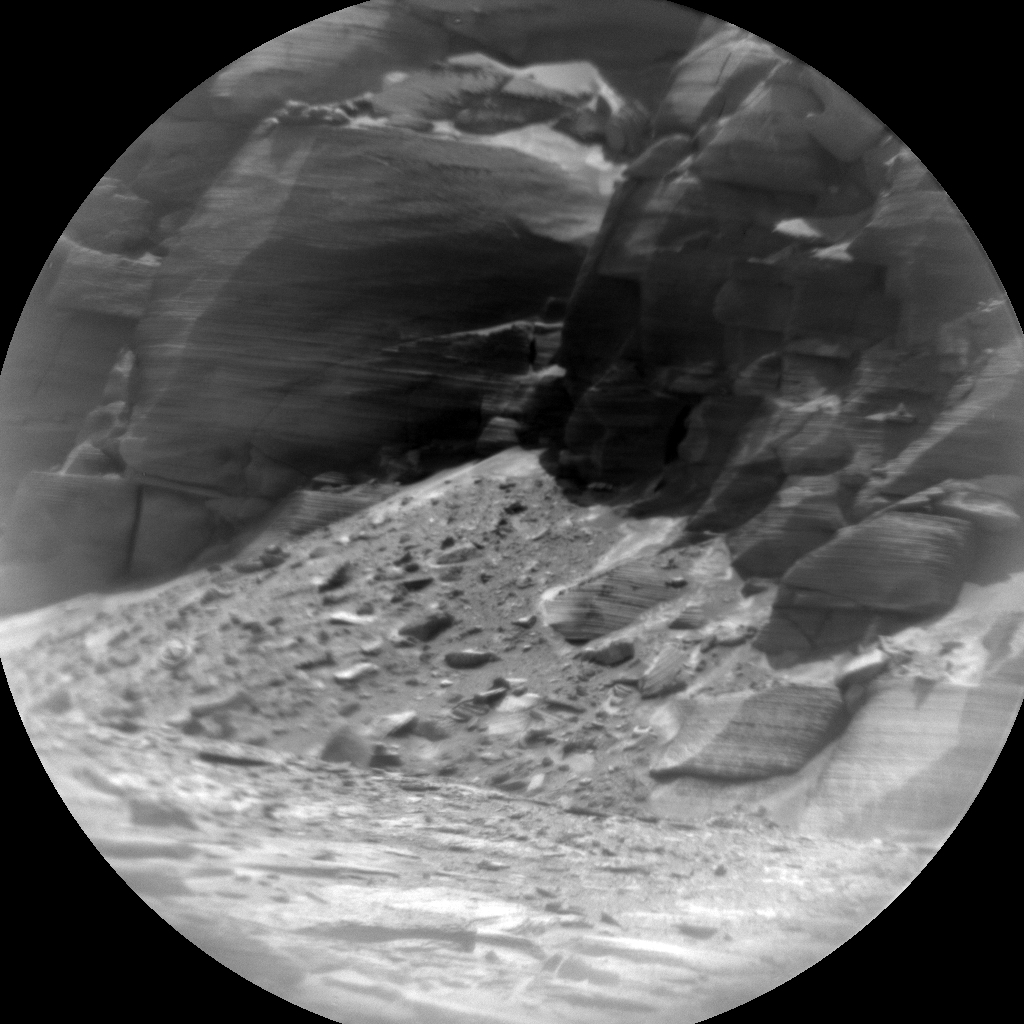
Curiosity Chemistry & Camera (ChemCam) Remote Micro-Imager (RMI) photo taken on Sol 3564, August 16, 2022.
Credit: NASA/JPL-Caltech/LANL
“We parked next to some sand in this plan, so we are spending time to look at grain sizes within the sand patch,” O’Connell-Cooper reports.

Curiosity Front Hazard Avoidance Camera Right B image acquired on Sol 3564, August 16, 2022.
Credit: NASA/JPL-Caltech
The robot’s Mastcam will image the nicely developed ripple crest (“Blackwater Creek”). The Mars Hand Lens Imager (MAHLI) target “Sand Creek” and the Mastcam target “Karowrieng” look at the flanks, away from the ripple crest.
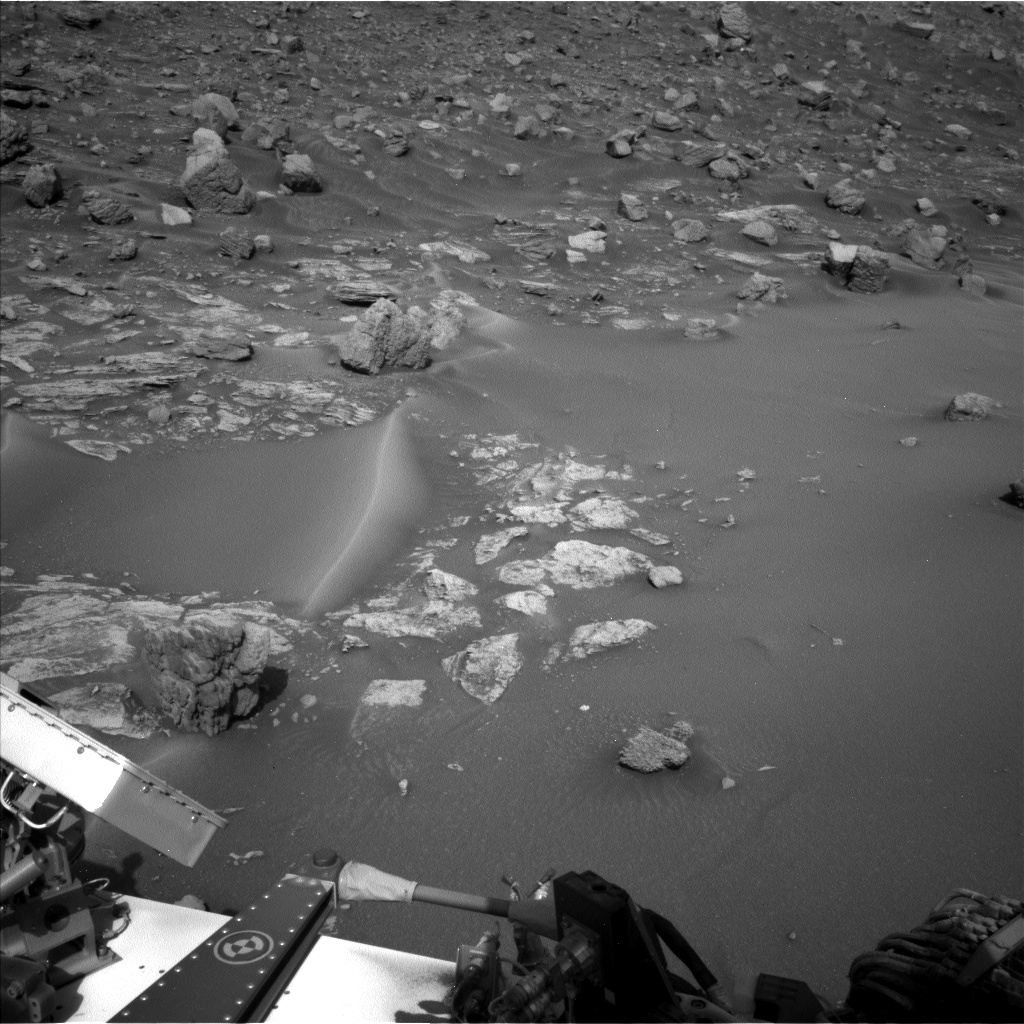
Curiosity Left B Navigation Camera image acquired on Sol 3564, August 16, 2022.
Credit: NASA/JPL-Caltech
Intriguing sand flow patterns
This sandy patch has a few float (i.e., loose on the surface) rocks in it, O’Connell-Cooper reports.
MAHLI will analyze “Nascente,” which is a small rock in the middle of the sand patch, right in front of the rover.

Curiosity Mars Hand Lens Imager (MAHLI) photo produced on Sol 3564, August 16, 2022.
Credit: NASA/JPL-Caltech/MSSS

Curiosity Mars Hand Lens Imager (MAHLI) photo produced on Sol 3564, August 16, 2022.
Credit: NASA/JPL-Caltech/MSSS

Curiosity Mars Hand Lens Imager (MAHLI) photo produced on Sol 3564, August 16, 2022.
Credit: NASA/JPL-Caltech/MSSS
Mastcam is imaging a large float rock “Plantain Island,” off to the left of the rover, and the float “Pairuwa Islands” within the sand patch, which has some intriguing sand flow patterns.
Mars researchers can compare these float targets to the bedrock ChemCam . Laser Induced Breakdown Spectroscopy (LIBS) target “Corocito” – this may help them determine the origin of the float rocks.
“Once our imaging and contact science is complete here today, we will move forward, picking our way along the pass, O’Connell-Cooper concludes.
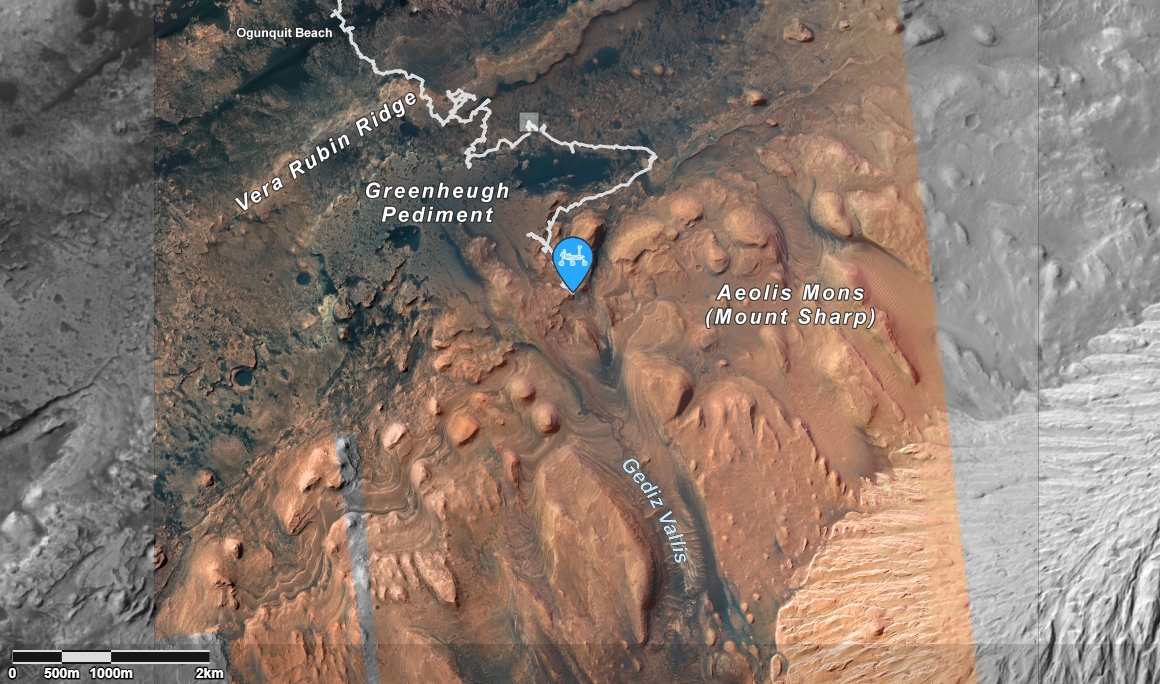
Curiosity’s location as of Sol 3563. Distance driven to this sol: 17.7 miles/28.49 kilometers.
Credit: NASA/JPL-Caltech/Univ. of Arizona
 Posted in Space News

