 By
By  July 2nd, 2022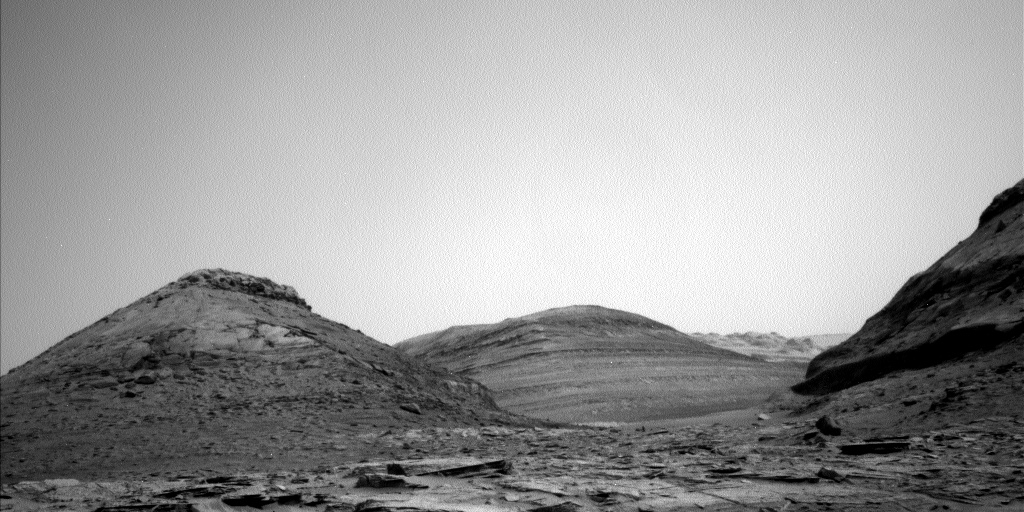
“Deepdale” on the left and the edge of “Bolivar” on the right. Curiosity Left Navigation Camera image taken on June 26, Sol 3515, at drive 3152, site number 95. While it looks like it’s about the same size as the hills that bound it, this effect is just due to forced perspective. In reality, Kukenán is nearly five times farther away and over three times as tall as Deepdale!
Credit: NASA/JPL-Caltech
NASA’s Curiosity Mars rover at Gale Crater is now performing Sol 3521 duties.
Abigail Fraeman, a planetary geologist at NASA’s Jet Propulsion Laboratory, reports that Curiosity is proceeding through a pre-planned checklist of activities for drill campaigns, after a successful drilling of Avanavero.
The rover team is waiting for the downlink that contains data from the robot’s Chemistry & Mineralogy X-Ray Diffraction/X-Ray Fluorescence Instrument (CheMin) – the first analysis of the Avanavero drilled sample.
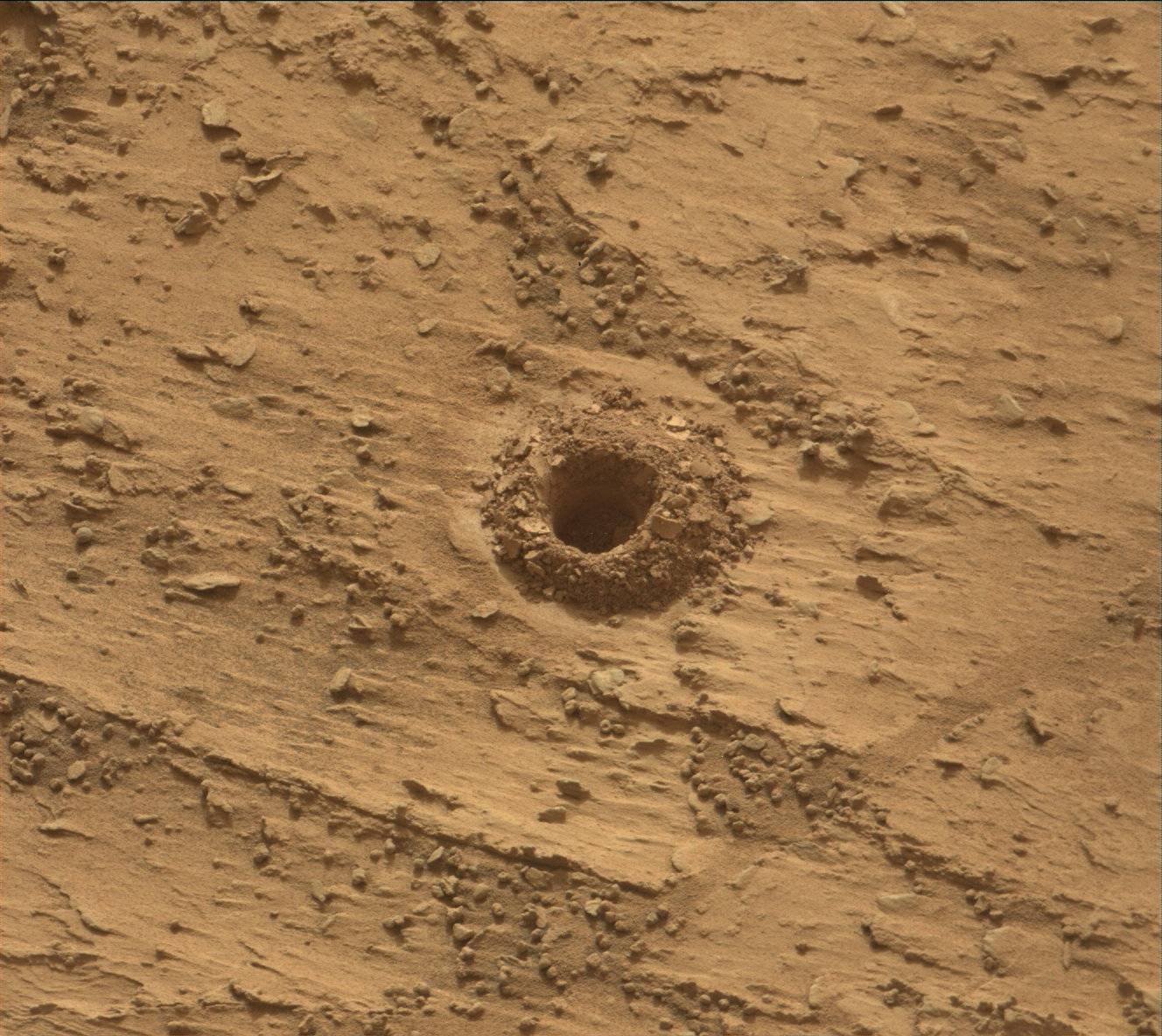
Curiosity Mast Camera image of drill hole taken on Sol 3512, June 23, 2022.
Credit: NASA/JPL-Caltech/MSSS
That data helps Mars researchers to decide whether to analyze the sample with the Sample Analysis at Mars (SAM) Instrument Suite as well.
Onboard lab work
“While we wait today, we planned a whopping six sols worth of activity that will cover the upcoming July 4th US holiday,” Fraeman adds. “The main activities in the plan included a second evening of analysis of Avanavero with CheMin, and an activity to prepare the SAM instrument to accept a sample so that we can be ready to say ‘Go for sample analysis!’ on Tuesday after we see the CheMin results.
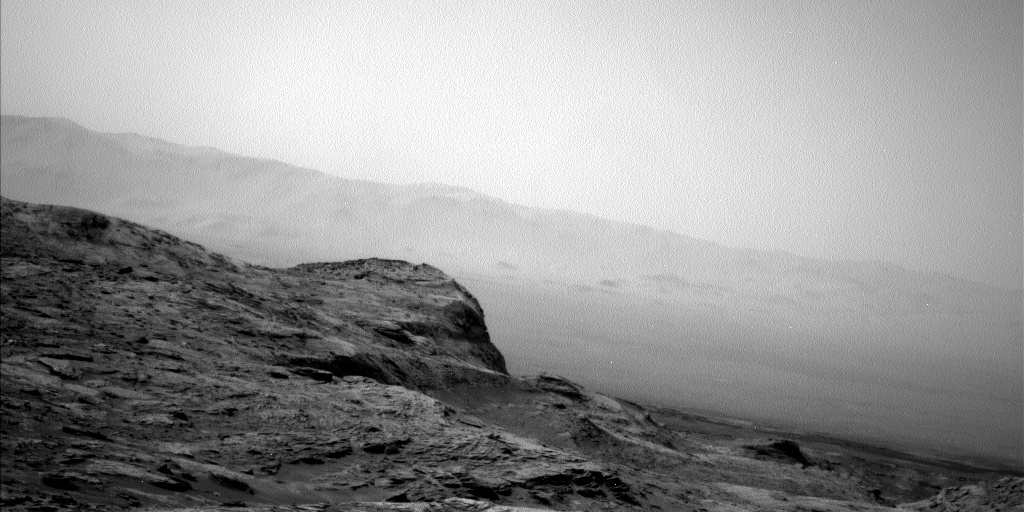
Curiosity Left B Navigation Camera image taken on Sol 3519, June 30, 2022.
Credit: NASA/JPL-Caltech
“We planned lots of remote sensing activities around the tasks of our SAM and CheMin onboard laboratories. We will be collecting several high resolution Mastcam mosaics of the area and environmental sensing data,” Fraeman explains.
Impressive expression
Also slated is collecting Chemistry and Camera (ChemCam) Laser Induced Breakdown Spectroscopy (LIBS) observations of rock targets named “Tocobirem” and “Uaiparu,” a soil target named “Simibi,” and the drill hole itself.
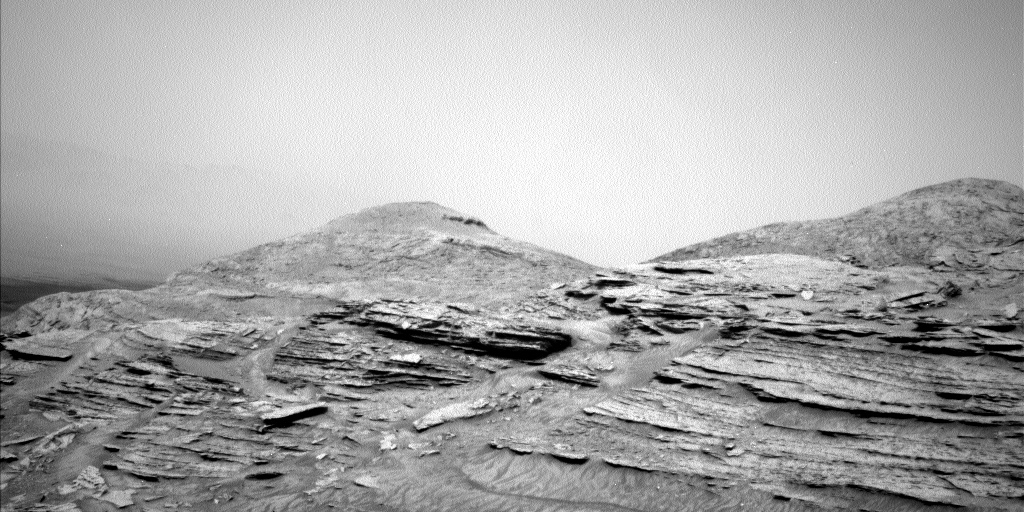
Curiosity Left B Navigation Camera image taken on Sol 3519, June 30, 2022.
Credit: NASA/JPL-Caltech
On top of that, ChemCam will also acquire two long distance Remote Micro-Imager (RMI) mosaics, one over Gediz Vallis ridge, and one over a far distant hill named “Kukenán.”
“Kukenán’s Earth namesake is a tepui, or distinctive isolated table-top mountain, found in South America. The Martian Kukenán is also somewhat flat topped and an impressive expression in Mt. Sharp’s topography,” Fraeman adds.
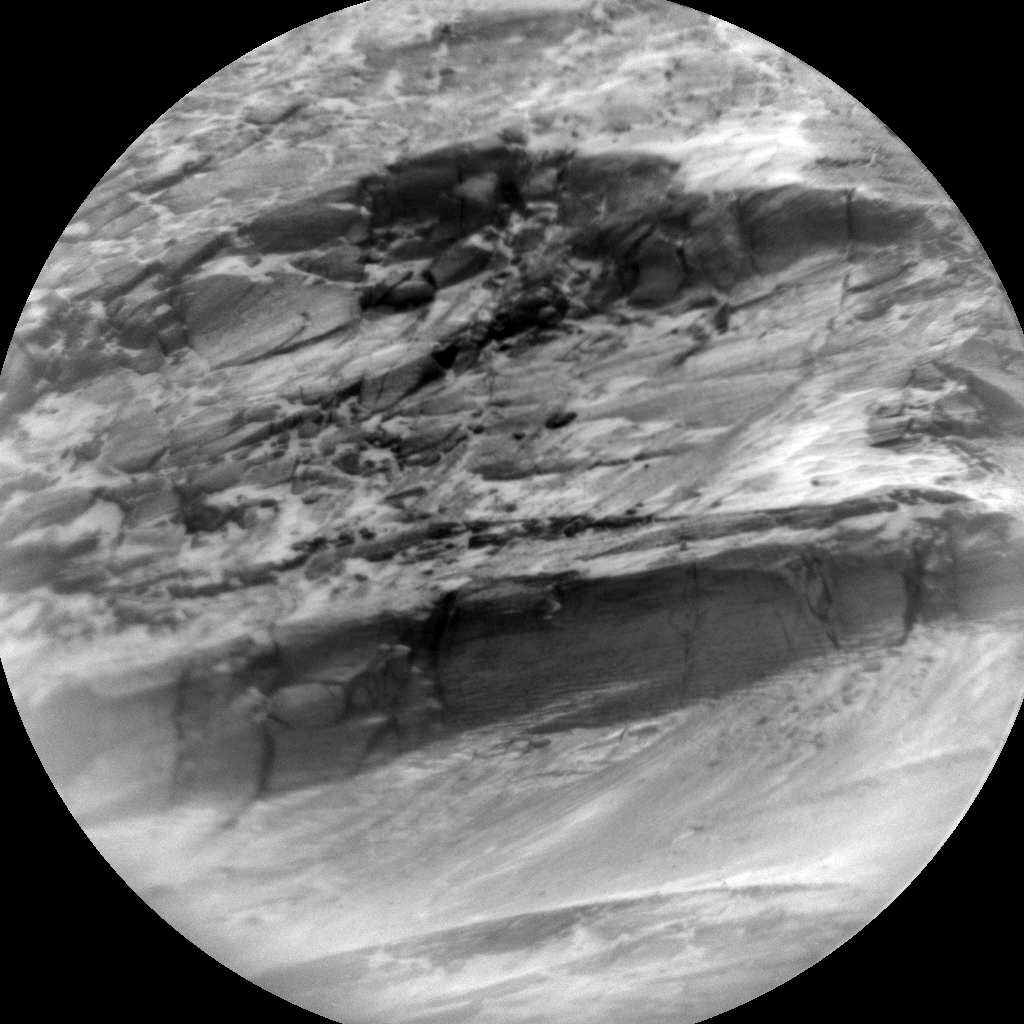
Curiosity Chemistry & Camera (ChemCam) Remote Micro-Imager (RMI) photo taken on Sol 3520, July 1, 2022.
Credit: NASA/JPL-Caltech/LANL
“Curiosity’s strategic traverse path takes the rover right past Kukenán in about a kilometer or so,” Fraeman notes, “so this feature will become a familiar landmark rising in our windshield for months to come.”
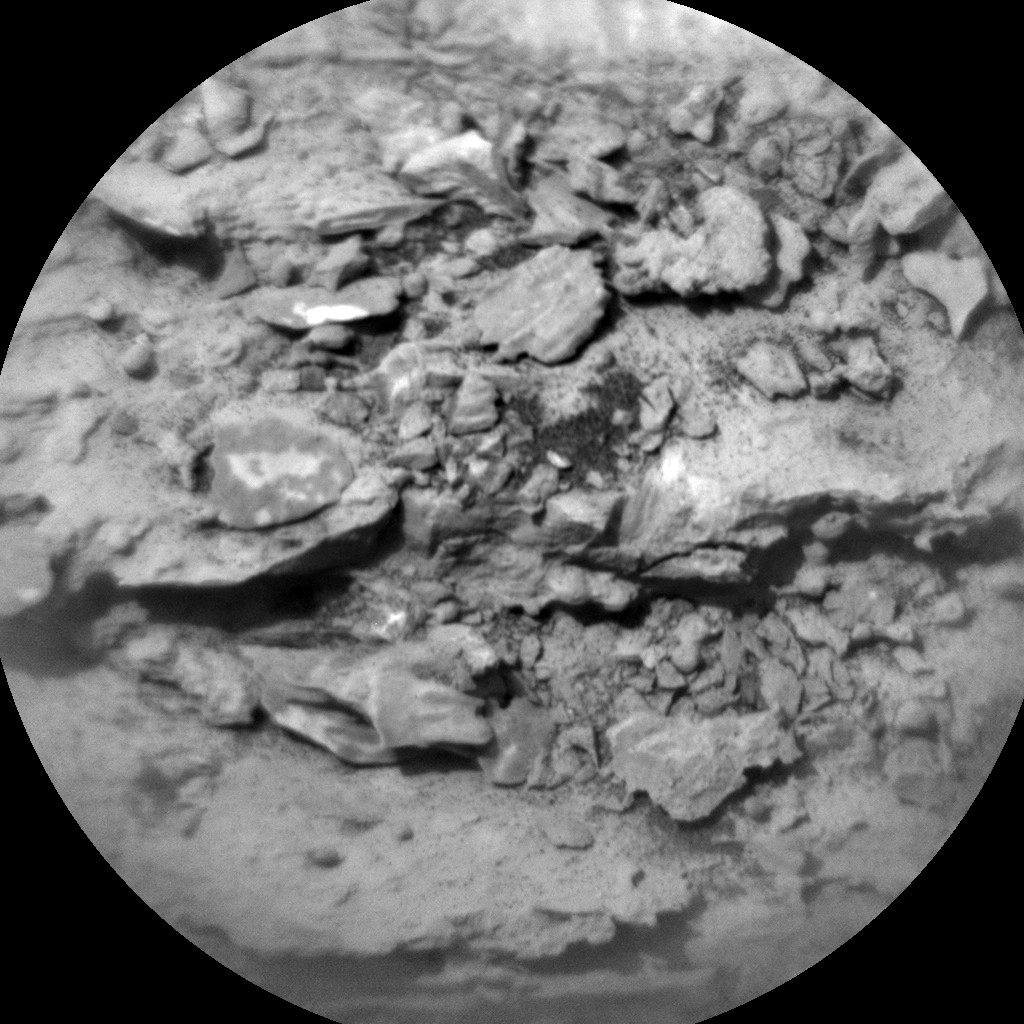
Curiosity Chemistry & Camera (ChemCam) Remote Micro-Imager (RMI) photo taken on Sol 3520, July 1, 2022.
Credit: NASA/JPL-Caltech/LANL
 Posted in Space News

