 By
By  June 6th, 2015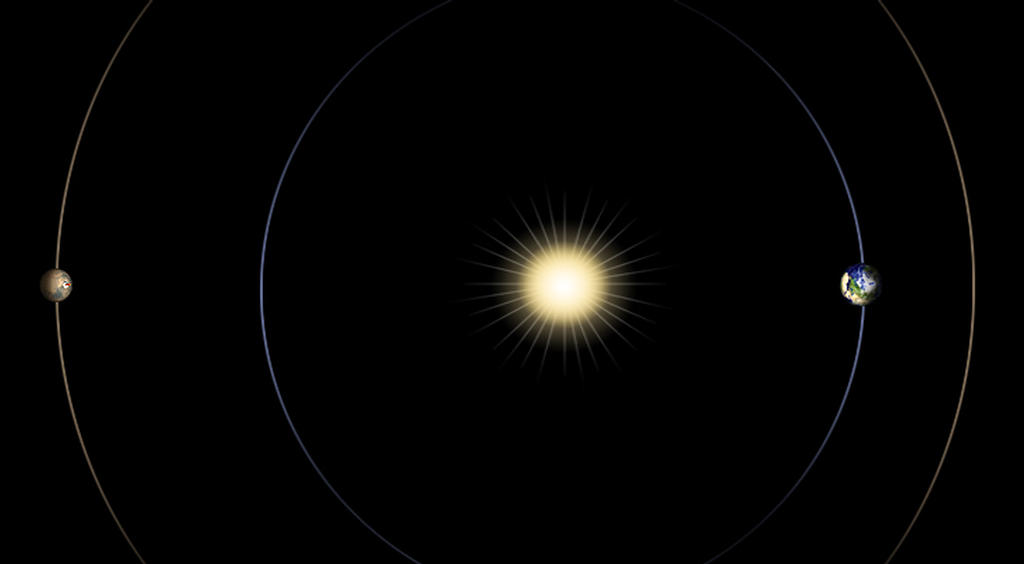
This diagram illustrates the positions of Mars, Earth and the sun during a period that occurs approximately every 26 months, when Mars passes almost directly behind the sun from Earth’s perspective.
Credit: NASA/JPL-Caltech
Curiosity and Opportunity rover operators are prepared this month when Mars passes almost directly behind the Sun from Earth’s perspective, celestial geometry called Mars solar conjunction.
Mars solar conjunction happens about every 26 months.
Because the Sun disrupts radio transmissions between Earth and Mars during conjunction, there is a moratorium on sending commands to spacecraft on the surface of Mars or in orbit around Mars.
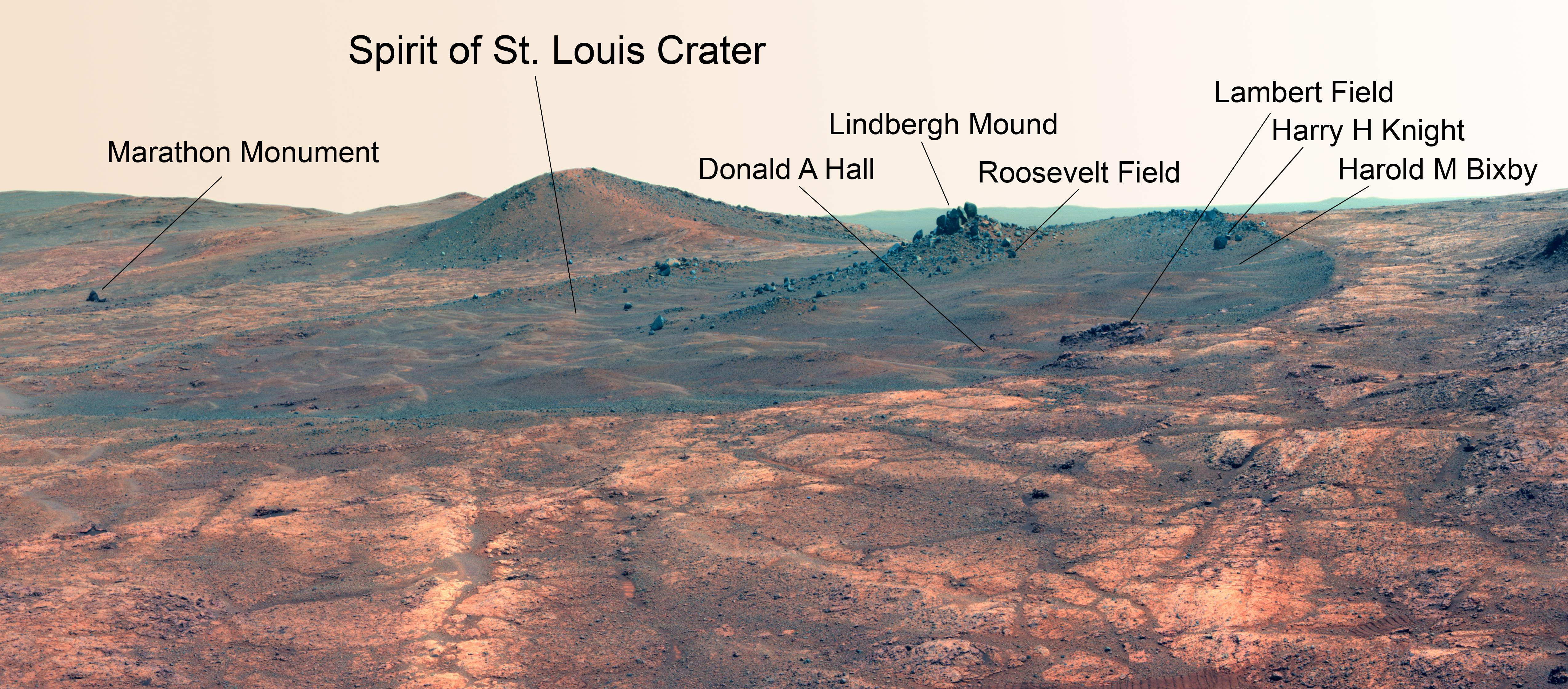
The “Spirit of St. Louis Crater” and a rock spire called “Lindbergh Mound” are shown in this false-color image from Opportunity’s panoramic camera (Pancam). The names carry references to Charles Lindbergh’s ocean crossing in the airplane Spirit of St. Louis, designed by Charles D. Hall. Lindbergh named the plane to recognize financial backing for the flight from St. Louis residents, including Harold M. Bixby and Harry H. Knight.
Credit:
NASA/JPL-Caltech/Cornell Univ./Arizona State Univ.
Long-running rover
Opportunity is the longest-running rover on Mars – landing on the Red Planet in January 2004.
The last six sol conjunction plan for Opportunity has been completed, said Ray Arvidson, Mars Exploration Rover (MER) deputy principal investigator at Washington University in St. Louis.
“We have the Alpha Particle X-ray Spectrometer (APXS) down on a breccia target called Private William Bratton on the northern rim of Spirit of St. Louis crater. Breccia refers to a rock formed from another rock that was broken up and/or shattered in some way.
The shallow Spirit of St. Louis Crater is about 110 feet (34 meters) long and about 80 feet (24 meters) wide, with a floor slightly darker than surrounding terrain. Lindbergh Mound is about 7 to 10 feet (2 to 3 meters) tall, rising higher than the crater’s rim.
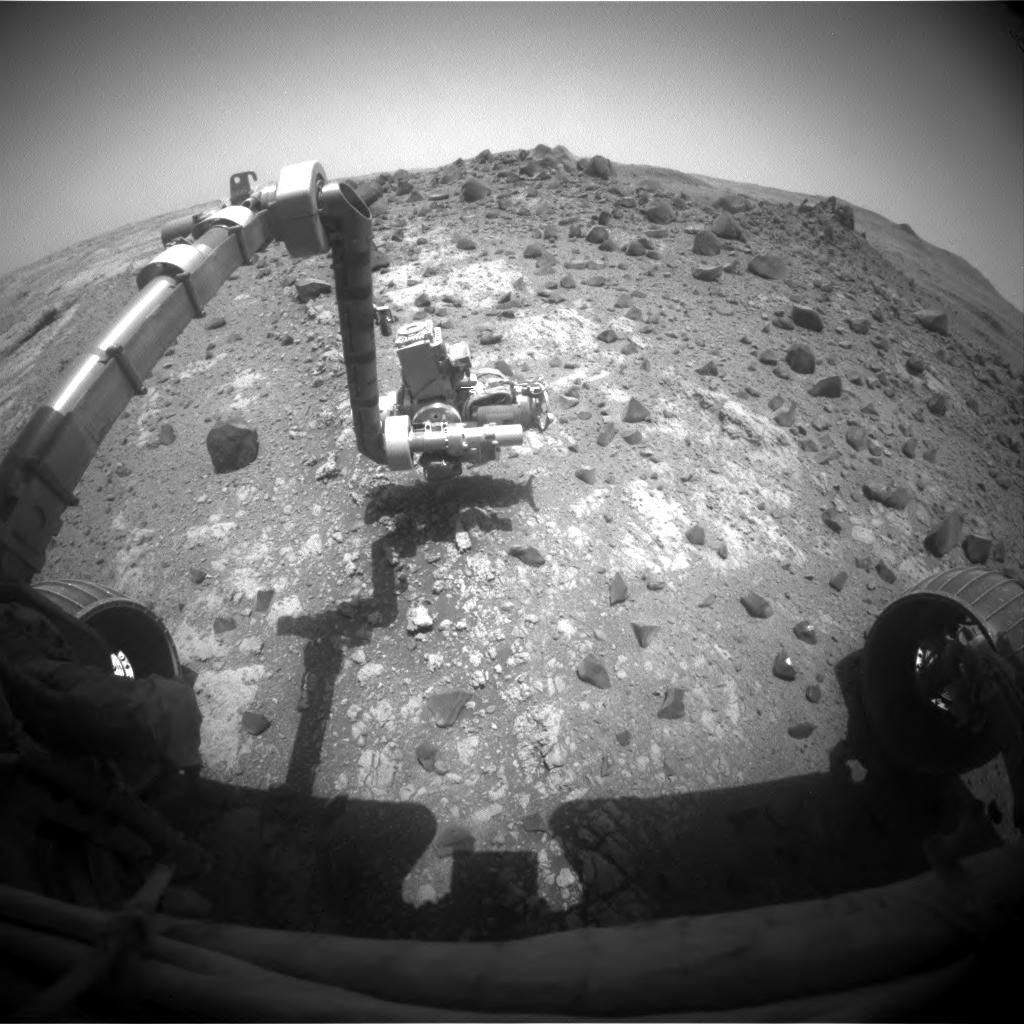
Opportunity’s Front Hazcam image on Sol 4035.
Credit: NASA/JPL
Get to the valley
With limited storage on the Odyssey and the Mars Reconnaissance Orbiter (MRO) spacecraft, Opportunity can only gather during conjunction some optical depth measurements, some repeat images of the surface for change detection, and a few hours of APXS integrations.
“We will start up again on June 24, finish up measurements on the rim of Spirit of St. Louis crater and head east to Marathon valley and the smectite [clay mineral] exposures,” Arvidson explained.

Navigation Camera onboard Opportunity snagged this image on Sol 4036.
Credit: NASA/JPL
“Fall season is almost upon us so there is some urgency to get to the valley,” Arvidson told Inside Outer Space.
Track changes
“Opportunity is in good shape,” said James Rice, a senior scientist for the Mars Exploration Rover Project and a MER geology team leader at the Planetary Science Institute in Tucson, Arizona.
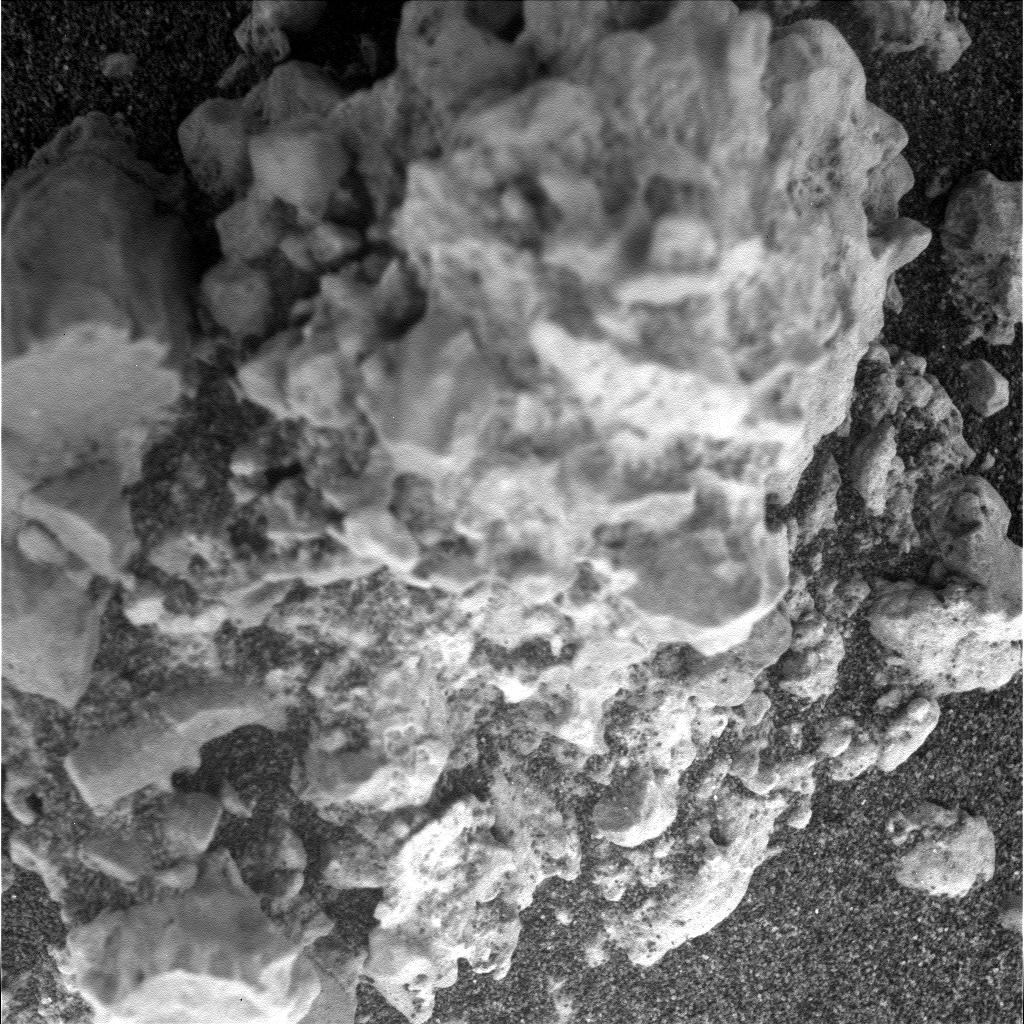
Opportunity’s Microscopic Imager took image on Sol 4035.
Credit: NASA/JPL
“We are parked on north rim of the Spirit of St. Louis crater doing some minimal conjunction science,” Rice told Inside Outer Space.
Images taken by the rover are looking for any changes in its tracks and on the robot’s deck, as well as monitor atmospheric dust, Rice said.
 Posted in Space News

