 By
By  October 21st, 2021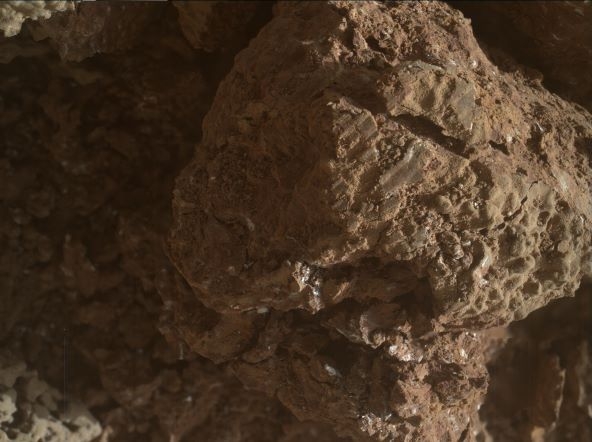
There is evidence Curiosity drove over this nodule in the high resolution image taken by MAHLI, the hand lens imager that’s located on the turret at the end of the rover’s robotic arm. Photo produced on October 20, 2021, Sol 3272.
Credit: NASA/JPL-Caltech/MSSS
NASA’s Curiosity Mars rover at Gale Crater is now wrapping up Sol 3273 duties.
The wheeled robot recently drove over nodules, crushing them in the process. Doing so has allowed researchers to see inside these features, reports Susanne Schwenzer, a planetary geologist at The Open University; Milton Keynes in the U.K.
Newly sent images show evidence of the rover drive across a nodule – evidenced by very straight imprinted lines in the middle of flattened areas that appear slightly more grey.
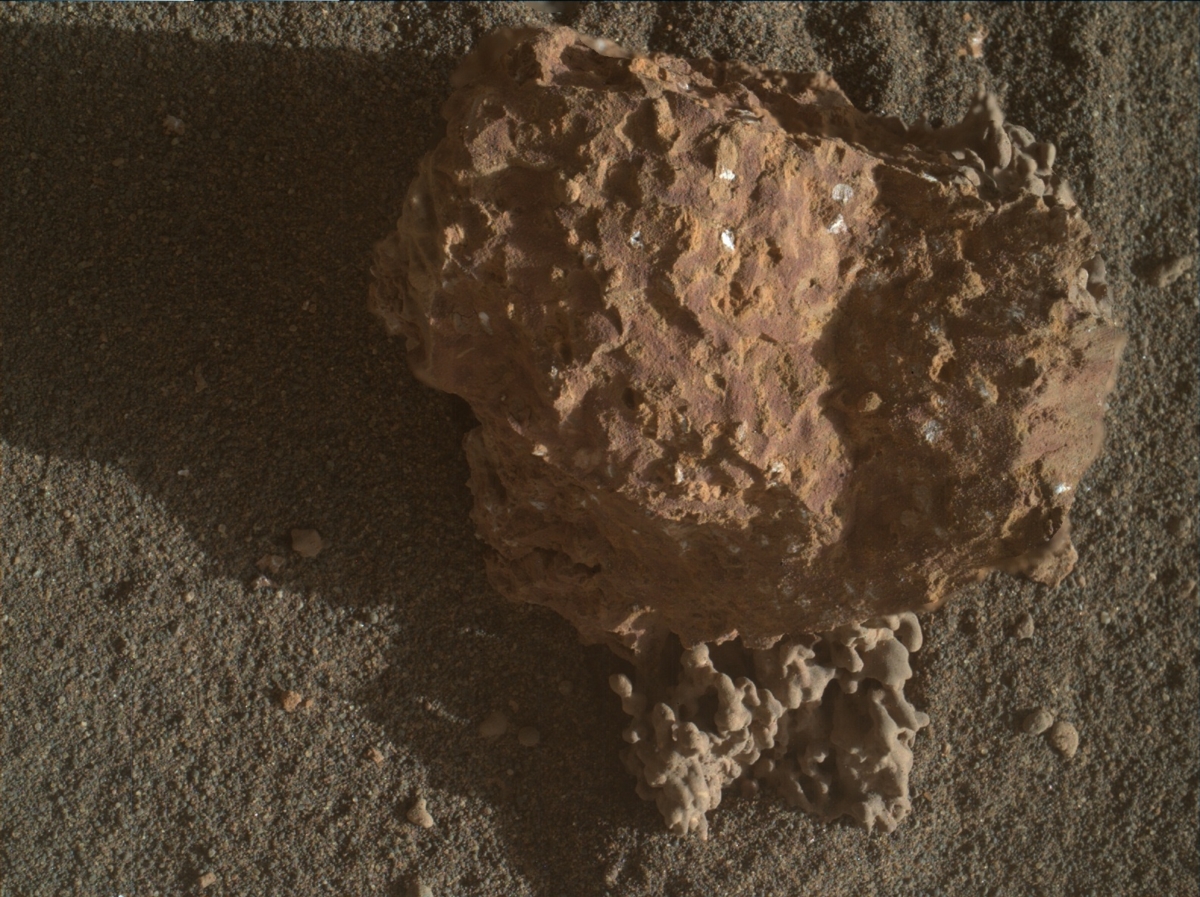
Mars Hand Lens Imager (MAHLI) photo produced on Sol 3273, October 20, 2021.
Credit: NASA/JPL-Caltech/MSSS
Insight into nodules
“You can also see cracks, especially clearly on the right of the nodule…but if you look around, you’ll find there are more of them,” Schwenzer points out.
“Some of the scratched areas are looking white, too. All those features will allow us an insight into the nodules and an interpretation beyond what we can otherwise see on the surface. As much as the surface can tell us – here we are getting to the heart of those nodules!”
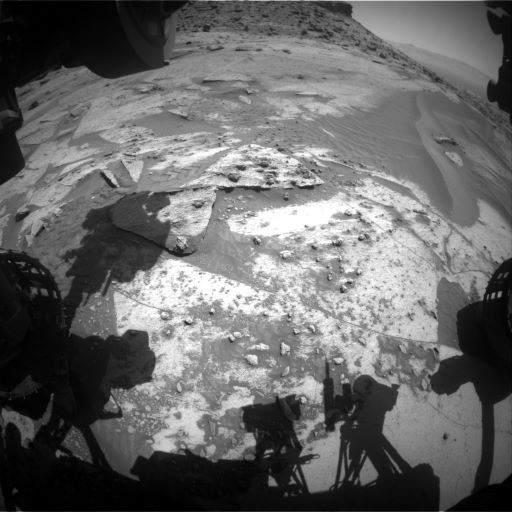
Curiosity Front Hazard Avoidance Camera Left B image acquired on Sol 3273, October 21, 2021.
Credit: NASA/JPL-Caltech
Broken rock feast
In a newly scripted plan, Chemistry and Camera (ChemCam) is to look at the wheel-disturbed rocks with a Laser Induced Breakdown Spectroscopy (LIBS) observation on target ‘Picardy Stone’ and with a passive spectral observation on target ‘Pollock.’
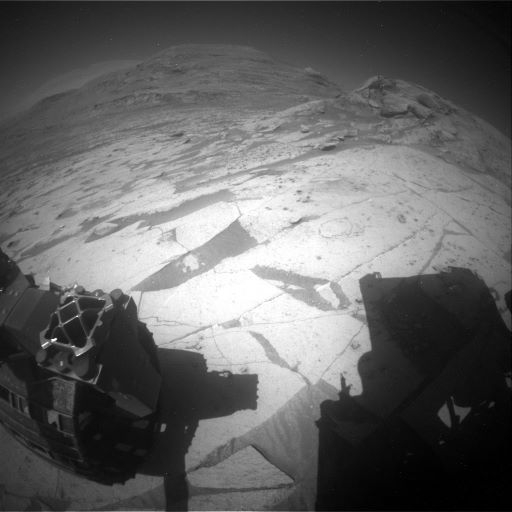
Curiosity Rear Hazard Avoidance Camera Left B photo taken on Sol 3273, October 21, 2021.
Credit: NASA/JPL-Caltech
“Mastcam is joining the broken rock feast,” Schwenzer adds, with a multispectral observation on an area named ‘Acadian,’ which is also investigated by the robot’s Alpha Particle X-Ray Spectrometer (APXS) and its Mars Hand Lens Imager (MAHLI).
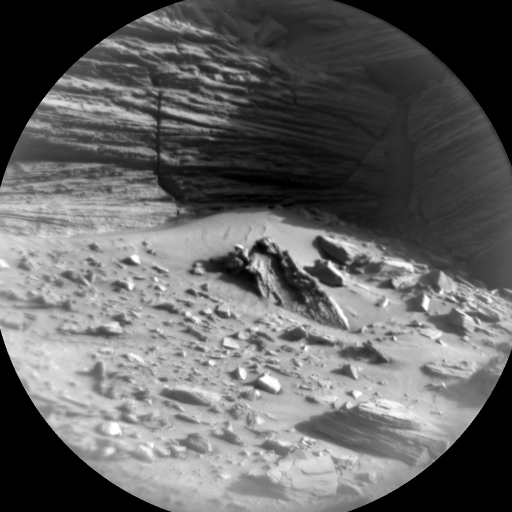
Curiosity Chemistry & Camera Remote Micro-Imager (RMI) photo taken on Sol 3273, October 20, 2021.
Credit: NASA/JPL-Caltech/LANL
Dune feature
“Last but not least, a dune feature, now named ‘Longhill,’ receives some attention with a Mastcam mosaic to further study the dunes on Mars,” Schwenzer notes.
“While dunes can tell us a lot about both current and past wind and climate, there is also atmospheric monitoring in the plan to document the current conditions around the rover adding to our cadence of images to assess dust levels in the atmosphere – and our dust devil searches.”
And, of course, the Rover Environmental Monitoring Station (REMS) is sending its daily weather report, and on top of all the atmospheric science possible with those long-term datasets, researchers enjoy knowing what temperature it is on Mars.
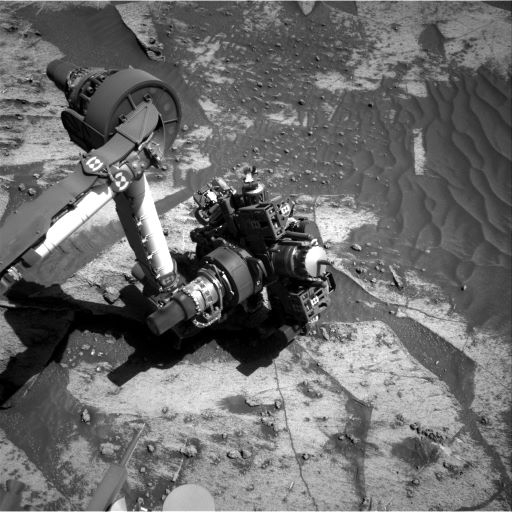
Curiosity Right B Navigation Camera photo acquired on Sol 3273, October 20, 2021.
Credit: NASA/JPL-Caltech
Drive in the plan
“There is a drive in the plan that should set us up nicely for some more investigations of this interesting area,” Schwenzer reports.
Images after the drive will give scientists first insights, and ChemCam gets a head start on the chemistry through an AEGIS observation.
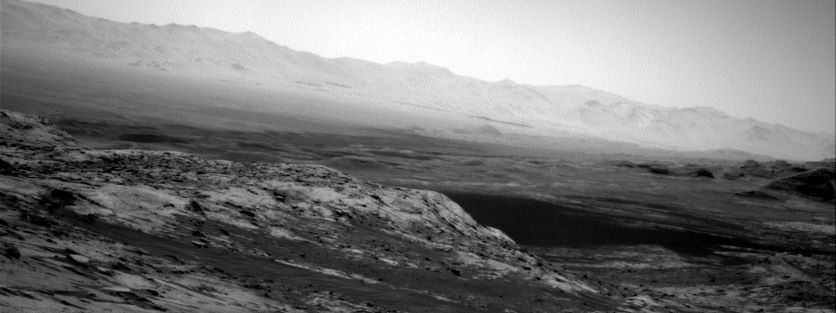
Curiosity Right B Navigation Camera image acquired on Sol 3273, October 21, 2021.
Credit: NASA/JPL-Caltech
AEGIS stands for Autonomous Exploration for Gathering Increased Science) – a software suite that permits the rover to autonomously detect and prioritize targets.
 Posted in Space News

