 By
By  May 6th, 2021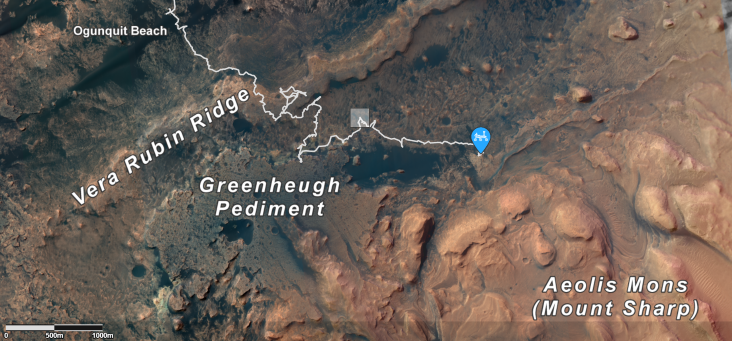
Credit: NASA/JPL-Caltech/Univ. of Arizona
NASA’s Curiosity Mars rover at Gale Crater is now performing Sol 3110 duties.
Curiosity recently drove roughly 145 feet (44 meters) on sol 3109, “so we’ve left our scenic view at ‘Bardou’ behind in the rear-view mirror… er… rear Hazcam… er…. actuaaaallllly, to be perfectly precise, front Hazcam since we drove backwards,” reports Abigail Fraeman, a planetary geologist at NASA’s Jet Propulsion Laboratory.
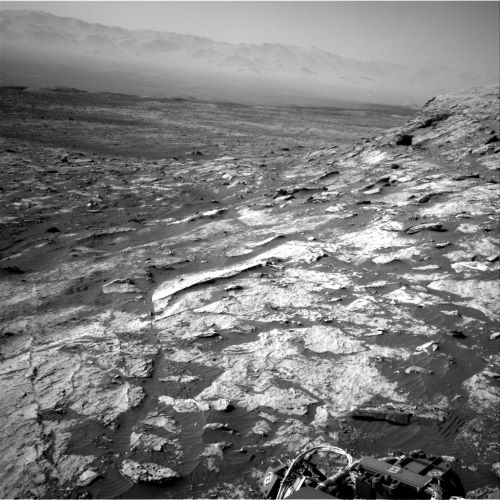
Curiosity Right Navigation Camera Right B photo taken on Sol 3109, May 5, 2021.
Credit: NASA/JPL-Caltech
The Mars machinery now has a new workspace under its wheels, with views of rocks with great textures on the horizon.
Touch and go
A newly scripted plan has a standard “touch and go” sol, meaning the rover will “snap a few photos and laser a rock, squeeze in some quick contact science to analyze the area in front of the rover, and then drive on to our next target all before we need to send the data back so that it arrives on Earth in time for us to see it before making Friday’s plan,” Fraeman explains.
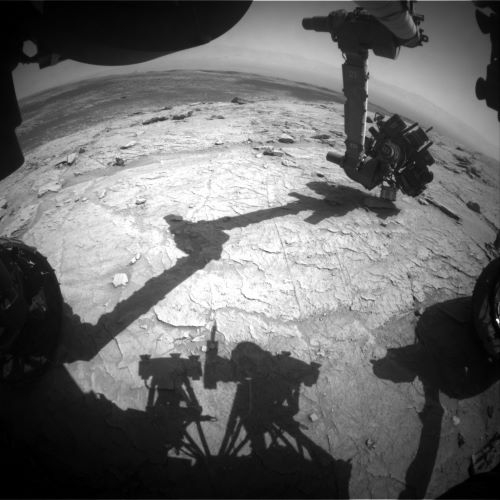
Curiosity Front Hazard Avoidance Right B Camera image acquired on Sol 3109, May 5, 2021.
Credit: NASA/JPL-Caltech
The contact science target in the current plan is a vein named “Gourdon,” with the robot acquiring Chemistry and Camera (ChemCam) Laser Induced Breakdown Spectroscopy (LIBS) data on the same vein on a target named “Molieres.”
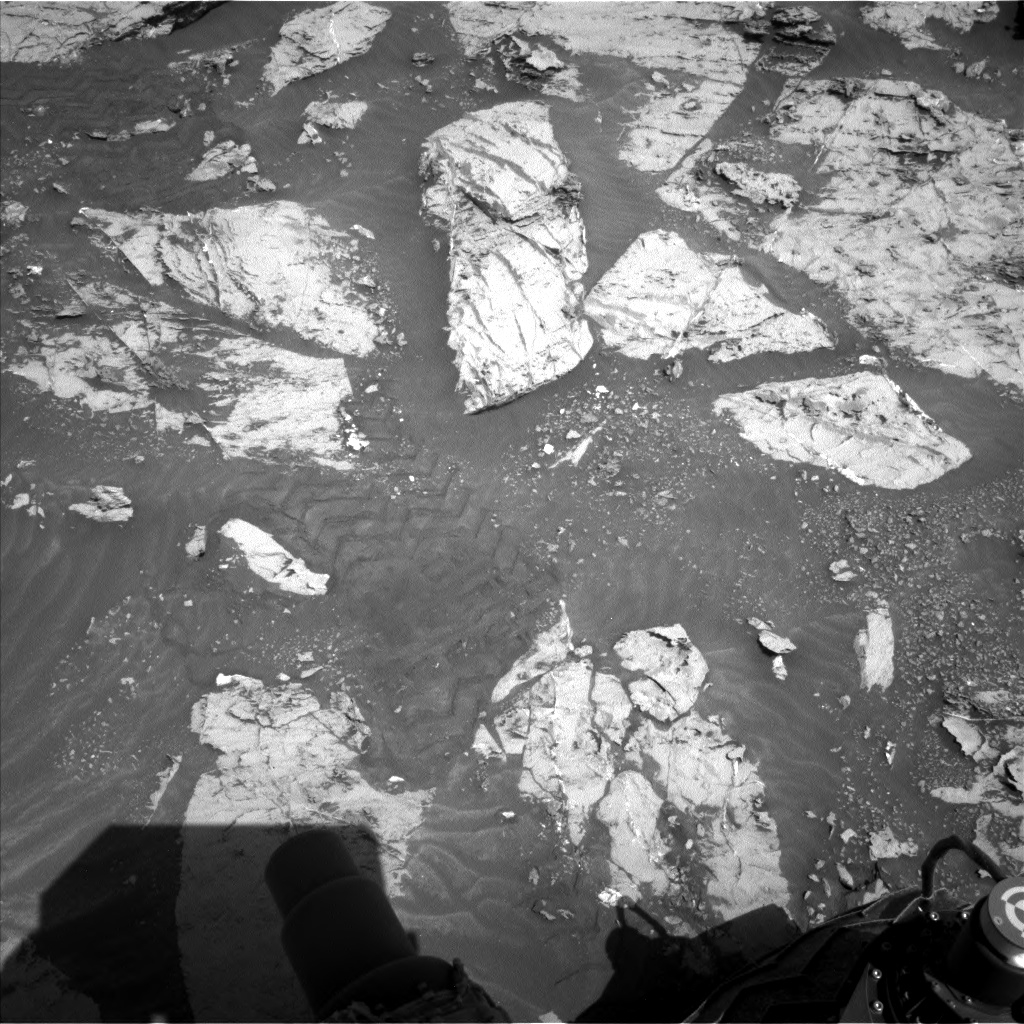
A rock informally described as having tiger stripes captured in this Left Navigation Camera image taken on Sol 3109.
Credit: NASA/JPL-Caltech
Tiger stripes
“We’ll additionally collect ChemCam passive spectral and Mastcam multispectral data on a different vein target named “Pech Du Loup,” and we’ll take several Mastcam images to capture the colors and textures of nearby rocks,” Fraeman adds.
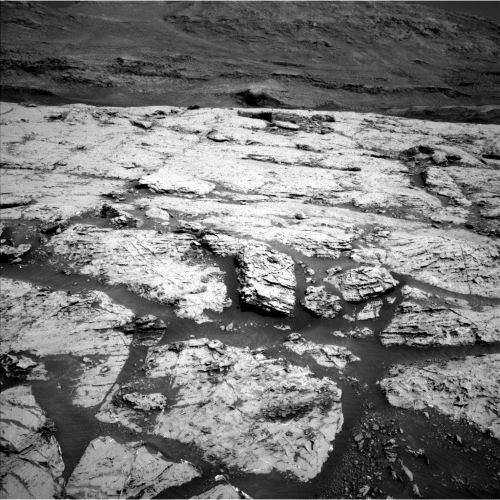
Curiosity Left B Navigation Camera image taken on Sol 3109, May 5, 2021.
Credit: NASA/JPL-Caltech
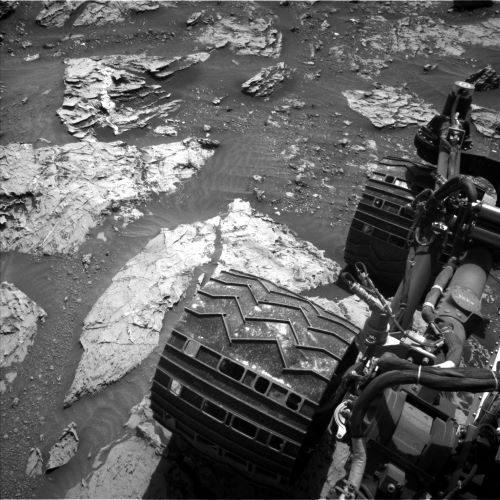
Curiosity Left B Navigation Camera image taken on Sol 3109, May 5, 2021.
Credit: NASA/JPL-Caltech
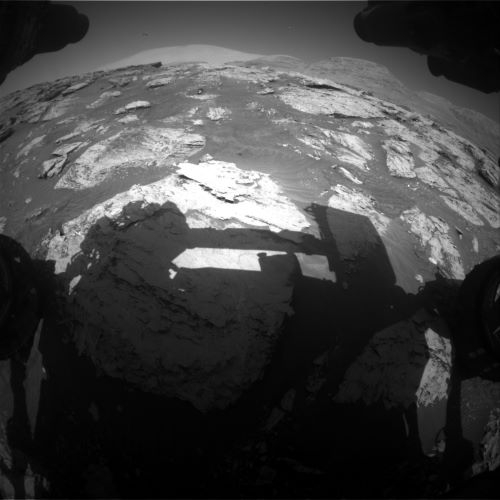
Curiosity Front Hazard Avoidance Right B Camera image acquired on Sol 3109, May 5, 2021.
Credit: NASA/JPL-Caltech
“For our drive, we’re aiming for a target that is located just above a rock the team informally started describing as having tiger stripes,” Fraeman notes. “The apparent stripes are likely caused by veins that jut out at low angles and are more resistant to erosion than the surrounding rock. It should be great fun to get a closer of view of this and the surrounding rocks in Friday’s plan.”
 Posted in Space News

