 By
By  January 13th, 2021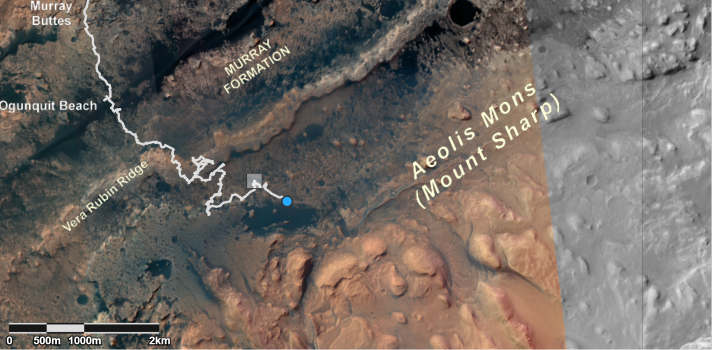
Credit: NASA/JPL-Caltech/Univ. of Arizona
NASA’s Curiosity Mars rover is now performing Sol 3,000 tasks.
Reports Lauren Edgar, Planetary Geologist at USGS Astrogeology Science Center in Flagstaff, Arizona: “Three thousand sols and never a dull moment!”
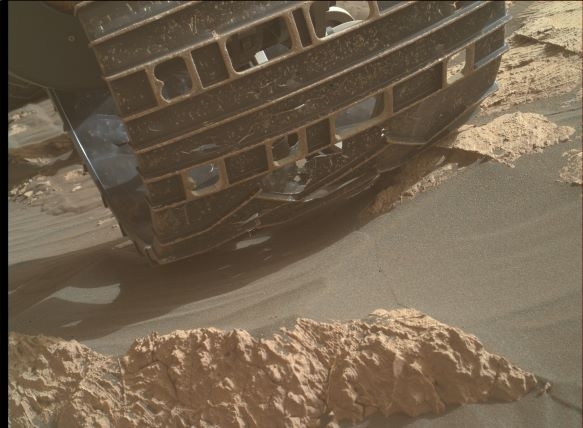
Curiosity Mars Hand Lens Image produced on Sol 2999, January 12, 2021.
Credit: NASA/JPL-Caltech/MSSS
A recent planning session orchestrated Sols 2999-3000, “and it was a real reminder of how complex and rewarding this mission can be,” Edgar adds.
Curiosity has recently completed an investigation of the “Sands of Forvie” ripple field and the rover is now working its way back to the path that scientists plan to take to ascend Mt. Sharp, transitioning back into terrain with fewer broken blocks of bedrock.
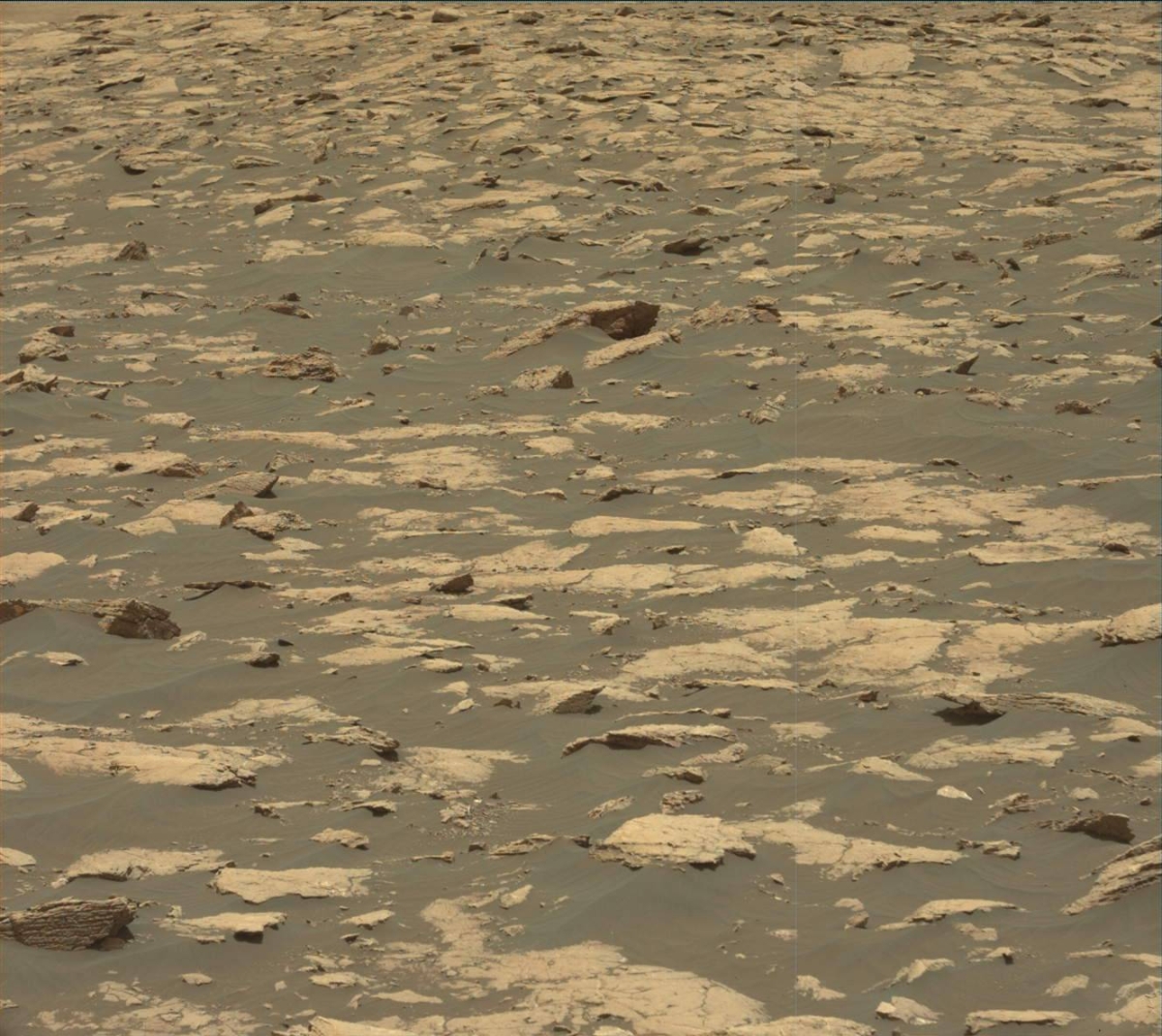
Curiosity Mast Camera Left image taken on Sol 2998, January 11, 2021.
Credit: NASA/JPL-Caltech/MSSS
Unexpected movement
“In the previous plan, Curiosity shifted slightly when we first unstowed the arm for the contact science activities,” Edgar explains. “When the flight software detected this small but unexpected movement, the rover stopped moving the arm to await further instruction from Earth. This is exactly what we designed the software to do to make sure everything stays safe, and it means we didn’t carry out subsequent contact science or the drive over the weekend.”
Edgar notes that this is a good safety check, and a reminder of how controllers made it to Sol 3,000 with a healthy rover by making good decisions and making sure the robot is on stable ground.
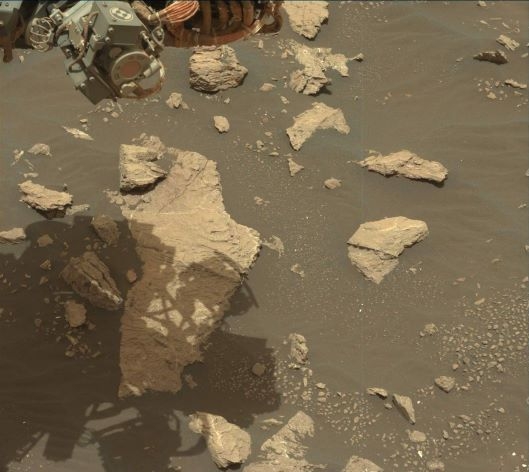
Curiosity Mast Camera Left image taken on Sol 2998, January 11, 2021.
Credit: NASA/JPL-Caltech/MSSS
“All is well and it just means that today we have a familiar workspace and a chance to regain some of these observations before getting back on the road,” Edgar notes.
Diagenetic features
A recent two-sol plan starts with Chemistry and Camera (ChemCam) observation of the targets “Queyon” and “Longa Skerry” to characterize the various textures and diagenetic features present in the bedrock – large‐scale color variations within bedrock. Diagenesis is the name for a wide range of changes that affect sediments during their progress to become sedimentary rocks.
Then the rover’s Mastcam will acquire a multispectral observation of “St. Andrew Square” to assess some interesting color variations. Later in the afternoon the Mars Hand Lens Imager (MAHLI) was scheduled to take a closer look at targets named “Nugarth” and “Kleber.”
The second sol includes a ChemCam observation of “Backagord” and a number of environmental monitoring observations to search for dust devils and monitor the dust content of the atmosphere.
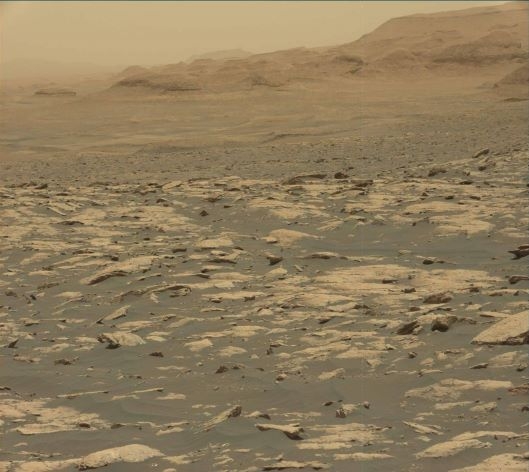
Curiosity Mast Camera Left image taken on Sol 2998, January 11, 2021.
Credit: NASA/JPL-Caltech/MSSS
Smoother terrain
“Then Curiosity will drive to the north to get back into smoother terrain, followed by imaging to prepare for targeting in the next plan. The next morning Curiosity will acquire a ChemCam passive sky survey to assess water vapor and dust in the atmosphere,” Edgar reports.
“It’s been an exciting 3,000 sols so far, and I look forward to seeing what else we’ll discover as Curiosity continues to climb Mt. Sharp,” Edgar concludes. “Tonight I’ll be raising a glass to Curiosity and the science and engineering teams that have gotten us this far!”
 Posted in Space News

