 By
By  January 8th, 2021
Chang’e-4’s farside landing zone.
Credit: NASA/GSFC/Arizona State University
China’s lunar farside mission – the Chang’e-4 lander and Yutu-2 rover – have once again perked up from a 14-day nighttime slumber and have resumed work for the 26th lunar day of exploration.

Chang’e-4 lunar lander imaged by the mission’s Yutu-2 rover. Arrow points to the Germany-provided Lunar Lander Neutron and Dosimetry (LND) instrument.
Credit: CNSA/CLEP/NAOC
A lunar day is equal to roughly 14 days on Earth, and a lunar night is of the same length.
The solar-powered machinery switches to dormant mode during the lunar night.
The Lunar Exploration and Space Program Center of the China National Space Administration reports that the lander woke up at 3:13 am on Friday (Beijing time), and the rover Yutu-2, or Jade Rabbit-2, woke up at 10:29 am on Thursday.

Image of China’s Yutu-2 lunar rover taken by Chang’e-4 lander.
Credit: CNSA/CLEP
Long-lived lander/rover
China’s Xinhua news agency adds that Yutu-2 is on tap to take panoramic photos. Aldo, the rover’s infrared imaging spectrometer, neutral atom detector and lunar radar will continue to carry out scientific investigations.
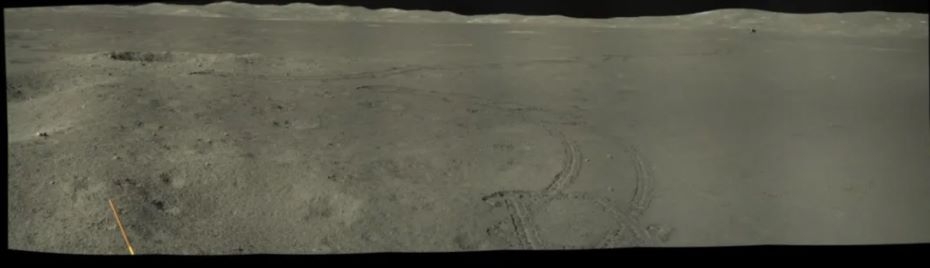
Within Von Kármán crater on the lunar farside, China’s Yutu-2 rover takes a longing look back from its Chang’e-4 lander dispatching zone.
Credit: CNSA/CLEP
Touching down on the Moon on January 3, 2019, the long-lived Chang’e-4 mission has survived 736 Earth days on the Moon.
During the 26th lunar day, Yutu-2 will move northwest toward the basalt area or impact craters with high reflectivity.
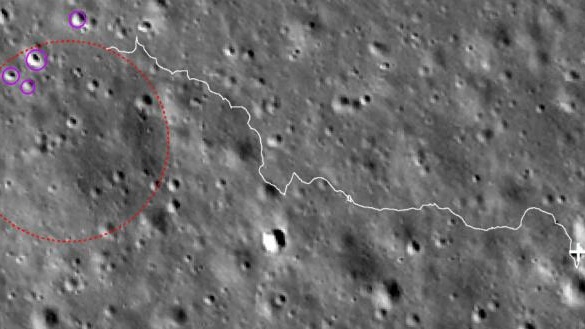
Planned route (white line) of the Yutu-2 rover.
Credit: Lunar Exploration and Space Program Center
 Posted in Space News

