 By
By  October 26th, 2020
NASA’s Stratospheric Observatory for Infrared Astronomy (SOFIA) is shown airborne with the sliding door over its 17-ton infrared telescope wide open.
Credit: NASA/Jim Ross
Until recently the Moon was thought to be bone dry and a waterless world. Little by little there seems to be a drip by drip of news that our celestial neighbor sports a wet look.
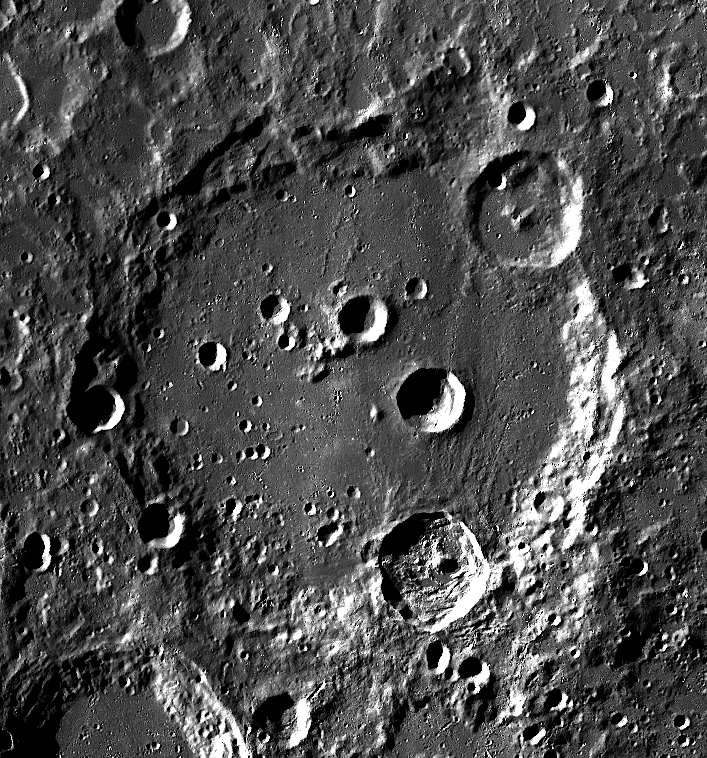
NASA’s Lunar Reconnaissance Orbiter (LRO) wide-angle camera image of Clavius crater.
Credit: NASA/GSFC/Arizona State University
Two research papers published in Nature Astronomy have turned on the tap a bit more to the prospect of molecular water on the moon.
The timing seemingly appears good for those keen on scuffing up the lunar topside once again and setting up off-Earth, long-term habitation. After all, where there is water there is life – even if that life needs to be well-suited and helmeted.

Astronauts explore lunar south pole crater. A water ice-rich resource ready for processing awaits?
Credit: NASA
For more information regarding the results of new research, go to my Scientific American story at:
Water Found in Sunlight and Shadow on the Moon
Observations by NASA’s SOFIA telescope and Lunar Reconnaissance Orbiter reveal signs of water in sun-baked lunar soil, as well as in small, dark craters – go to:
https://www.scientificamerican.com/article/water-found-in-sunlight-and-shadow-on-the-moon/
From Planetary Science Institute:
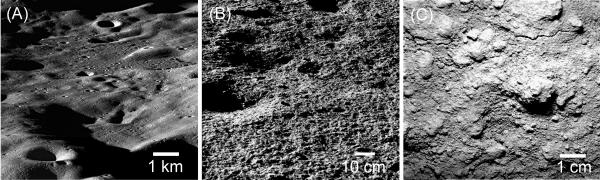
These three images of the lunar surface show shadows at all scales, from several kilometers to less than a centimeter. (A) Lunar Reconnaissance Orbiter oblique view over the rim of the Cabeus crater near the Moon’s south pole (NASA/GSFC/ASU). (B) Chang’e-3 close-up surface image taken by the Yutu rover some distance from the landing site (CNSA/CLEP). (C) Apollo 14 close-up camera image of undisturbed regolith. Some of these shadows are permanent and could remain cold enough to harbor ice (NASA).
 Posted in Space News

