 By
By  September 5th, 2020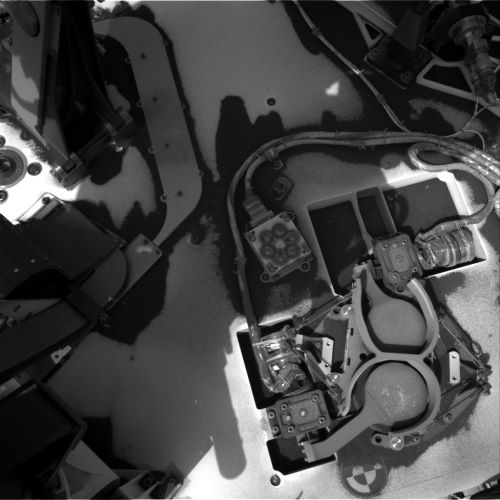
Curiosity Right B Navigation Camera image taken on Sol 2873, September 5, 2020.
Credit: NASA/JPL-Caltech
NASA’s Curiosity Mars rover is now performing Sol 2874 tasks.
The word is that there’s been no sample drop-off to the rover’s Sample Analysis at Mars (SAM) Instrument Suite.
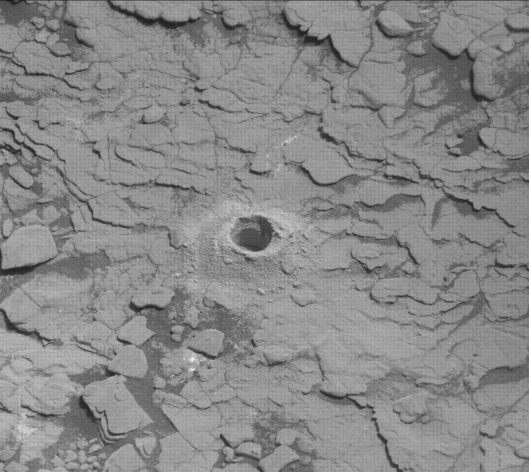
Curiosity Mast Camera Right photo acquired on Sol 2872, September 4, 2020.
Credit: NASA/JPL-Caltech/MSSS
Ken Herkenhoff, Planetary Geologist at USGS Astrogeology Science Center in Flagstaff, Arizona reports that the science team expected the weekend plan to include drop-off of some of the drill sample to the SAM instrument. But it was later recognized that the detailed requirements for the dropoff and SAM analysis could not be met in a recent plan.
“So the arm and SAM activities had to be removed from the plan, freeing up power for other observations,” Herkenhoff adds. The robot will be busy gathering important data over the upcoming holiday weekend.
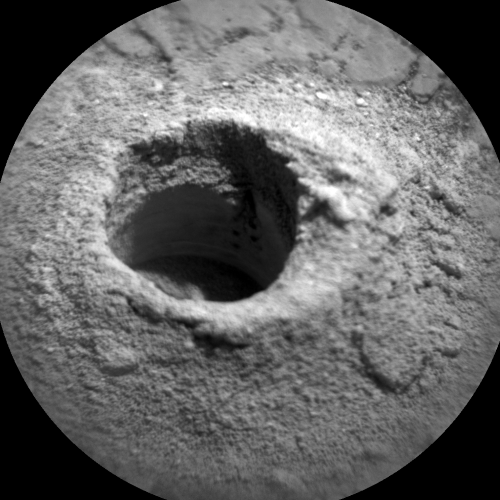
Curiosity Mast Camera Right photo acquired on Sol 2872, September 4, 2020.
Credit: NASA/JPL-Caltech/MSSS
A trio of Sols
Planning is no longer restricted, so Saturday is a “soliday” and the rover team is planning three sols of activities (Sols 2874-2876) to get the rover through Labor Day.
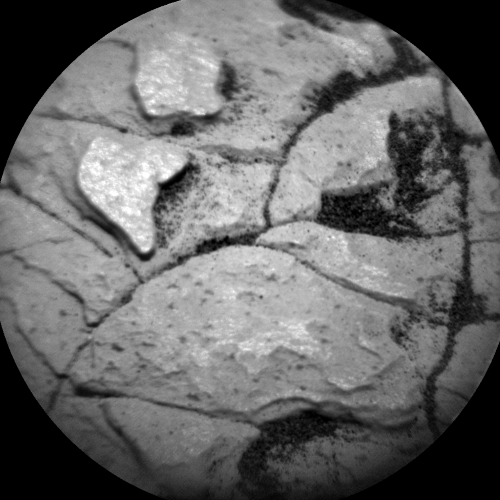
Curiosity Chemistry & Camera (ChemCam) Remote Micro Imager (RMI) photo taken on Sol 2873, September 5, 2020.
Credit: NASA/JPL-Caltech/LANL
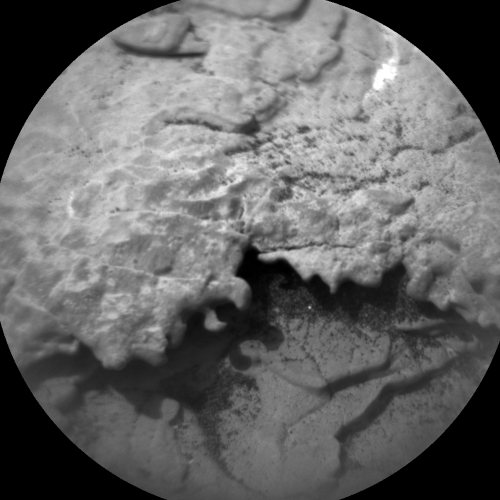
Curiosity Chemistry & Camera (ChemCam) Remote Micro Imager (RMI) photo taken on Sol 2873, September 5, 2020.
Credit: NASA/JPL-Caltech/LANL
On Sol 2874, Curiosity’s Chemistry and Camera (ChemCam) will measure the chemistry of the atmosphere above Gale Crater by looking upward and acquiring spectra. Then ChemCam will fire its laser at the wall of the “Mary Anning 3” drill hole and at a soil target named “Insh Marshes.”
After the Right Mastcam takes pictures of the ChemCam targets, Mastcam will acquire a stereo mosaic to extend the coverage of the area in front of the rover.
Navcam will then search for dust devils and, later that evening, take images of the sky for calibration.
Similarly, just after sunset, the ChemCam Remote Micro Imager (RMI) will take images of the sky above the rover to check the camera’s calibration, Herkenhoff notes.
Room for other activities
The second sol (2875) was originally filled with arm and SAM activities, and after they were removed from the plan there was room for other activities, so added was a long Dynamic Albedo of Neutrons (DAN) passive observation and some engineering checks to go along with the usual Rover Environmental Monitoring Station (REMS) atmospheric measurements.
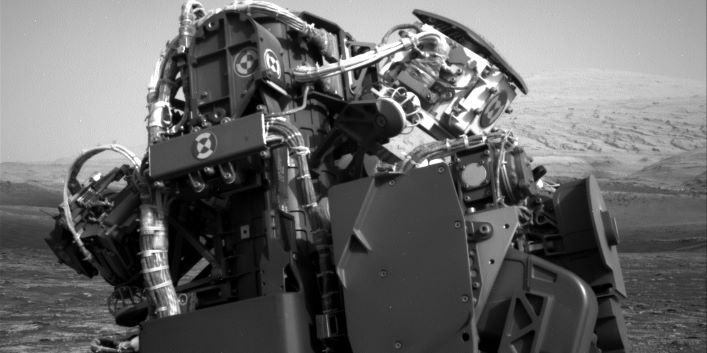
Curiosity Right B Navigation Camera image taken on Sol 2873, September 5, 2020.
Credit: NASA/JPL-Caltech
Herkenhoff continues by pointing out that on Sol 2876, Mastcam will look for changes in the sandy “Upper Ollach” area and take some pictures of the rover deck to look for changes there as well.
Then ChemCam will analyze the chemistry of rock targets “Njuggleswater” and “Rocabarrigh” and the Right Mastcam will image them as well. “Don’t ask me how to pronounce those names,” Herkenhoff says.
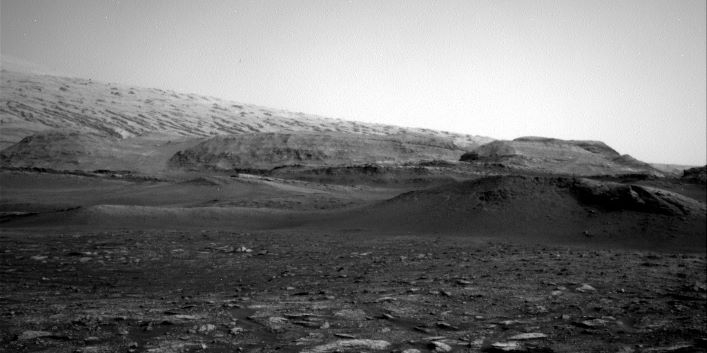
Curiosity Right B Navigation Camera image taken on Sol 2873, September 5, 2020.
Credit: NASA/JPL-Caltech
Finally, during the morning of 2877, Navcam will search for clouds and Mastcam will measure the opacity of dust in the atmosphere, Herkenhoff concludes.
 Posted in Space News

