 By
By  July 11th, 2020
Curiosity Left Navigation Camera image acquired on Sol 2817, July 9, 2020.
Credit: NASA/JPL-Caltech
NASA’s Curiosity Mars rover is now carrying out Sol 2819 tasks.
Last Wednesday, Curiosity successfully drove a whopping 336 feet (102.5 meters) over 159 minutes, reports Abigail Fraeman, a planetary geologist at NASA’s Jet Propulsion Laboratory.
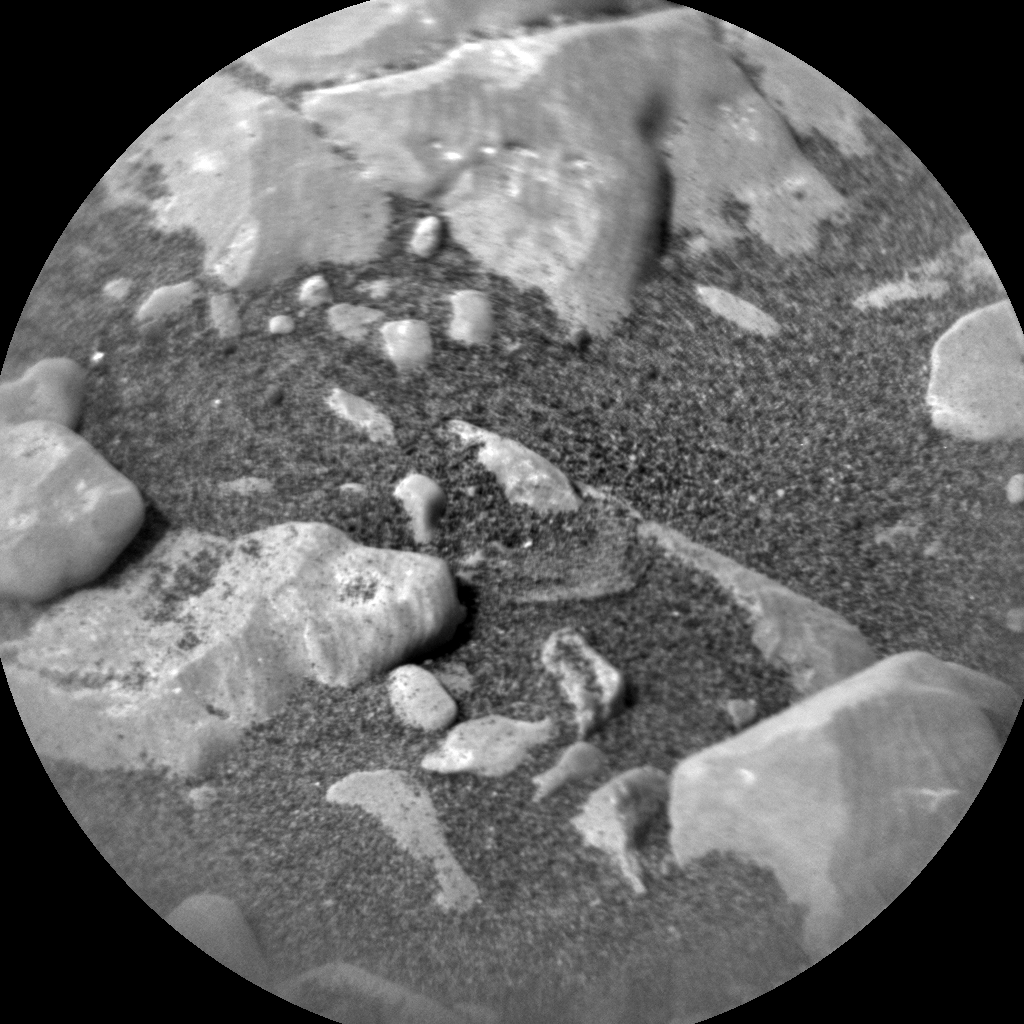
Curiosity Chemistry & Camera image taken on Sol 2818, July 10, 2020.
Credit: NASA/JPL-Caltech/LANL
“This isn’t the longest drive Curiosity’s ever completed (the record is 142.5 meters on sol 665), but it did set a record for the longest drive ever planned from our quarantined dining room tables and couches,” Fraeman adds.
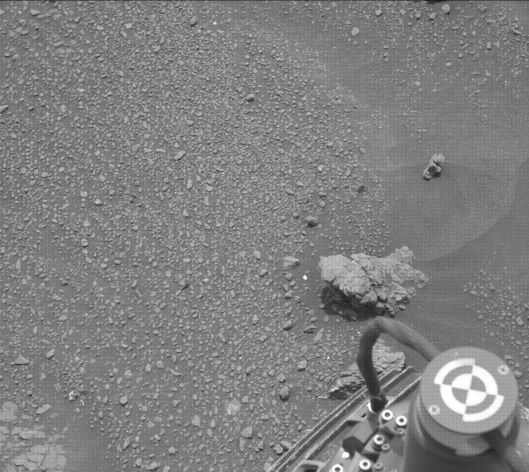
Curiosity Mast Camera Left image taken on Sol 2817, July 9, 2020.
Credit: NASA/JPL-Caltech/MSSS
Great progress
“We’re making great progress on our summer road trip towards the sulfate unit, and are getting very close to our first ‘rest stop.’ While I have fond memories of pulling over at the Delaware House during my many trips up and down the east coast of the U.S. as a child, Curiosity’s rest stop will be a location in the clay unit that we might decide to drill in order to collect one last clay-rich sample we leave the area,” Fraeman explains.
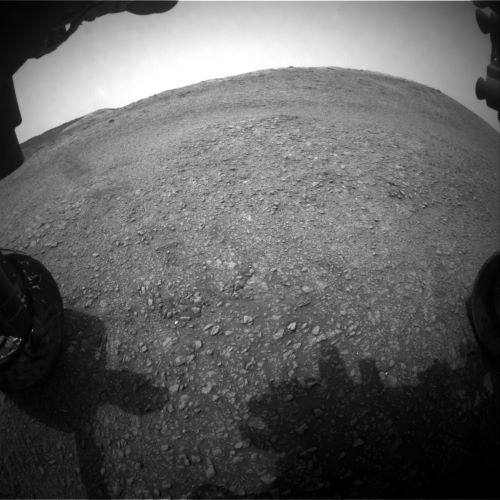
Curiosity Front Hazard Avoidance Camera Left B photo acquired on Sol 2818, July 10, 2020.
Credit: NASA/JPL-Caltech
A new plan calls for the robot to drive another roughly 105 feet (32 meters) on the second sol of the weekend’s plan.
Pebbly workspace
Before that, Curiosity will collect Chemistry and Camera (ChemCam) observations on targets named “Reivers Route,” “Moray Coastal Trail,” and “West Highland Way,” and take some Mastcam mosaics.
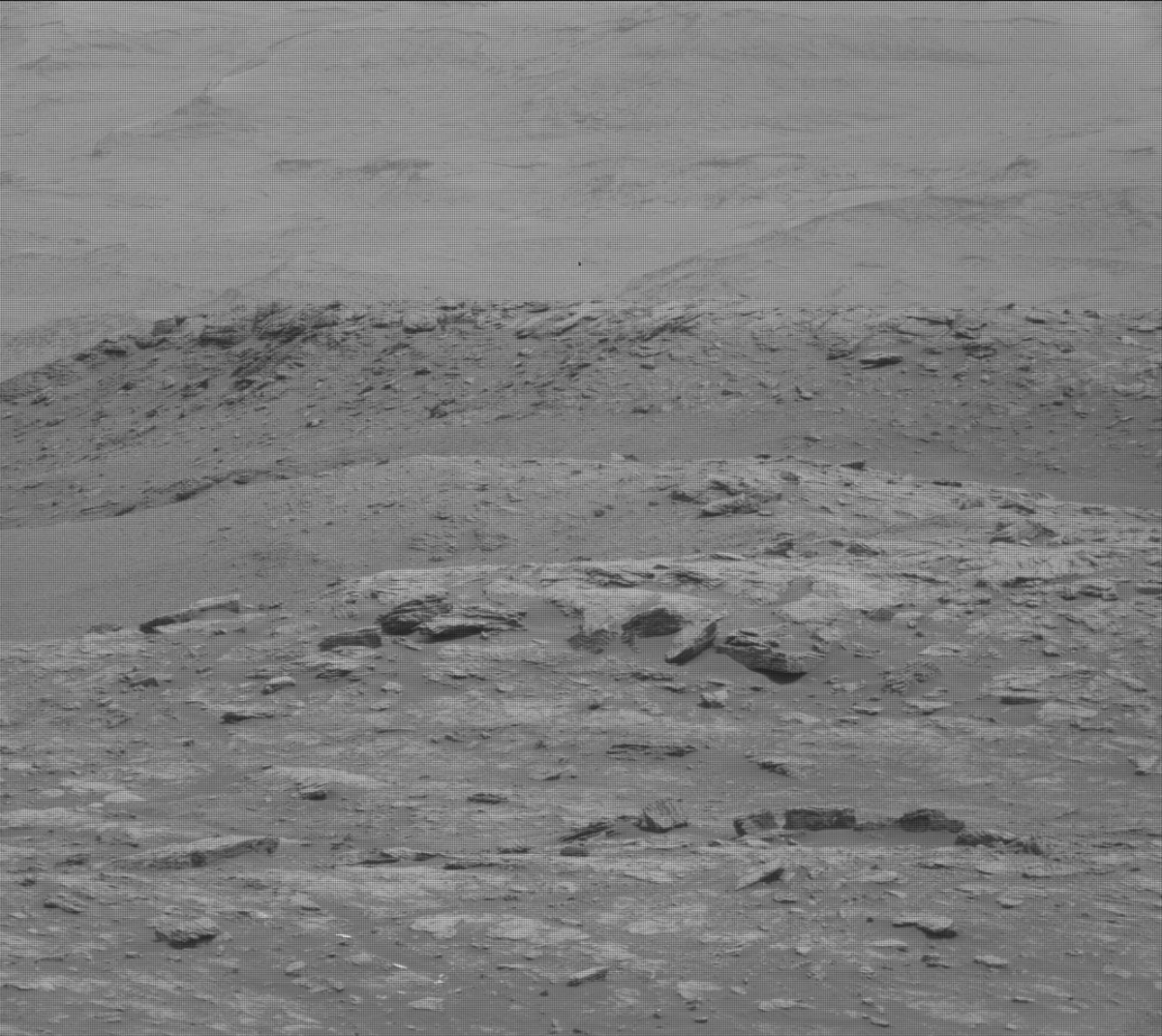
Curiosity Mast Camera Right image taken on Sol 2817, July 9, 2020.
Credit: NASA/JPL-Caltech/MSSS
Also on the plan is use of the Alpha Particle X-Ray Spectrometer (APXS) and Mars Hand Lens Imager (MAHLI) data from a target named “Kintyre Way,” which is one of the larger rocks in the pebbly workspace in front of the rover.
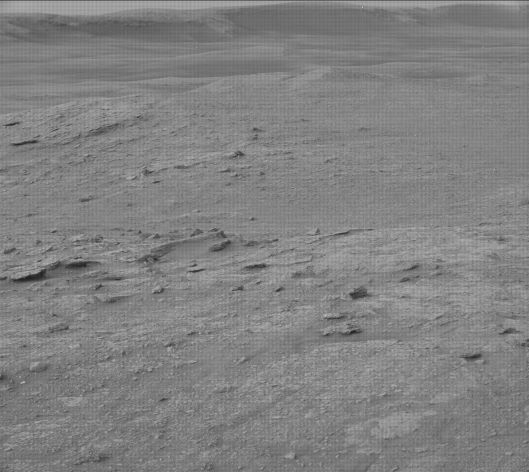
Curiosity Mast Camera Left image taken on Sol 2817, July 9, 2020.
Credit: NASA/JPL-Caltech/MSSS
Lastly, Curiosity will collect the usual suite of observations to measure the environmental conditions, Fraeman concludes, and image the ChemCam calibration targets after the drive on the third sol of the weekend plan, Sols 2819-2821.
 Posted in Space News

