 By
By  May 20th, 2020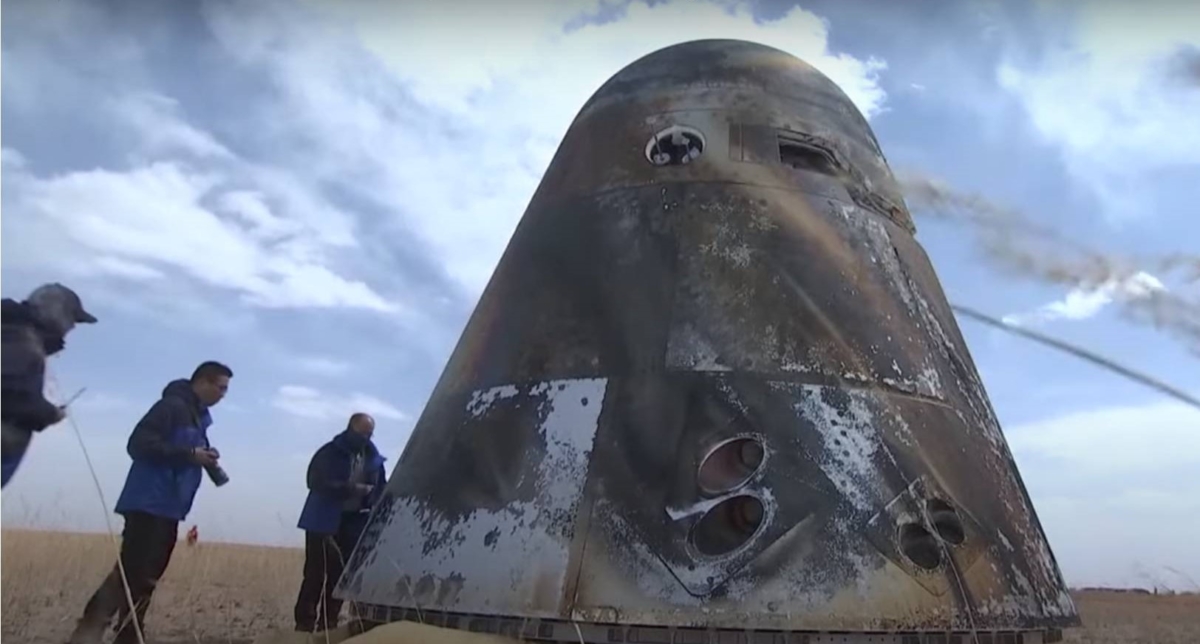
The return capsule of the trial version of China’s new-generation manned spaceship.
Credit: CCTV/Inside Outer Space screengrab
China space officials are detailing use of the country’s new-generation spacecraft to support human missions to the Moon.
The return capsule of the trial version of China’s new-generation manned spaceship is under intensive study after touching down at the Dongfeng landing site, Inner Mongolia Autonomous Region, China, on May 8, 2020.
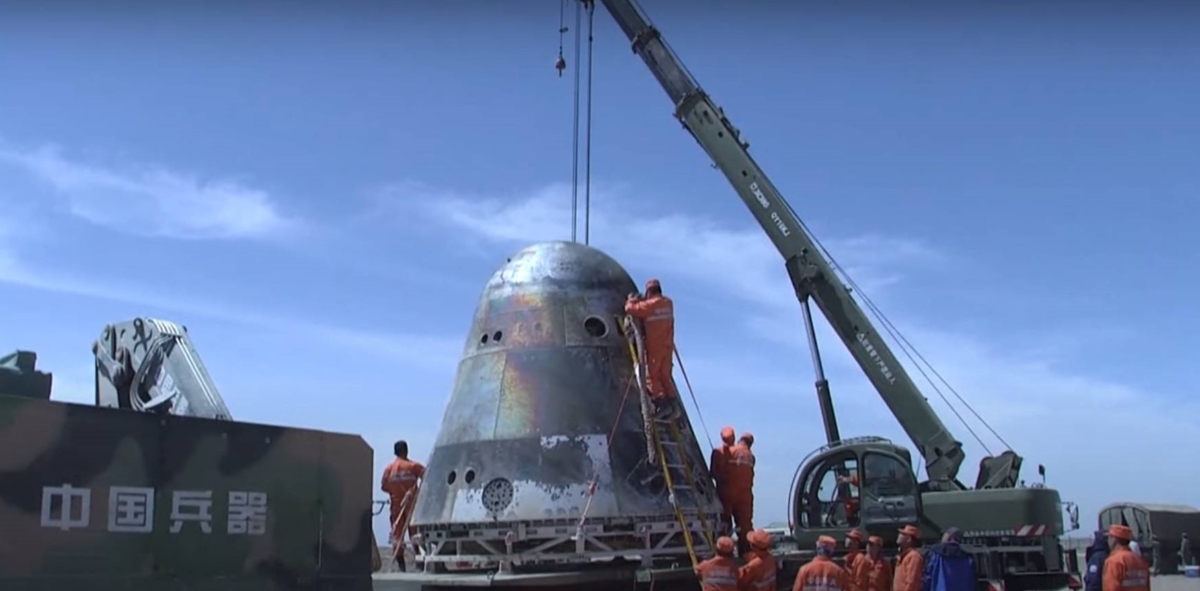
Credit: CCTV/Inside Outer Space screengrab
The spacecraft was first transported to the Jiuquan Satellite Launch Center and then to Beijing, reports China Central Television (CCTV).
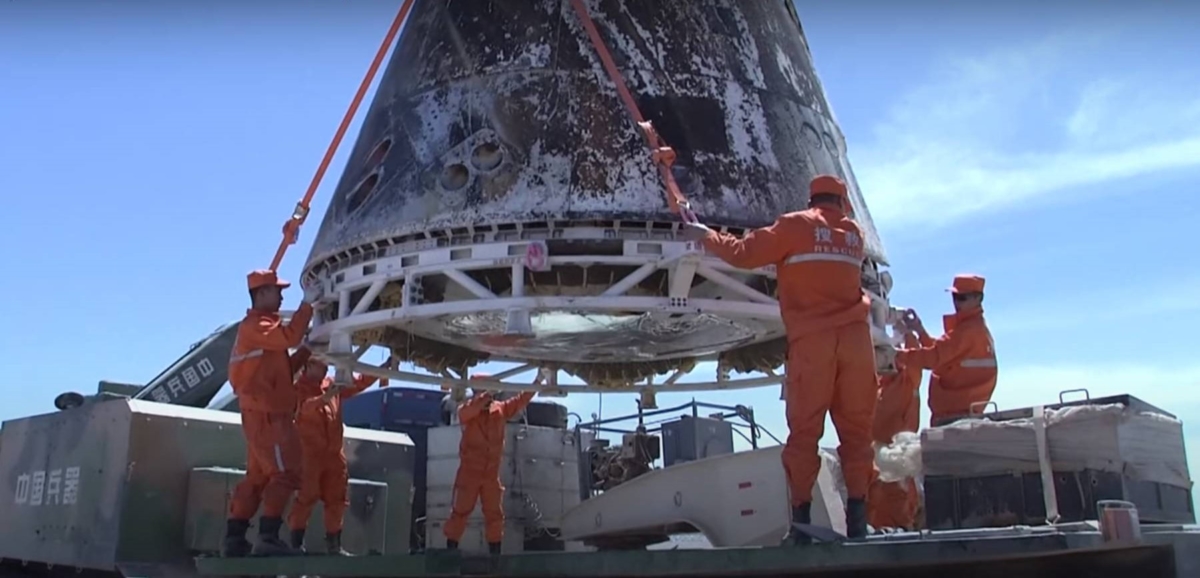
Credit: CCTV/Inside Outer Space screengrab
Follow-up development
Scientists at the Fifth Academy under the China Aerospace Science and Technology Corporation (CASC) — the place where the capsule was developed and produced – are collecting and analyzing the capsule for follow-up development of China’s new-generation manned spacecraft.
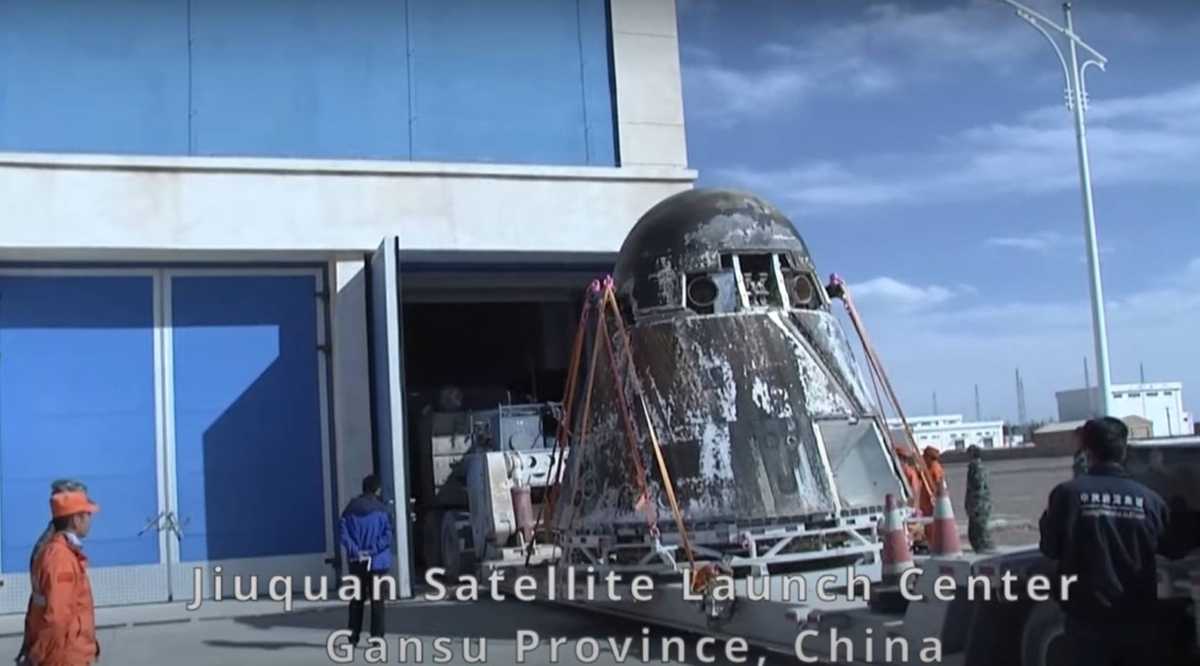
Credit: CCTV/Inside Outer Space screengrab
“We have experienced a lot of setbacks and hard work,” said Yang Feng, Party branch secretary of the general department of manned spaceflight testing center in the Fifth Academy under CASC.
Credit: CCTV/Inside Outer Space screengrab
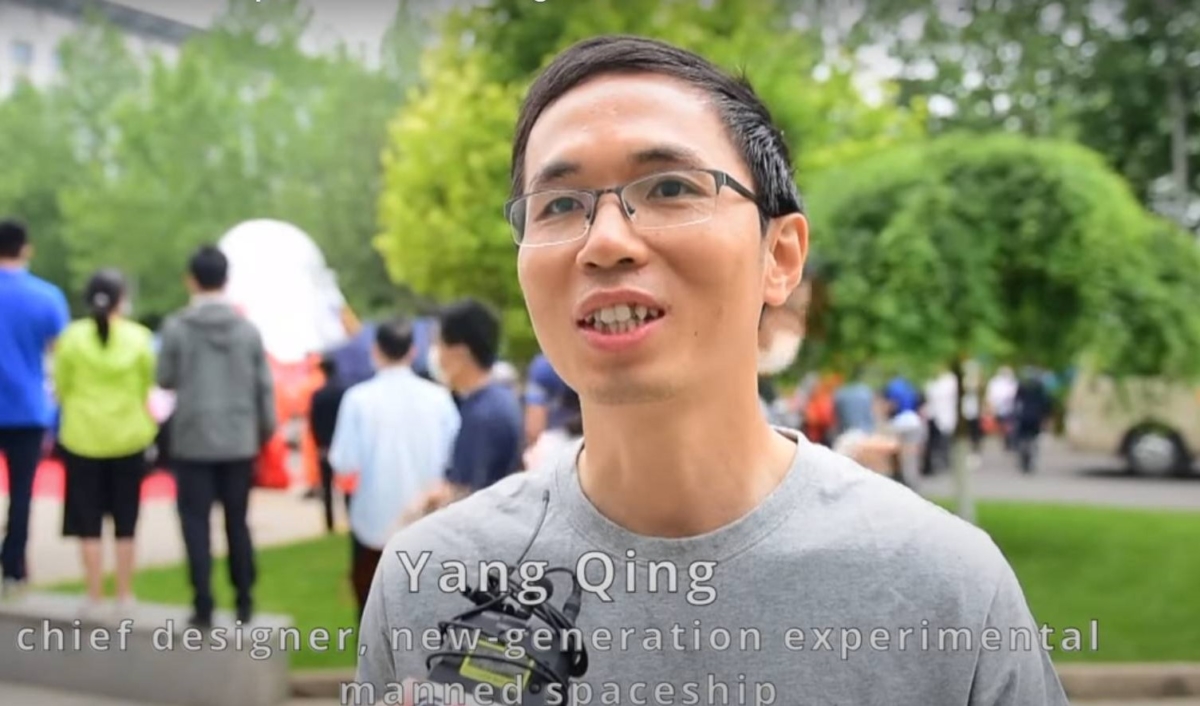
“The spaceship, including the return capsule, was made by ourselves…it has returned to the place where it came into being, and I am very happy,” said Yang Qing, chief designer of the new-generation experimental manned spaceship.
Credit: CCTV/Inside Outer Space screengrab
Thermal-protective coating
The new thermal-protective material adopted on the return capsule for the first time has withstood the high temperature caused by its reentry into the earth atmosphere.
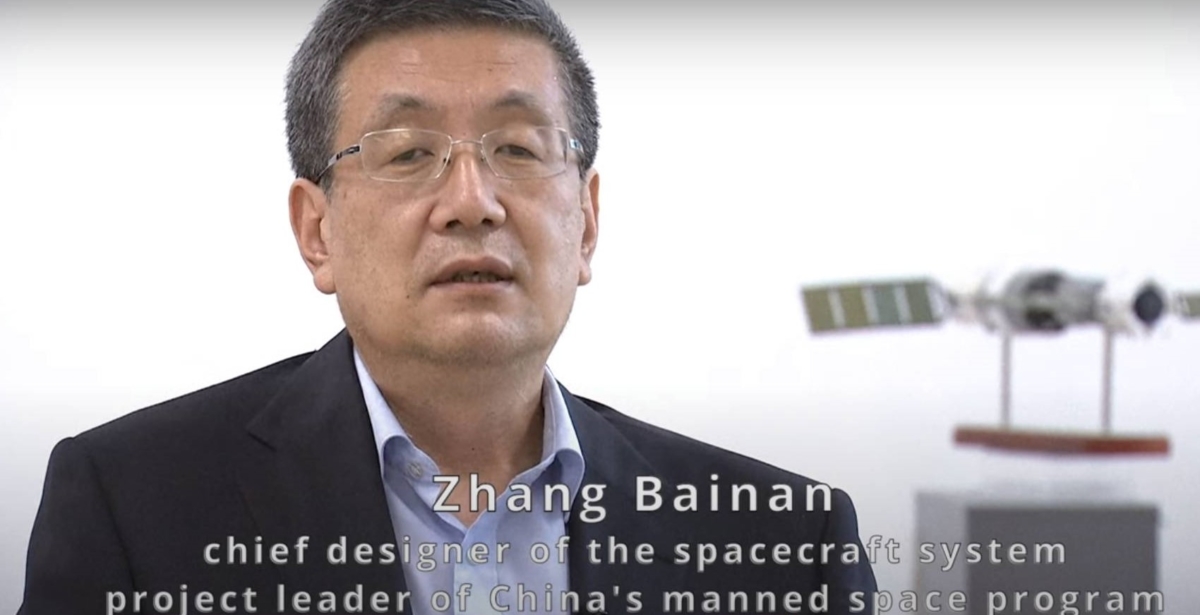
Zhang Bainan, Chief Designer of the Spacecraft System Project Leader of China’s Manned Space Program and also project leader of the new-generation experimental manned spaceship, paid much attention to the situation of the thermal-protective coating bottom.
“This thermal-protective material is of our own intellectual property rights, and it worked particularly well in integrity, much better than before. We will do detailed analysis for these materials,” Zhang said.

Credit: CCTV/Inside Outer Space screengrab
Space experiment results
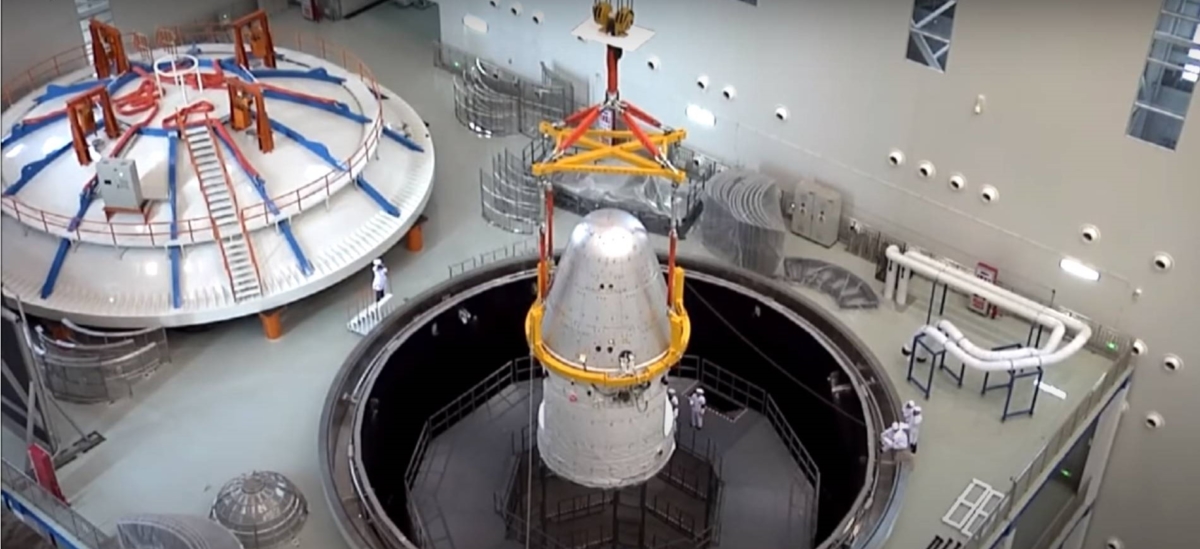
Next, scientists will conduct professional inspection on the appearance of the capsule, collect and analyze relevant data to verify the return capsule’s reusable performance. Meanwhile, they will also conduct research on the space experiment results brought back by the capsule, so as to provide further technological base for the overall plan of the new-generation manned spacecraft.

Credit: CCTV/Inside Outer Space screengrab
“We will verify the deformation of the metal structure to confirm whether it is reusable. We will also take a sample of the ablated thermal-protective material outside and conduct an electrical test on the whole cabin to confirm the reusable performance of the electronic equipment in the cabin,” said Liu Yan, electricity chief designer of the new-generation experimental manned spaceship.
Credit: CCTV/China National Space Administration (CNSA)/Inside Outer Space screengrab
Lunar ambitions
“The new-generation spacecraft can not only offer transportation services for building the space station, but also realize the goal of manned lunar landing. It is designed for the manned lunar landing mission,” explained Zhang. “Now we are keeping pace with the U.S., instead of always following it like before.”
Go to this China Central Television (CCTV) video titled “China’s new crewed spacecraft is designed for lunar missions,” at:
https://youtu.be/Hz63YRlU0Rs?list=PLpGTA7wMEDFjz0Zx93ifOsi92FwylSAS3
 Posted in Space News

