 By
By  May 11th, 2020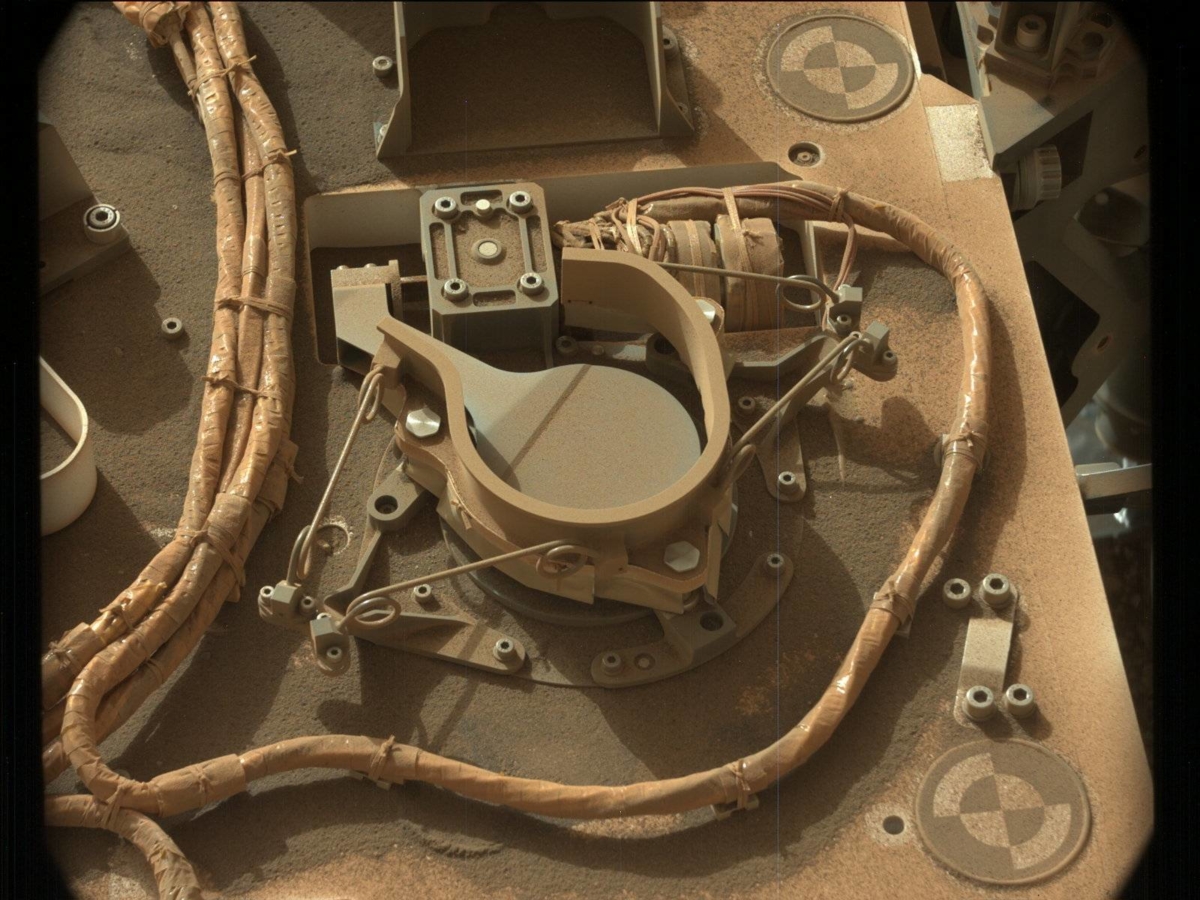
Curiosity Mast Camera Left image taken on Sol 2758, May 10, 2020.
Credit: NASA/JPL-Caltech/MSSS
NASA’s Curiosity Mars rover is now carrying out Sol 2760 tasks.
New imagery from the robot shows the fine material called “drill tailings” that surrounds the new “Glasgow” drill hole, reports Melissa Rice, Planetary Geologist at Western Washington University in Bellingham, Washington.
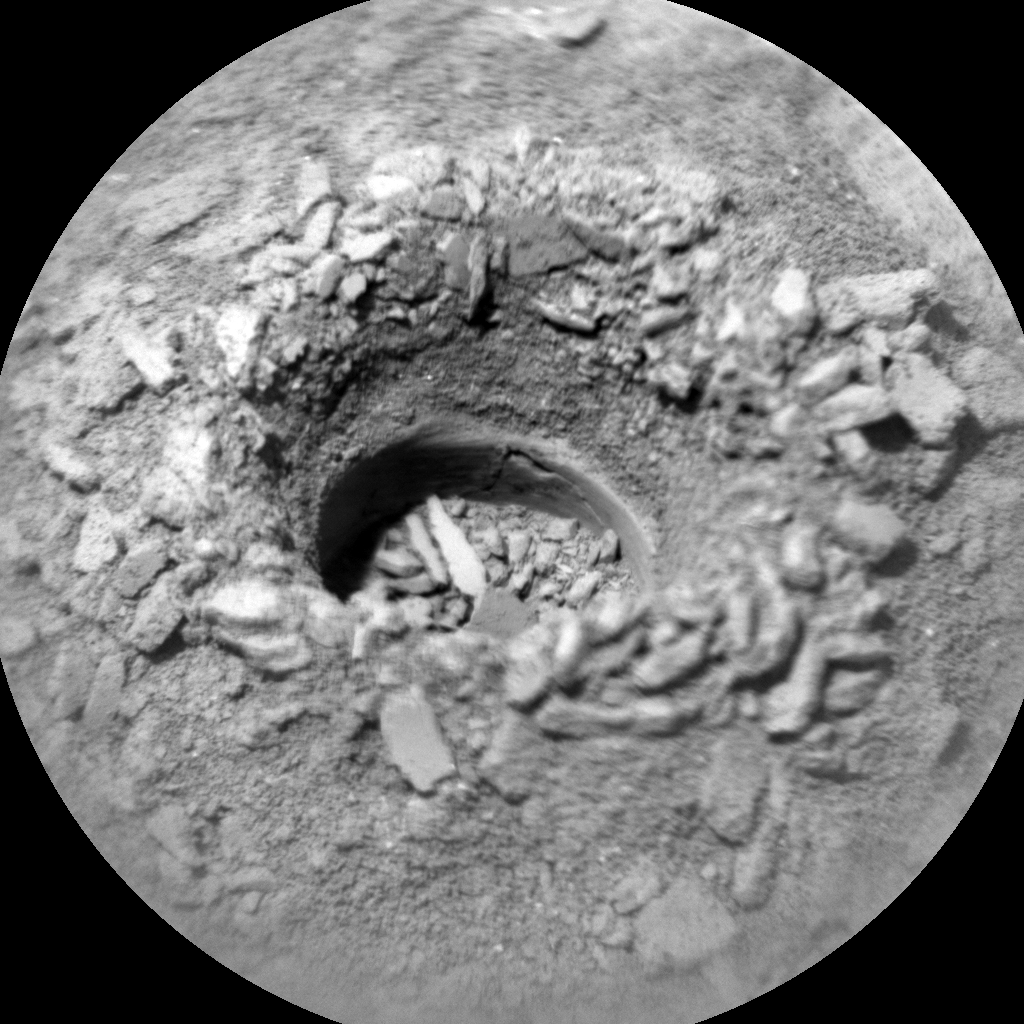
Some of the rock taken from inside the drill hole will be fed to the rover’s Chemistry & Mineralogy X-Ray Diffraction/X-Ray Fluorescence Instrument (CheMin) on sol 2758.
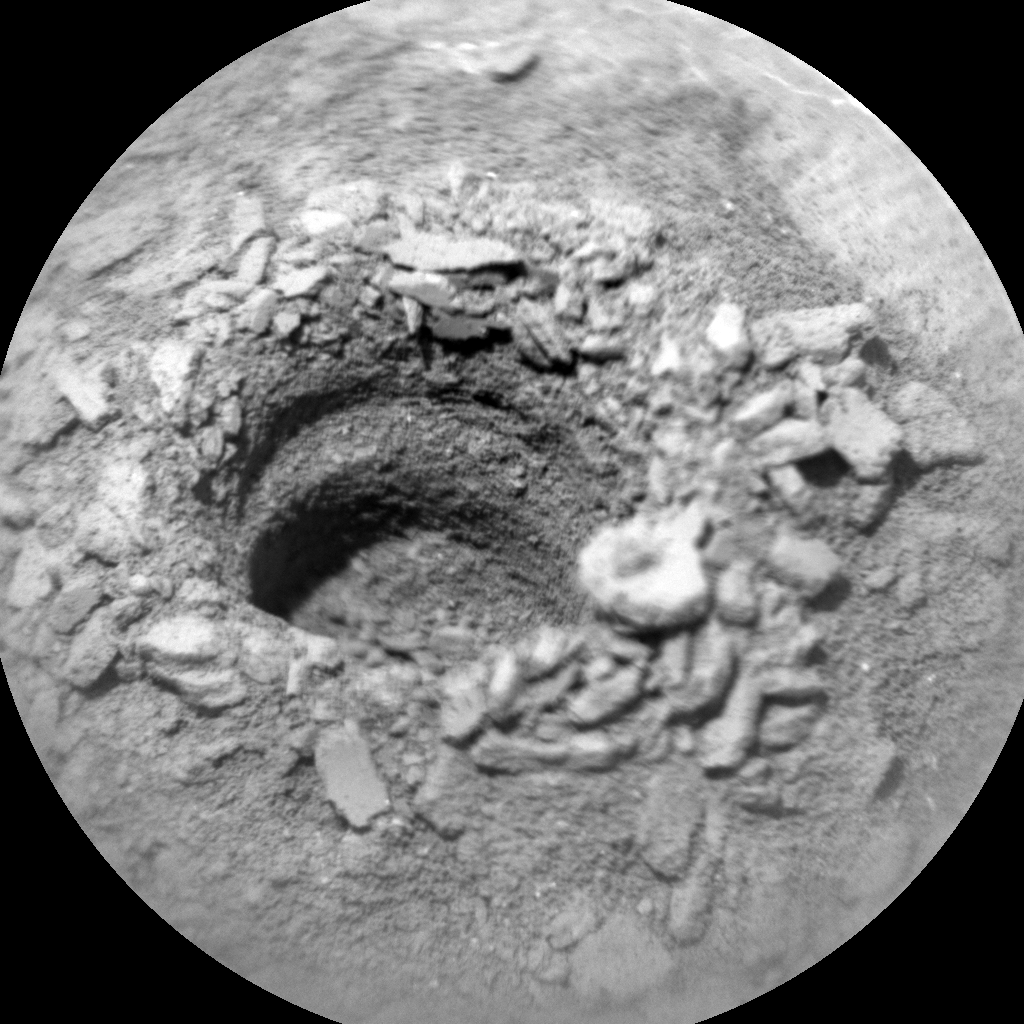
Curiosity Chemistry & Camera RMI Sol 2758 photo taken on May 9, 2020.
Credit: NASA/JPL-Caltech/LANL
Untangle the history
“The X-ray diffraction patterns that CheMin acquires will tell us what minerals are present in the rock,” Rice notes. “That important data, in combination with Curiosity’s other instrument investigations, will help us untangle the complex history of how this outcrop formed, what the environment at Gale crater was like when it did, and how it has interacted with water between then and now.”
In addition to CheMin’s taste of Glasgow, the plan calls for the rover’s Chemistry and Camera (ChemCam) instrument to also give the drill target a sniff by shooting its Laser Induced Breakdown Spectroscopy (LIBS) laser inside the hole.
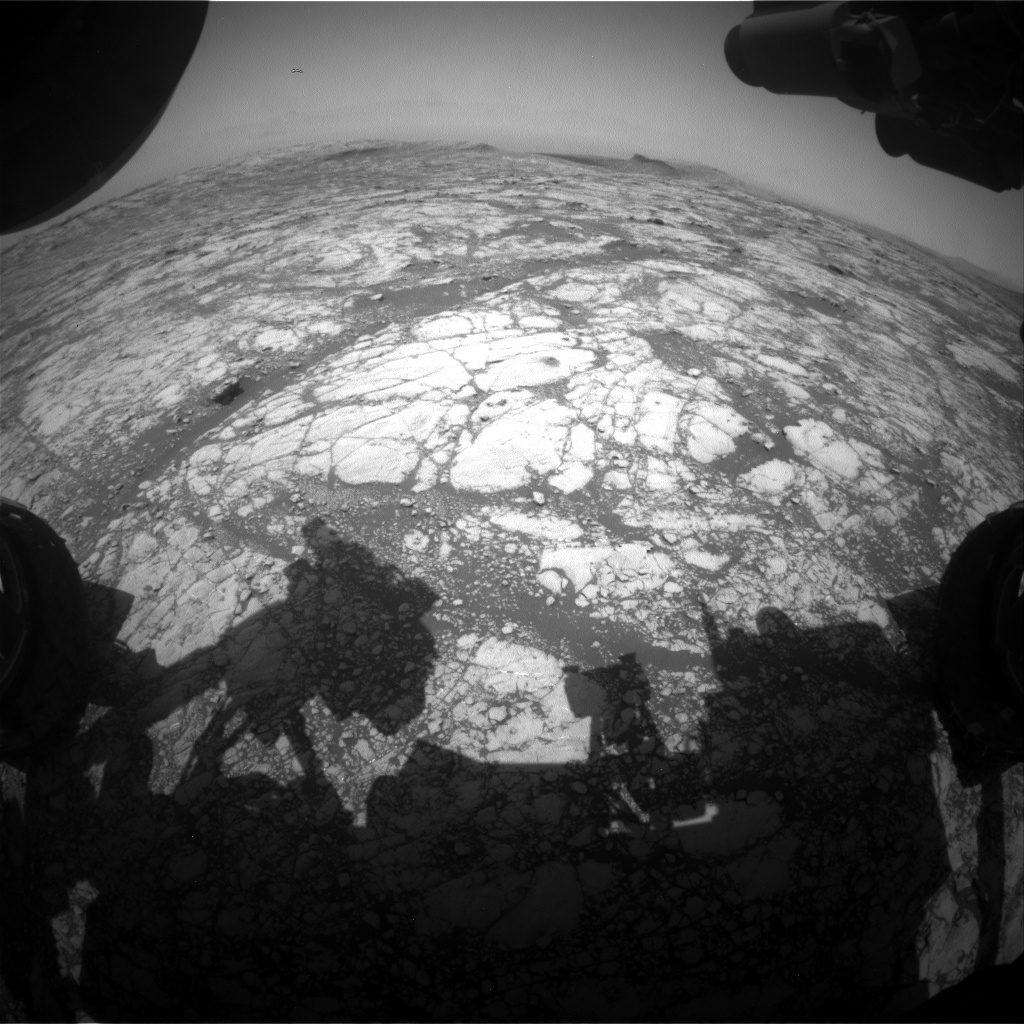
Curiosity Front Hazard Avoidance Camera Right B image acquired on Sol 2759, May 10, 2020.
Credit: NASA/JPL-Caltech
Wind-moved sand
“ChemCam will also target other spots on the nearby bedrock at “Loch_na_Keal,” “Loch_Olabhat,” and “Loch_Trool.” With Mastcam, Curiosity will photograph the area with wide stereo mosaics, and will look at spots called “Ishriff_1” and “Ishriff_2” to see if the wind has moved any of the sand since Mastcam imaged these same locations 10 days ago,” Rice adds.
In addition, the ChemCam Remote Micro Imager (RMI) is to peer at the trough called “Calmac” on the Western Butte, and Curiosity will also perform several environmental monitoring activities this weekend.
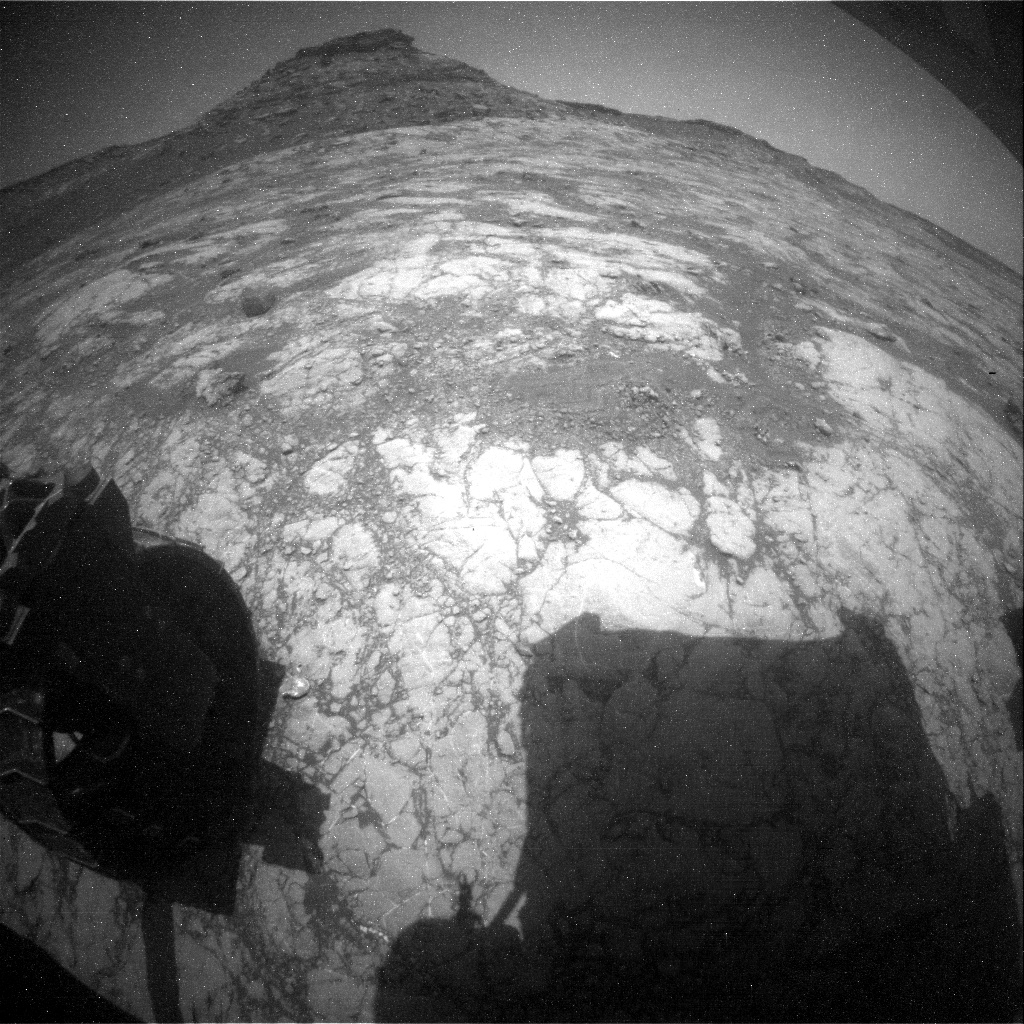
Curiosity Rear Hazard Avoidance Camera Right B image taken on Sol 2759, May 10, 2020.
Credit: NASA/JPL-Caltech
Chewing on the sample
In looking ahead, Rice as a long-term planner, points out that the next few days and into the coming weeks: “We will be chewing on the Glasgow sample for a while before we’re ready to spit it out and drive away.”
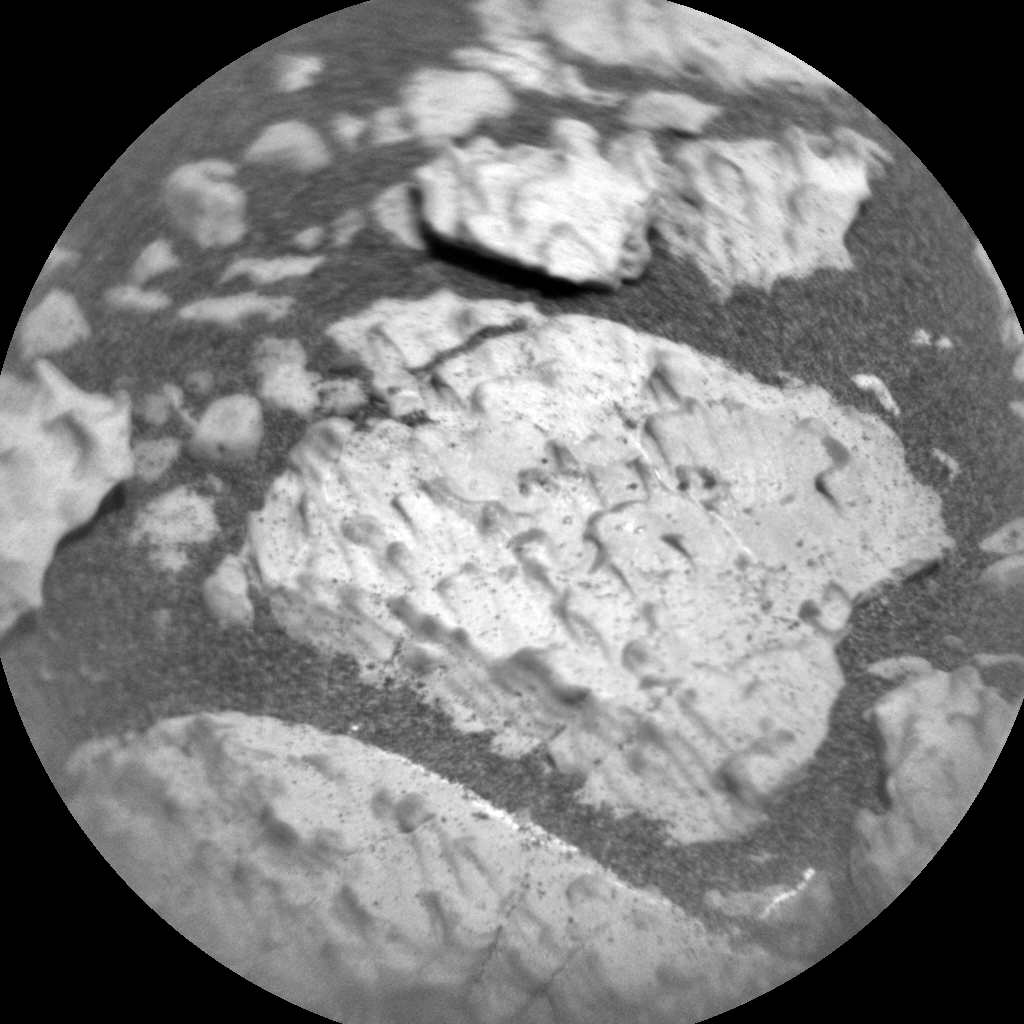
Curosity Chemistry & Camera RMI photo taken on Sol 2758, photo taken on May 9, 2020.
Credit: NASA/JPL-Caltech/LANL
Curiosity’s Sample Analysis at Mars (SAM) Instrument Suite will analyze the sample later this week, Rice concludes, and CheMin will acquire more data as well – so the plan now being implemented “really is just a first taste!”
 Posted in Space News

