 By
By  March 5th, 2015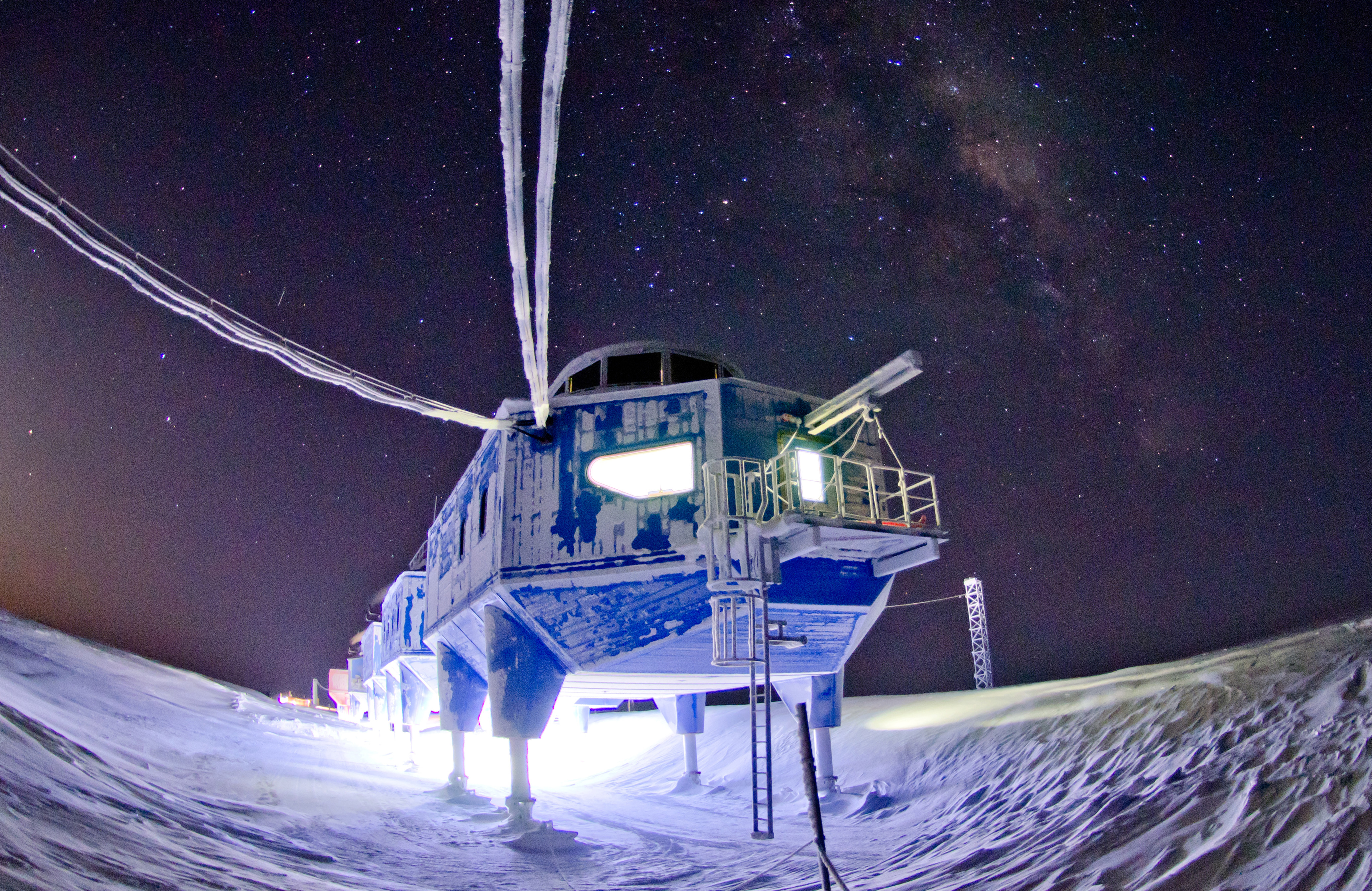
British Antarctic Survey’s Halley Research Station in Antarctica.
Credit: Sam Burrell, British Antarctic Survey.
Research stations in Antarctica are gearing up to study how humans adapt to living in faraway, isolated locales – useful information to help orchestrate long-duration sojourns in space and setting up habitats on the Moon and Mars.
Halley Research Station in Antarctica is hosting key research to understand human adaptation to space travel. Depending on the time of year, the facility is home to between 13-52 scientists and support staff.
The “bitter truth” is that the station is about to embark on winter and will experience temperatures as low as -50 degrees Celsius and more than four months of darkness.

Halley Research Station in Antarctica.
Credit: Sam Burrell, British Antarctic Survey.
The Halley crew will live in the same conditions as teams being studied at Dome Concordia – a joint French/Italian station, located on the other side of the continent – except they will be at sea level.
Isolated and in the dark
The experiment aims to investigate how well previously trained skills are maintained over the nine months period of the winter, being completely isolated and in the dark for four months.
The mobile spaceflight simulator at Halley Station has been designed by the Institute of Space Systems (IRS) of the University of Stuttgart.
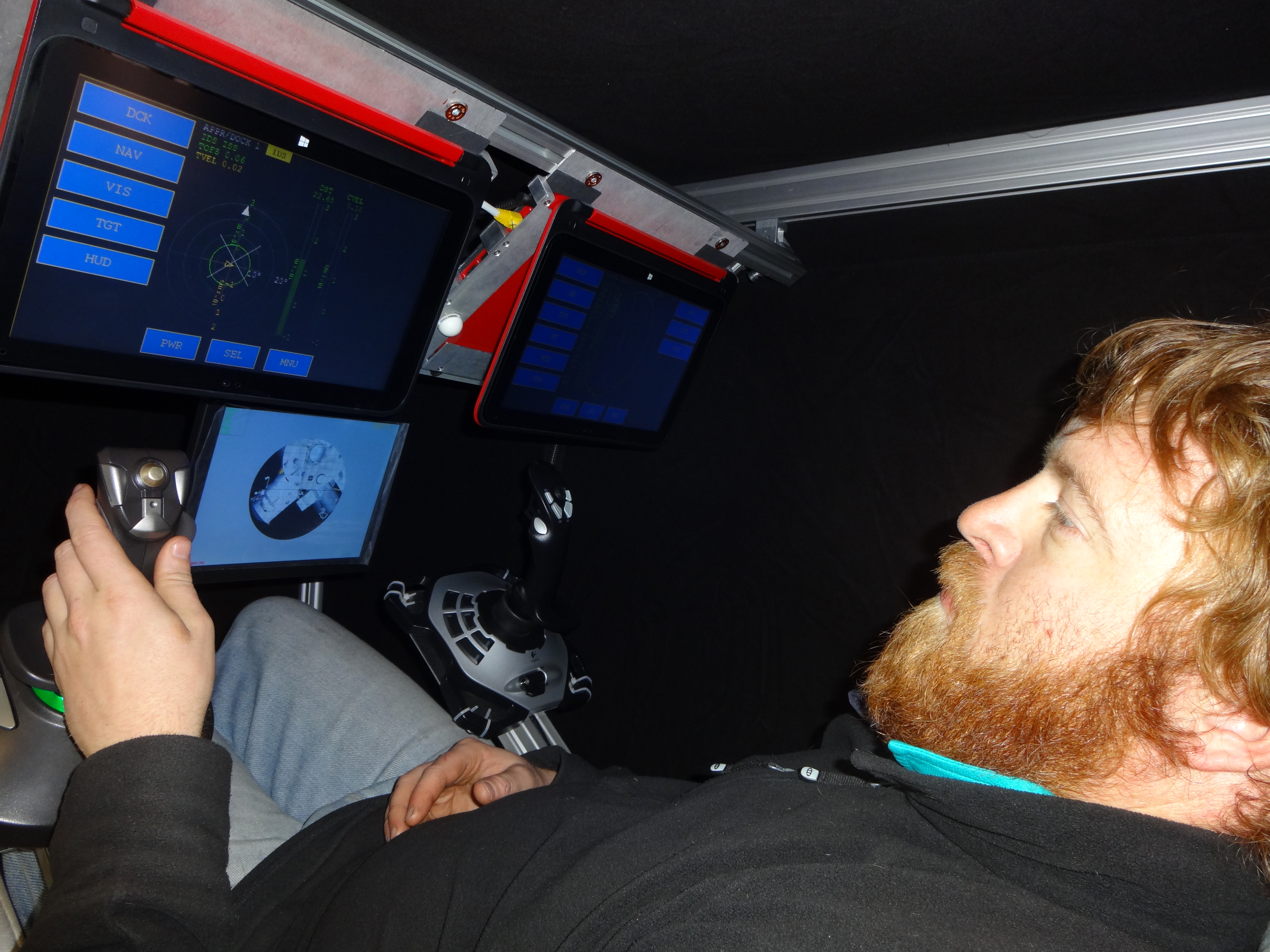
Winter generator mechanic, Steve Croft, inside the space flight simulator at Halley Research Station. Credit: Alexander Finch
Partnerships for Moon, Mars…and beyond
David Vaughan, Director of Science at BAS, says that partnership with ESA to use Halley Research Station in Antarctica can play a part in ensuring astronauts can operate safely on future space missions.
“Offering Halley Research Station as an additional platform for European researchers will provide us with important data, experience and knowledge to prepare for future long-duration human missions to the Moon, Mars and beyond,” said ESA’s Jennifer Ngo-Anh.
Cut off from the world
Explains Halley Research Station doctor Nathalie Pattyn, in a British Antarctic Survey Press Office release: “This experiment will be running at both Concordia and Halley stations to look at the factors affecting astronauts as they embark on long periods in space. Living at Halley is in many ways similar to living in space where crew are cut off from the world without sunlight and in very small communities.”
There is expected to be a huge scientific bonus of comparing data from Halley and Concordia stations, Pattyn concludes, the kind of information useful to appreciate the influence of hypoxia, the lack of oxygen, on top of the isolation and confinement issues.
Pattyn is from Vrije Universiteit Brussel where she is a professor of biological psychology.
Psychological status check
One of the other projects running over the next nine months will involve the team members recording themselves in a video diary.
Diaries will be analyzed via a computer algorithm through parameters such as pitch or word choice.
Researchers expect that this technique will provide a new window to objective monitoring of psychological status, and thus adaptations to the stresses of prolonged space flight.
 Posted in Space News

