 By
By  April 8th, 2020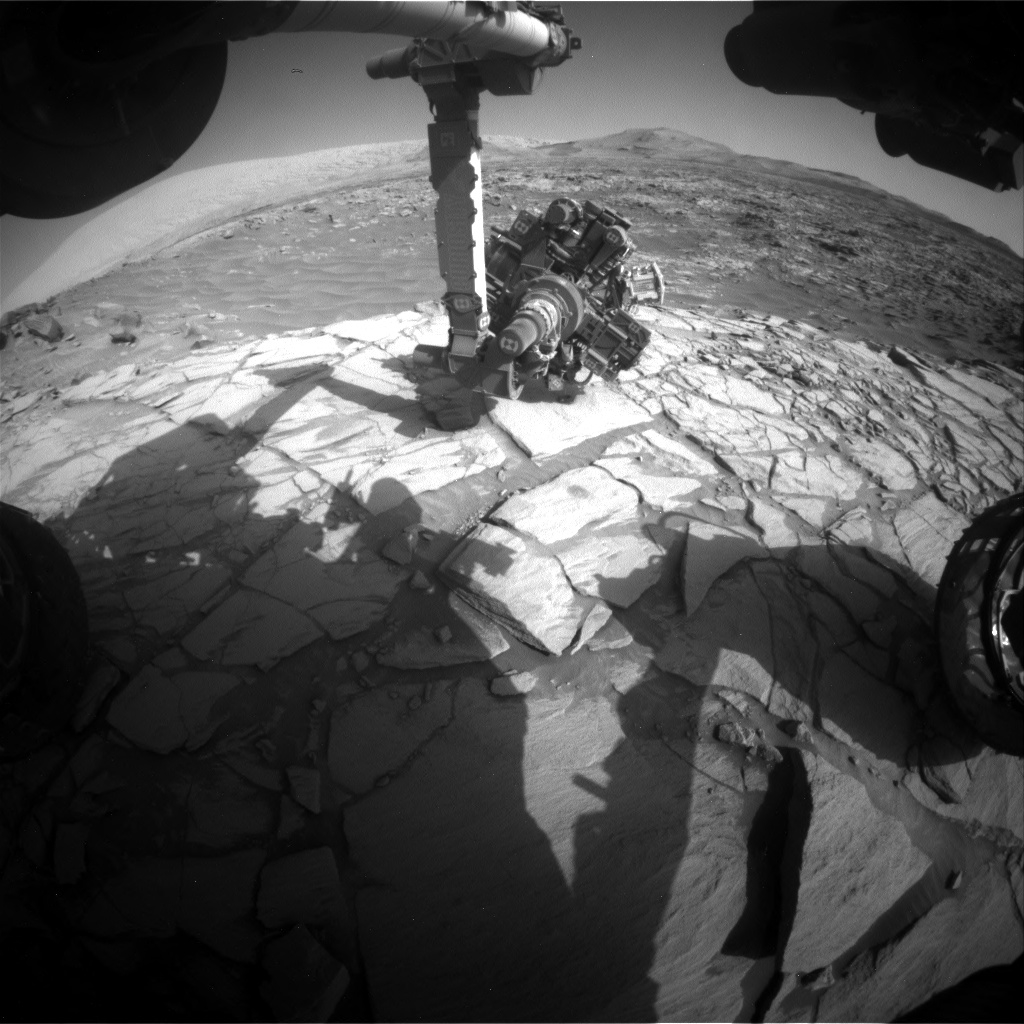
Curiosity Front Hazard Avoidance Camera Right B image taken on Sol 2727, April 8, 2020.
Credit: NASA/JPL-Caltech
NASA’s Curiosity Mars rover is now performing Sol 2728 tasks.
Reports Kristen Bennett, a planetary geologist at USGS Astrogeology Science Center in Flagstaff, Arizona: In the last weekend plan the remainder of the “Edinburgh” drill sample was dumped, “which means that we are almost finished with activities in this drill location.”
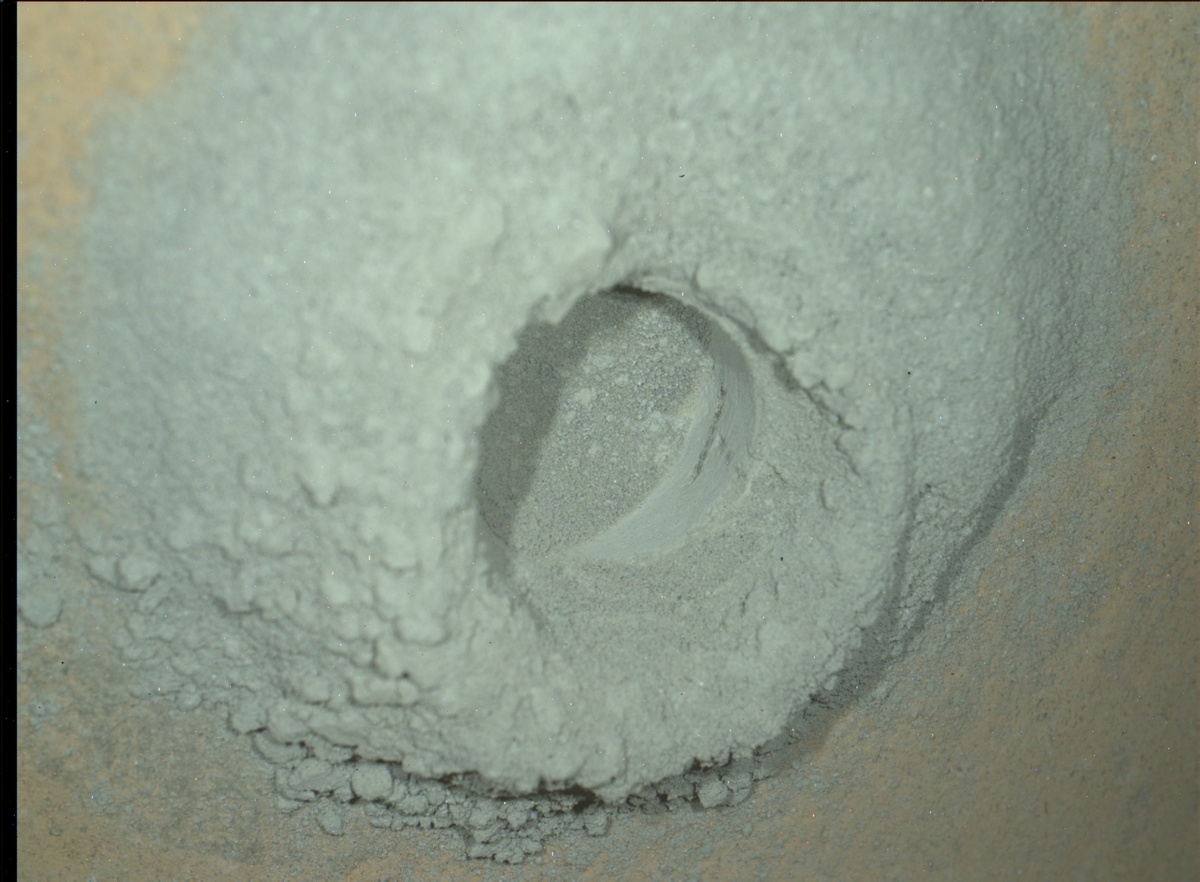
Curiosity Mars Hand Lens Imager photo produced on Sol 2727, April 8, 2020.
Credit: NASA/JPL-Caltech/MSSS
A recent two-sol plan was filled with activities to characterize the dump pile and drill hole as well as remote sensing observations.
Dump pile imagery
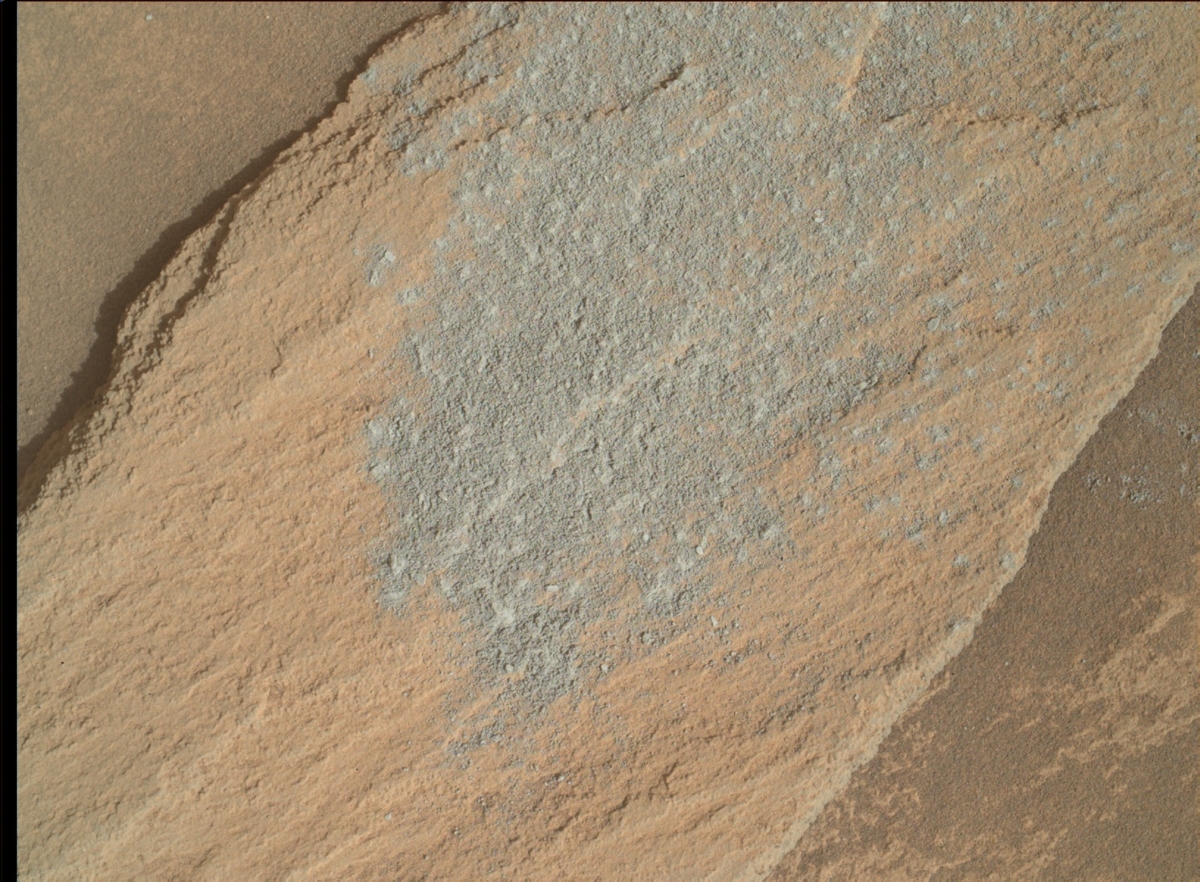
The rover’s Alpha Particle X-Ray Spectrometer (APXS) attempted to document the new dump pile in the weekend plan, “but that observation was offset from the intended target because we did not know exactly where the dump pile would be,” Bennett notes.
Curiosity Mars Hand Lens Imager photo produced on Sol 2727, April 8, 2020.
Credit: NASA/JPL-Caltech/MSSS
“Now that we have images of the dump pile, we know its specific location and APXS will redo that measurement,” Bennett says. “Additionally, APXS will observe the drill hole tailings.”
Curiosity Mars Hand Lens Imager photo produced on Sol 2727, April 8, 2020.
Credit: NASA/JPL-Caltech/MSSS
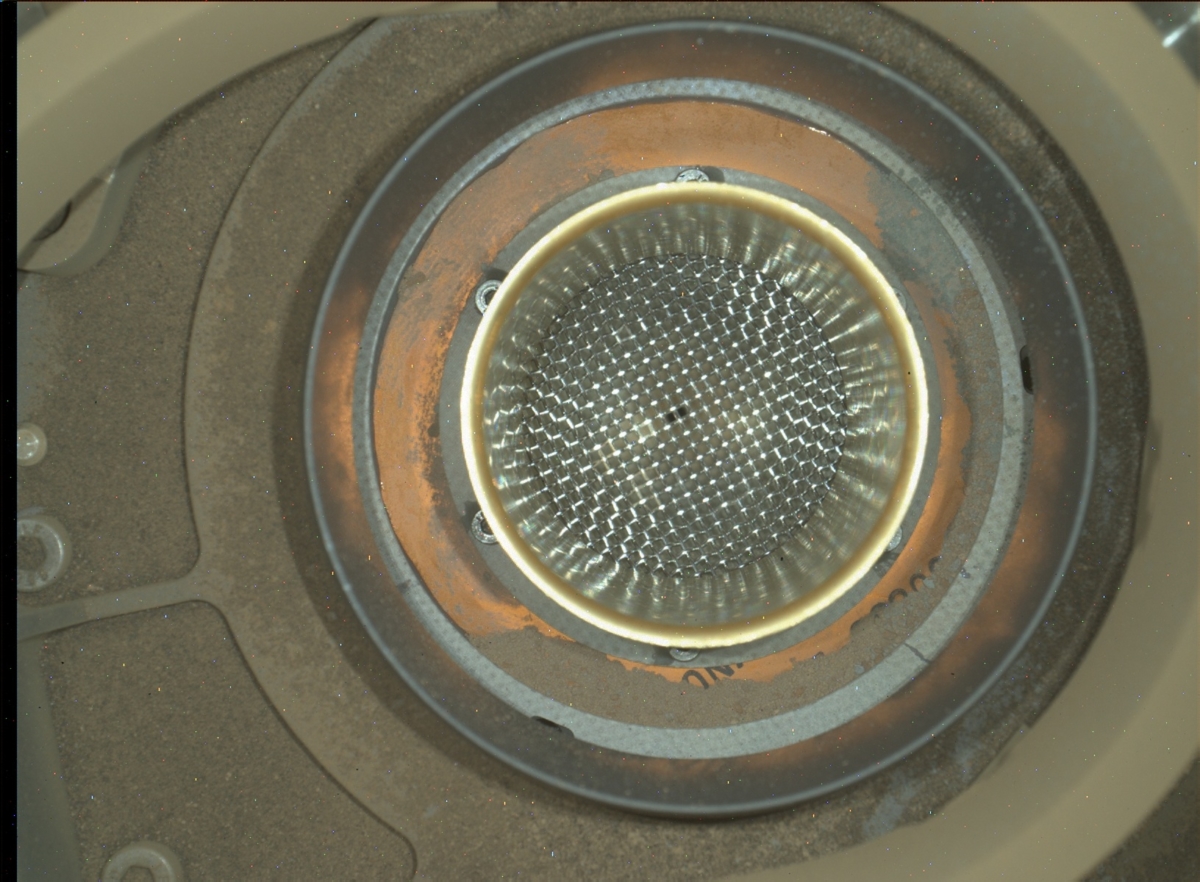
The robot’s Mars Hand Lens Imager (MAHLI) will be used to document the dump pile and the drill hole tailings. In this plan MAHLI will also take nighttime images of the drill hole walls and of the Chemistry & Mineralogy X-Ray Diffraction/X-Ray Fluorescence Instrument (CheMin) inlet to make sure all the sample made it through the inlet.
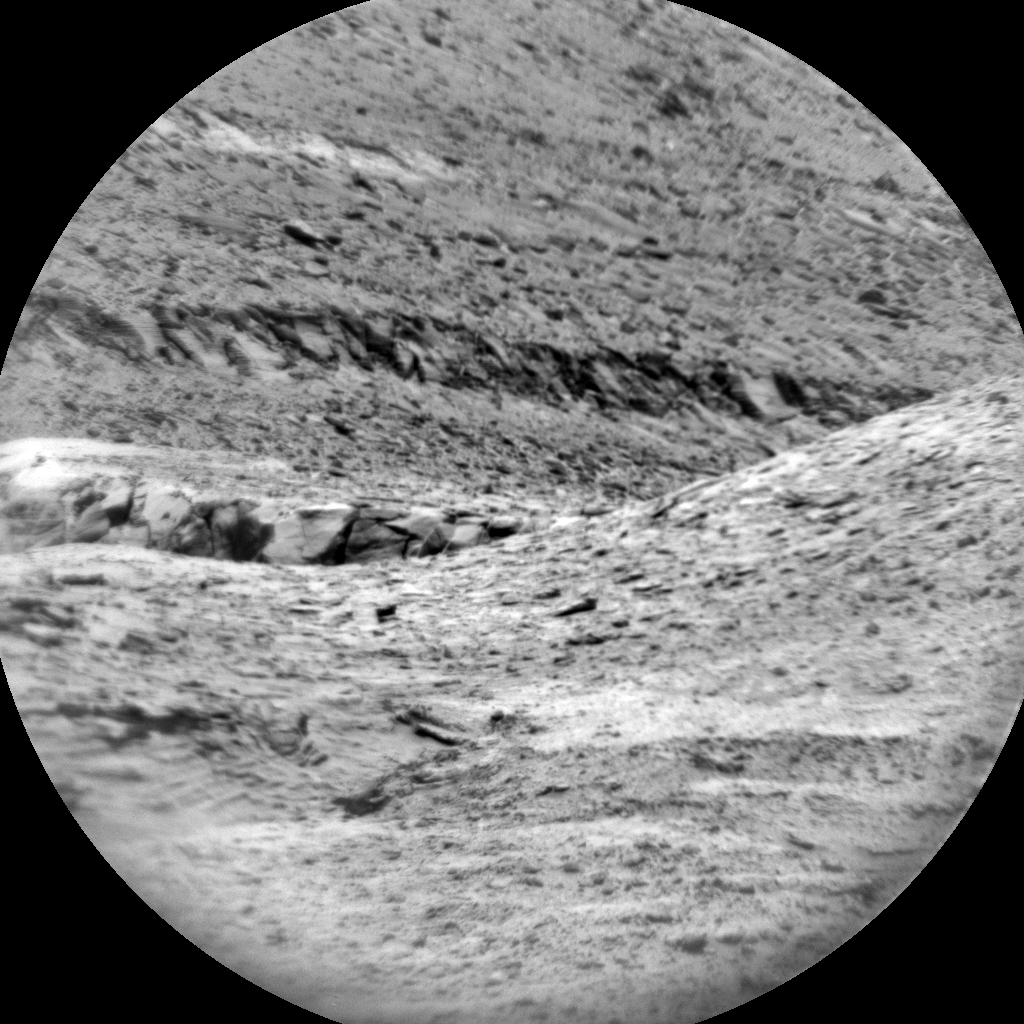
Curiosity Chemistry & Camera RMI photo taken on Sol 2726, April 7, 2020.
Credit: NASA/JPL-Caltech/LANL
Spectacular view
For remote sensing, ChemCam will take a Remote Micro Imager (RMI) telescope observation looking towards Gediz Vallis.
“From our current location on the “Greenheugh” pediment we have a spectacular view looking up towards Mount Sharp and “Gediz Vallis,” so this observation is part of a series of ChemCam RMIs documenting areas that will be obscured once we descend off the pediment. ChemCam will also target the Edinburgh drill hole and tailings in this plan,” Bennett adds.
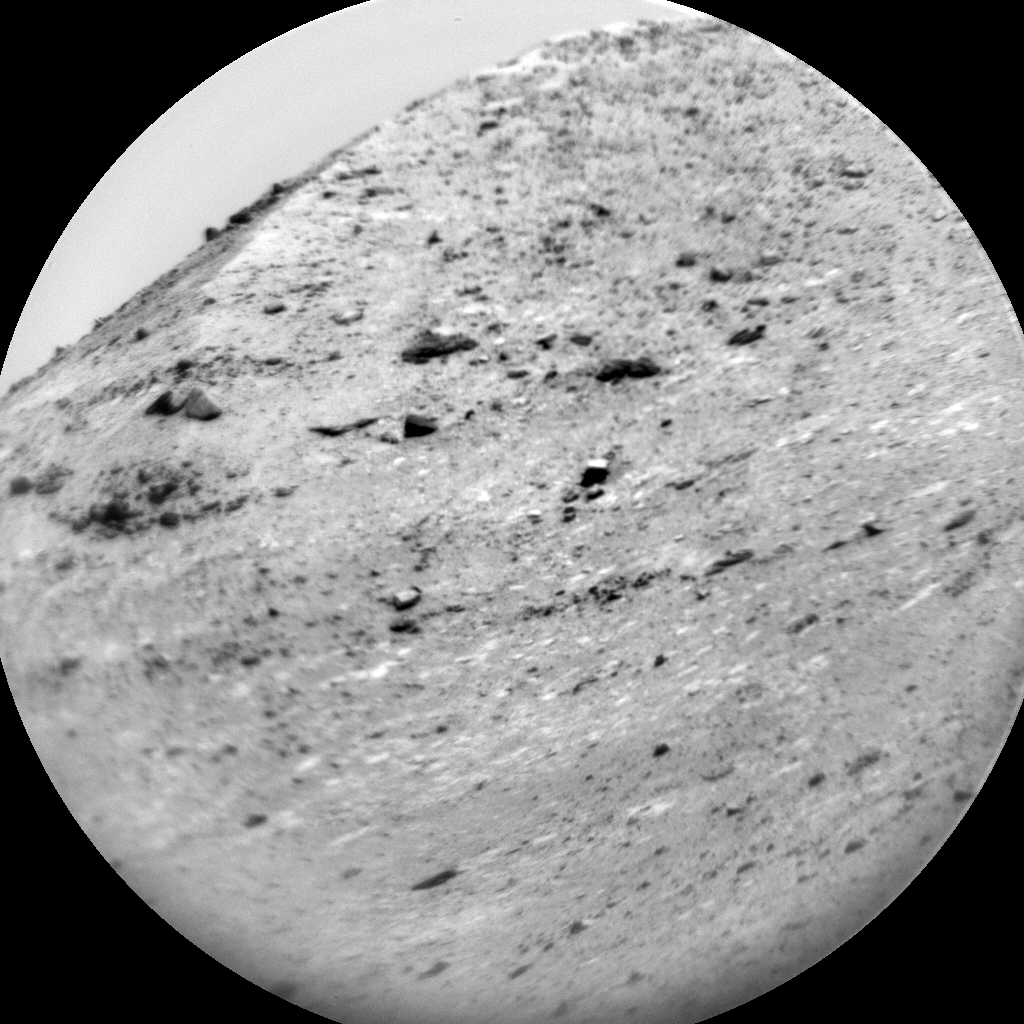
Curiosity Chemistry & Camera RMI photo taken on Sol 2726, April 7, 2020.
Credit: NASA/JPL-Caltech/LANL
Hilltop mosaic
Curiosity’s Mastcam will be retaking a portion of the “Hilltop” mosaic, Bennett explains. “The instrument’s arm ended up “waving at us” in the original mosaic…which is fun (Hi, Curiosity!), but we decided to retake those frames so we can see the bedrock that the arm obscured.”
“We will also be finishing up a Navcam/Mastcam photometry experiment in this plan. The goal of this experiment is to model how light scatters off the surface,” Bennett continues. “While Curiosity has been sitting here at the Edinburgh drill site, Navcam and Mastcam have been taking images of the same locations at multiple times of day to learn how light scatters from the surface at different sun angles. The final Navcam images were taken in this plan.”
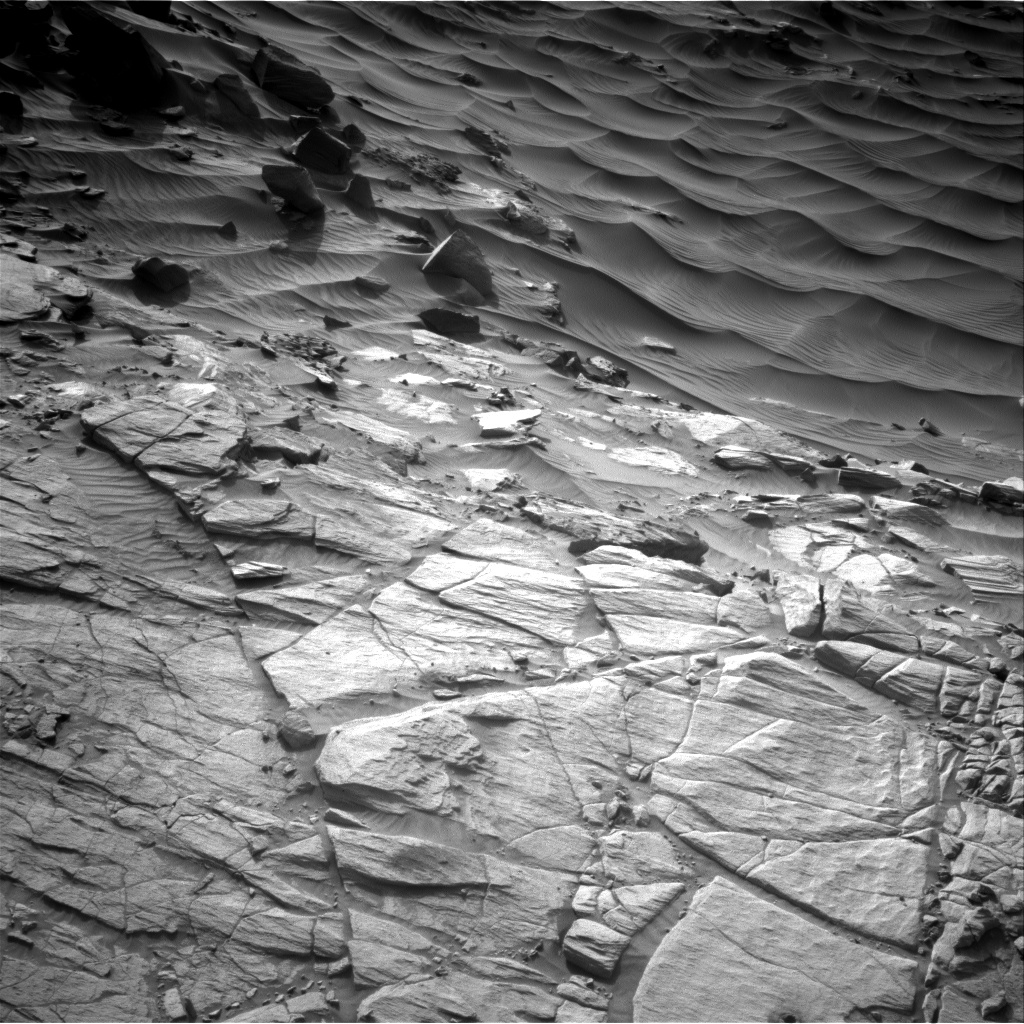
Curiosity Right B Navigation Camera image acquired on Sol 2727, April 7, 2020.
Credit: NASA/JPL-Caltech
Changes in ripples
Finally, there will be several change detection observations to constrain the amount of wind activity in this area.
The first observation is with Mastcam of a nearby ripple field to search for any changes in the ripples,” Bennett reports. The second is with the rover’s Mars Descent Imager (MARDI) “because this instrument has been staring at the same patch of ground underneath the rover so if anything moved because of the wind or drill activities, MARDI is ready to observe the evidence.”
In completing activities at the Edinburgh drill site, Mars scientists soon expect to drive away from the rover’s current location.
 Posted in Space News

