 By
By  February 6th, 2015
Up, up and away!
Credit: DARPA
This week, at the 18th Annual Federal Aviation Administration Commercial Space Transportation Conference in Washington, D.C., the Defense Advanced Research Projects Agency (DARPA) highlighted its Airborne Launch Assist Space Access program (ALASA).
The current ALASA design envisions launching a low-cost, expendable launch vehicle from conventional aircraft. Serving as a reusable first stage, the plane would fly to high altitude and release the launch vehicle, which would carry the payload to the desired location.
The goal of ALASA is to develop a significantly less expensive approach for routinely launching small satellites, with a goal of at least threefold reduction in costs compared to current military and US commercial launch costs. Currently, small satellite payloads cost more than $30,000 per pound to launch, and must share a launcher with other satellites.
ALASA seeks to launch satellites on the order of 100 pounds for less than $1 million total, including range support costs, to orbits that are selected specifically for each 100 pound payload.
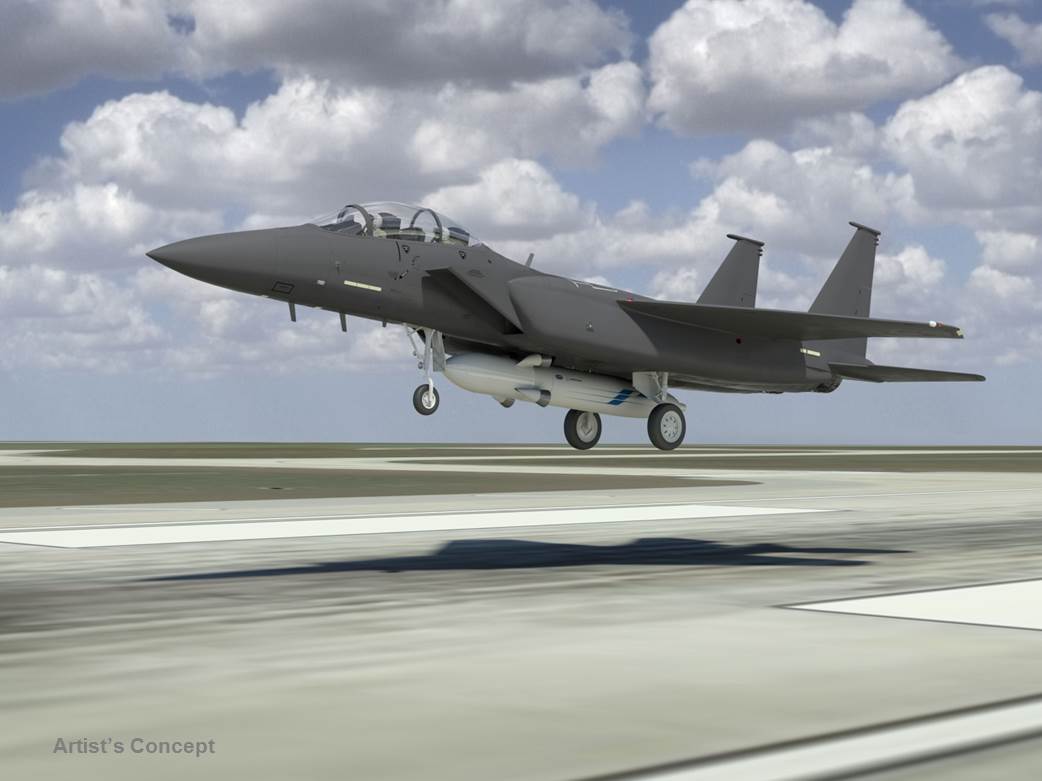
Credit: DARPA
According to DARPA, the ALASA program is moving ahead with rigorous testing of new technologies that one day could enable revolutionary satellite launch systems that provide more affordable, routine and reliable access to space.
Take a look at this DARPA video:
https://www.youtube.com/watch?v=BOaJWoVLhAc
 Posted in Space News

