 By
By  April 13th, 2019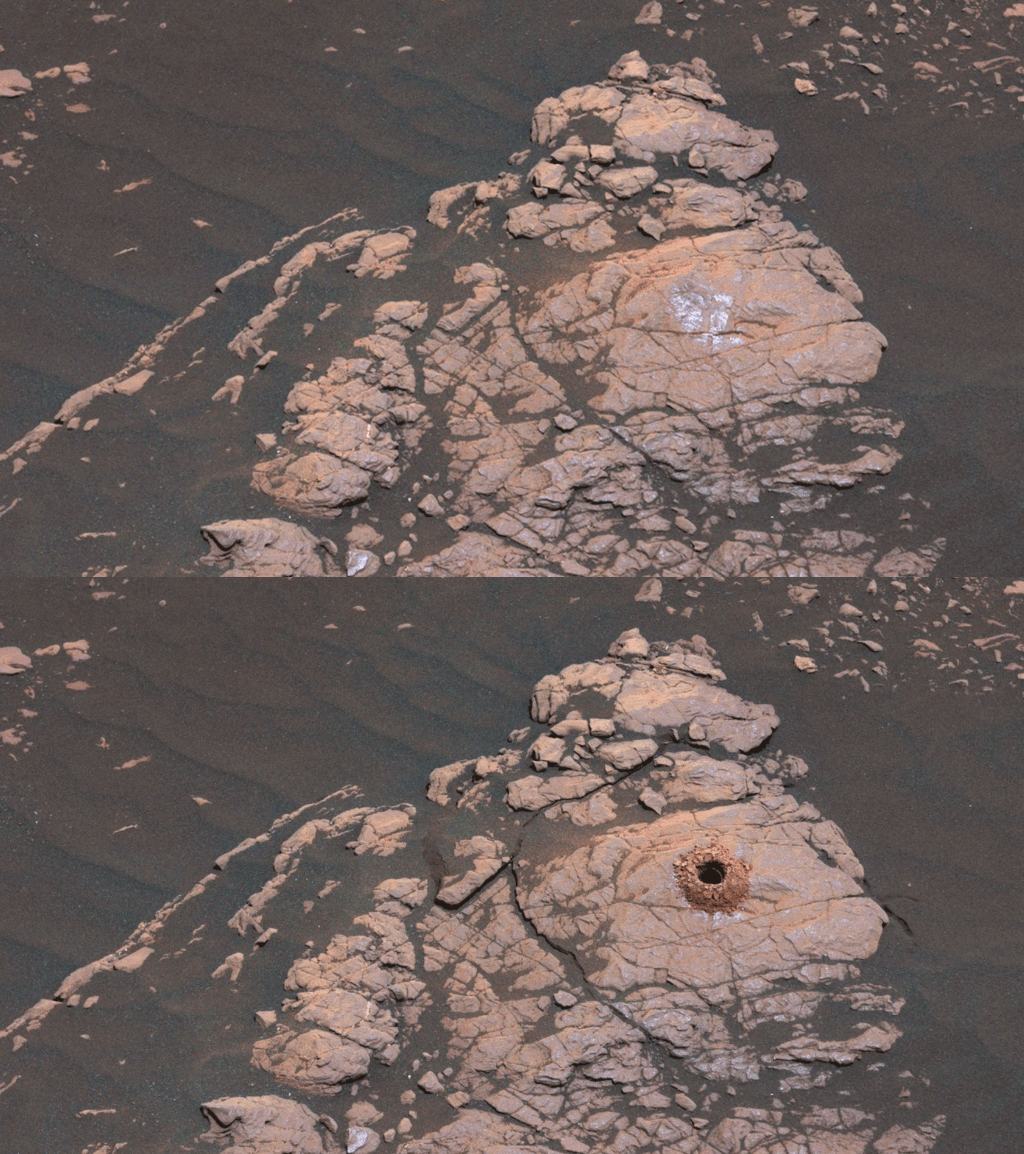
Click on image to produce before/after drilling. Credit: NASA/JPL-Caltech/MSSS
NASA’s Curiosity Mars Rover is now performing Sol 2376 science duties.
The Mars robot continues the sequence of drill activities at “Aberlady” reports Vivian Sun, a planetary geologist at NASA/JPL in Pasadena, California,
Mars researchers will be collecting Alpha Particle X-Ray Spectrometer (APXS) data of the dump pile with two offset observations “to better understand any compositional variations, which are hinted at by the color variations observed in the drill fines,” Sun adds.

Curiosity Front Hazcam Right B photo taken on Sol 2376, April 13, 2019.
Credit: NASA/JPL-Caltech
Also planned is performing another Chemistry & Mineralogy X-Ray Diffraction/X-Ray Fluorescence Instrument (CheMin) integration to further refine the mineralogic analyses for Aberlady.
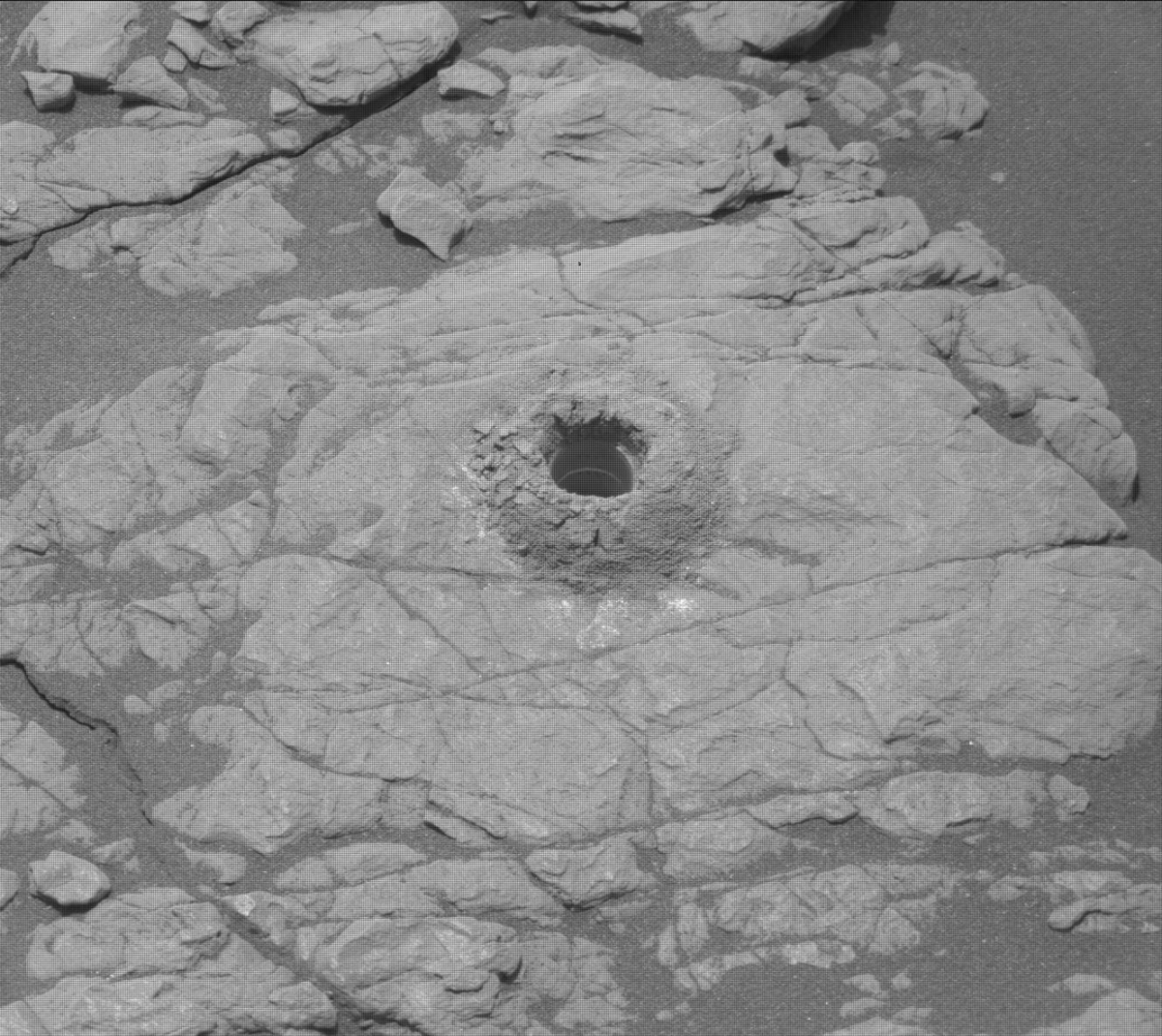
Mastcam Right Sol 2374 image acquired on April 11, 2019.
Credit: NASA/JPL-Caltech/MSSS
Dump pile photos
Images will be taken by Curiosity’s Mars Hand Lens Imager (MAHLI) images of the dump pile and the drill hole.
“Discussions of whether we should drill again near our current workspace or drive away and drill elsewhere are still ongoing,” Sun explains, “but to cover our bases we planned an APXS and MAHLI observation of “Seil” for reconnaissance on potentially drillable bedrock.”
Many of the robot’s remote sensing activities were designed to characterize the compositional variability of the bedrock in this region.

Navcam Left B photo taken on Sol 2376, April 13, 2019.
Credit: NASA/JPL-Caltech
Possible meteorite fragment
On the plan is producing a series of ChemCam Laser Induced Breakdown Spectroscopy (LIBS) rasters on “Glen Water,” “Ben Vane,” “John O Groats,” and “Kirkcaldy,” as well as their corresponding Mastcam documentation images.
“We also planned a ChemCam target on a possible meteorite fragment called ‘Lumphanan.’ This observation is unusual because ChemCam targets are usually limited to within approximately [23 feet] 7 meters distance of the rover mast, as data quality decreases at longer distances. Lumphanan is more than [30 feet] 9 meters from the rover mast, but we decided to use this measurement as a long distance calibration activity,” Sun notes.
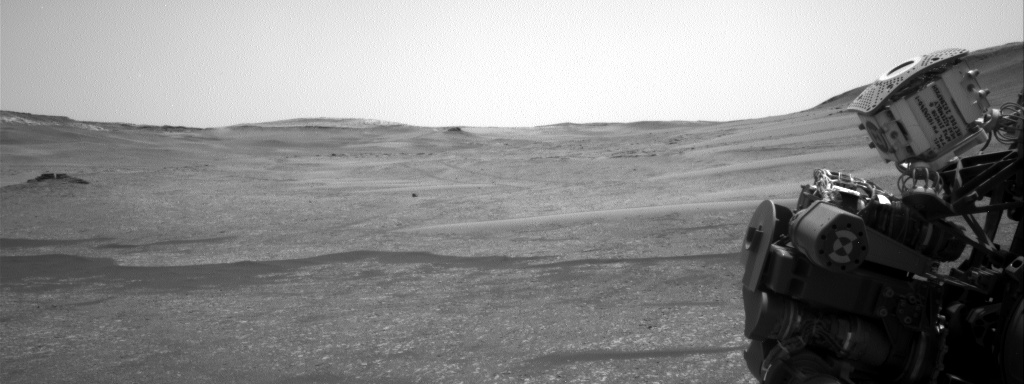
Navcam Right B image acquired on Sol 2376, April 13, 2019.
Credit: NASA/JPL-Caltech
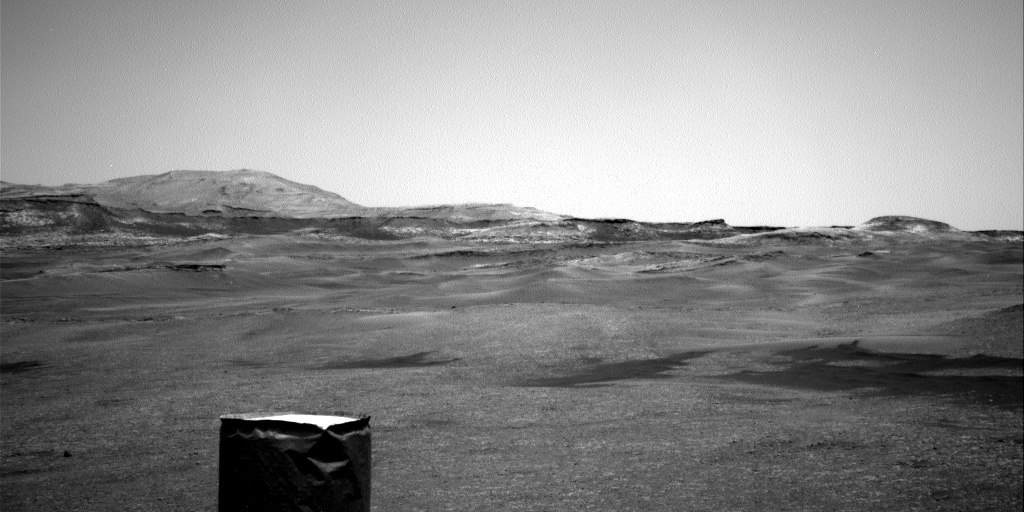
Navcam Right B image acquired on Sol 2376, April 13, 2019.
Credit: NASA/JPL-Caltech
Dust devil survey
Other observations in the weekend plan include a suite of atmospheric monitoring activities, Sun reports, including a Navcam dust devil survey.
Scientists are also taking advantage of Curiosity’s stationary location by continuing the change detection campaign with Mastcams of “Claymore” and Mars Descent Imager (MARDI) observations. Lastly, also planned is a Mastcam mosaic of the sulfate unit to aid in targeting a ChemCam long-distance Remote Micro-Imager (RMI) observation of the sulfate unit, Sun concludes.
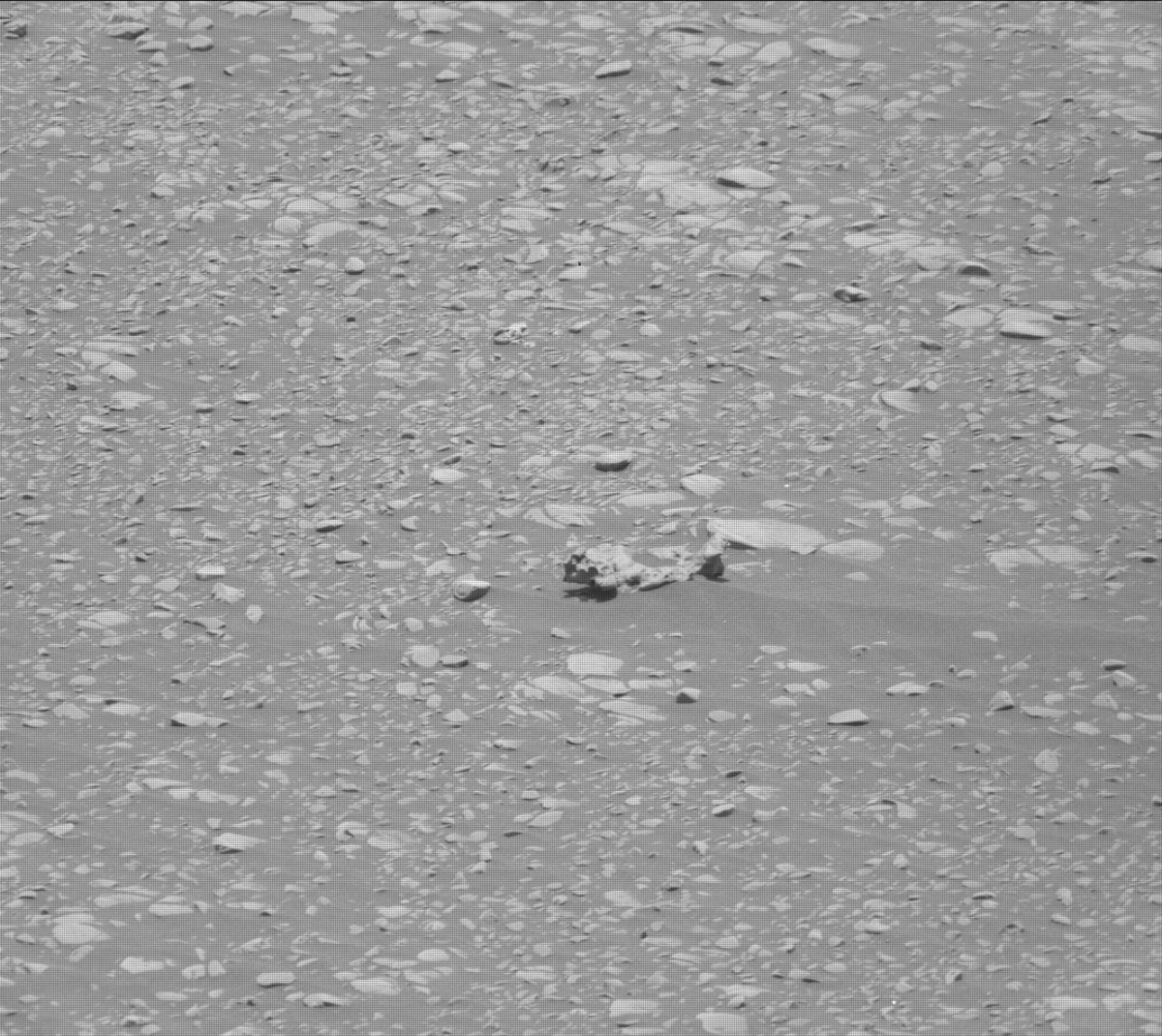
Possible meteorite fragment? Mastcam Right image taken on Sol 2365, April 2, 2019.
Credit: NASA/JPL-Caltech/MSSS

Meteorite? Photo taken by Curiosity ChemCam Remote Micro-Imager on Sol 2376, April 13, 2019.
Credit: NASA/JPL-Caltech/LANL
 Posted in Space News

