 By
By  February 8th, 2019
Credit: ASAP
NASA’s Aerospace Safety Advisory Panel (ASAP) has released its 2018 Annual Report.
The ASAP appraisal highlights 2018 activities and includes assessments of NASA’s:
Exploration Systems Development
Commercial Crew Program
Deep space exploration
International Space Station operations
Aeronautics missions and air operations, and
Enterprise protection
Risk management
In a letter within the report to NASA chief, Jim Bridenstine, Patricia Sanders
Chair of the Aerospace Safety Advisory Panel, flags a number of issues.
“As both the Commercial Crew Program and Exploration Systems Development move beyond design into hardware production and test, we continue to note that NASA maintains focus on the requisite details for risk management and mission success without apparent neglect or omission of planned content,” Sanders says.
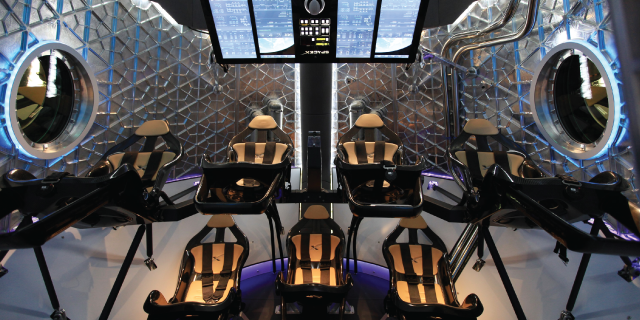
A look through the open hatch of the Dragon V2 reveals the layout and interior of the seven-crew capacity spacecraft. SpaceX unveiled the new spacecraft during a ceremony at its headquarters in Hawthorne, California, on May 29, 2014. (NASA/Dimitri Gerondidakis)
“To date, but with technical challenges remaining, there has been no direct evidence that schedule pressure is driving decisions that will adversely impact safety,” adds Sanders.
Inherent perils
The letter explains that, as NASA transitions from development to operational launch and flight of its astronauts—something it has not done for several years, since the end of the Shuttle era—it is essential to remain cognizant of the perils inherent to space flight.
“Given the great uncertainties of the space operational environment, it is critical to maintain vigilance and attention to test results, engineering understanding, disciplined processes, and consideration of mitigation alternatives,” Sanders says. “We have often commented on the need for constancy of purpose for exploration, but along with that must go constancy of standards for certification, flight test, and acceptable risk.”
The report explains that two recent events demonstrate that space flight is inherently risky: a pressure leak on the International Space Station (ISS), and an abort during a launch of the Russian Soyuz.

International Space Station
Credit: Roscosmos
ISS mitigation plan
Noted in the letter, the ASAP advice includes a recommendation that NASA and the Congress agree on a mitigation plan to ensure continuing U.S. presence on the International Space Station until commercial crew providers are available.
They also advise that NASA maintain a persistent presence in low-Earth orbit for the long term in order to mitigate the considerable risk of human exploration in the far reaches of space.
The ASAP also continues to urge serious attention to the hazards posed by Micrometeoroids and Orbital Debris, and they continue to recommend that the language in the NASA Authorization Act of 2005 requiring the establishment of a Presidential Commission for Human Space Flight Independent Investigations be reviewed and revised.
To read the entire report – Aerospace Safety Advisory Panel Annual Report: 2018 – go to:
https://oiir.hq.nasa.gov/asap/documents/2018_ASAP_Report-TAGGED.pdf
 Posted in Space News

