 By
By  December 18th, 2014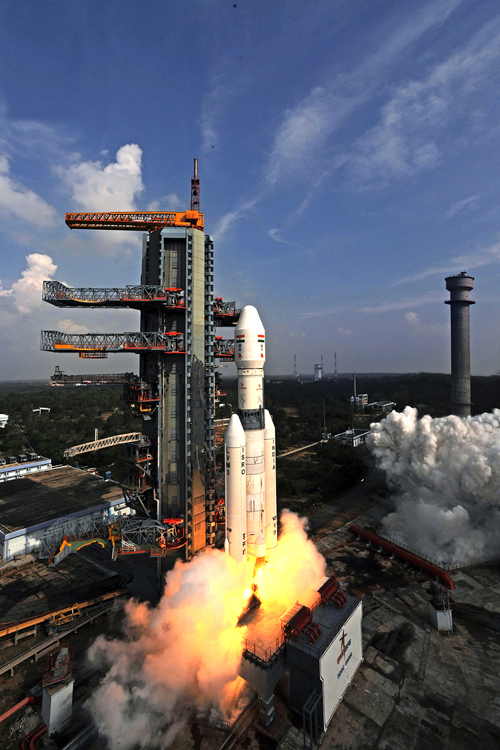
Liftoff of India’s next generation booster – GSLV Mk-III.
Credit: ISRO
India’s next generation booster – GSLV Mk-III – flew successfully on its first experimental flight.
The rocket departed the Satish Dhawan Space Centre SHAR, Sriharikota on December 18.
The suborbital shot had a two-fold agenda:
— Test the vehicle performance during its critical atmospheric phase of its flight carrying a non-functional cryogenic upper stage.
— Fly the over four ton (3,775 kg) Crew Module Atmospheric Re-entry Experiment (CARE) – to a height of over 75 miles (126 km).
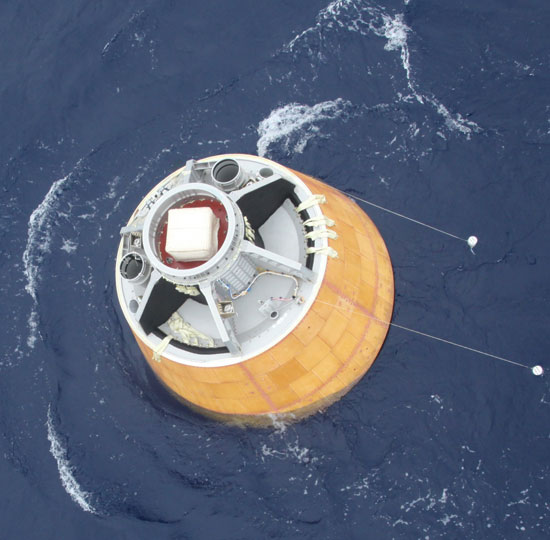
Bobbing in the Bay of Bengal – India’s Crew Module Atmospheric Re-entry Experiment (CARE)
Credit: ISRO
The CARE separated from the upper stage of rocket and re-entered the atmosphere, plopping down in the Bay of Bengal under its parachutes.
The flight lasted about 20 minutes 43 seconds, from lift-off to splashdown.
Go to this website to see the impressive test flight:
 Posted in Space News

