 By
By  February 2nd, 2019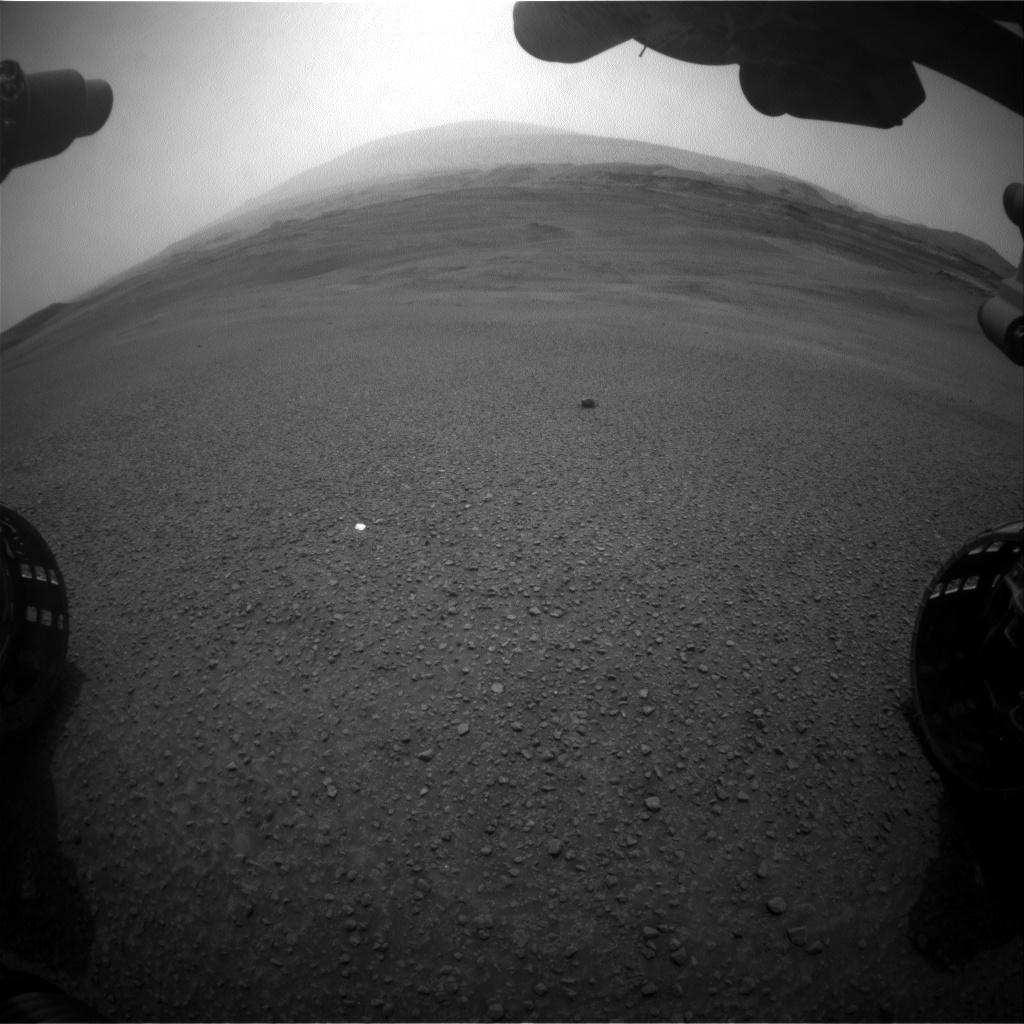
Curiosity Front Hazcam Right A photo taken on Sol 2307, February 1, 2019.
Credit: NASA/JPL-Caltech
NASA’s Curiosity Mars rover is now carrying out Sol 2308 tasks.
The rover has completed a new drive, reports Vivian Sun, a planetary geologist at NASA/JPL in Pasadena, California, and is now parked on top of “Knockfarril Hill” – one of the ridges in the clay-bearing unit.
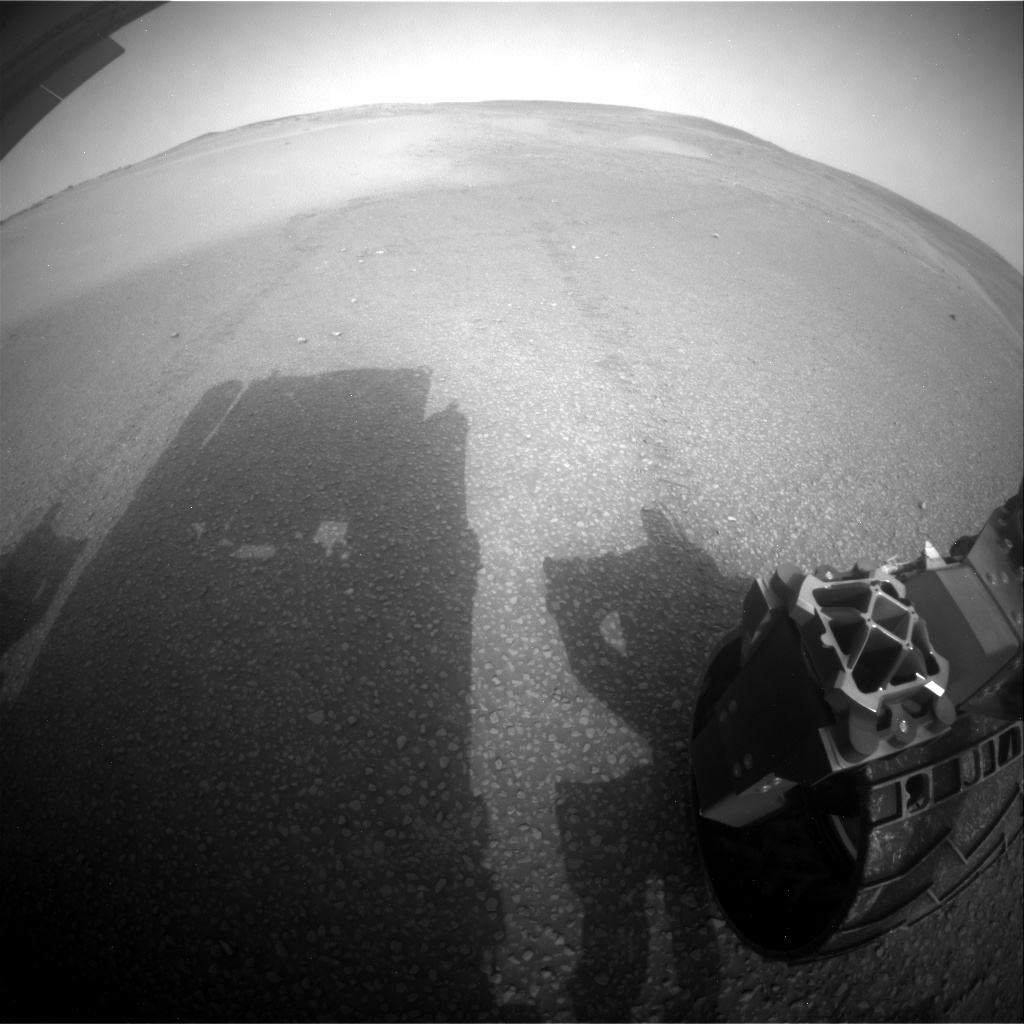
Curiosity Rear Hazcam Right A photo acquired on Sol 2307, February 1, 2019.
Credit: NASA/JPL-Caltech
Weekend exploration
“One of the mysteries of the clay unit is the origin of these ridges – how did they form and what are they made of? This weekend’s 3-sol plan is packed with observations designed to start addressing these questions,” Sun explains.
The current workspace in front of Curiosity is very rubbly, with no bedrock that is reachable by the rover arm.
“However, most of the clay-bearing unit is likely composed of this rubbly material,” Sun points out, “so it’s important to characterize its composition and texture.
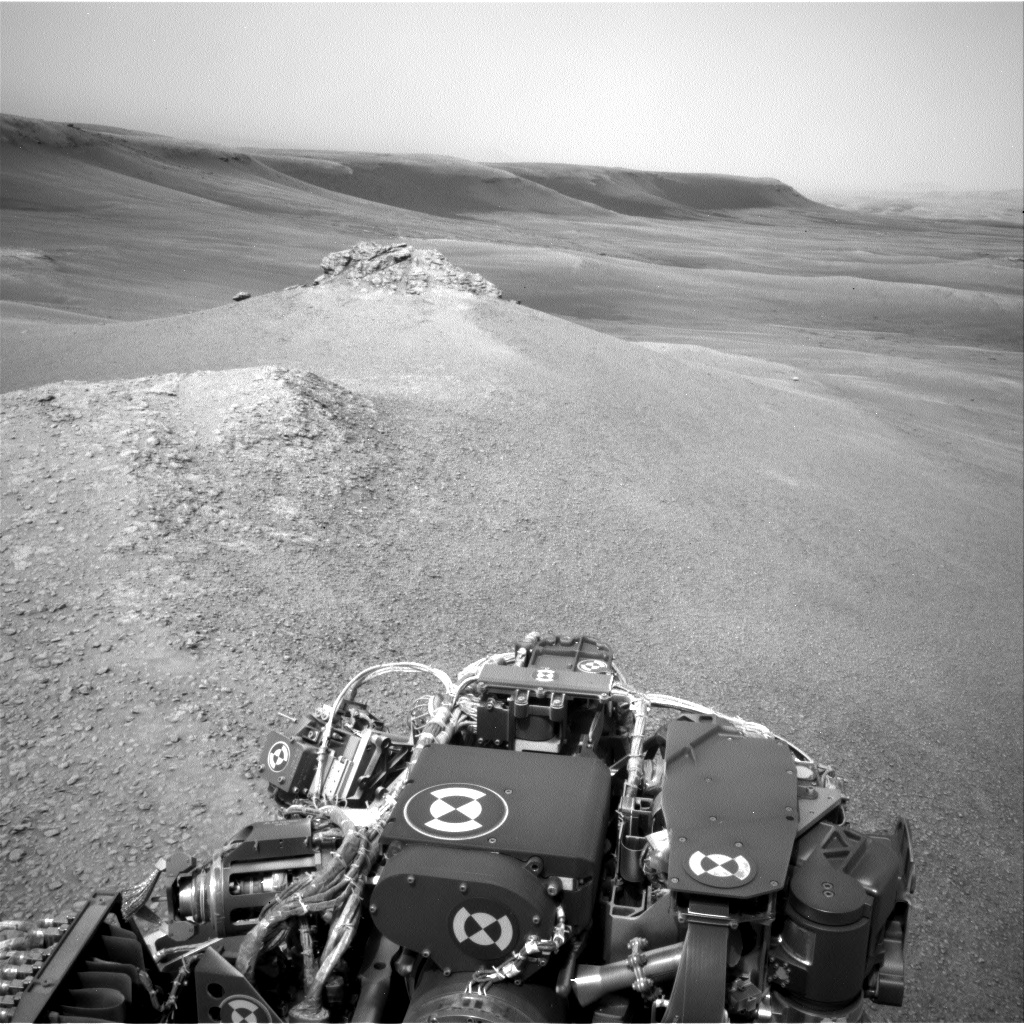
Curiosity Navcam Left A image acquired on Sol 2306, January 31, 2019.
Credit: NASA/JPL-Caltech
Pebbles, sand and soil
To that end, the rover is acquiring Alpha Particle X-Ray Spectrometer (APXS) measurements of this material on Sol 2308, using a rastering technique where the APXS will be placed over three overlapping spots in the workspace.
“By obtaining chemical measurements over different, but slightly overlapping areas, we will be able to distinguish the compositions of the pebbles from the sand and soil in the APXS field of view,” Sun notes.
Also planned is Curiosity analyzing the variety of pebbles in the workspace with Chemistry and Camera (ChemCam) on “Brent” (also the APXS target), “Carluke,” and “Foveran.”
Happy coincidence
“In a happy coincidence, we had identified Carluke as a ChemCam target before we learned that the previous plan’s ChemCam AEGIS [Autonomous Exploration for Gathering Increased Science software] observation had autonomously selected the same Carluke pebble to analyze! We decided to keep the Carluke observation in any case, to gather better statistics on the chemical variability in this pebble,” Sun reports.
Planners also slated plenty of Mastcam imagery given the robot’s relatively high vantage point atop the ridge. Two mosaics are planned to document the bedrock outcrop exposed at Knockfarril Hill and of a layered bedrock outcrop nearby.

Curiosity ChemCam Remote Micro-Imager photo taken on Sol 2307, February 1, 2019.
Credit: NASA/JPL-Caltech/LANL
Intriguing ridges
“We will also document some intriguing aeolian ridges in the distance,” Sun adds, “as well as some enigmatic dark and bright aeolian features in an area called “Crawton.””
After all of these activities, Curiosity is slated to make a short drive descending Knockfarril Hill on Sol 2309, while performing the second part of mobility tests to assess how to best drive in this new rubbly terrain.
“We close out our plan with a suite of atmospheric observations on Sol 2310, including Mastcam taus and dust devil surveys,” Sun concludes. “I kept quite busy as the Geology Keeper of the Plan today, but it was well worth it to plan all of these exciting observations!”
 Posted in Space News

