 By
By  December 11th, 2014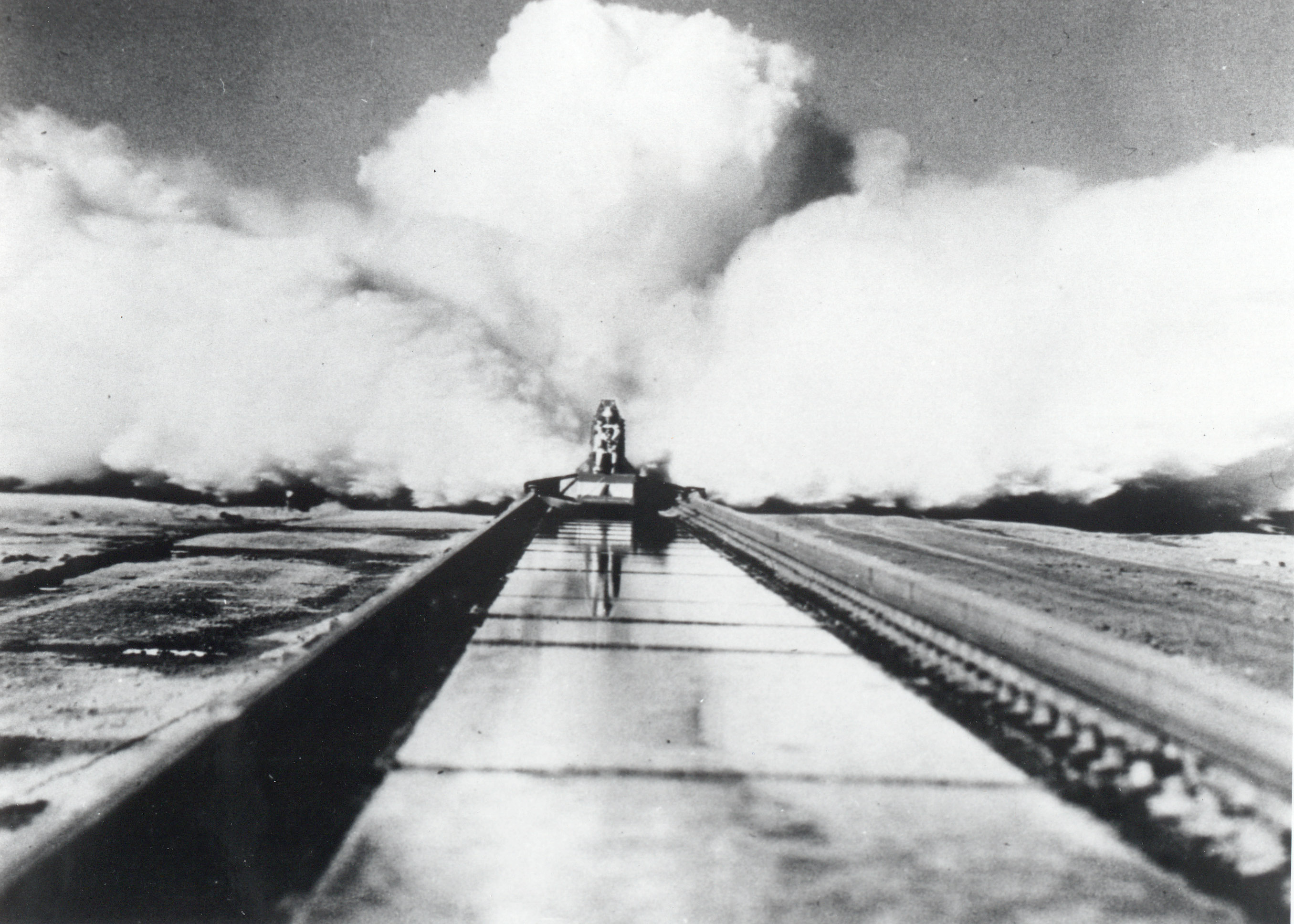
December 10, 2014 marks the 60th anniversary of Col. John P. Stapp’s record-breaking experiment at the Holloman High Speed Test Track.
Credit: U.S. Air Force/Courtesy Photo
It has been 60 years since Col. John P. Stapp sailed down a test track, strapped in tight onboard Sonic Wind Rocket Sled 1.
That pioneering ride on Dec. 10, 1954 earned Stapp the title, “The Fastest Man on Earth” – a speedy rocket-powered trip that propelled him to a rate of 632 miles per hour and subjected the test subject to more than 40 g’s given the rocket sled’s 1.4 second stop in motion.
The site of his adventure was the Holloman High Speed Test Track in New Mexico, an experiment to ascertain the impact on a pilot ejected at 35,000 feet at twice the speed of sound.
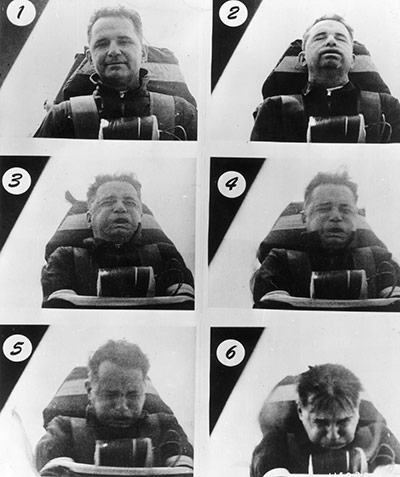
Full stop! A pioneering rocket sled ride. Even in black & white it hurts.
Credit: US Air Force
Stapp sustained bruises, blisters and temporary blindness.
Images of that experiment were publicized around the world. And for aspiring space cadets it was an early, albeit scary, introduction to rocket travel and g-force face time!
Sled on display
Visitors to the New Mexico Museum of Space History in Alamogordo, New Mexico can view the Sonic Wind Rocket Sled 1.
The sled is on display within The John P. Stapp Air & Space Park, named after International Space Hall of Fame Inductee and aeromedical pioneer.
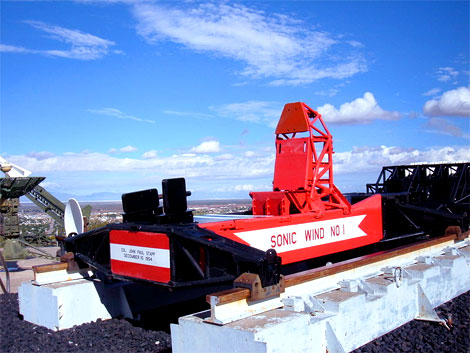
Photo courtesy of NMMSH/The John P. Stapp Air & Space Park
Stapp retired from the U.S. Air Force in 1970 as a colonel and died at his home in Alamogordo, N.M. in 1999.
 Posted in Space News

