 By
By  June 16th, 2018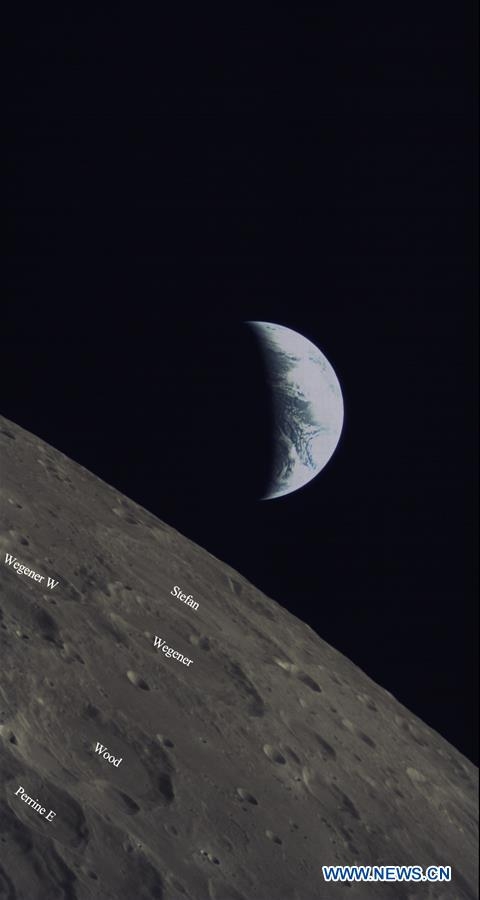
Credit: CNSA/King Abdulaziz City for Science and Technology
China and Saudi Arabia have jointly unveiled lunar images acquired through cooperation on the relay satellite mission for the upcoming Chang’e-4 lunar mission.
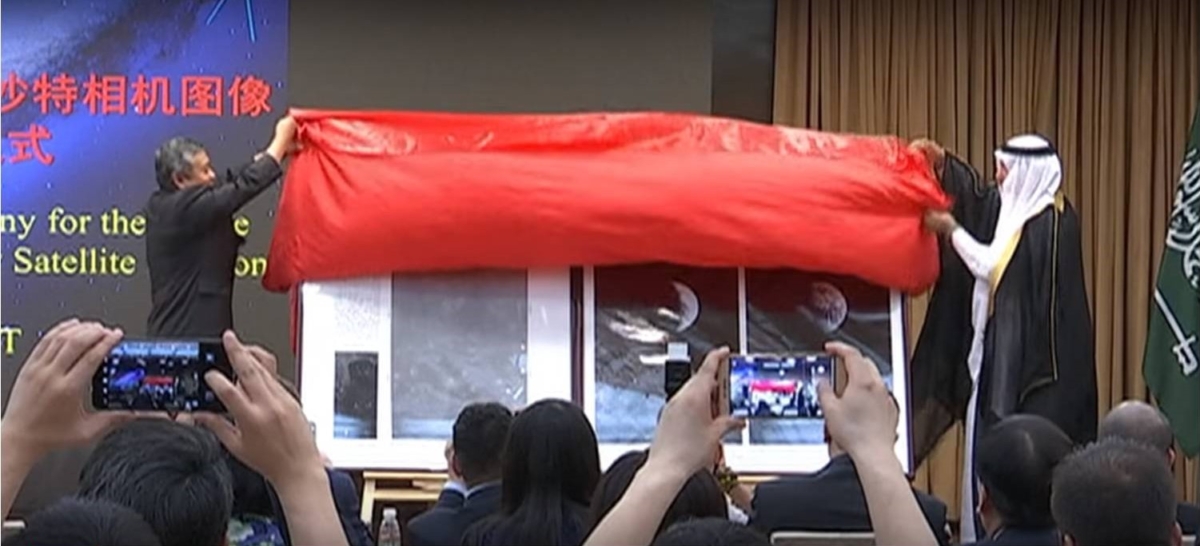
Moon imagery unveiled in Beijing on June 14 by Zhang Kejian, head of the China National Space Administration (CNSA), and Prince Dr. Turki Saud Mohammad Al Saud, president of the King Abdulaziz City for Science and Technology of Saudi Arabia.
Credit: CNSA/Screengrab
An optical camera, developed by the King Abdulaziz City for Science and Technology of Saudi Arabia, was installed on a micro satellite, named Longjiang-2. The small spacecraft is a hitchhiking probe that was sent moonward on the May 21 relay satellite launch.
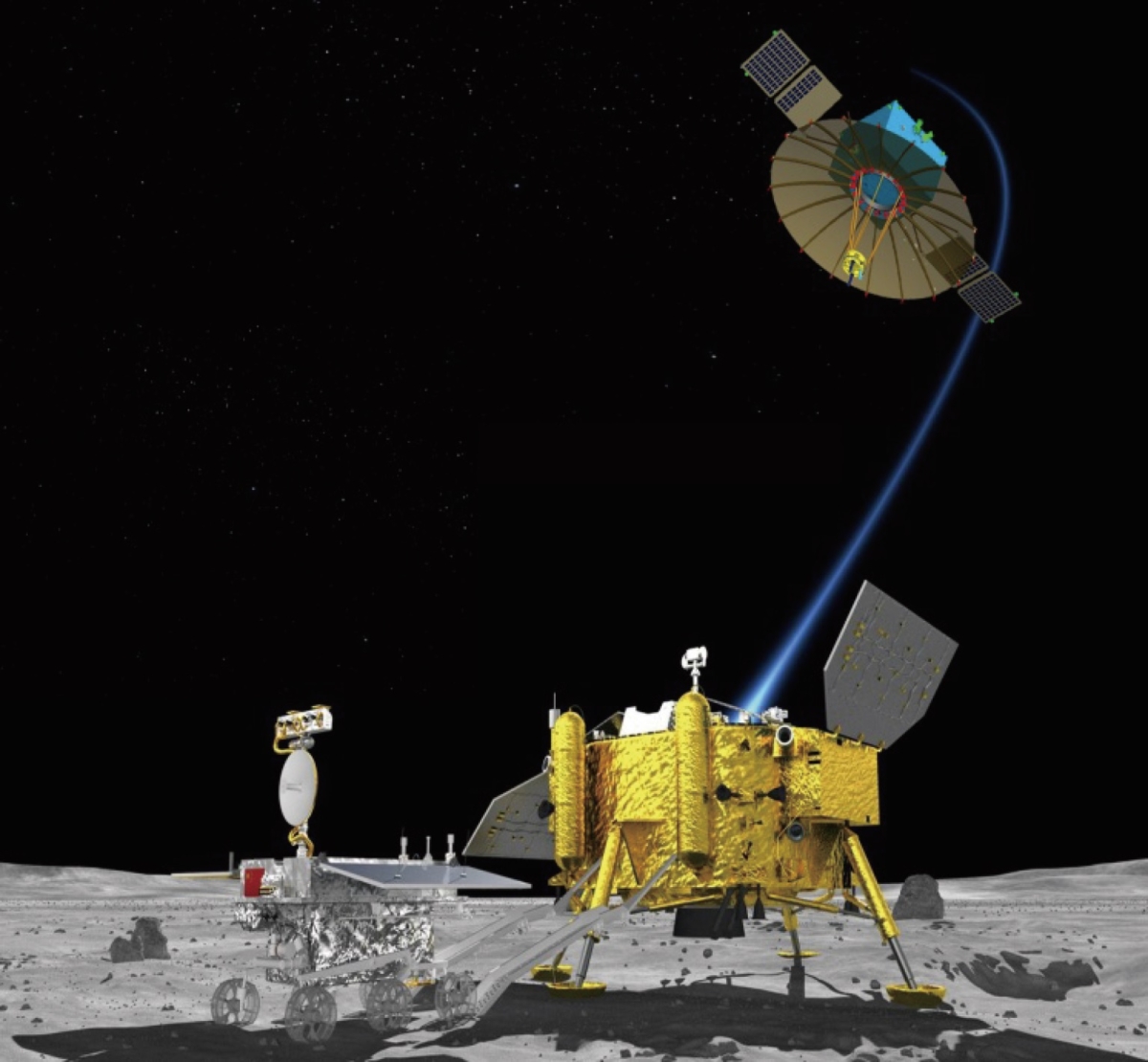
Chang’e-4 Moon lander and rover.
Credit: Chinese Academy of Sciences
Lunar images, data
The camera, which began to work on May 28, has conducted observations of the Moon and acquired a series of lunar images and data, as reported by Xinhua, the Chinese news agency.
The images were unveiled in Beijing on June 14 by Zhang Kejian, head of the China National Space Administration (CNSA), and Prince Dr. Turki Saud Mohammad Al Saud, president of the King Abdulaziz City for Science and Technology of Saudi Arabia.
Halo orbit
The relay satellite for China’s Chang’e-4 lunar lander/rover — named Queqiao or Magpie Bridge — was launched on May 21.
Last Thursday, after a journey of more than 20 days, Queqiao entered a halo orbit around the second Lagrangian (L2) point of the Earth-Moon system, about 40,389 miles (65,000 kilometers) from the Moon.
This relay satellite will handle back and forth transmissions between Earth and the Chang’e-4 lunar lander expected to be lofted in late December. If successful, the spacecraft will touch down on the Moon’s far side – the first spacecraft to do so — in January 2019.
Landing region
The candidate landing region for the Chang’e-4 lander mission is 45°S-46°S 176.4°E-178.8°E, which is in the southern floor of the Von Kármán crater, within the South Pole-Aitken (SPA) basin.

Chang’e-4 landing site: Von Karman Crater as viewed by NASA’s Lunar Reconnaissance Orbiter Camera, or LROC.
Credit: NASA/GSFC/Arizona State University
Chang’e-4 will carry payloads for Germany, the Netherlands, Saudi Arabia and Sweden.
China’s lunar exploration program is designed to be conducted in three phases. The first phase is to orbit the Moon, which was completed by Chang’e-1 in 2009. The second phase is to land on the Moon, which was done by Chang’e-3 in 2013. The third phase is to collect samples and return them to the Earth, which will be advanced by Chang’e-4, Chang’e-5 and Chang’e-6.
The China National Space Administration has released this video spotlighting the newly acquired lunar images taken by the Longjiang-2 micro satellite.
Go to: https://youtu.be/2JS6q0ioBcI?list=PLpGTA7wMEDFjz0Zx93ifOsi92FwylSAS3
 Posted in Space News

