 By
By  June 16th, 2018
Curiosity Mars Hand Lens Imager (MAHLI) photo produced on Sol 2082, June 15, 2018. It is one image of many to create a new selfie.
Credit: NASA/JPL-Caltech/MSSS
NASA’s Curiosity Mars rover is now in Sol 2083. The robot has been busily taking new images to create a “selfie.”
Ken Herkenhoff, a planetary geologist at the USGS in Flagstaff, Arizona, reports that the investigation of the Duluth drill hole is going well, work that continued on Sol 2082.

Curiosity Front Hazcam Left B image acquired on Sol 2082, June 15, 2018.
Credit: NASA/JPL-Caltech
The robot’s Mars Hand Lens Imager (MAHLI) has produced pictures of the drill tailings to look for an imprint of the Alpha Particle X-Ray Spectrometer (APXS) contact sensor, then will acquire another rover selfie, Herkenhoff notes.
Dust storm: environmental effects
“The major dust storm that caused the solar-powered Opportunity rover, on the other side of Mars, to shut down has somewhat darkened the skies over Gale Crater,” Herkenhoff adds, but is not expected to seriously affect Curiosity operations.
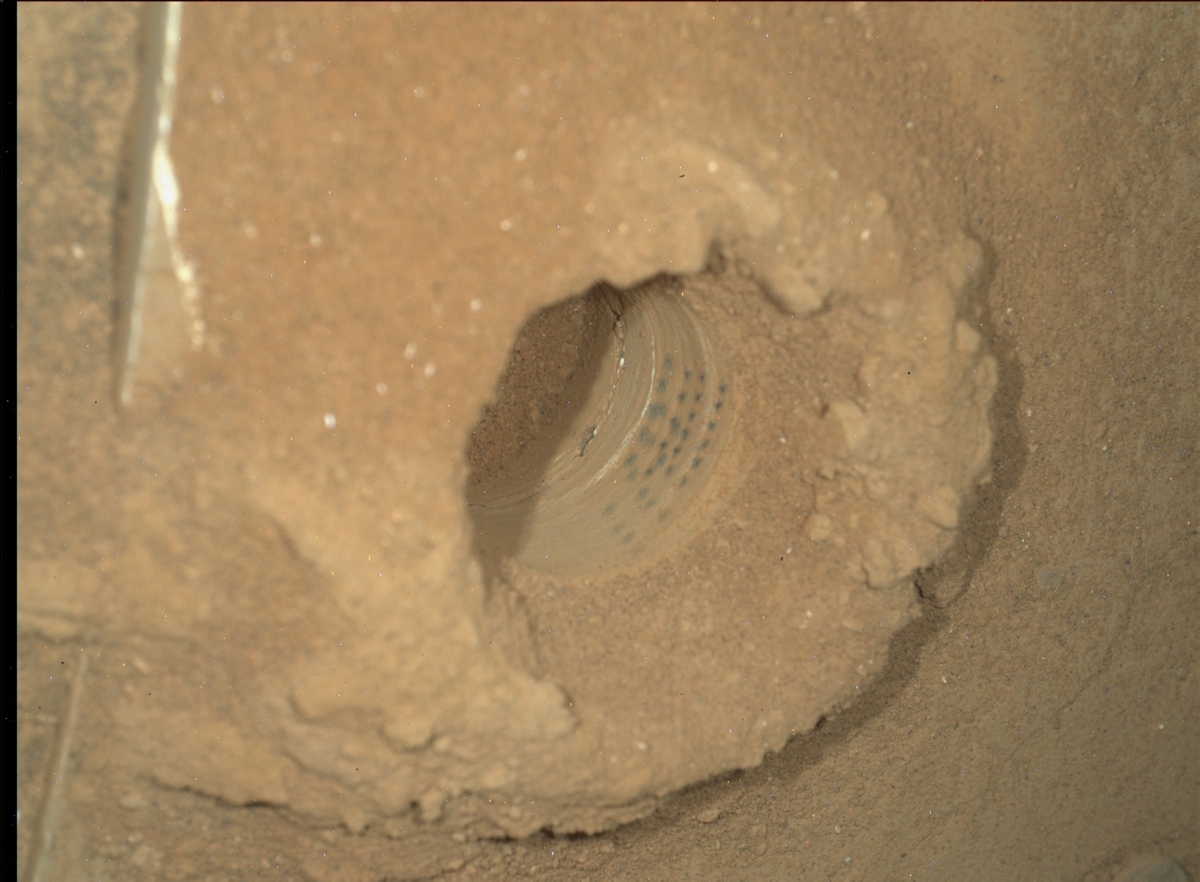
Curiosity Mars Hand Lens Imager (MAHLI) photo produced on Sol 2081, June 14, 2018.
Credit: NASA/JPL-Caltech/MSSS
Still, there is great interest in the environmental effects of the dust storm, so the Sol 2082 plan included more Navcam and Mastcam observations of atmospheric dust and Right Mastcam images intended to detect changes due to winds.
Dump pile
The rover’s Chemistry and Camera (ChemCam) was also to measure the elemental chemistry of the material in the sample dump pile, Herkenhoff notes, “if the wind hasn’t blown the pile away by then!”
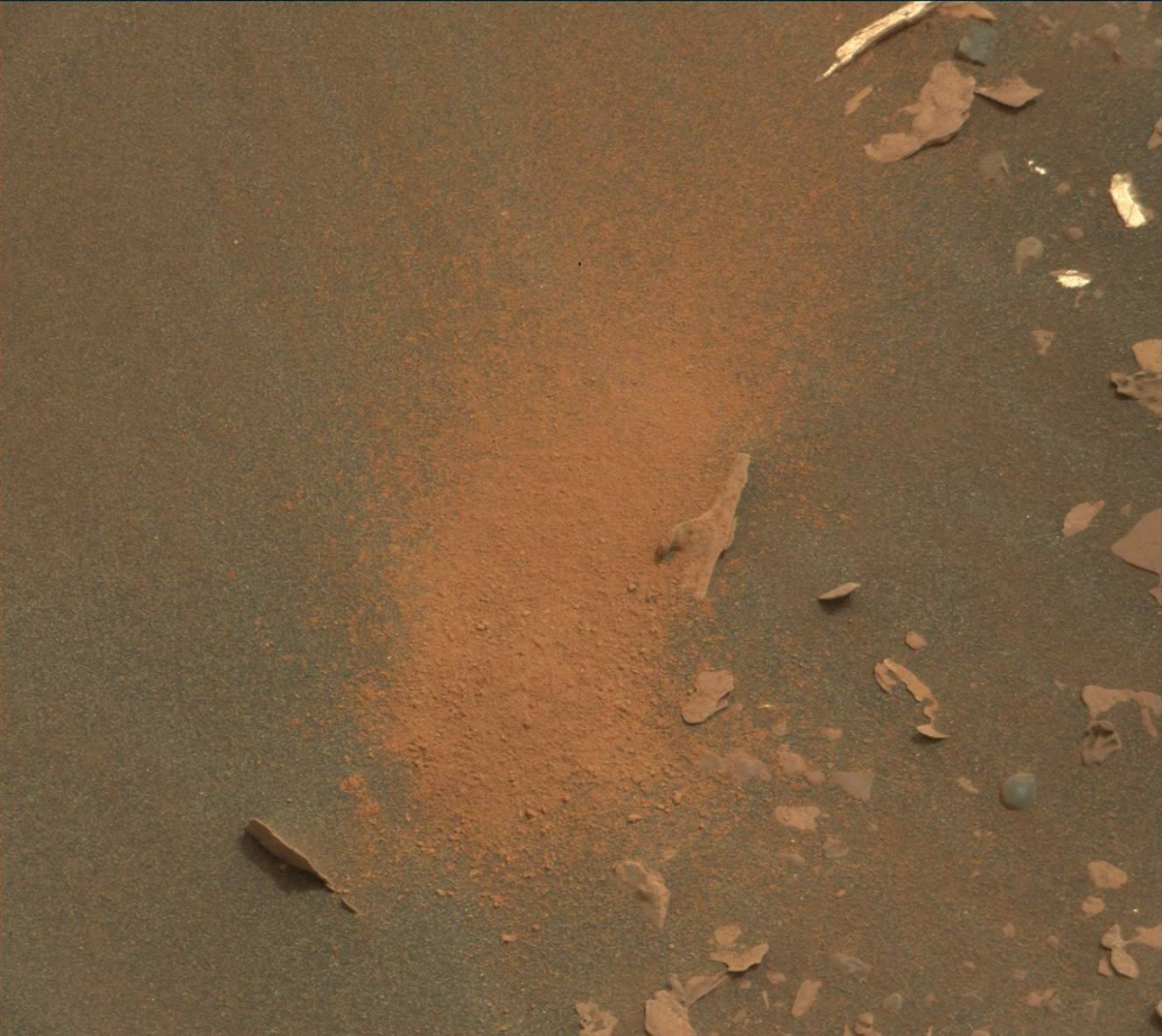
Curiosity Mastcam Right image acquired on Sol 2081, June 14, 2018.
Credit: NASA/JPL-Caltech/MSSS
Lastly, MAHLI was tasked to take images of the calibration targets on the front of the rover to monitor camera performance.
 Posted in Space News

