 By
By  June 7th, 2018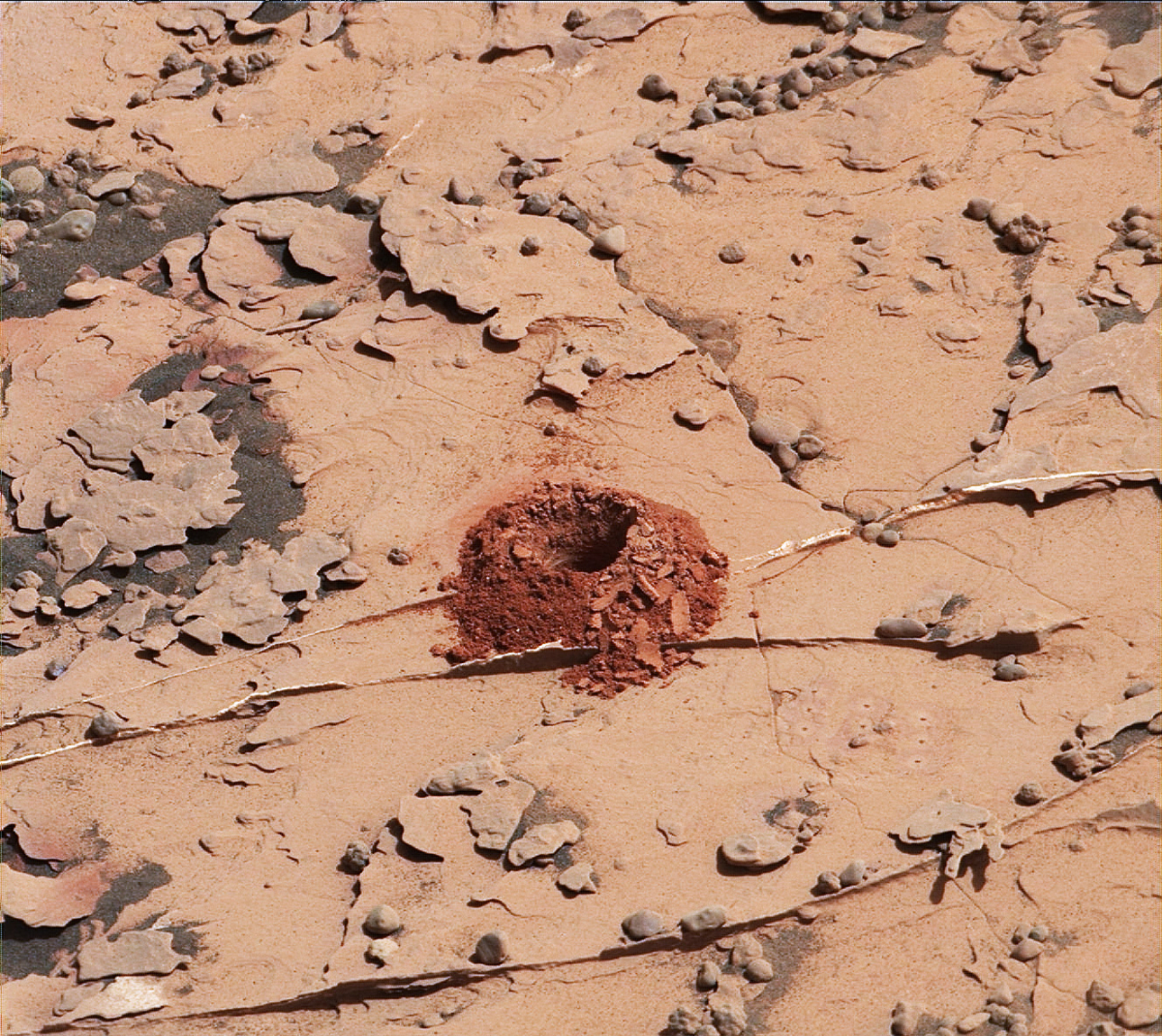
A close-up image of a 2-inch-deep hole produced using a new drilling technique for NASA’s Curiosity rover. The hole is about 0.6 inches (1.6 centimeters) in diameter. This image was taken by Curiosity’s Mast Camera (Mastcam) on Sol 2057. It has been white-balanced and contrast-enhanced.
NASA/JPL-Caltech/MSSS
NASA’s Curiosity Mars rover is now wrapping up Sol 2074 duties.
Curiosity rover scientists received the happy news that the Sample Analysis at Mars (SAM) Instrument Suite received enough sample to conduct its “evolved gas” analysis of the powdered rock from the “Duluth” drill hole!
“This will allow the team to study the composition of Duluth and search for clues about the habitability of Gale Crater billions of years ago,” explains Scott Guzewich, an atmospheric scientist at NASA/Goddard Space Flight Center in Greenbelt, Maryland. “It also fully validates the new sample drop off routines that were created to work with our new ‘feed-extended drilling’ technique.”
After a busy several sols where Curiosity’s onboard laboratories got back in action, the rover’s plan of action was relatively quiet with Chemistry and Camera (ChemCam) Laser-induced Breakdown Spectroscopy (LIBS) analysis of rock targets “Little Marais” and “Independence,” and some housekeeping activities from SAM following its investigations sols ago.
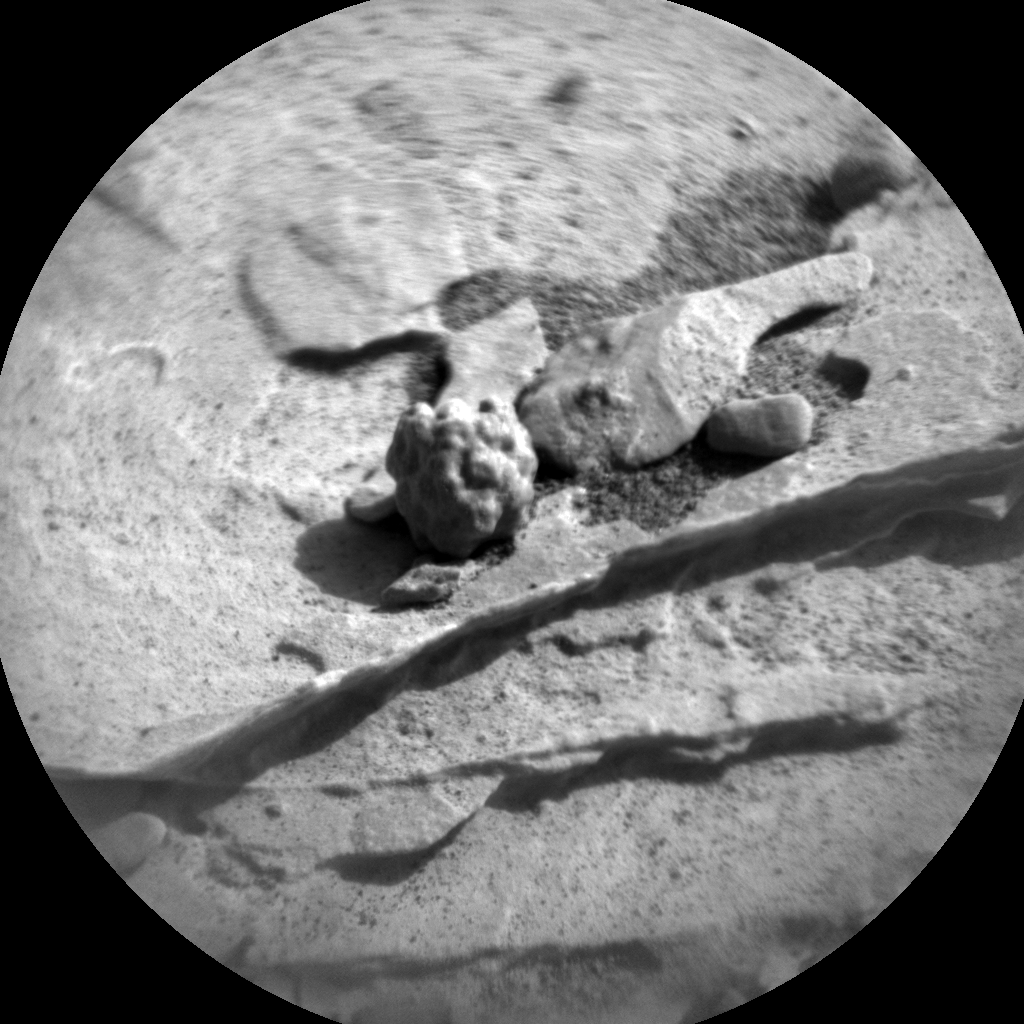
Curiosity ChemCam Remote Micro-Imager photo acquired on Sol 2074, June 7, 2018.
Credit: NASA/JPL-Caltech/LANL
Dust storm
Guzewich reports that the environmental science theme group is monitoring a growing large dust storm on the other side of Mars.
“To help keep tabs on if and when this storm begins to impact Gale Crater, we added two observations with Mastcam to monitor the amount of dust in the atmosphere and a short Navcam dust devil survey,” Guzewich adds.
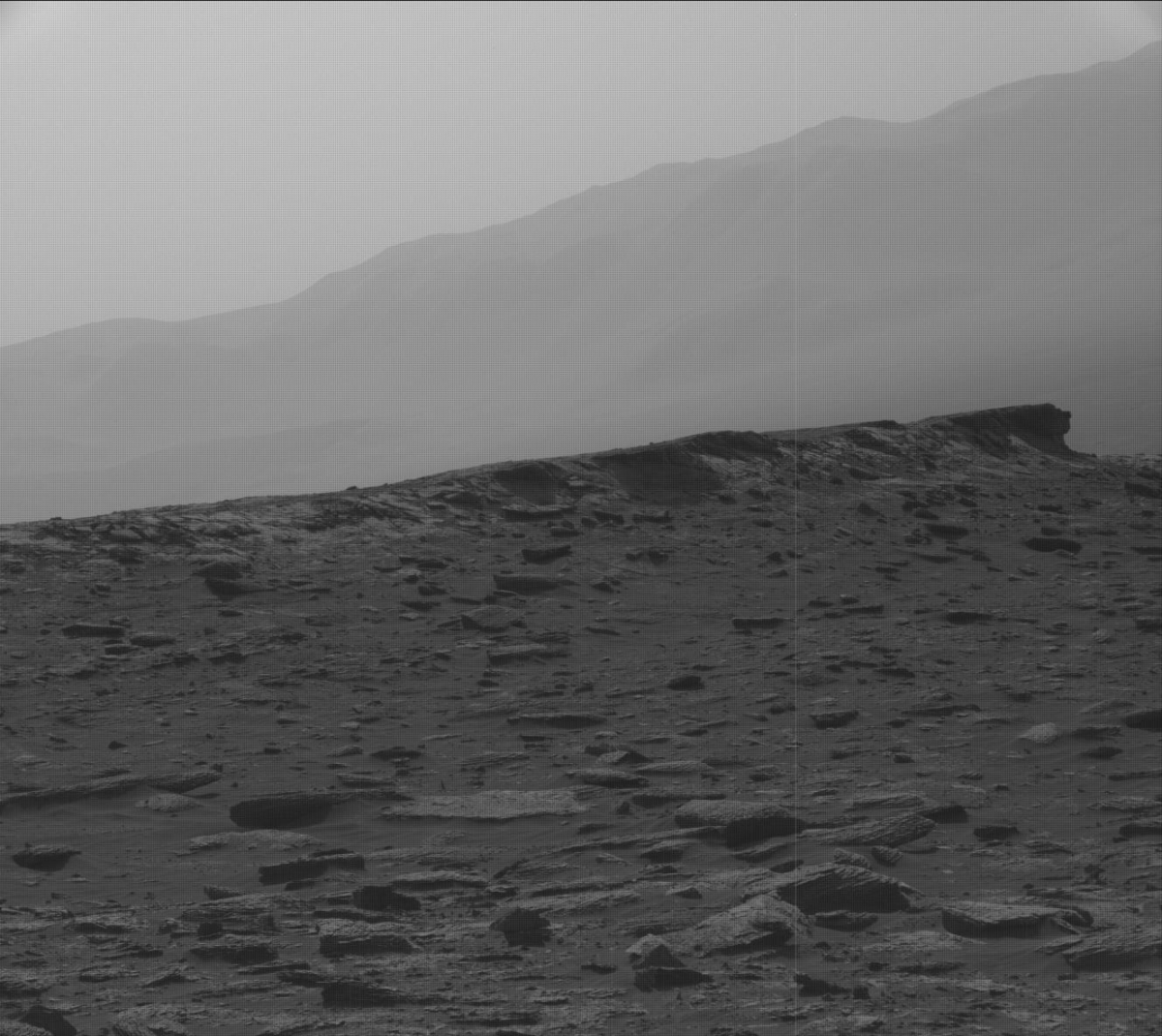
Amount of dust in Gale crater is likely to increase over the next several days and viewing of the crater’s rim will become far hazier.
Photo taken by Curiosity Mastcam Left camera on Sol 2072, June 5, 2018.
Credit: NASA/JPL-Caltech/MSSS
“We expect that even if the storm dissipates before becoming a global dust storm,” Guzewich points out, “that the amount of dust in Gale will increase over the next several days,” with the view of the crater’s rim becoming far hazier.
 Posted in Space News

