 By
By  June 7th, 2018
International Space Station.
Credit: NASA
U.S. Sen. Ted Cruz (R-Texas), chairman of the Subcommittee on Space, Science, and Competitiveness convened a hearing entitled “Examining the Future of the International Space Station: Stakeholder Perspectives,” on Wednesday, June 6, 2018.
The second in a series of hearings to examine the role of the International Space Station (ISS), this hearing provided ISS stakeholders the opportunity to discuss the value of the ISS to our national space program and the future of human space exploration.

Credit: ASAP/NASA
Golden era
Commerce Committee ranking member, Bill Nelson, said in an opening statement:
“This November will mark twenty years since the Russians launched the Zarya module into space. NASA launched the Unity module two weeks later, and so began assembly of the International Space Station.
Now, we are on the verge of a golden era for the ISS. Boeing and SpaceX are set to begin launching crew from Cape Canaveral to the ISS next year. That will allow us to increase the number of astronauts aboard the station and dramatically increase the amount of research we can do there.
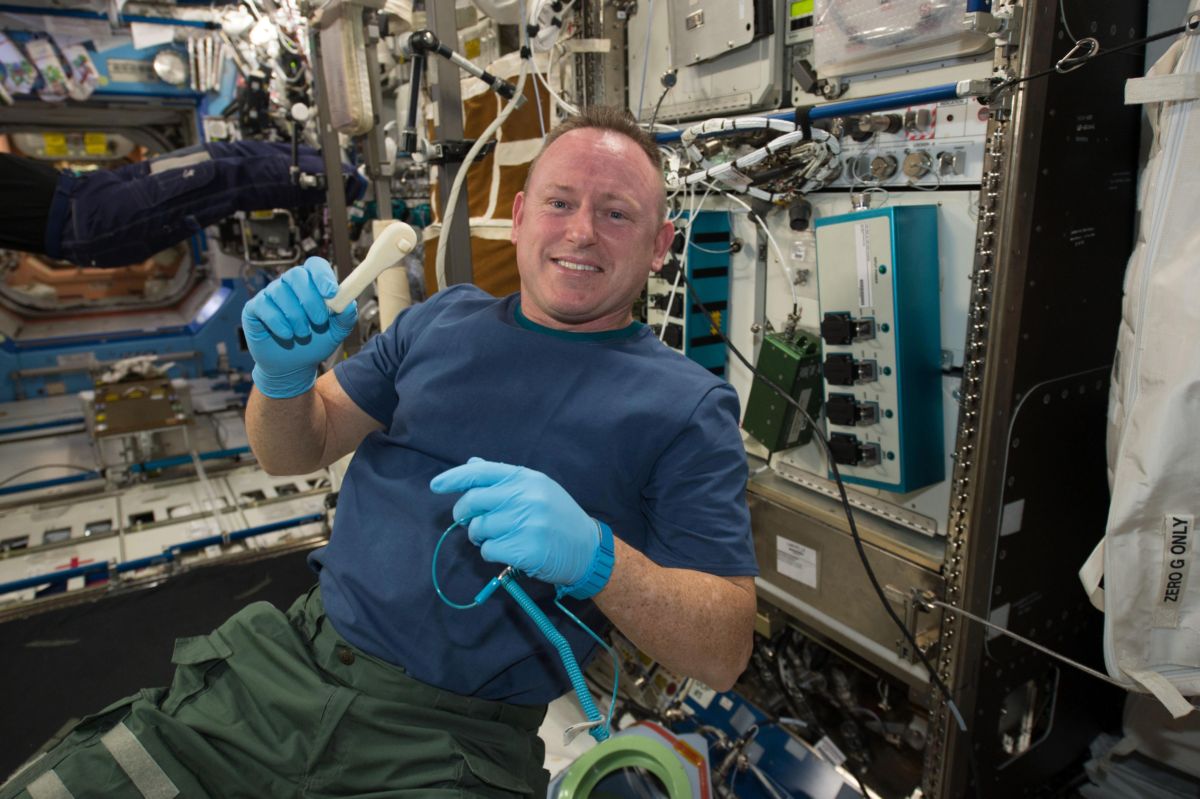
Ratcheting up use of 3D printing onboard the International Space Station. NASA Astronaut Barry (Butch) Wilmore holds a 3-D printed ratchet wrench from the new 3-D printer aboard the International Space Station. The printer completed the first phase of a NASA technology demonstration by printing a tool with a design file that was transmitted from the ground to the printer.
Credit: NASA
It’s taken the dedication of countless workers at Kennedy Space Center, at Johnson Space Center and in countries all over the world to get to this point.
Through 2030
Thanks to their efforts, the ISS is performing well and should keep functioning through 2030 or even longer.
Now is the time to reap the benefits of all of that effort and to maximize the return from our investment in ISS.
There is a strong, bipartisan consensus that we need a steady and deliberate commercialization of activities in low Earth orbit. That transition depends on the development of demand for services in low Earth orbit by non-NASA entities.
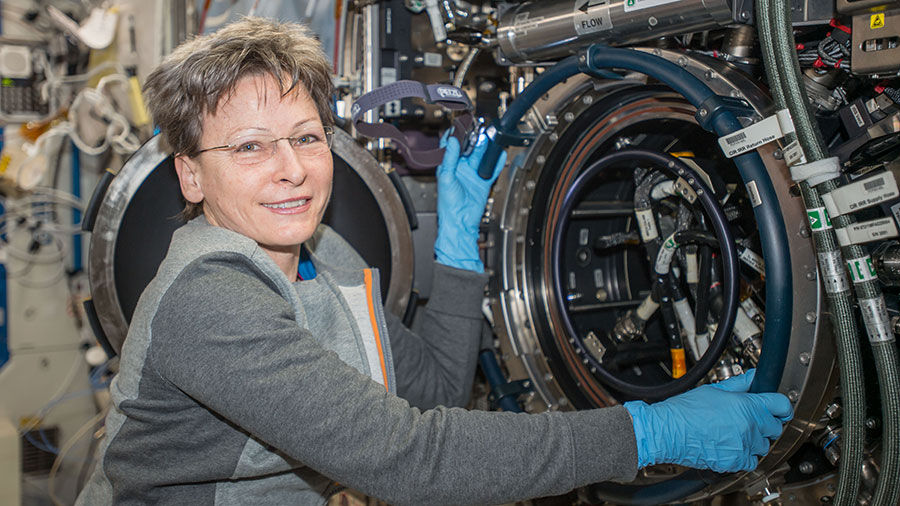
Astronaut Peggy Whitson works on the Combustion Integrated Rack in the U.S. Destiny laboratory module.
Credit: NASA
Arbitrary end date
Setting an arbitrary end date for the ISS in 2025 isn’t going to help build demand for these types of activities. To the contrary, it could crush the demand.
Who would want to make large, multi-year investments in space research and development activities if they have no assurance there will be a platform in orbit on which to carry out their activities?
What about the commercial crew and cargo capabilities that we are investing so heavily in right now? What would happen to them if there is no certainty that they will have a destination just a few years after they first get started?

Credit: China Manned Space Agency
China station
The Chinese certainly realize this. I suspect it is no accident that, within a few months of the administration’s proposal to end federal funding for ISS in 2025, the Chinese announced that their space station will soon be open for business. Just last week they invited countries around the world to conduct research aboard their station beginning in the 2020s.
And the research capabilities they advertise – medical sample analysis, combustion science, freezers, a science glovebox – sound remarkably similar to the ISS.
Cultivate demand
One day, low Earth orbit may be filled with commercial space stations serving NASA and other government and private sector customers. And NASA will be leading a human mission to Mars.
The ISS isn’t an obstacle to those developments – the ISS is the key to enabling them.
I am looking forward to today’s discussion on how the ISS can help cultivate the demand for new space activities and accelerate the development of commercial space habitats.”
Video of hearing:
Witnesses and written testimony
1)
Cynthia Bouthot
Director of Commercial Innovation & Sponsored Programs, Center for the Advancement of Science in Space
2)
Jim Chilton
Senior Vice President
Space and Launch, The Boeing Company
3)
Bob Mitchell
President
Bay Area Houston Economic Partnership
4)
Michael Suffredini
Chief Executive Officer and President
Axiom Space
 Posted in Space News

